

Exhibition on the Environmental Award
Online exhibition on the Environmental Award 2024
The projects of all participants will be published on this website. Let yourself be inspired for your potential project and marvel at what children and young people from Chemnitz have done for our environment.
Further information
Projects in the ‘Childcare Centre’ category
Eva Lu Children’s Home in Adelsberg: A refuge for everyone
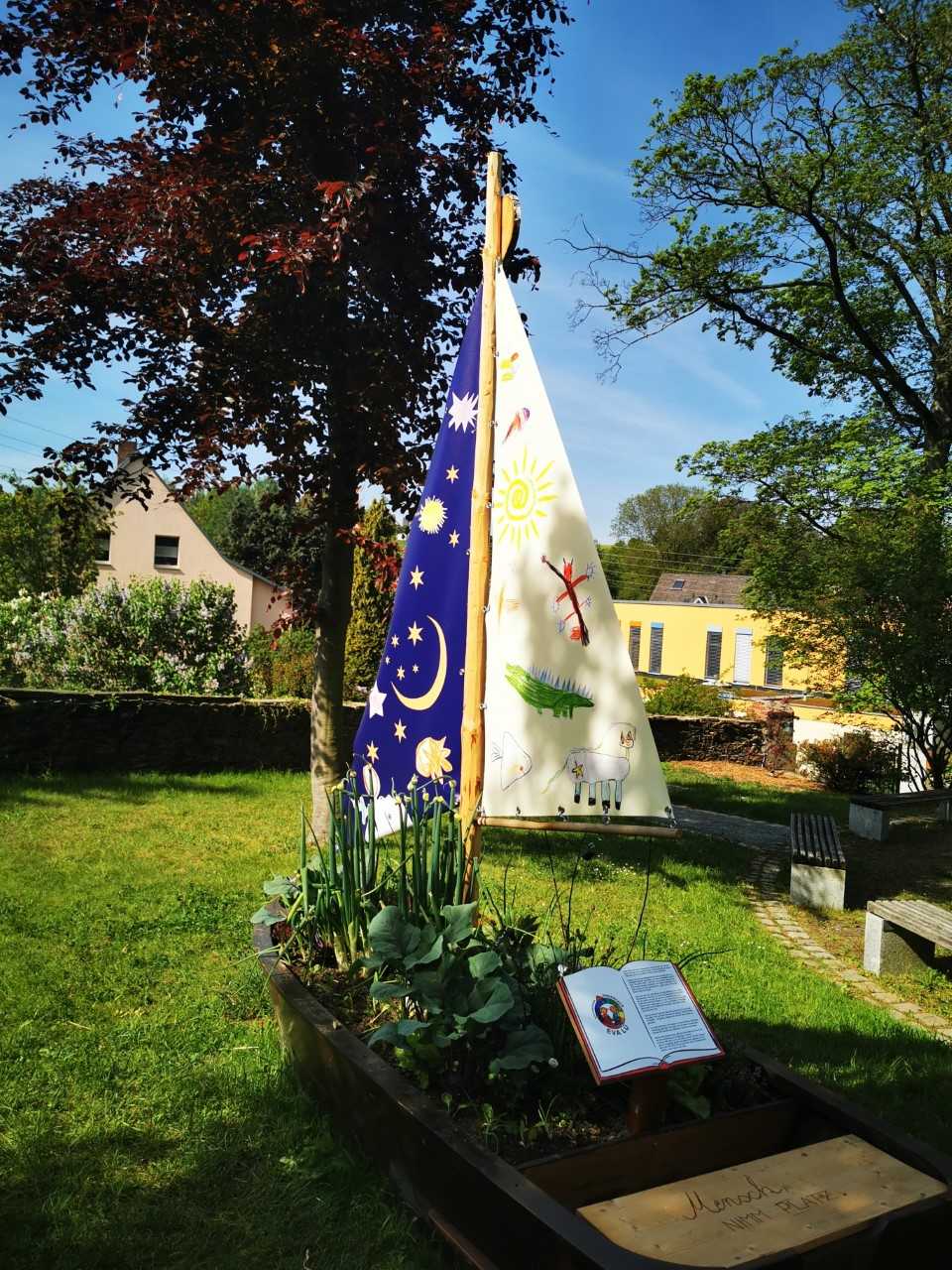
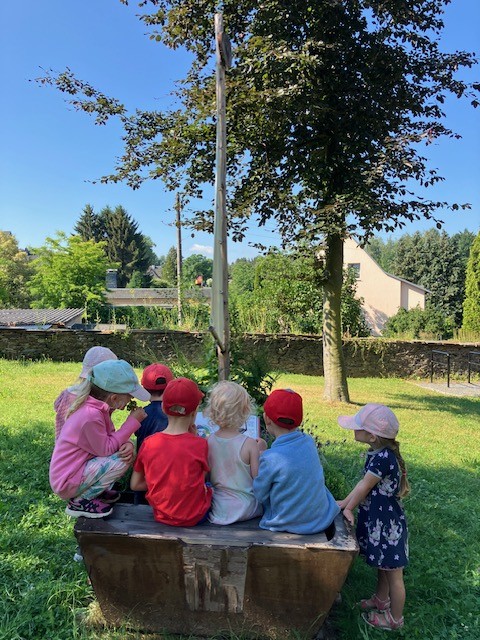
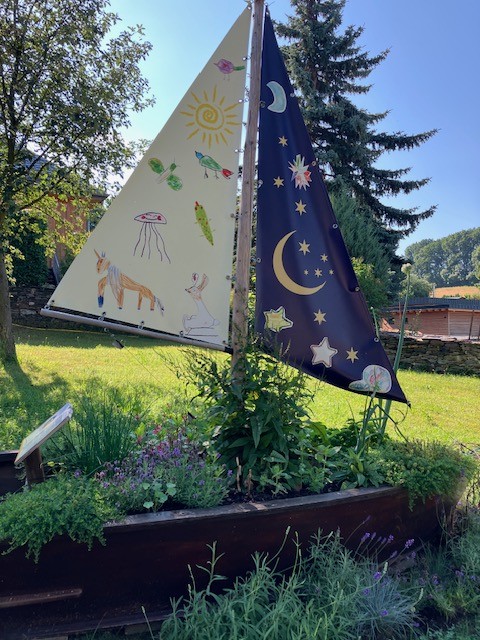
A wooden boat was transformed into a planted ark on the church meadow in Adelsberg. Together with the children, the boat was filled with soil and decorated to reflect the story of Creation. The sail features animals and celestial bodies painted by the children. The boat is home to crops as well as plants that are friendly to bees and other insects. The children look after the Ark and redesign it time and again to reflect the changing seasons.
In this way, they learn that they themselves can take responsibility for nature. At the same time, the Ark is a place of tranquillity and a meeting point for people from the neighbourhood.
Goethehain integrative kindergarten: Our butterfly meadow - created and grown like us
![[Translate to English:] Die Kinder gestalten Stoffreste mit Pflanzendruck](https://d2vw8mc5mcb3gm.cloudfront.net/fileadmin/chemnitz/media/unsere-stadt/umwelt/umweltpreis/2026/Bild_Website_3.png)
![[Translate to English:] Aus einer alten Schallplatte entstand ein Stiftehalter](https://d2vw8mc5mcb3gm.cloudfront.net/fileadmin/chemnitz/media/unsere-stadt/umwelt/umweltpreis/2026/Foto_Website1.jpg)
![[Translate to English:] Preisübergabe mit der Kinder- und Jugendbeauftragten Frau Norberger und Frau Schlett vom Umweltamt](https://d2vw8mc5mcb3gm.cloudfront.net/fileadmin/chemnitz/media/unsere-stadt/umwelt/umweltpreis/2026/Preis%C3%BCbergabe_Website.jpeg)
![[Translate to English:] Materialsammlung der Kita](https://d2vw8mc5mcb3gm.cloudfront.net/fileadmin/chemnitz/media/unsere-stadt/umwelt/umweltpreis/2026/Bild_Website.jpg)
The butterfly group at the Goethehain integrative kindergarten has created a near-natural meadow for butterflies, bees and crawling beetles behind the daycare centre. Over three years, a small bed of flowering plants was turned into a living natural garden with apple, plum and cherry trees, a willow tree, painted stones, a beetle hideaway in a clay pot and a bird house.
The children also experienced nature with all their senses: They visited a beekeeper, processed elderberries and apples, built raised beds, made butterflies and sang nature songs. As part of the project, the entire garden was redesigned to be close to nature - with compost, insect hotels, birdhouses and insect-friendly plants. In this way, the children learnt through play how important it is to protect nature and the environment.
"Am Feldschlößchen" Nursery: "A Heart for Urban Nature" project
![[Translate to English:] Der Bereich für die Blumenwiese wird vorbereitet](https://d2vw8mc5mcb3gm.cloudfront.net/fileadmin/chemnitz/media/unsere-stadt/umwelt/umweltpreis/2026/Kita_Feldschl%C3%B6%C3%9Fchen_1.jpg)
![[Translate to English:] Die Blühwiese zeigt ihre volle Pracht](https://d2vw8mc5mcb3gm.cloudfront.net/fileadmin/chemnitz/media/unsere-stadt/umwelt/umweltpreis/2026/Kita_Feldschl%C3%B6%C3%9Fchen__20_.jpg)
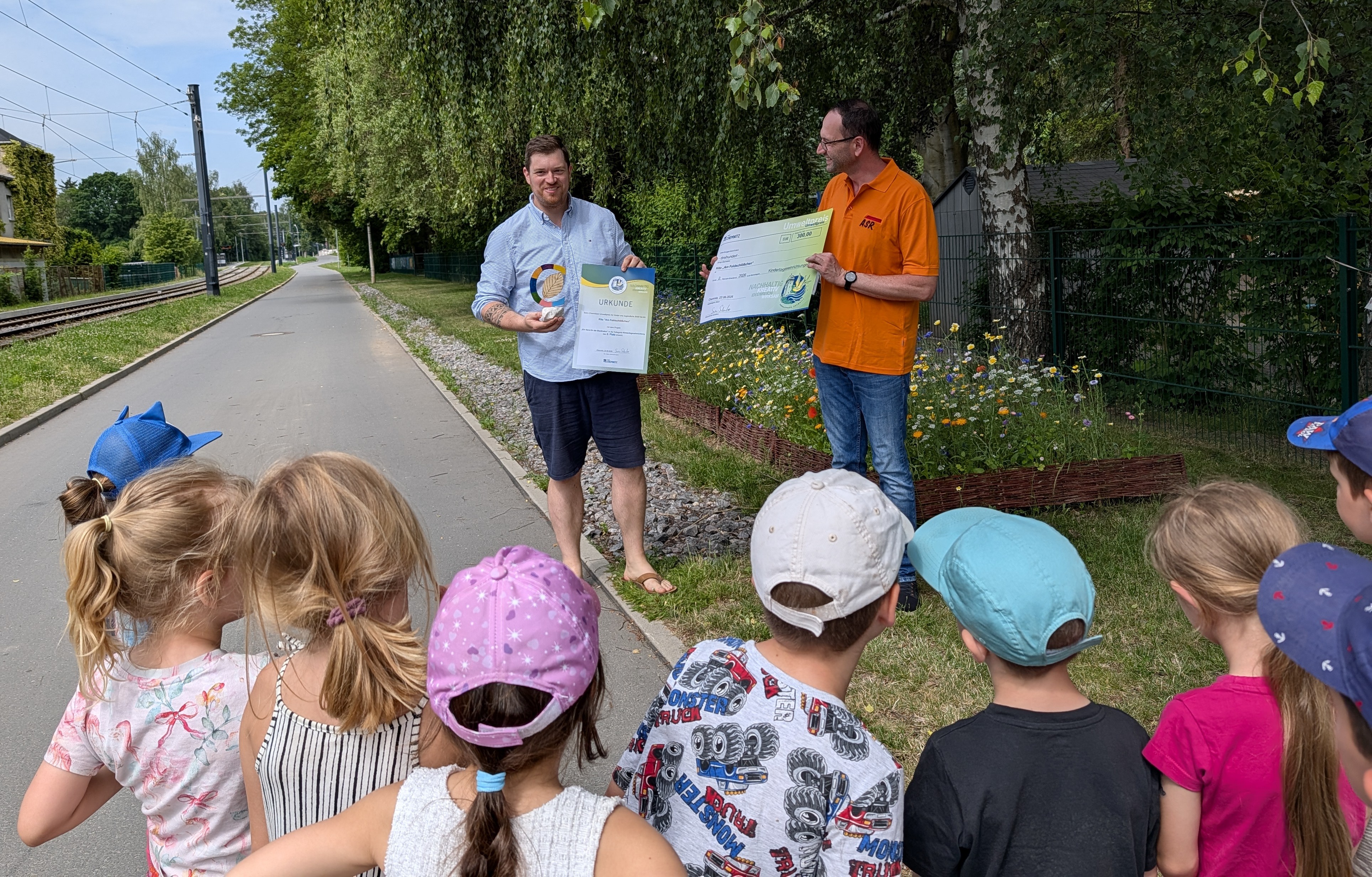
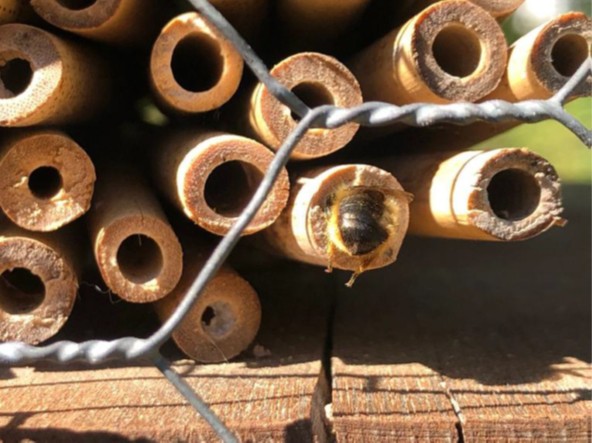
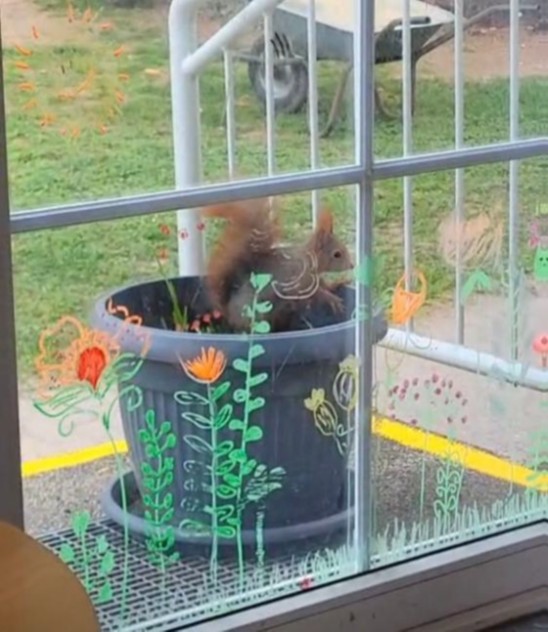
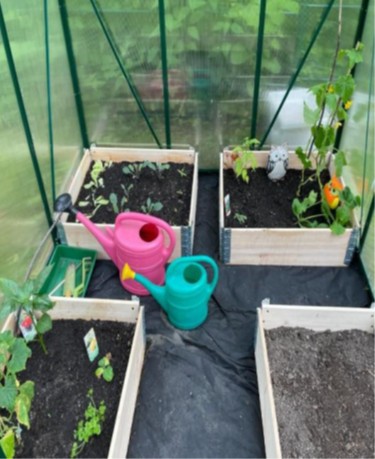
For a whole year, the children explored the urban natural environment around their nursery. Together with parents and nursery staff, they created a flowerbed, improved an insect hotel, planted greenery along the fence, and tended raised beds, a greenhouse and a willow teepee. They learnt about wild bees, birds, hedgehogs, trees, fruit and animal tracks.
They also sowed, harvested and prepared vegetables and herbs. Through a range of small, everyday activities, the children learnt what habitats native animals need and how they themselves can help protect nature.
Kita Kindertreffpunkt: Our nursery is becoming a habitat for animals and insects
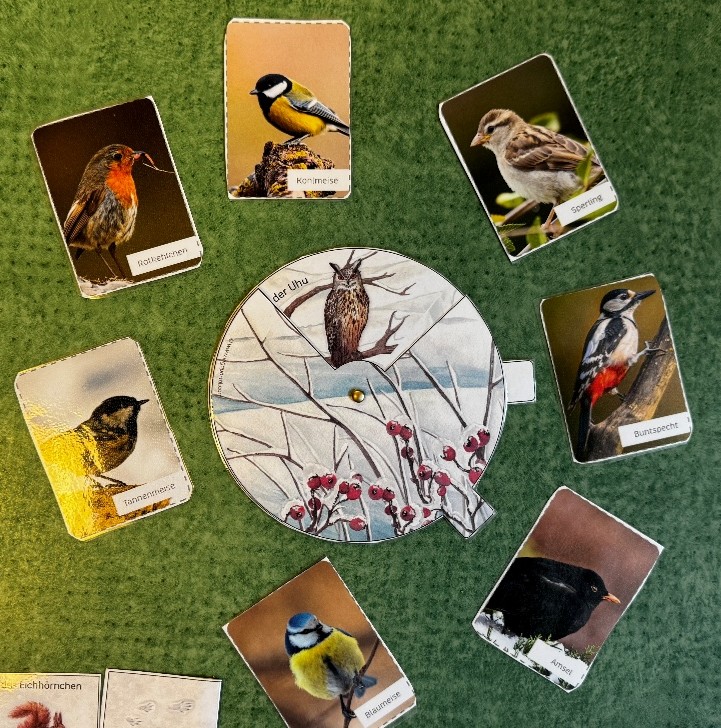
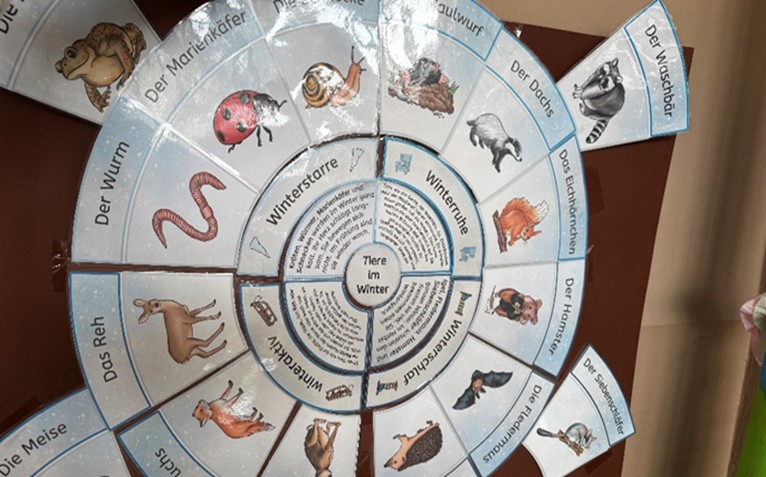
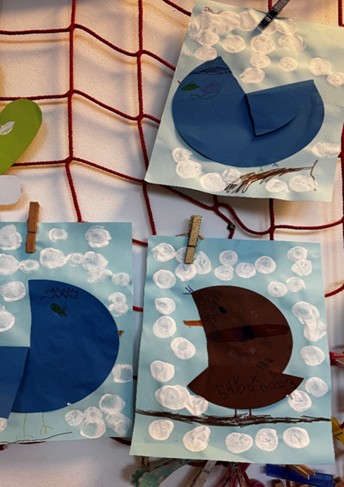
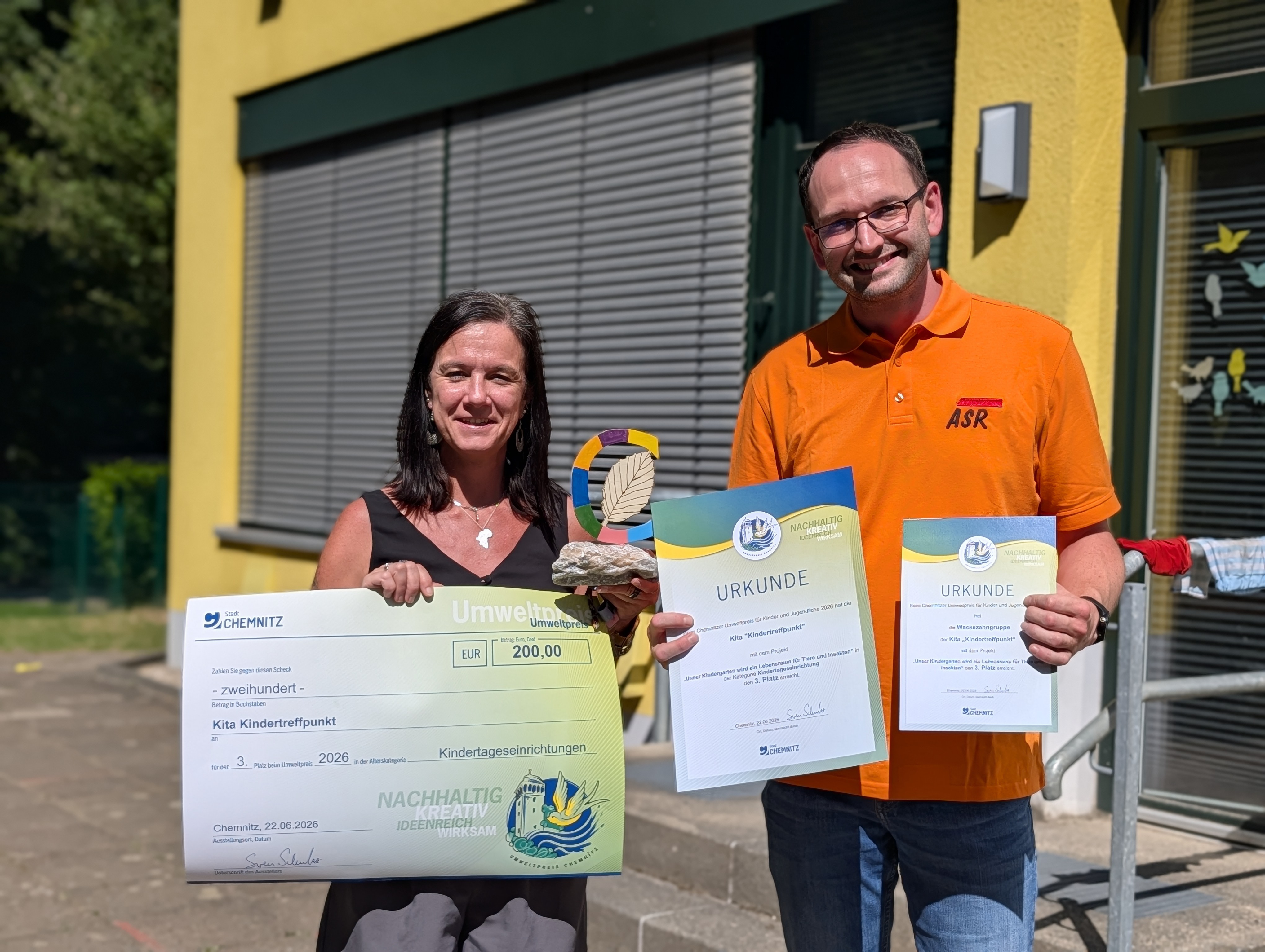
Step by step, the children are transforming the outdoor area of their nursery into a natural habitat. The project includes a raised bed of wildflowers, insect hotels, birdhouses and a pile of garden cuttings to serve as a refuge for small animals. Throughout the year, the children explore animals in winter, pollinators, butterflies, birds and the changes in nature. They sow seeds, build, observe and look after the newly created habitats. In doing so, they experience first-hand how their own actions have a positive impact on animals and plants, and that nature conservation can begin right here in their own nursery garden.
Projects in the primary school category
Adelsberg Primary School: Tomorrow’s climate heroes – the future is taking root in Adelsberg
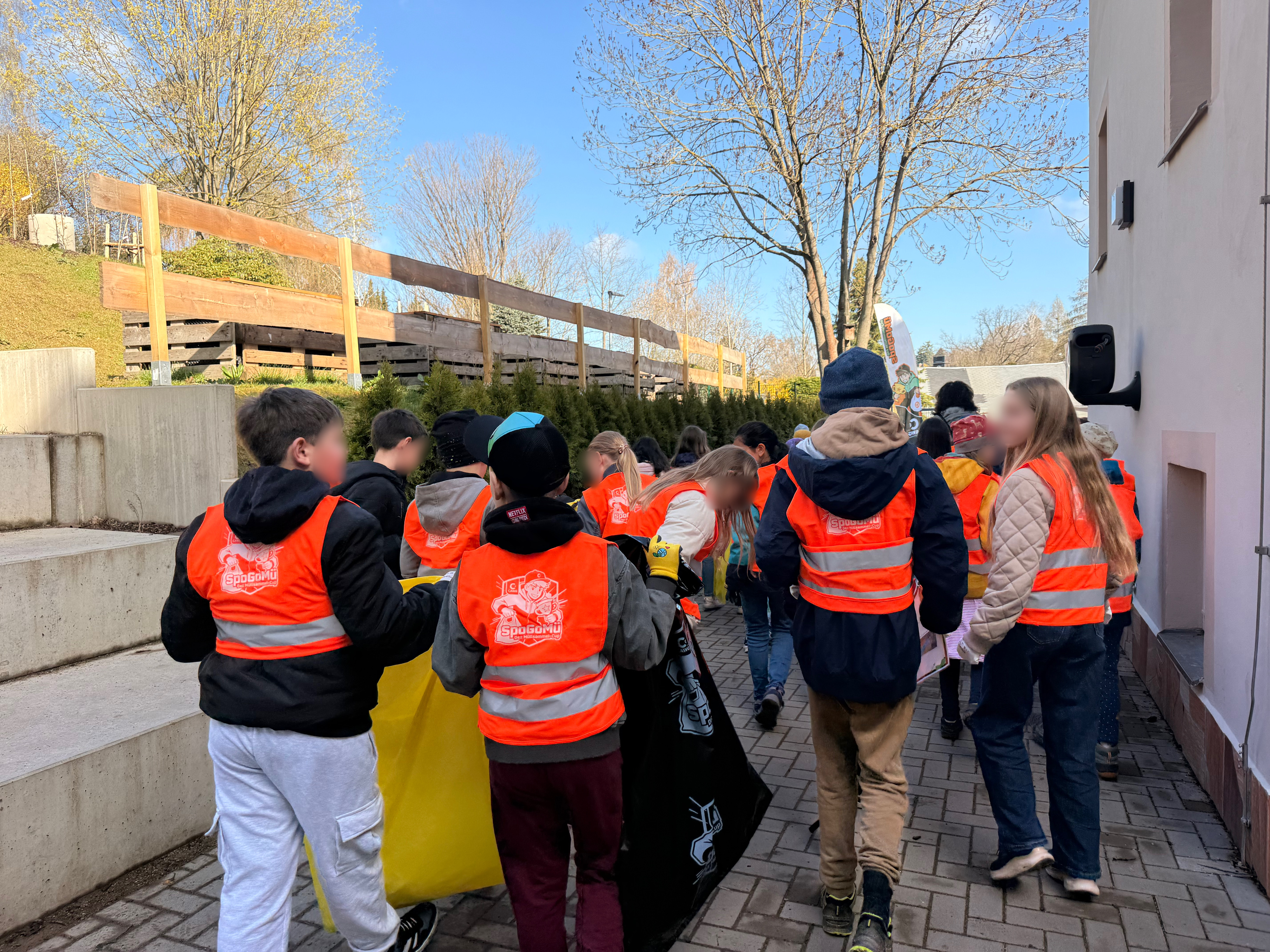
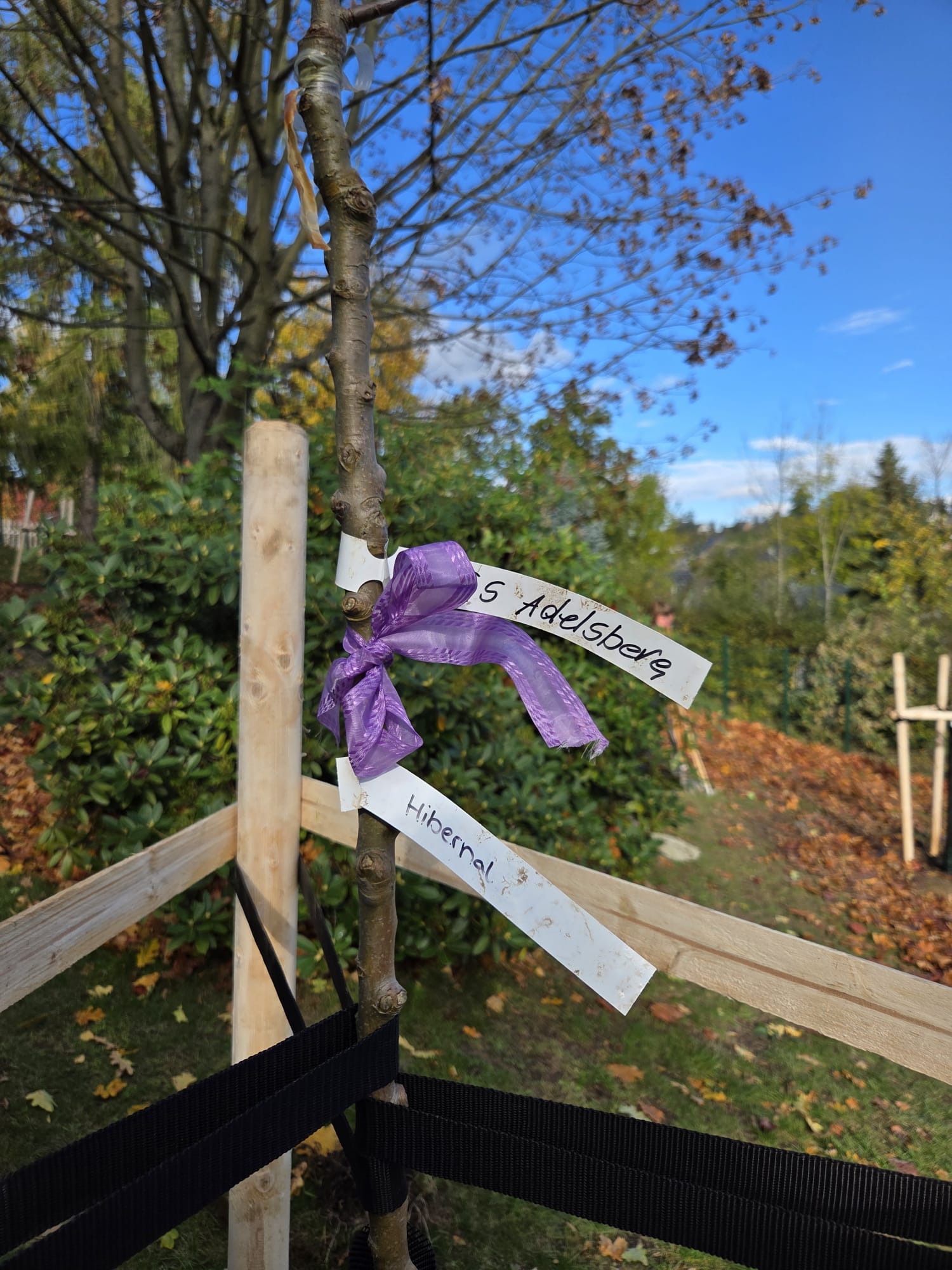
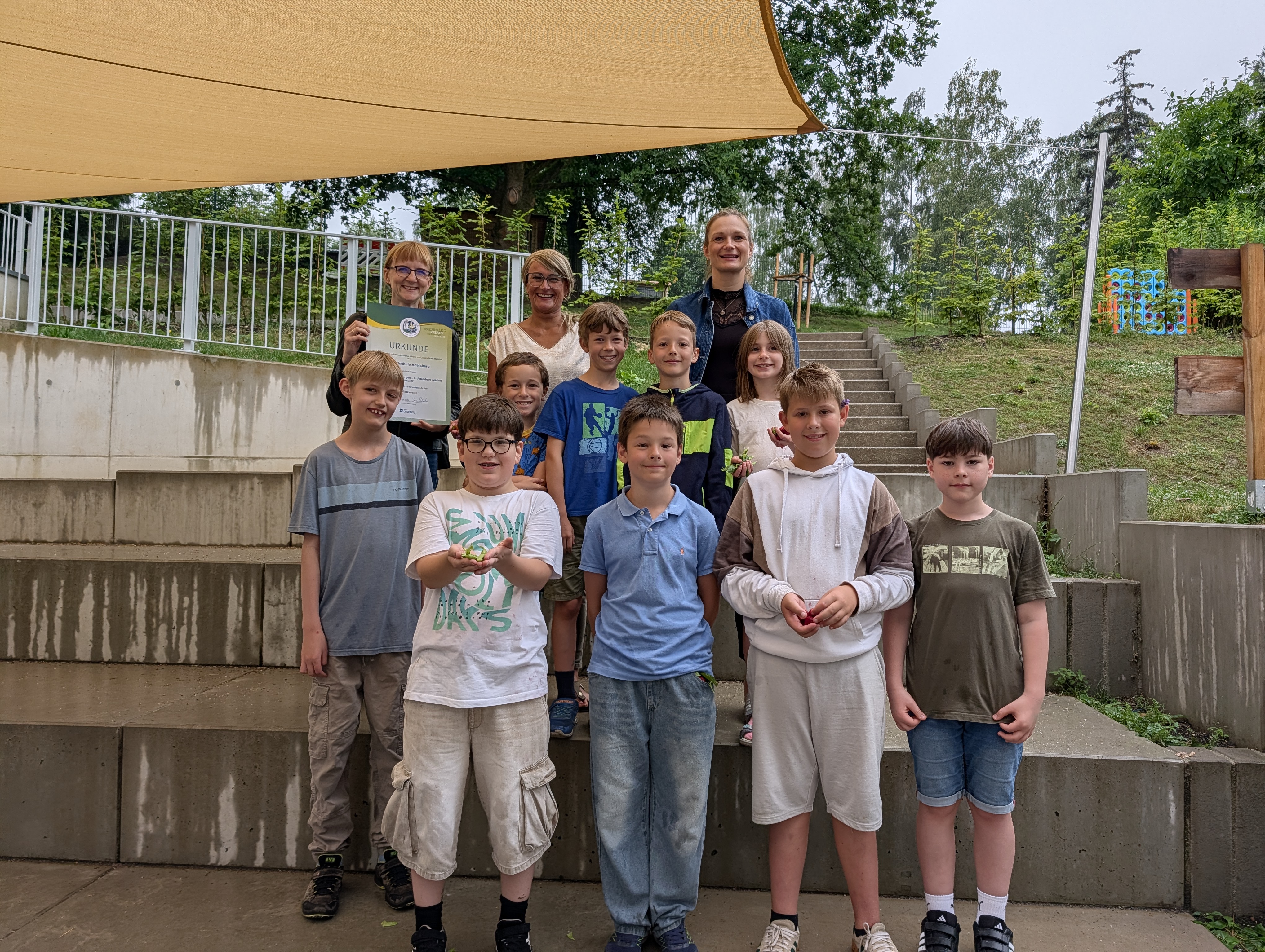
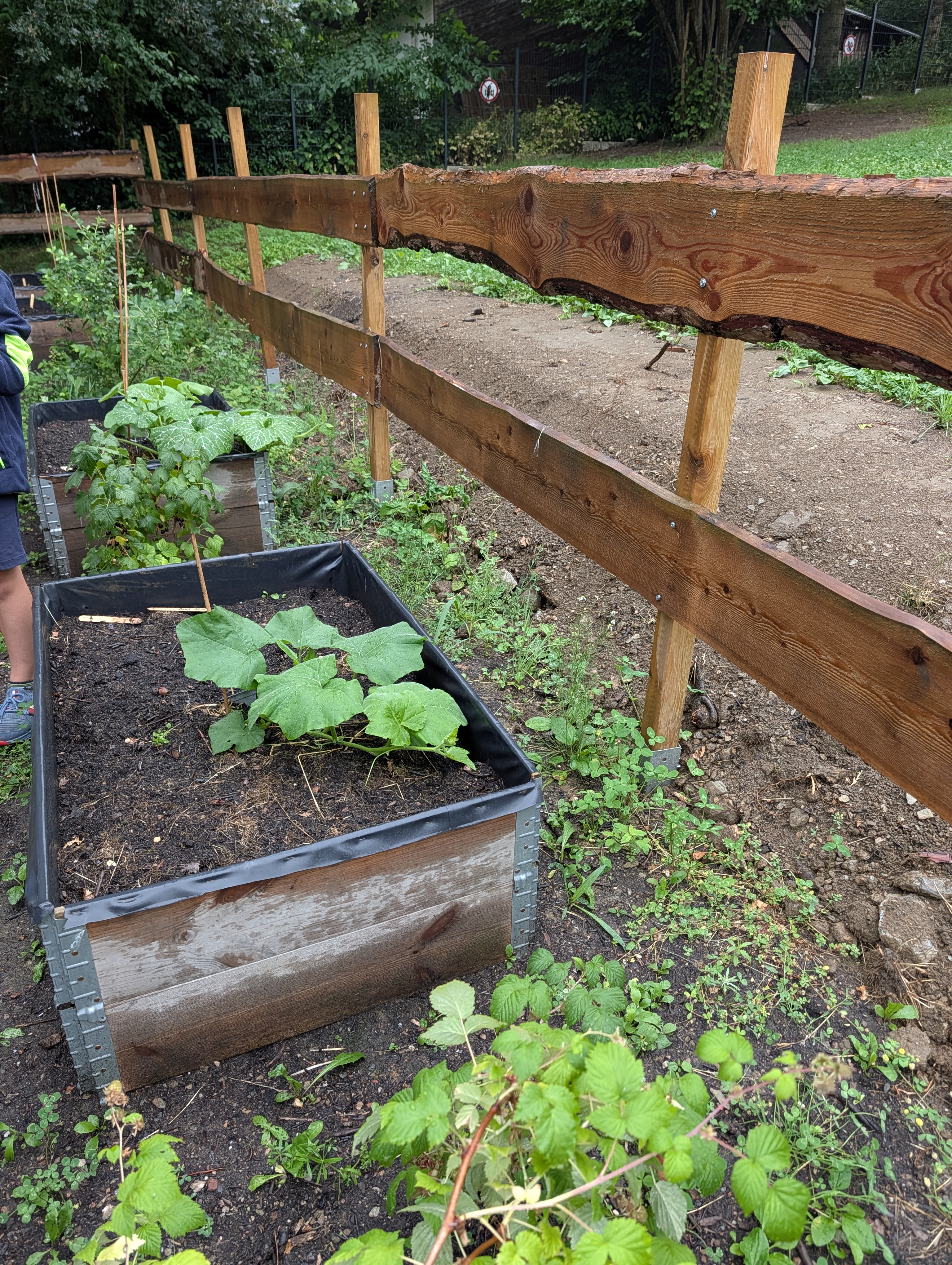
Adelsberg Primary School combines environmental education with hands-on activities. As part of the ‘Gelebte Nachbarschaft’ project, the pupils planted five apple trees, which the classes and school staff will sponsor in the long term.
Through the ‘GemüseAckerdemie’ programme, the children tend to twelve vegetable beds and five raised beds, growing vegetables, herbs and flowers whilst learning about natural cycles, plant growth and healthy eating.
In the ‘SpoGoMü’ litter-picking cup, the classes collect and sort litter around the school and learn in a playful way how environmental protection, physical activity and creativity can be combined.
Borna Primary School: Our journey to school without litter
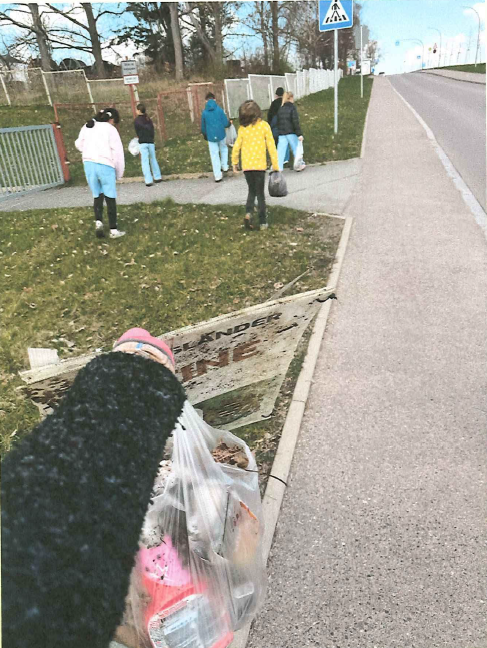
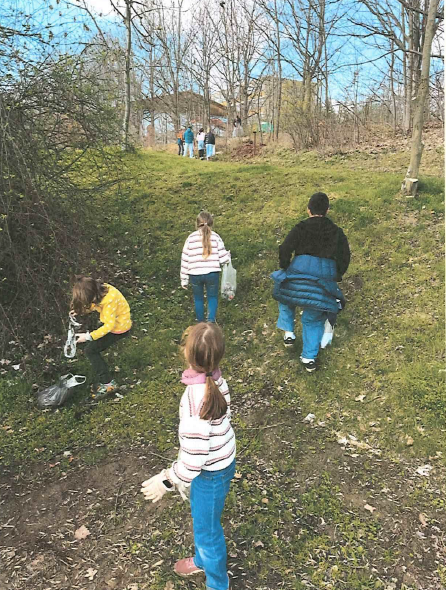
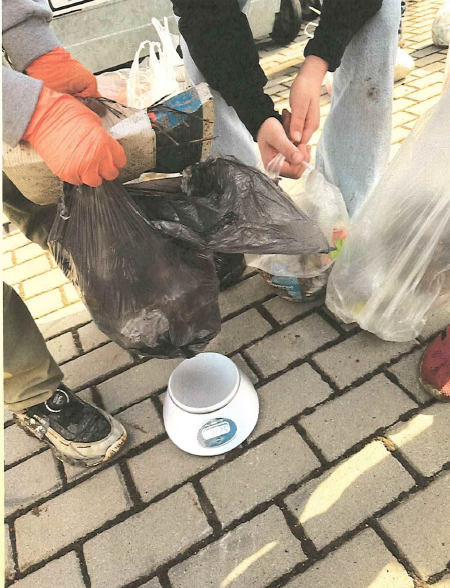
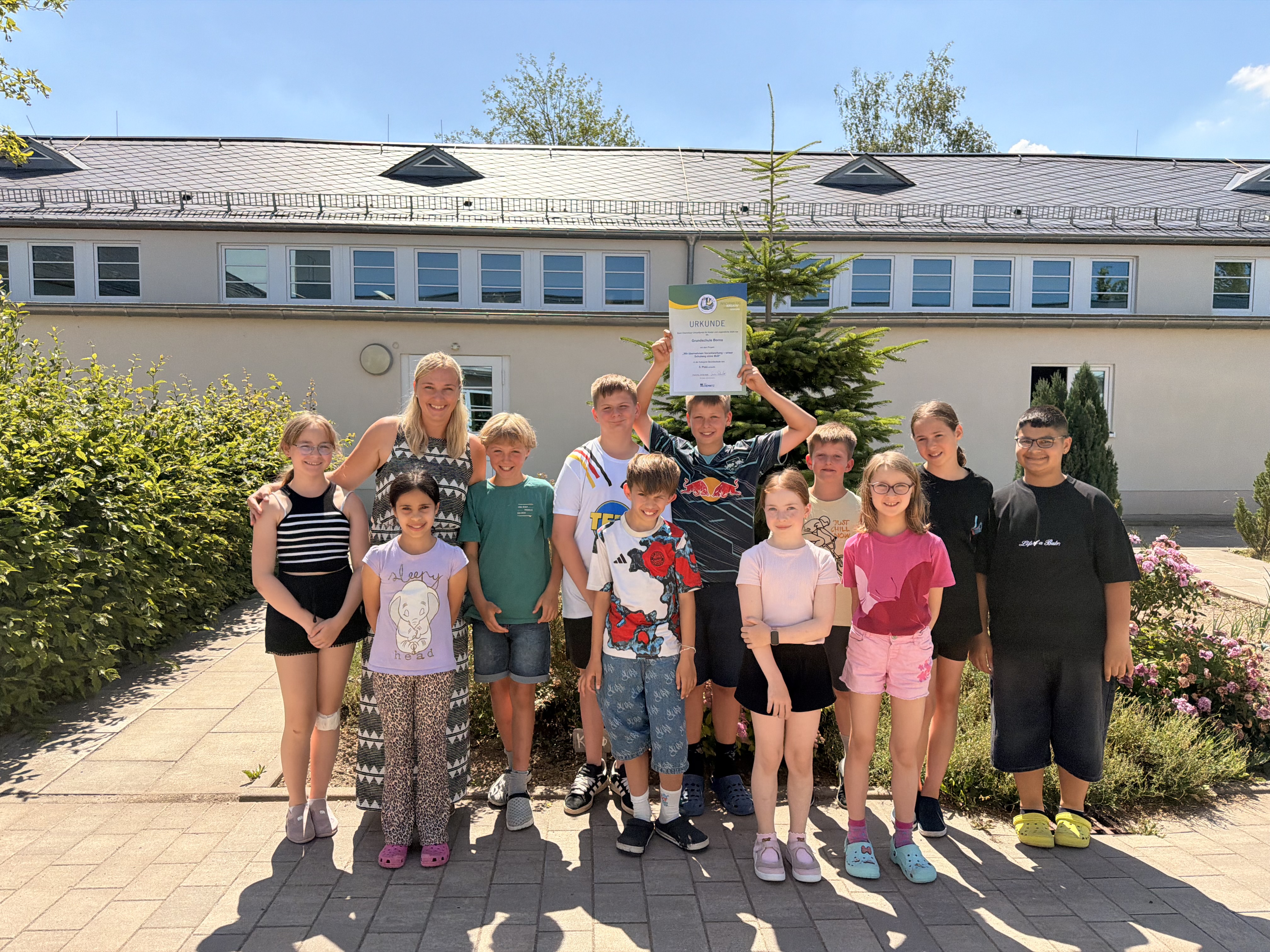
Class 4a were no longer willing to put up with the increasing amount of litter on their way to school, so they took matters into their own hands. Sixteen pupils collected coffee cups, packaging, tissues, glass bottles and even household rubbish along a stretch of around 600 metres.
In total, they cleared around 6,000 square metres of an area of approximately 16 kilograms of rubbish. Using posters they designed themselves, the children are continuing to raise awareness of the need to keep the route to school clean. The project shows that working together right on the school’s doorstep can bring about visible change.
Rabenstein Primary School After-School Club: ‘Lenni-Oscar the Raven Made from Tetrapaks’ project
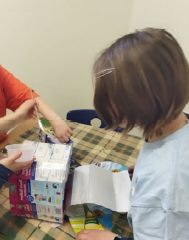
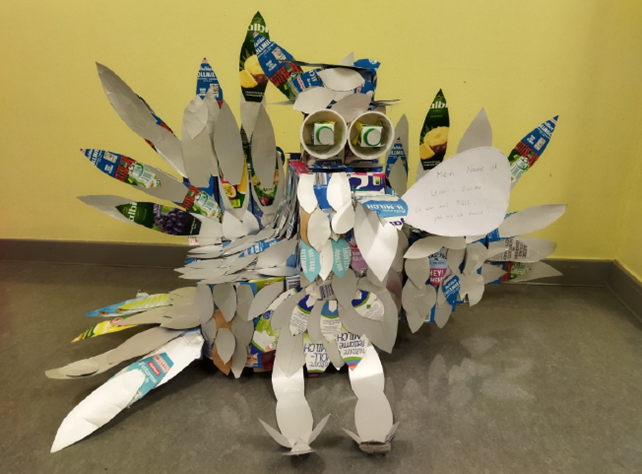
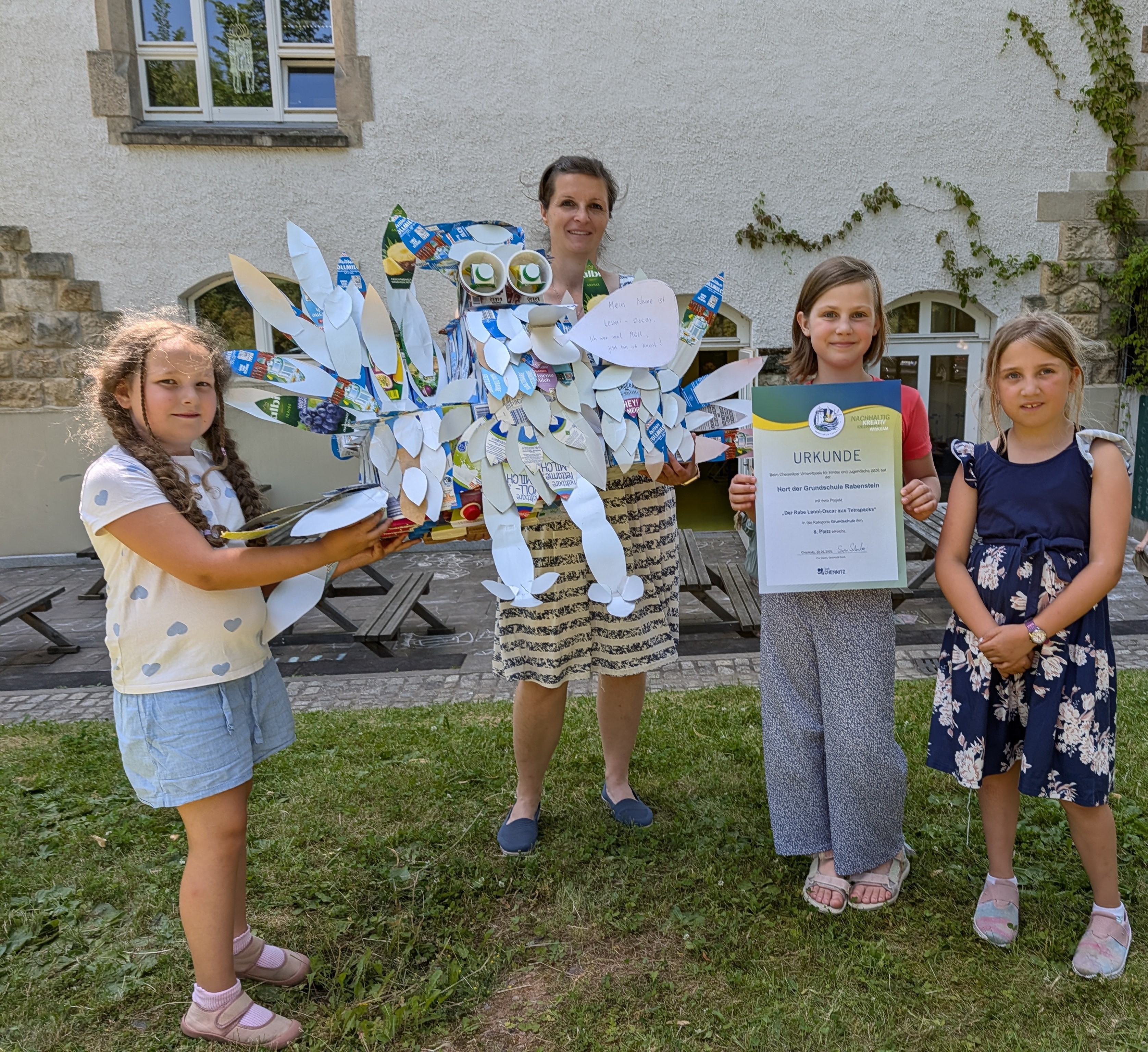
The pupils at Ebersdorf Primary School undertook an in-depth study of waste separation, recycling and waste prevention. Following a visit from the ASR, all classes collected packaging, bottles, cigarette ends and other rubbish from around the school. Subsequently, waste separation in everyday school life was improved: A waste management team checks the bins, and organic waste is composted in the school garden. The children also investigated how long different types of waste remain in the natural environment and how packaging, origin, seasonality and animal husbandry affect the ecological footprint of food.
Leonardo Independent Primary School: Project week ‘Sustainability – taking responsibility together’
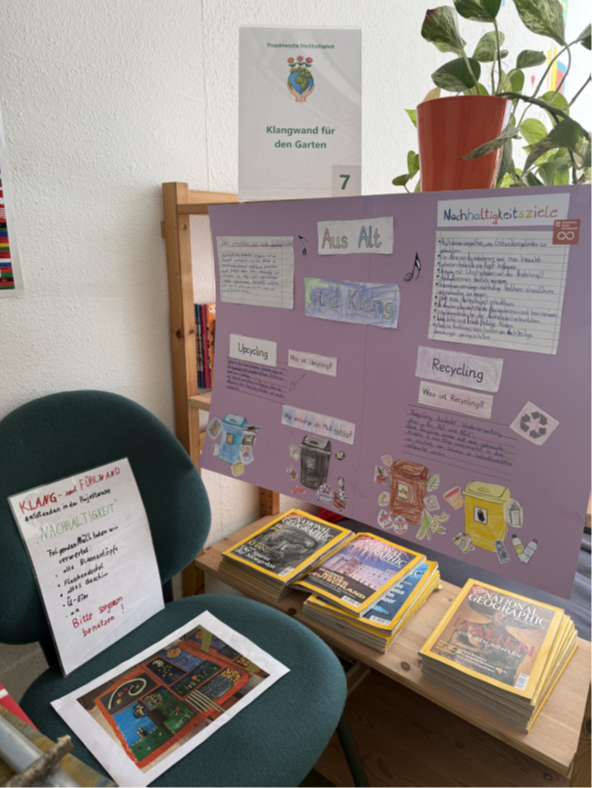
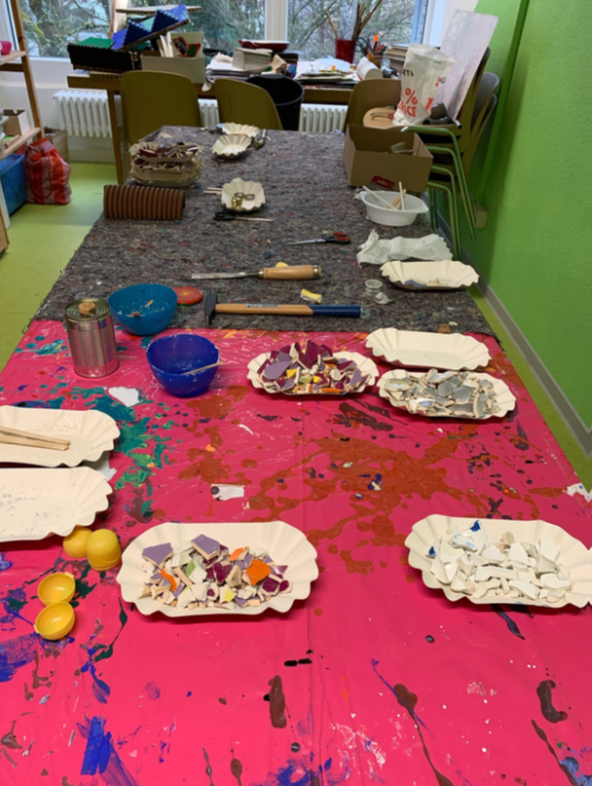
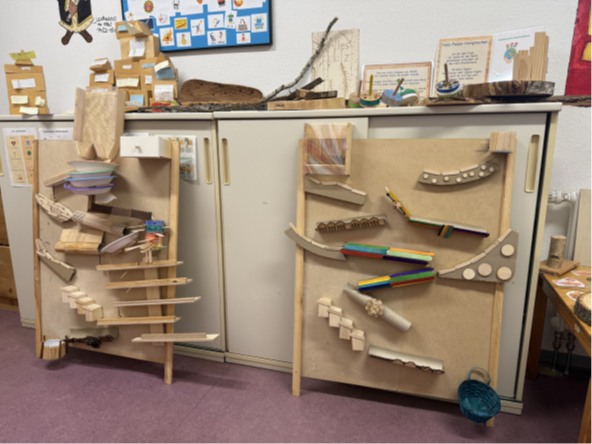
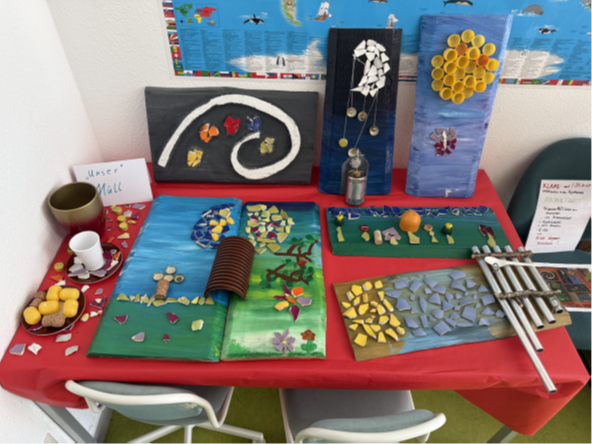
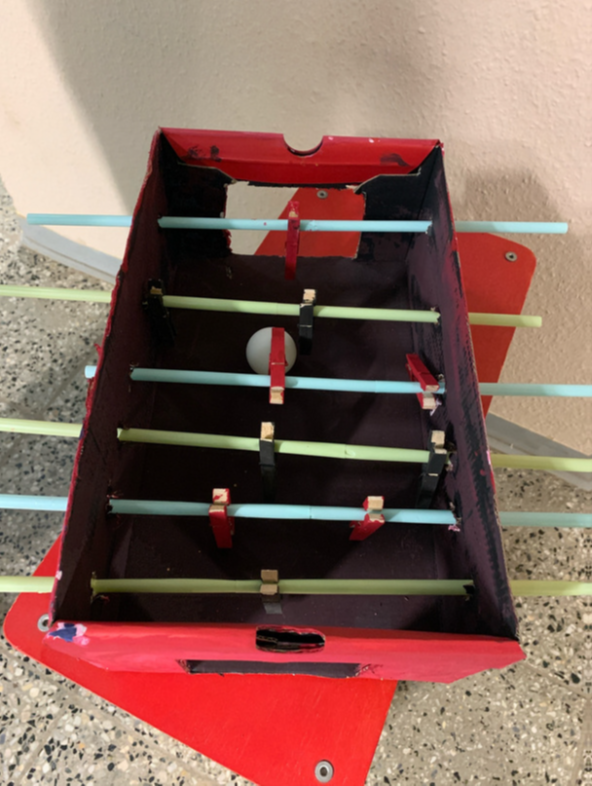
During a joint project week, the children in the nursery and Years 1 to 4 explored sustainability in a variety of ways. Working in mixed-age groups, they researched, built and experimented on topics such as waste prevention, reuse, wood, and saving energy and water.
Among other things, they used old materials to create games, a marble run and a sound and touch wall, whilst the ‘rubbish detectives’ organised a collection drive and produced a permanent guide to waste sorting. In addition, a ‘fair exchange point’ was set up where items in good condition can be passed on. Many of the outcomes of the project week have become a permanent feature of everyday school life, reminding the school community to use resources consciously.
"Am Stadtpark" After-school Club: "Recycled Slatted Compost" project
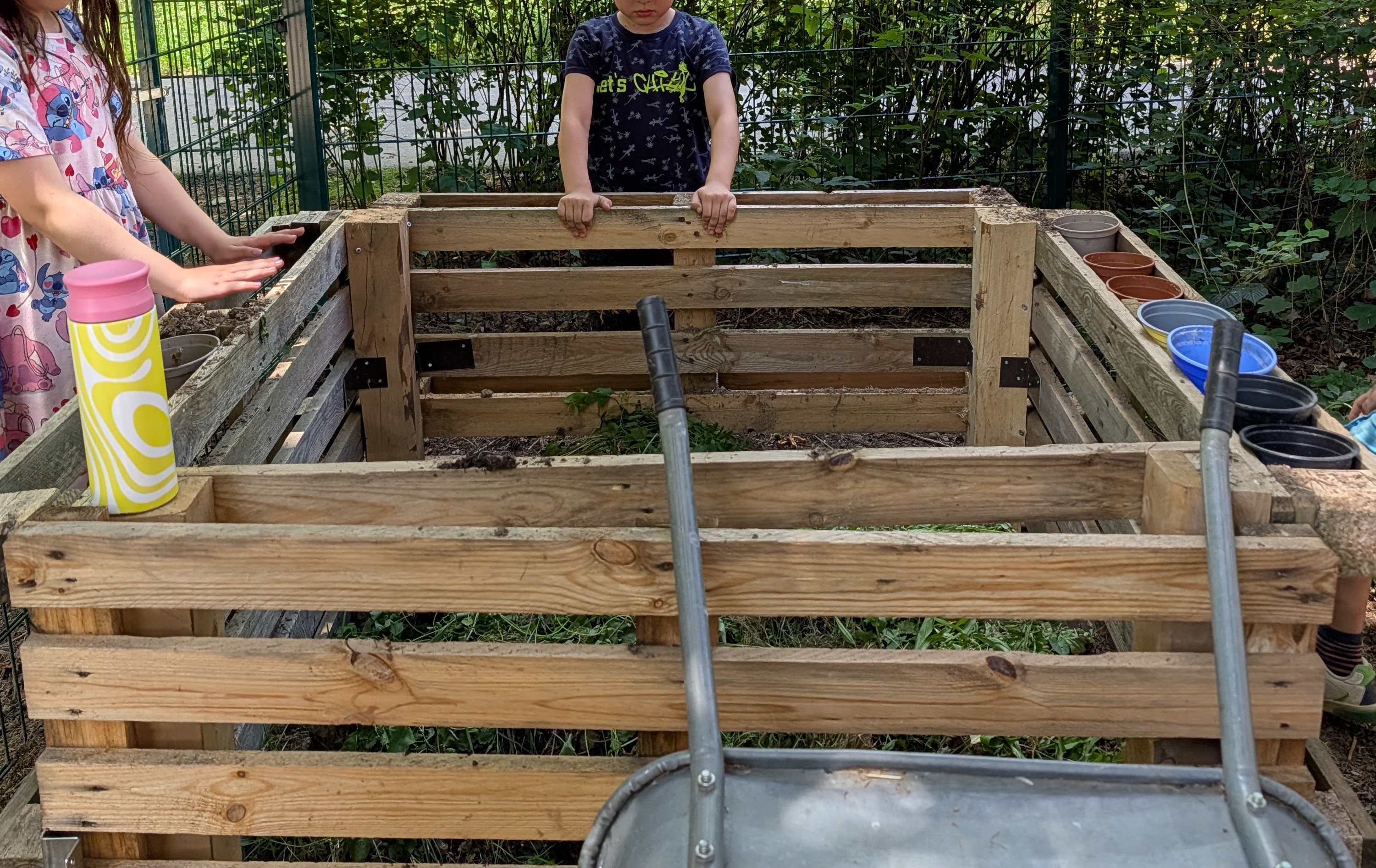
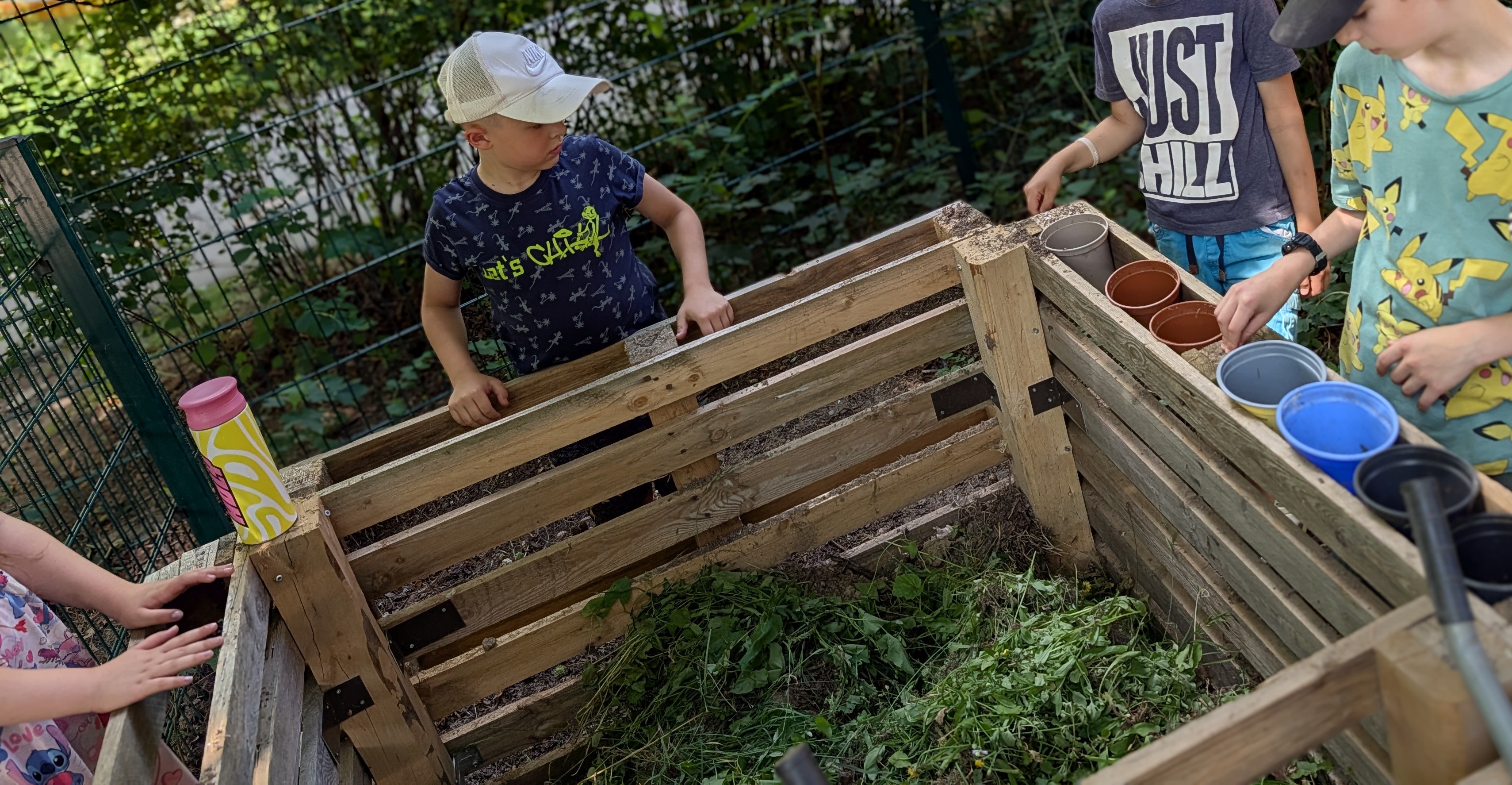
At the ‘Am Stadtpark’ after-school club, the children helped to build a new compost bin for the club’s own kitchen garden. They used old wood donated by families, giving it a new lease of life. The children planned the structure, measured out the pieces of wood, cut them to size and assembled the compost bin using nails and screws. It was then filled with the first batch of organic waste from the after-school club’s daily routine. In addition, the children set up their own collection bin for compostable waste and designed a sign explaining how to fill it correctly.
In this way, the project combines upcycling, waste sorting and the natural recycling of organic waste in a very practical way
Borna Primary School: the ‘Everything in the Bin’, ‘Everything is Transient!?’ and ‘Clean Chemnitz’ projects
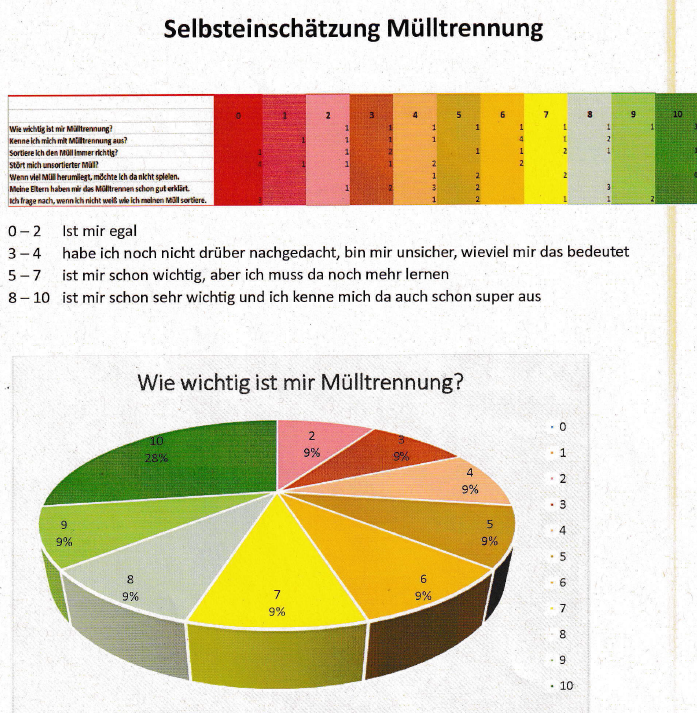
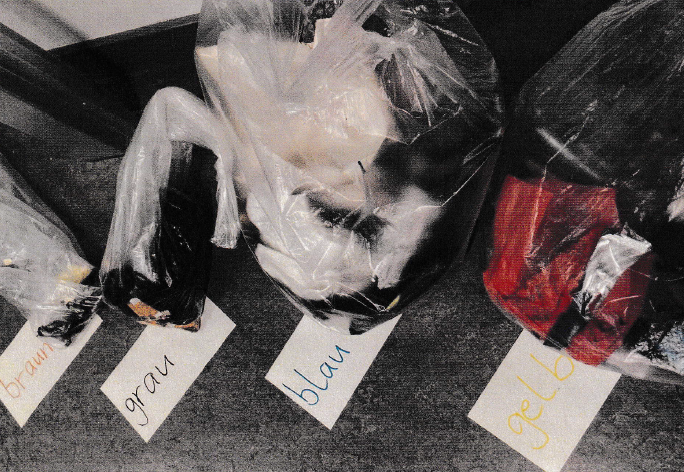
The ‘Everything in the Bin’ project
In the “Everything in the Bin” project, the pupils engaged intensively with the topic of proper waste sorting. They first assessed their own knowledge and then, through play, checked which types of waste belong in which bins. To ensure the topic remained a visible part of everyday school life, the children designed creative ‘rubbish monsters’ featuring slogans of their own choosing for the waste bins in the classrooms. In this way, knowledge about recycling and waste separation was combined with creativity and a sense of personal responsibility.
Project “Is everything temporary!?”
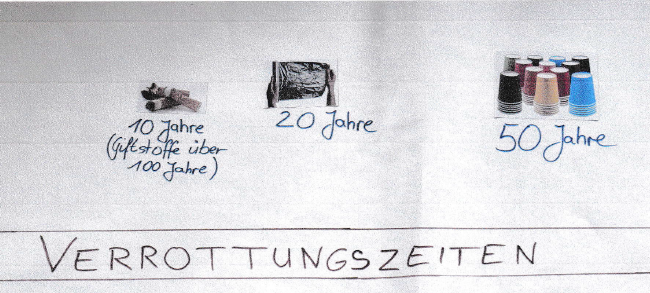
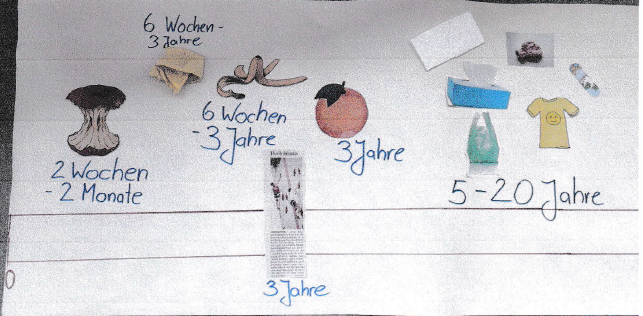
How long does rubbish actually remain in our environment, and what impacts are not immediately visible? The pupils explored these questions through various experiments. They investigated the decomposition times of different types of waste, built their own water filters and, using dust collectors and light, explored where dust and pollution are found in the school and its surroundings. This made it abundantly clear that much waste remains in the natural environment for a very long time, and that clean water, clean air and the responsible management of waste cannot be taken for granted.
‘Clean Chemnitz’ project
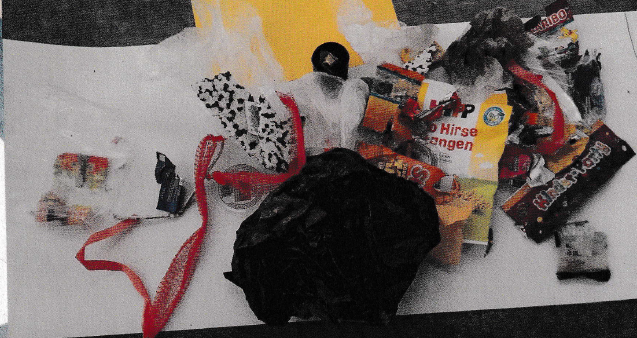
As part of the ‘Clean Chemnitz’ project, the pupils carried out a practical investigation into just how clean the school grounds and their surroundings actually are. Equipped with maps, bin bags, gloves and litter pickers, they searched for litter carelessly discarded, documented the existing bins and then sorted their finds. In doing so, they discovered that there is a lot of litter lying around even in places where there are plenty of bins. The initiative made it clear that a clean environment does not depend solely on bins, but on the responsible behaviour of every individual.
EL ZWO Children’s and Youth Club and Contact Plus at Haus Liddy: ‘Let’s Make It Colourful Together’ project
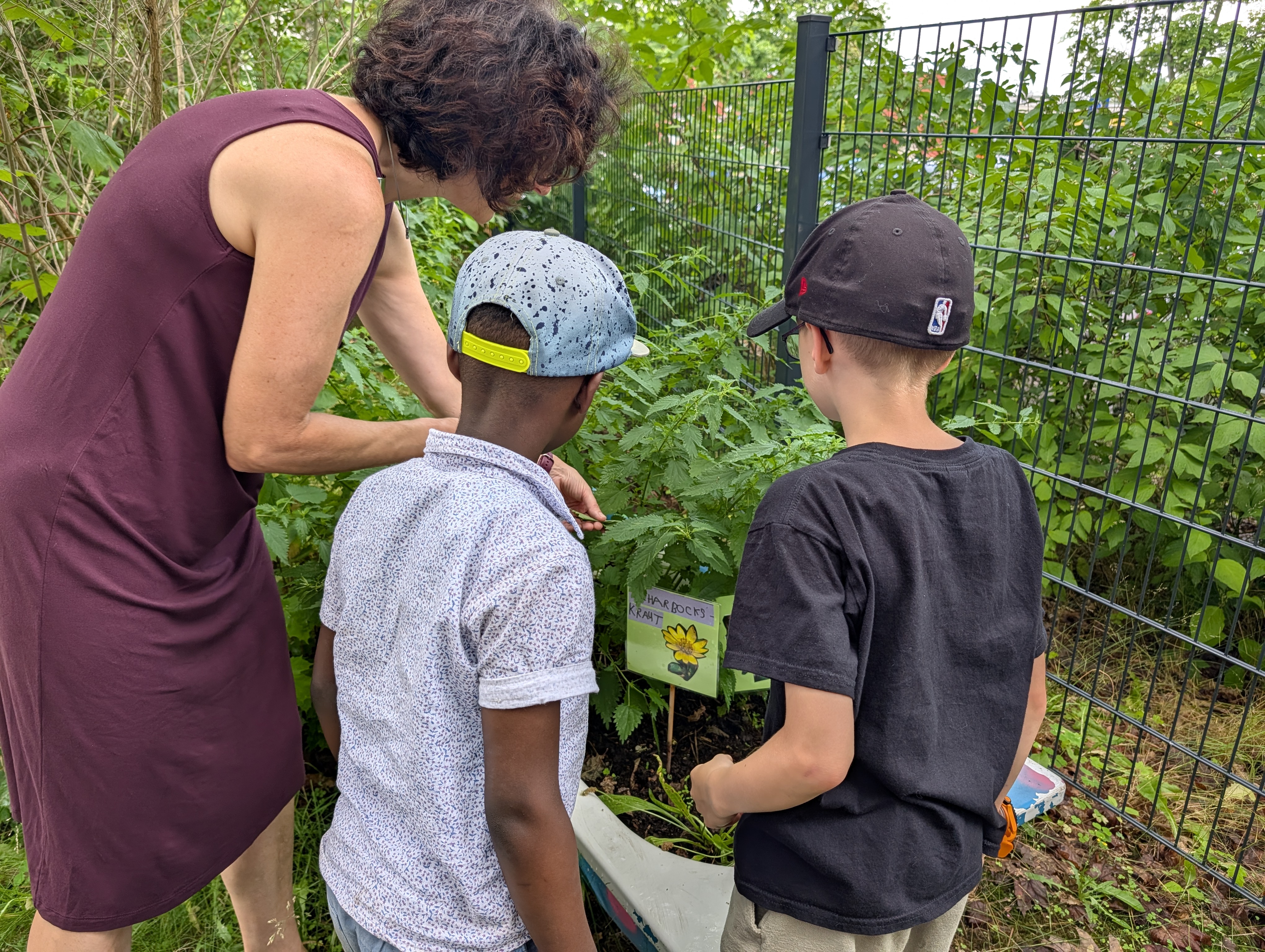
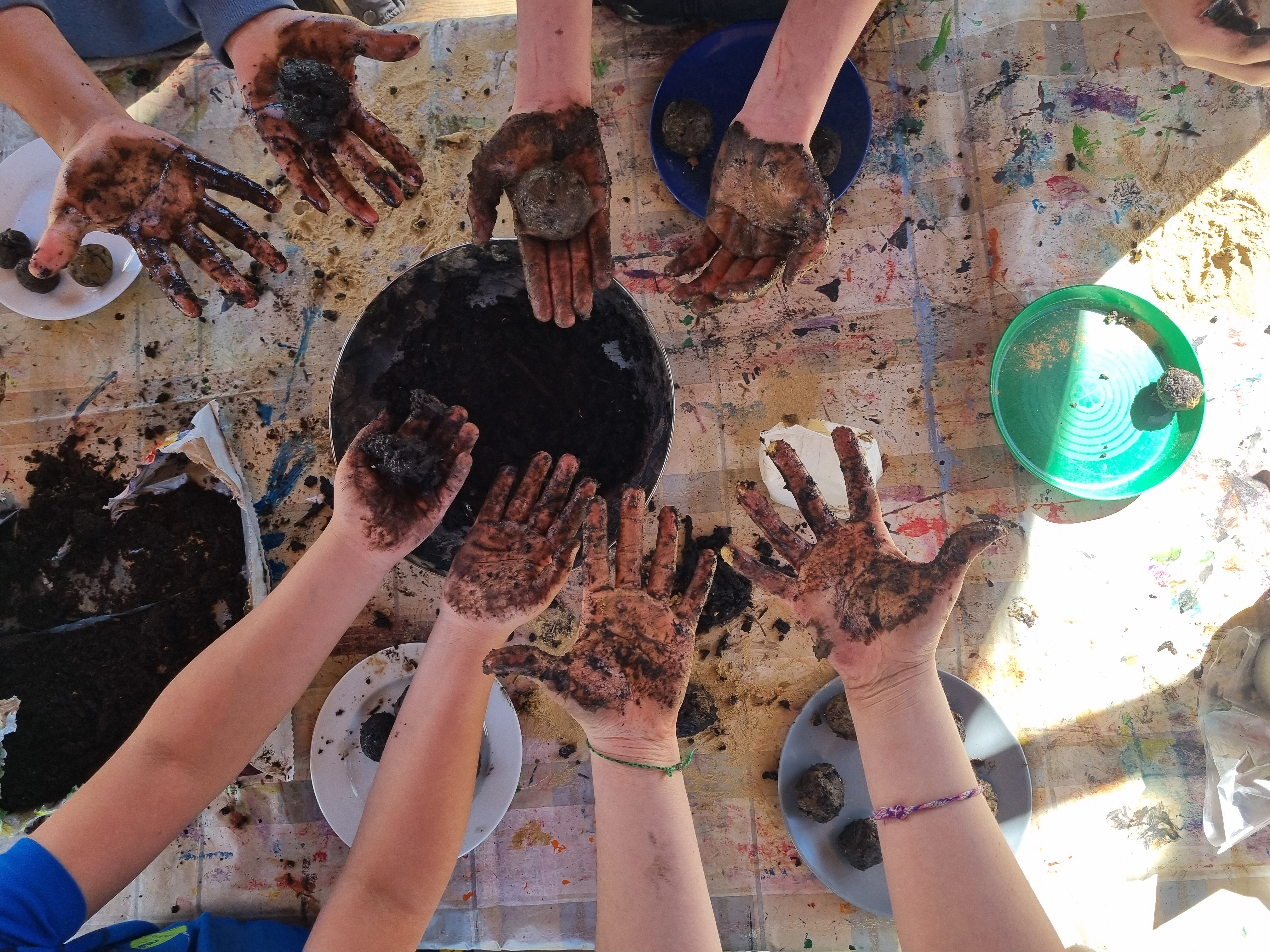
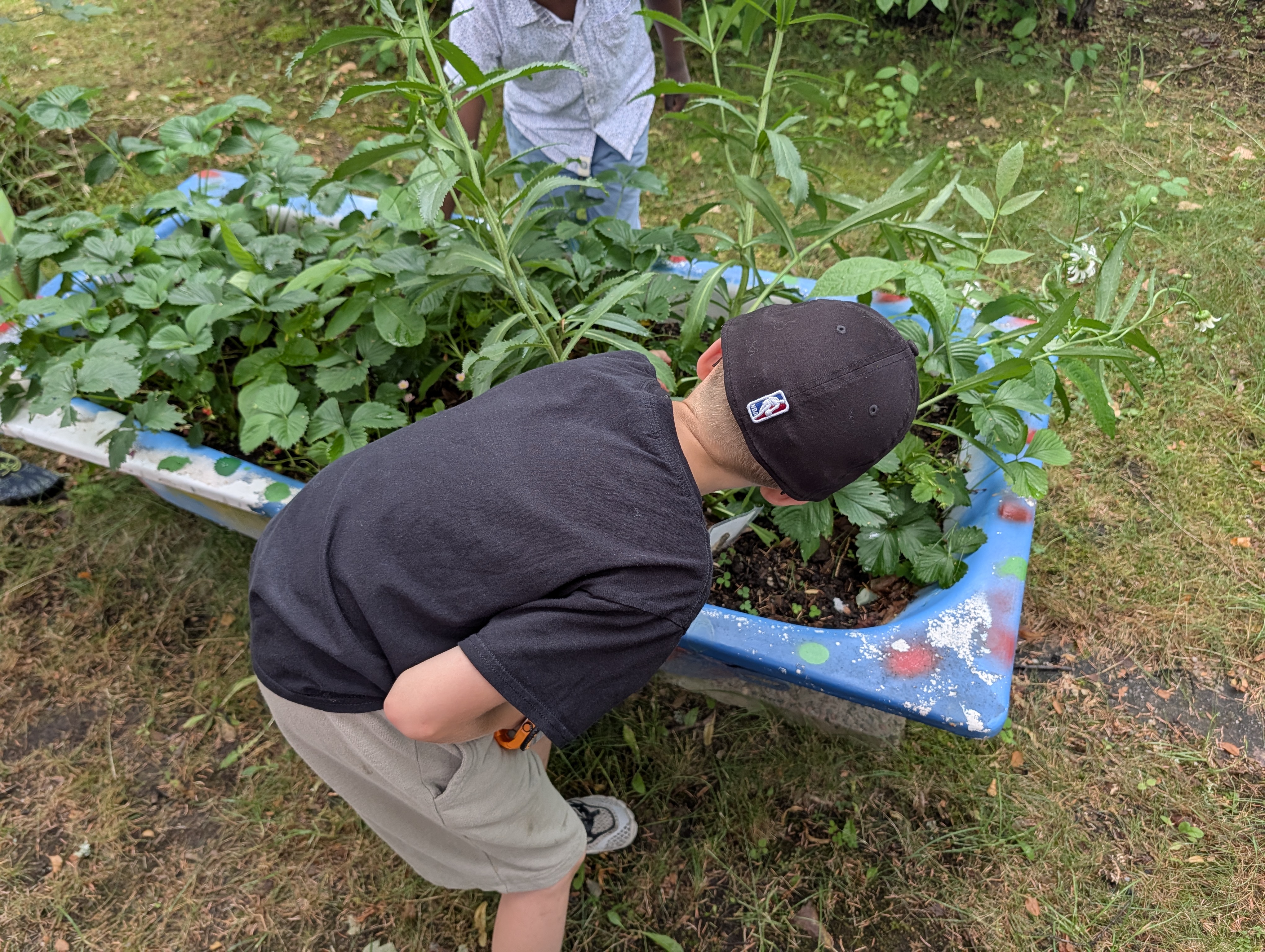
Through the ‘Gemeinsam wird’s bunt’ project, children and young people are working together to make Haus Liddy and its outdoor areas more nature-friendly and diverse. They are sowing flowers and herbs for the raised beds, making seed balls and learning about the compost and its animal inhabitants. Plans also include a wildflower meadow and a joint flowerpot project with the Creative Centre and local gardeners. Through planting, exploring and designing together, the participants experience nature first-hand and learn how they themselves can contribute to biodiversity and the sustainable design of their surroundings.
Terra Nova Campus – the Discovery School: Projects – ‘Our Deadwood Pile’
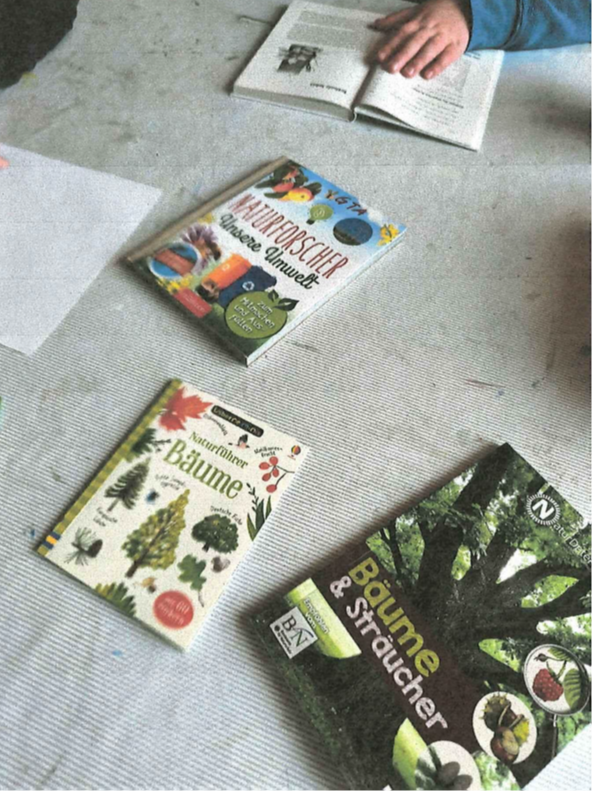
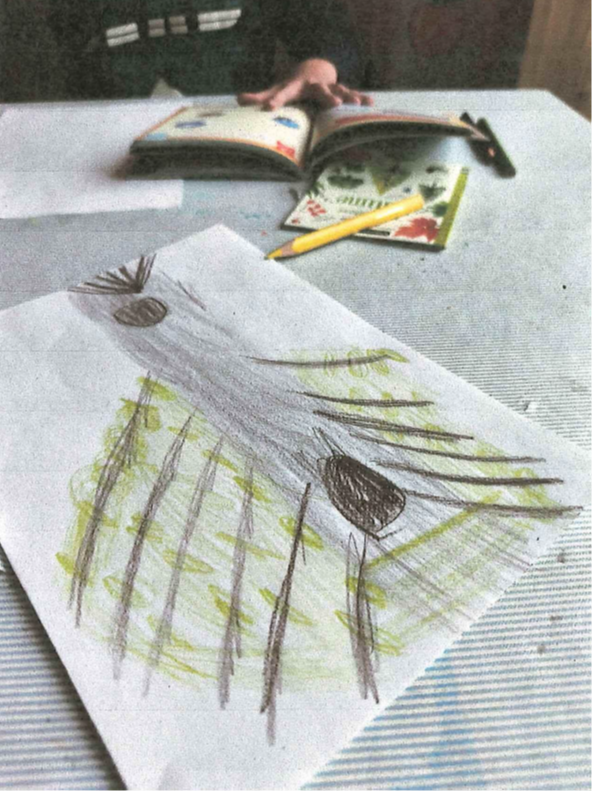
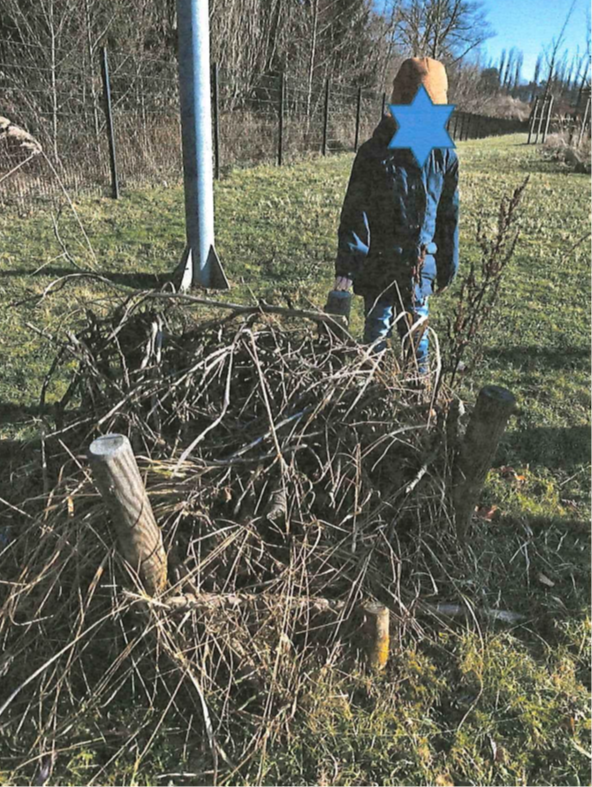
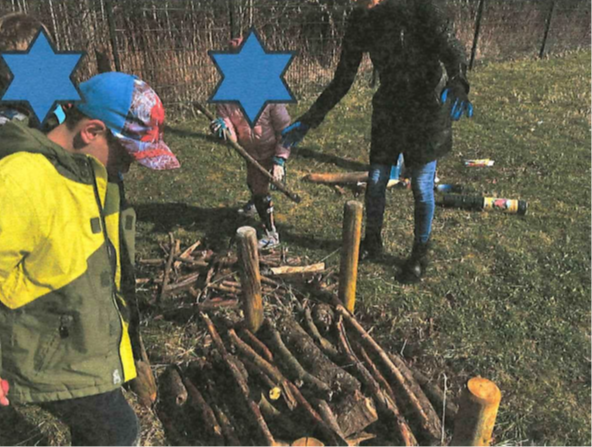
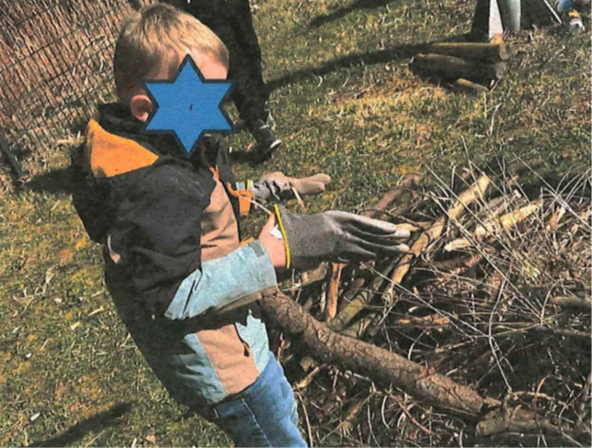
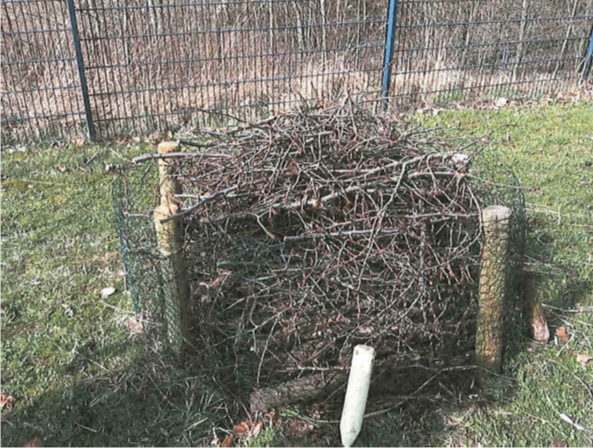
The ‘Nature Lovers’ group at Terra Nova Campus discovered an old, badly collapsed pile of dead wood on the school grounds and decided to rebuild it. First, the pupils researched in books and online to find out about the importance of deadwood as a habitat for beetles, spiders, worms, mosses and other small creatures. They then planned the new location and, with the support of the caretakers, built a new deadwood pile using branches of varying thicknesses and other natural materials.
In addition, the children designed an information board and built a model featuring animals they had made themselves. This not only created a new habitat on the school grounds, but also served as a vivid learning environment for nature conservation and species protection.
Valentina Tereshkova Primary School: Project Week on Education for Sustainable Development
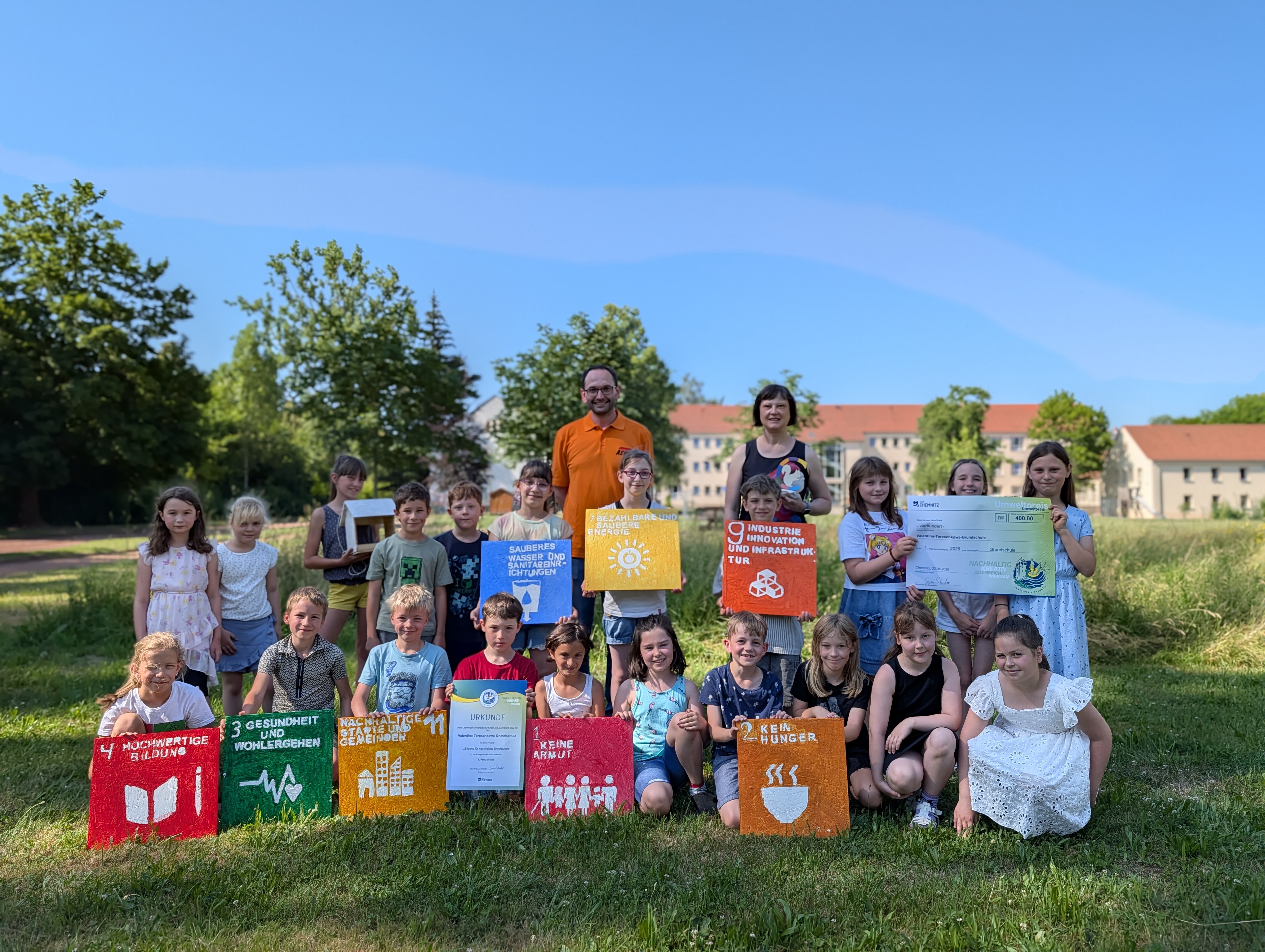
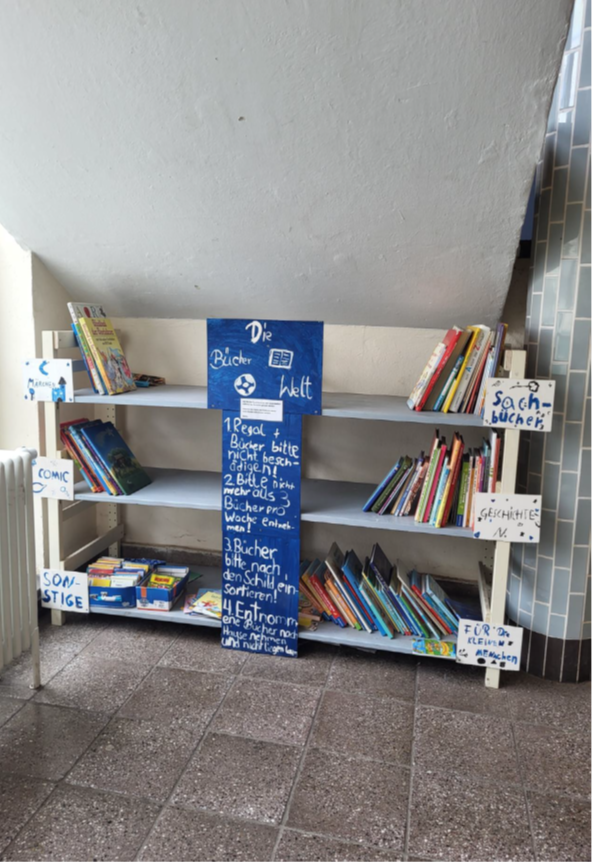
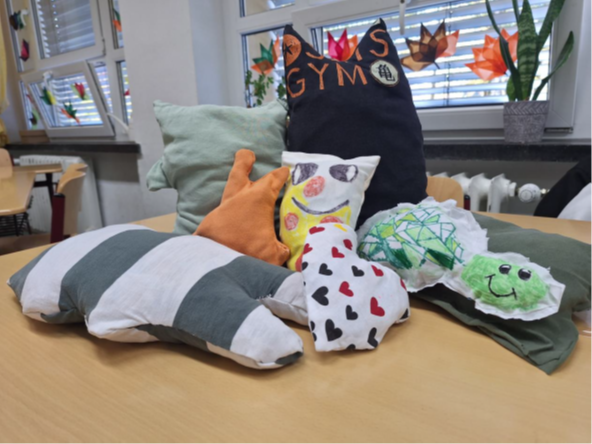
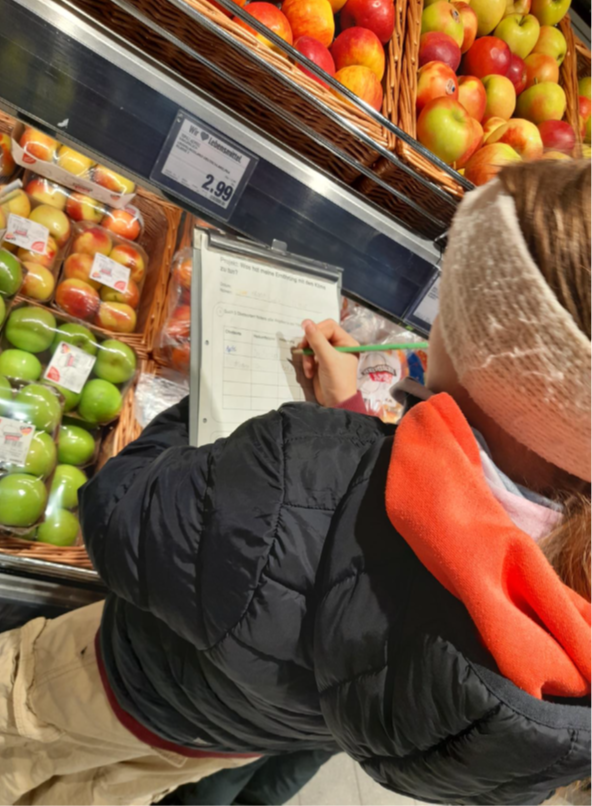
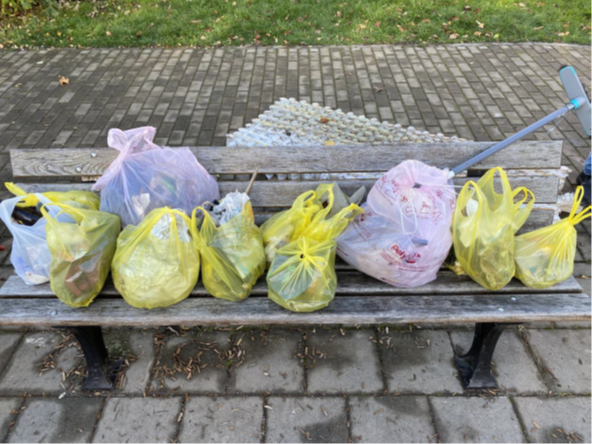
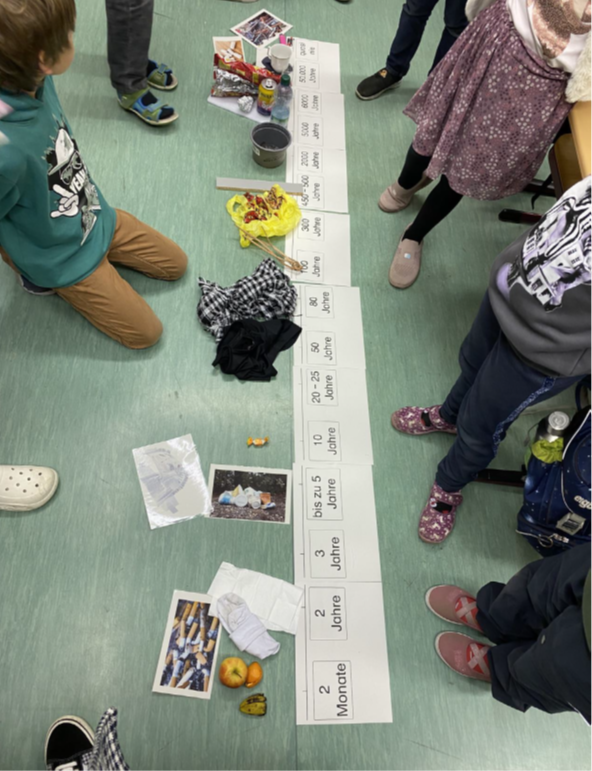
During a school-wide project week, children in Years 1 to 4 explored sustainable development in a variety of practical ways. Numerous workshops covered topics including waste and upcycling, the protection of birds and bees, climate-friendly eating, mindful use of clothing, and nature and climate conservation. The children built bird feeders and a book-swap cupboard, sewed new cushions from old clothes, collected and sorted rubbish, and made their own juice from locally grown apples.
Five apple trees planted on the school grounds are also being looked after by the school community. The project week is set to take place annually in future, with the aim of permanently embedding sustainable thinking and action into everyday school life.
Chemnitz Waldorf School: ‘Year 3’s walk-through insect hotel’
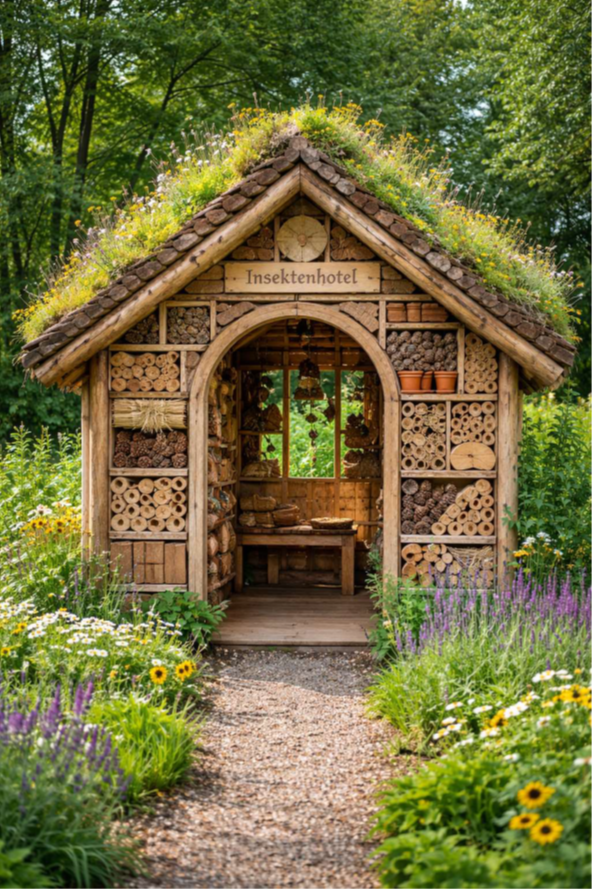
Year 3 at the Waldorf School in Chemnitz have planned a walk-in insect hotel for their three-week building project. The project is currently still in the preparatory phase.
The plan is for each child to first study a specific insect in depth and then use this knowledge to design a suitable habitat for the future insect hotel. The aim is to create areas for wild bees, beetles, butterflies and other beneficial insects.
Wherever possible, natural and locally sourced materials will be used for the construction. The project is also designed with the long term in mind: the pupils wish to look after, maintain and further develop the insect hotel until they leave school. Subsequent year groups will then continue the project, thereby creating a permanent learning and living space.
Rosa Luxemburg Primary School: ‘By Bees, for Bees – the Bee Class Raises Awareness’ project
The 23 children in Class 1a, the ‘Bee Class’, want to campaign for the protection of bees and inform others about their important role in nature. They are planning to produce a brochure they have designed themselves, featuring facts, drawings and the children’s thoughts. They also want to build bee watering stations and make seed bombs containing bee-friendly plants. There are also plans to create a bee-friendly flower bed in the school playground, which will provide a long-term food source for insects whilst also serving as a learning space for other classes.
The project has already been developed jointly by the Year 1 pupils and is due to be put into practice in the coming school year.
Projects in the Grades 5–8 category
DPFA Secondary School and Grammar School: ‘Sustainability, Waste and Environmental Protection’ project
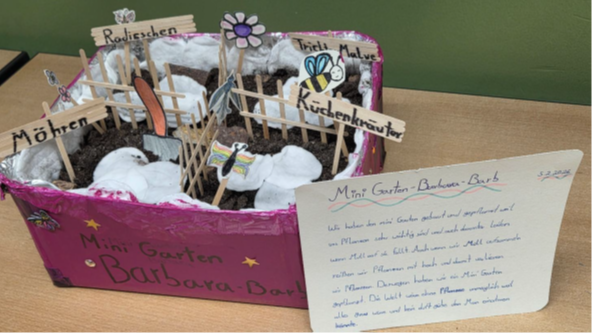
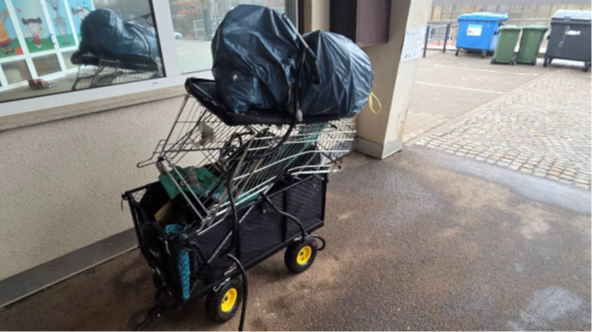
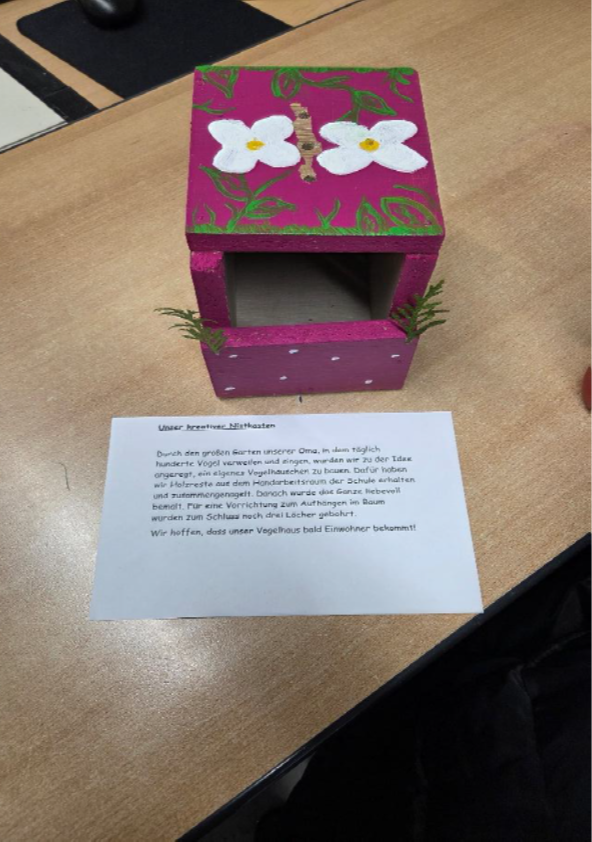
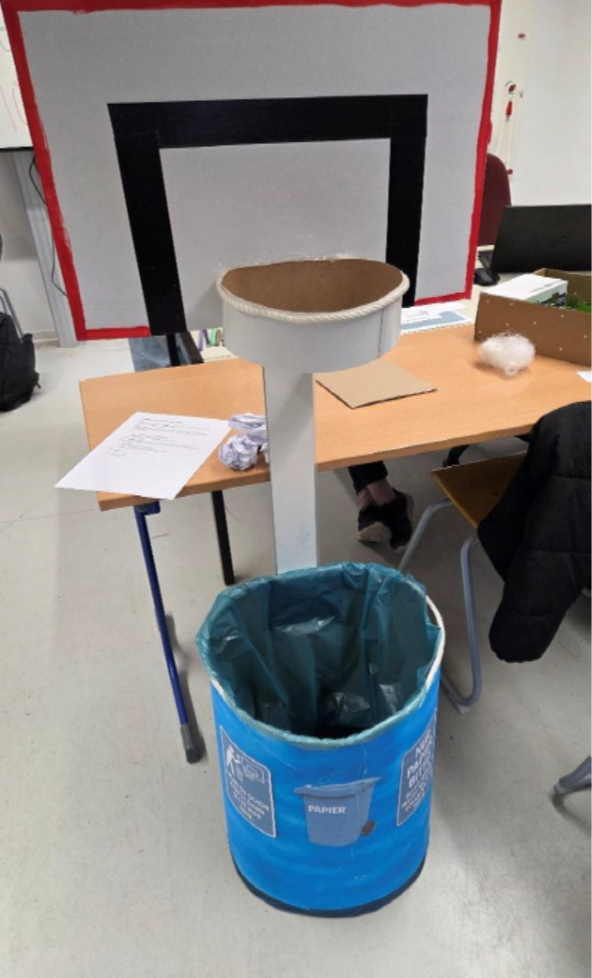
During the project days, 13 pupils from Years 5 to 8 explored various aspects of sustainability and environmental protection. Among other things, they explored marine pollution, endangered and protected animal species, and upcycling, and captured their ideas in posters and creative projects. They also built a nesting box, a mini-garden and a homemade wastepaper basket.
During a litter-picking campaign around the school grounds, the pupils collected a large amount of rubbish, which they then sorted and disposed of correctly together. In this way, the project combined knowledge, creativity and practical action for a clean environment.
Dr Wilhelm André Grammar School, Chemnitz: Project ‘Discover the future of digital pets and learn to code’
As part of a two-day project week, 28 pupils in Years 5 and 6 created their own digital pets using the Scratch programme. In doing so, they combined programming with topics relating to sustainability and environmental education. The digital characters were designed, for example, to offer tips on saving energy and reducing waste, to provide short environmental quizzes or educational games, and to motivate pupils to tackle sustainability challenges in their everyday lives. Ideas such as reward systems and a personalised ‘environmental status’ were also developed.
In this way, the pupils learnt how digital media can be used to convey knowledge about climate protection and sustainable behaviour in a playful way.
Chemnitz Partner School: ‘C The green’ project
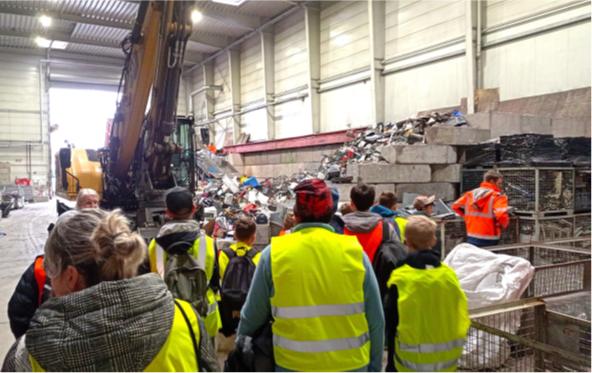
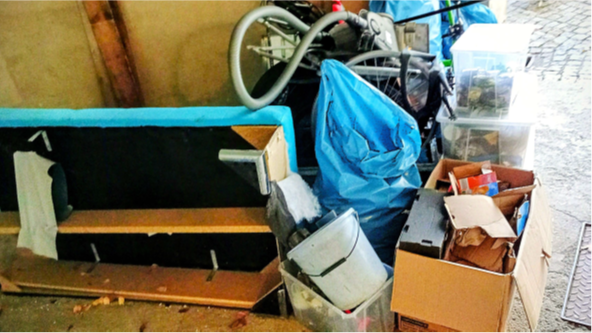
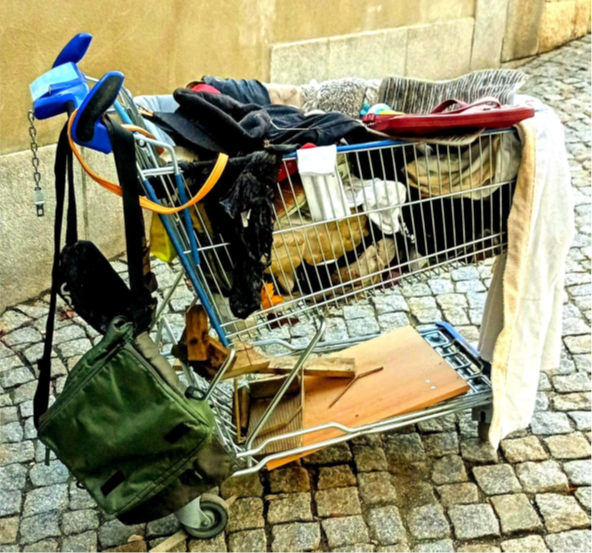
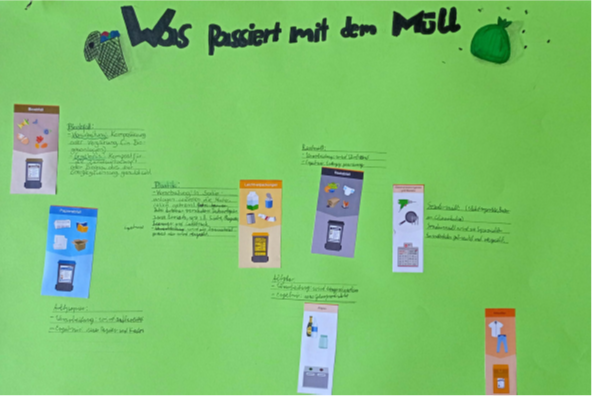
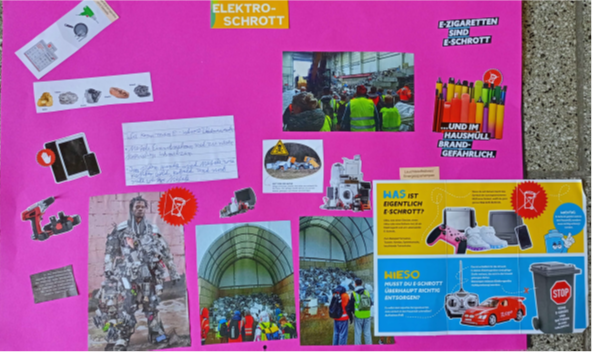
As part of a project week, pupils in Years 5 to 9 explored the issues of litter, recycling and the consequences of environmental pollution in their own neighbourhood. Prompted by the increasing amount of litter in the areas around their school and homes, they first learnt about different types of waste, their environmental impact and recycling. During a site visit, they also gained an insight into the recycling of electronic waste.
The focus then shifted to practical action: the pupils planned their own collection areas and carried out litter-picking campaigns lasting several days in the school’s surroundings, in the Reitbahnviertel neighbourhood and in the Park of the Victims of Fascism. Among other things, they collected car tyres, electronic waste, textiles, packaging, returnable bottles and numerous cigarette ends. The items found were sorted, documented and finally presented in an exhibition. The project demonstrated just how much the pupils can achieve in practical terms for a cleaner Chemnitz through their joint efforts.
Anthony, Year 8: ‘Collecting rubbish for a clean forest’ project
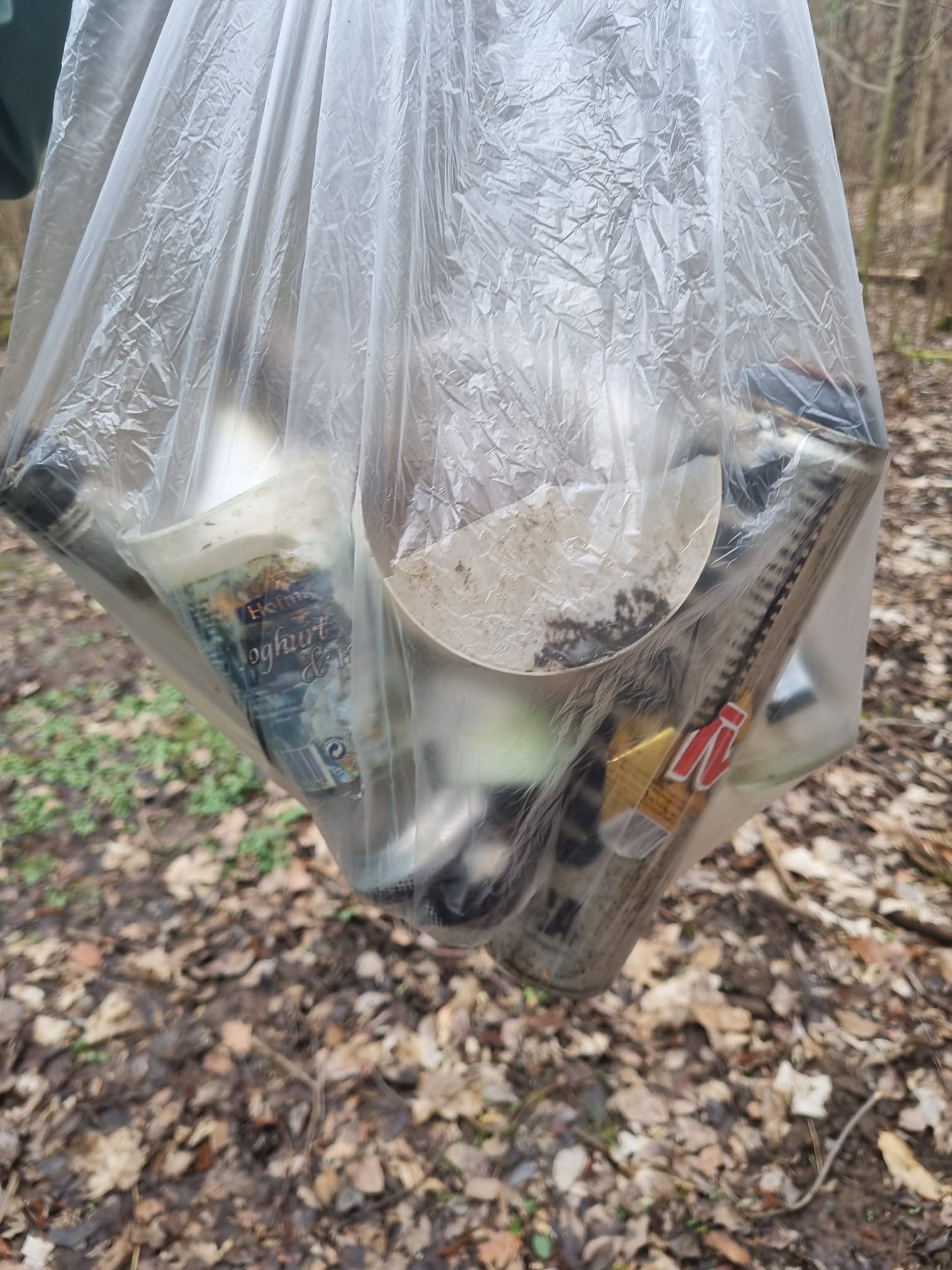
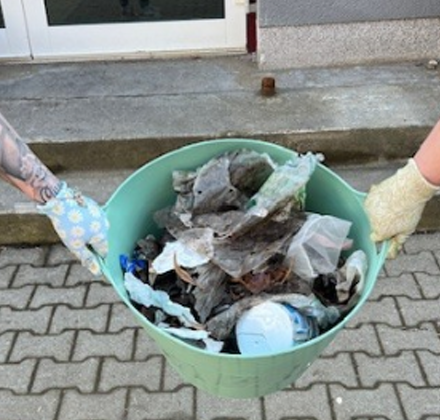
As part of the project, the Zeisigwald was literally cleared of litter that had been carelessly discarded. Equipped with gloves and bin bags, the volunteers collected items including plastic bottles, packaging and old tins. In the end, they had collected several full bags of rubbish.
The initiative demonstrated first-hand how individual commitment can help to keep an important natural and recreational area in Chemnitz clean. At the same time, it raised awareness that protecting the environment starts with each and every one of us, and that even small actions can make a visible difference.
Projects in the category ‘Years 9 to 12 and young people up to the age of 20’
Terra Nova Campus – The Discovery School: ‘Pupils Take Action’ project
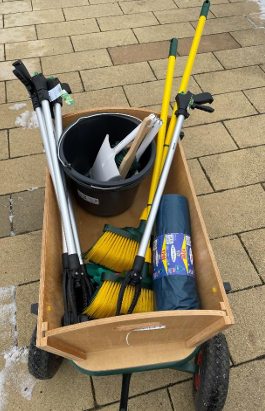
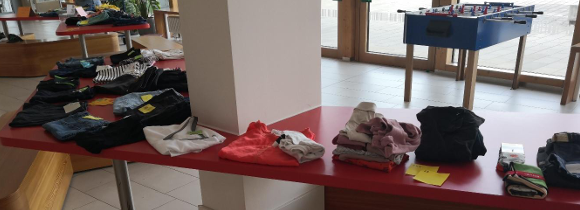
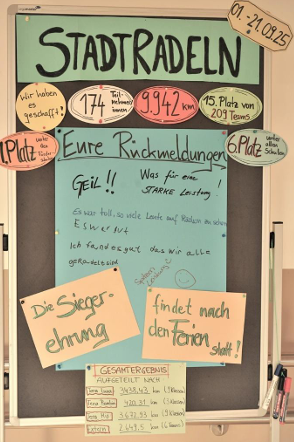
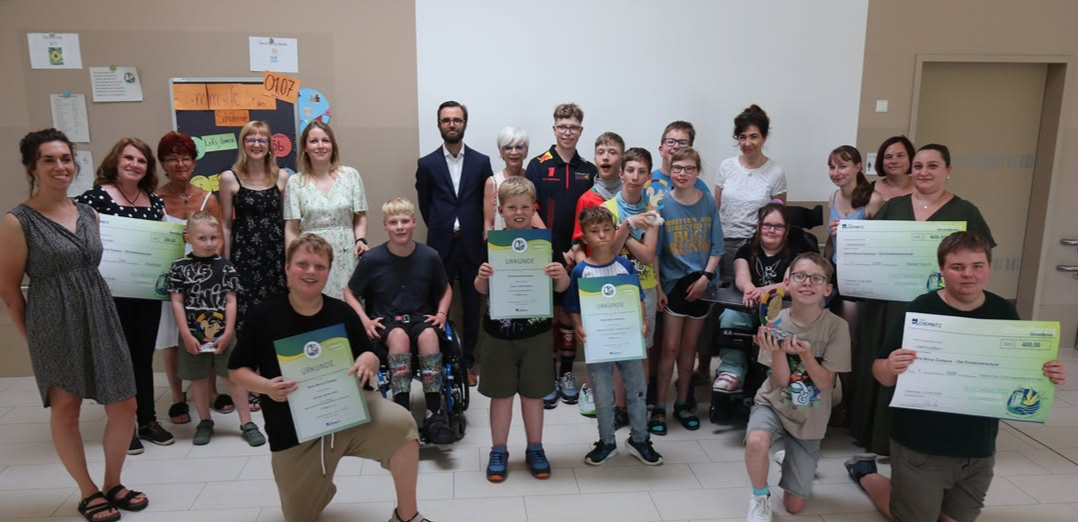
In the optional course ‘Pupils Take Action’, pupils explore environmental, climate and sustainability issues and organise their own initiatives for the school community. They donated the prize money they won at last year’s Chemnitz Environment Award to the ‘Franz von Assisi’ animal shelter. During the 2025/2026 school year, their activities included helping to organise the ‘STADTRADELN’ cycle challenge, making prizes from old bicycle parts, and exploring the issues of fast fashion and resource conservation as part of a clothes flea market. In addition, they took part in climate and sustainability events and are planning further initiatives such as a spring clean on the Sonnenberg and an Environment Day.
In this way, the young people experience first-hand how they can make a difference with their ideas and commitment.
SSA gGmbH – Vocational Schools Lene Voigt: Workshop ‘Let’s talk about menstruation and the environment’
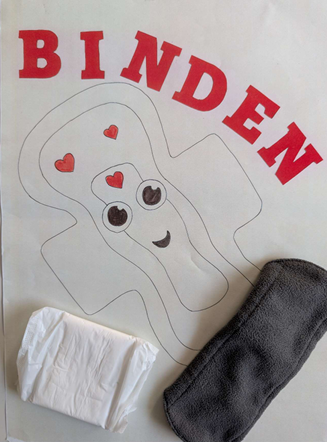
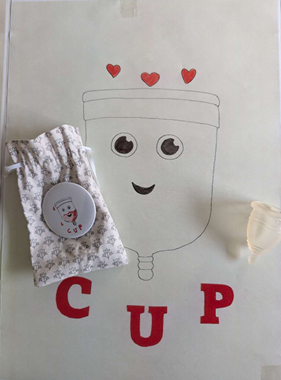
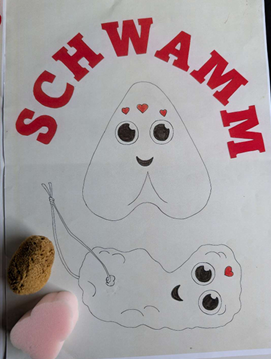
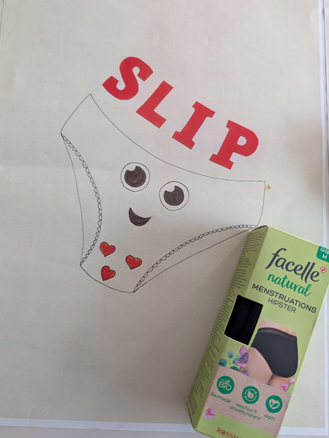
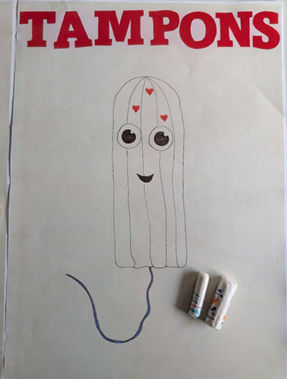
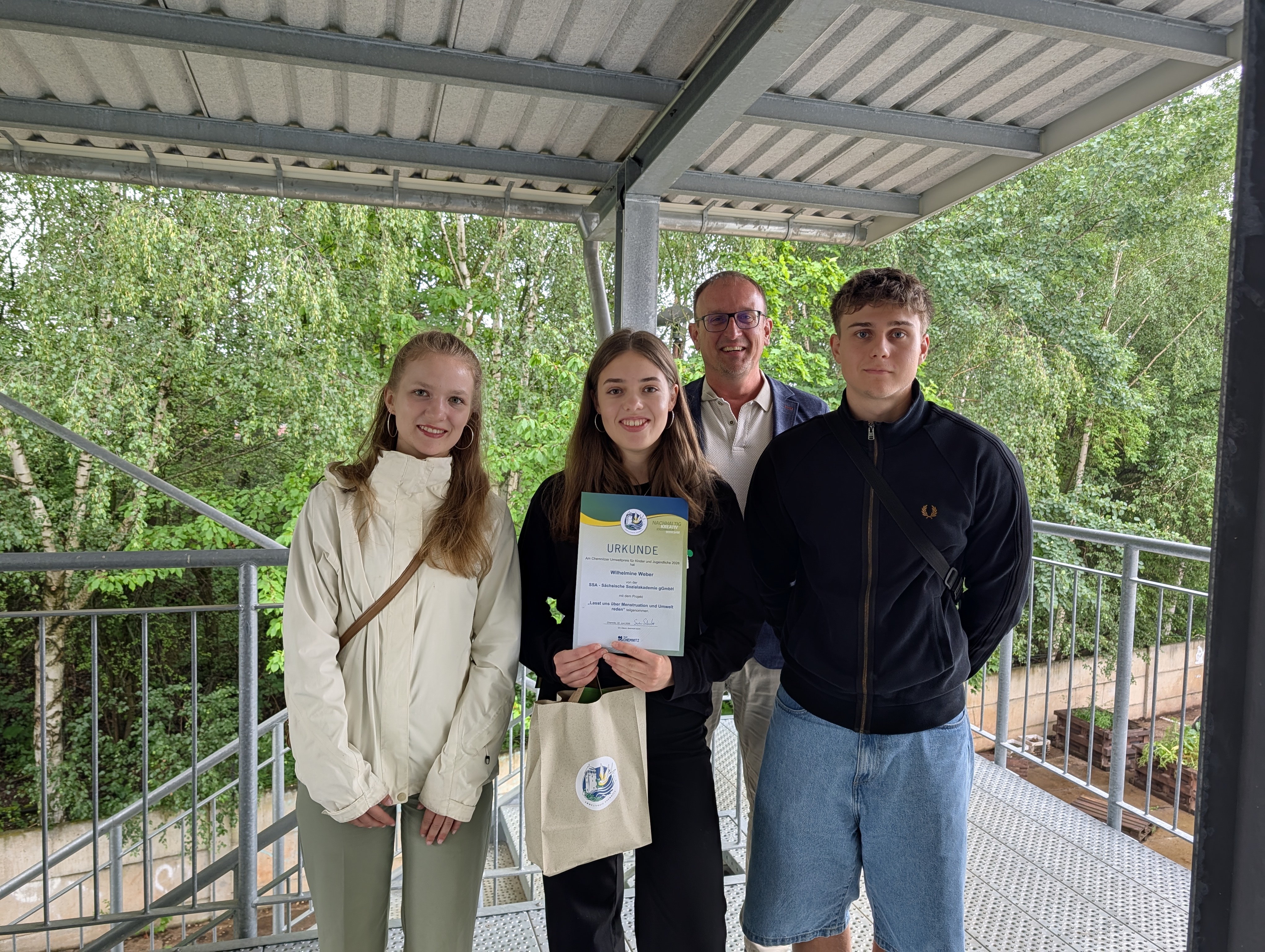
In her workshop ‘Let’s talk about menstruation and the environment’, Wilhelmine Weber combines education about menstruation with environmental education. Through an open and participatory discussion, various menstrual products are presented, examined from a practical perspective and compared in terms of their use, cost and environmental impact. Particular emphasis is placed on reusable alternatives such as cloth pads, period underwear and menstrual cups, and on how these can help reduce waste. At the same time, the workshop addresses the issue of access to suitable menstrual products for people with disabilities. The aim is to impart knowledge, break down prejudices and encourage a more conscious and sustainable choice of products.
Bethanien Education Centre: ‘Insect Hotel with Flowering Meadow’ project
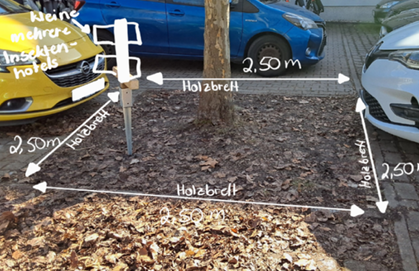
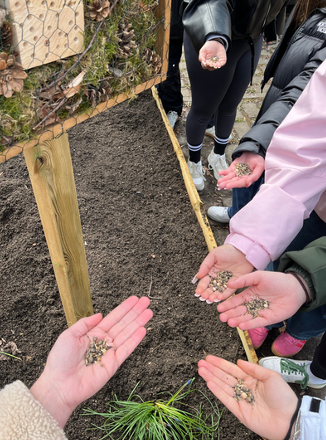
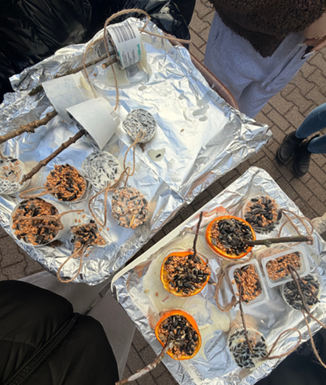
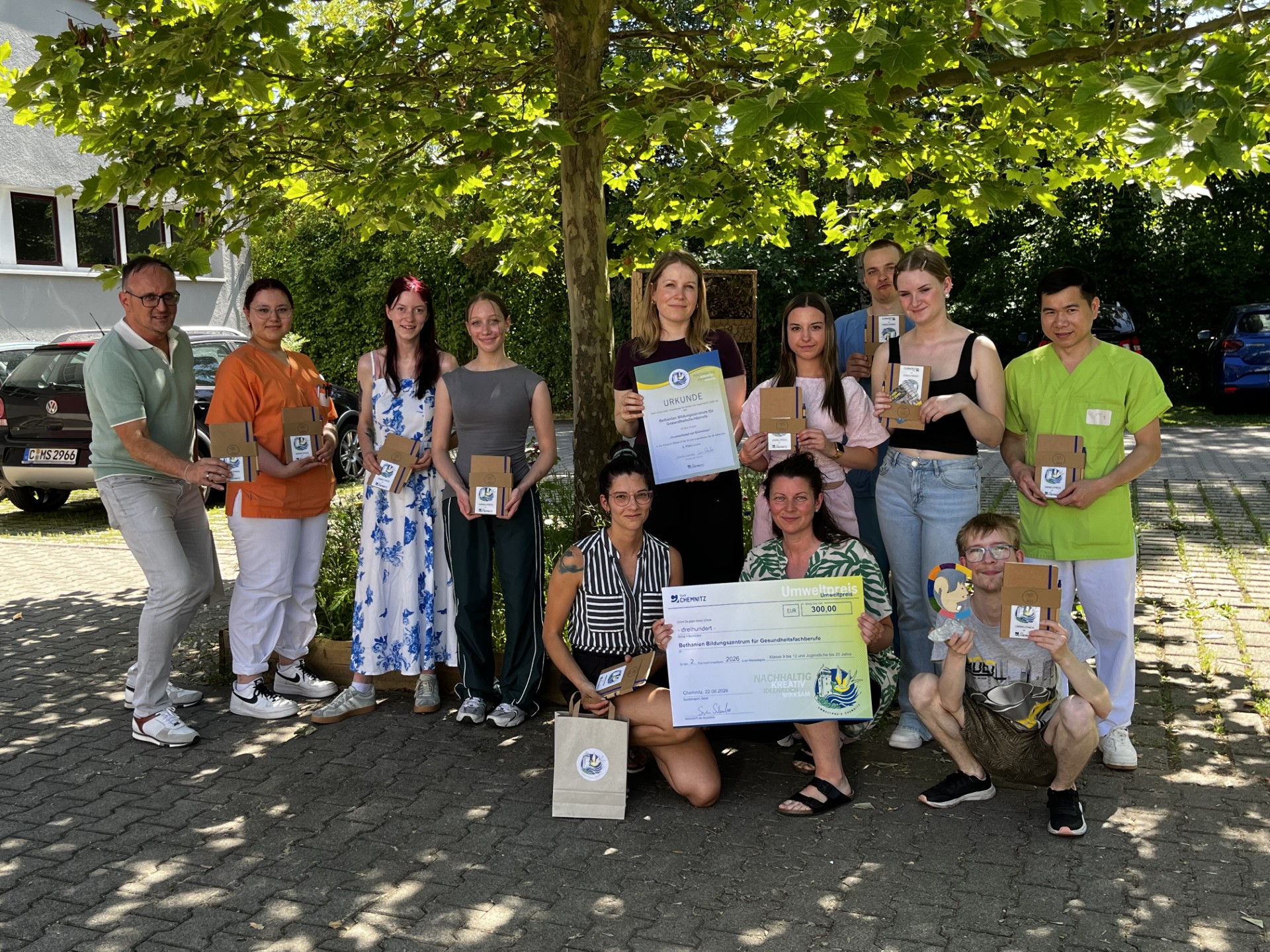
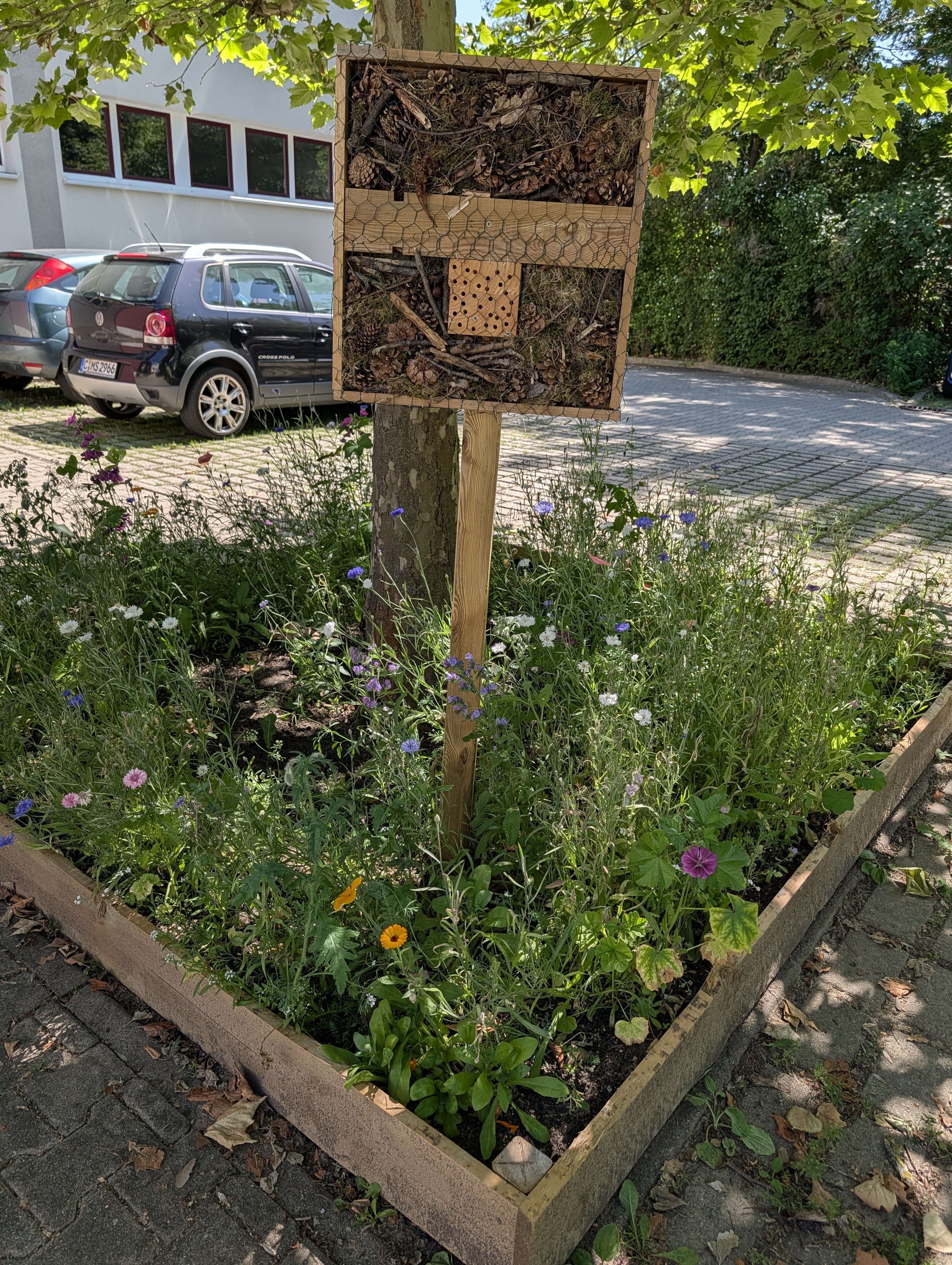
The final-year trainees in class H24 jointly came up with the idea of transforming a previously unused area on the school grounds into a habitat for insects. Following planning, research and the sourcing of materials, a flowering meadow featuring several insect hotels was created there. Among other things, they used scrap wood, offcuts, recycled picture frames and natural fillers. A bee-friendly mix of flowers complements the area and provides additional food for wild bees, beetles and other insects.
At the same time, the apprentices implemented further environmental initiatives: they made bird feed, collected litter on the school grounds, developed a cigarette butt disposal bin from old glass jars and set up a seating area using old car tyres. In this way, the project combines biodiversity, recycling and hands-on environmental learning in a variety of ways.
DPFA Rainbow Secondary School and Grammar School: ‘Sustainability, Waste and Environmental Protection’ project
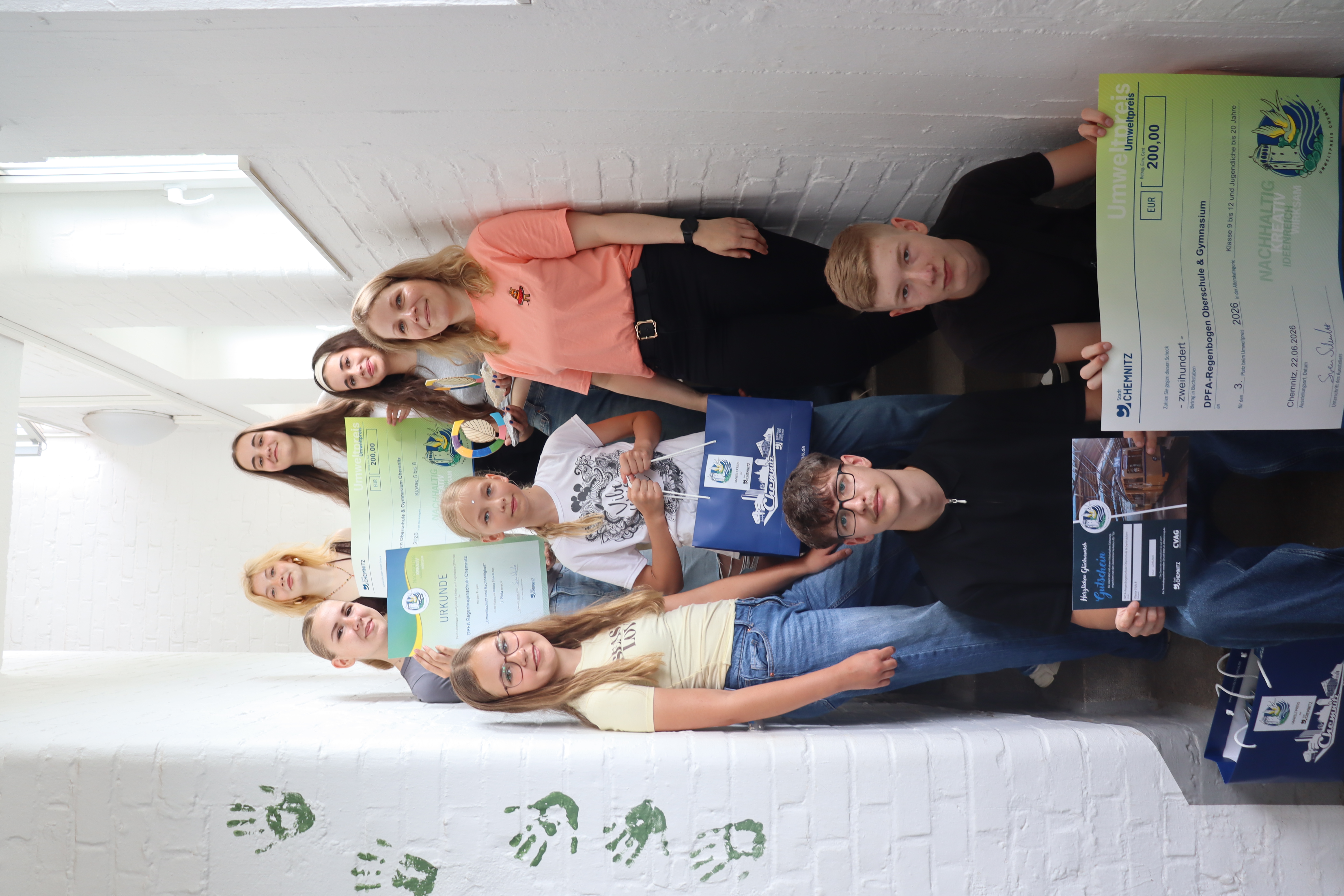
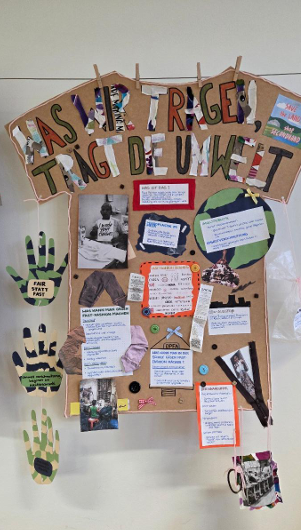
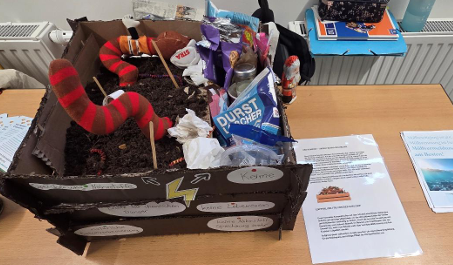
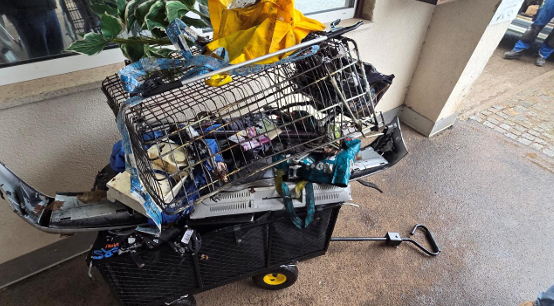
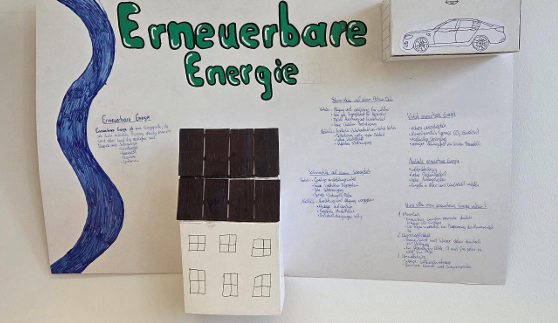
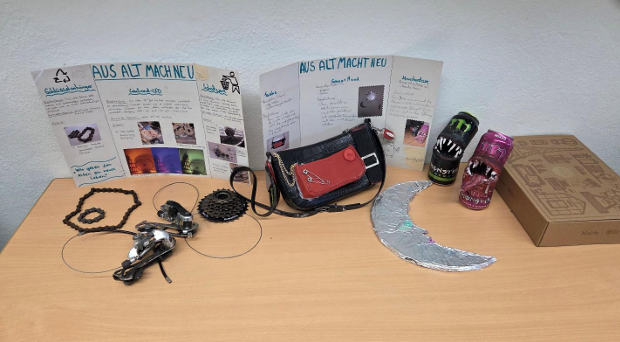
During the project days, ten pupils from Years 9 and 10 explored various topics relating to sustainability and environmental protection. Among other things, they explored fast fashion, renewable energy, proper composting and upcycling, and presented their findings on posters and in models they had designed themselves. This resulted, for example, in a model demonstrating proper composting, as well as creative projects made from reused materials. In addition, the pupils joined other classes in a litter-picking campaign around the school grounds. The collected rubbish was then sorted and disposed of properly. In this way, the project combined theoretical knowledge with creative work and practical commitment to a clean environment.
Projects in the ‘Childcare Centre’ category
Caritas Kindergarten Schatzkiste: A garden for children
As part of the "A garden for children" project, the children from the Caritas Kita Schatzkiste designed raised beds on the grounds of the Hammerfrieden e. V. allotment garden association, painted them creatively and labelled them with the name of the kindergarten. The children sowed vegetables and lettuce, watched them grow and lovingly cared for the plants all year round - watering, weeding and tending the beds. When the vegetables were ripe, they processed them into delicious pickled cucumbers and fresh tomato salad, among other things. Cooking was not neglected either: the children made homemade pasta and cooked fresh tomato sauce. The children also went on a tour of the allotment site, collected various herbs and used them to make fragrant bouquets and wreaths. They also created a herb puzzle for their display case in the kindergarten.
The children also took part in the "Living Neighbourhood" project of the Capital of Culture by planting apple trees on the club grounds. They also designed two nesting boxes for the kindergarten grounds and maintained regular contact with the neighbouring retirement home "Am Kirschhof", which they often visit.
Goethehain integrative kindergarten: Our butterfly meadow - created and grown like us
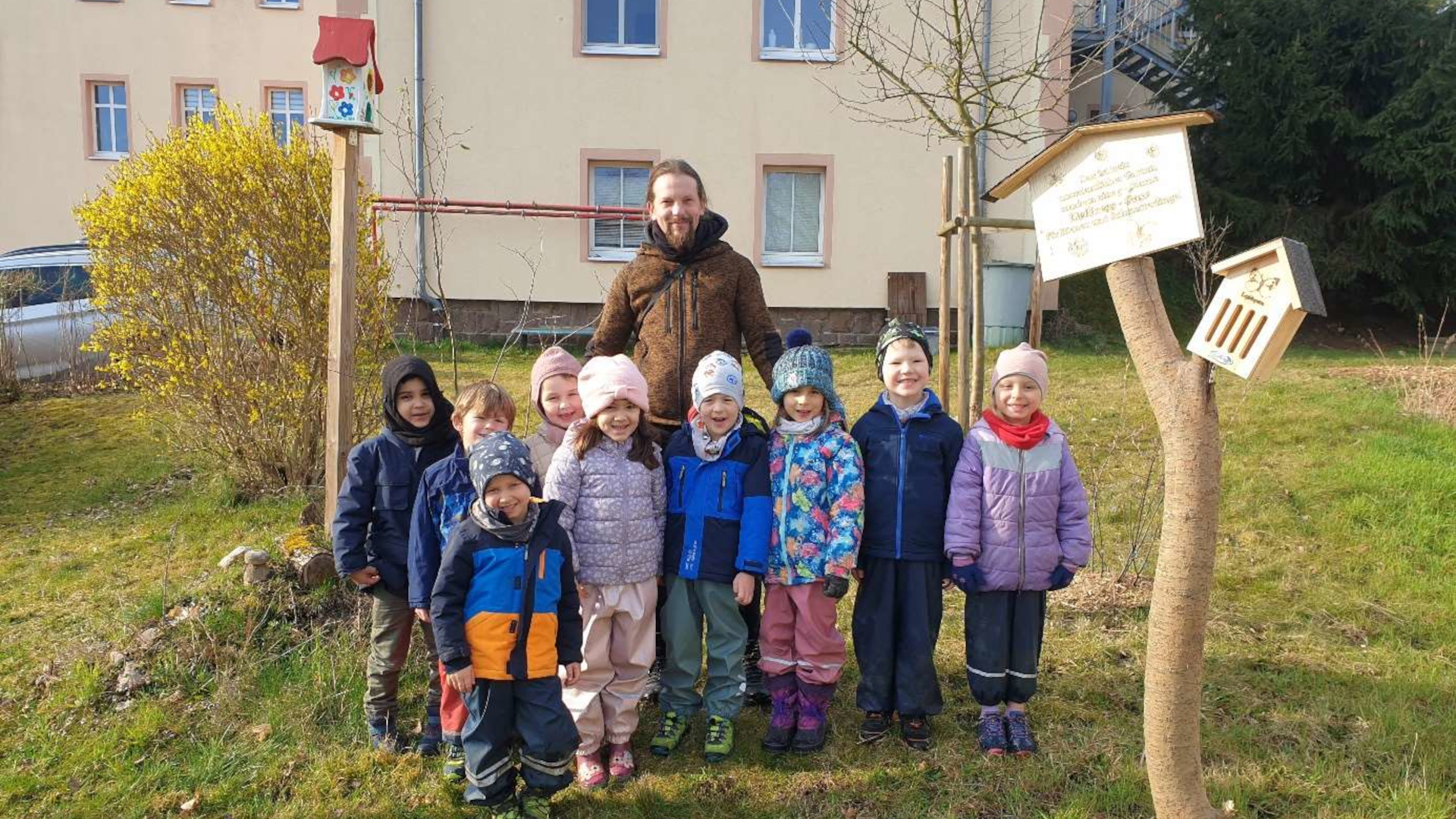
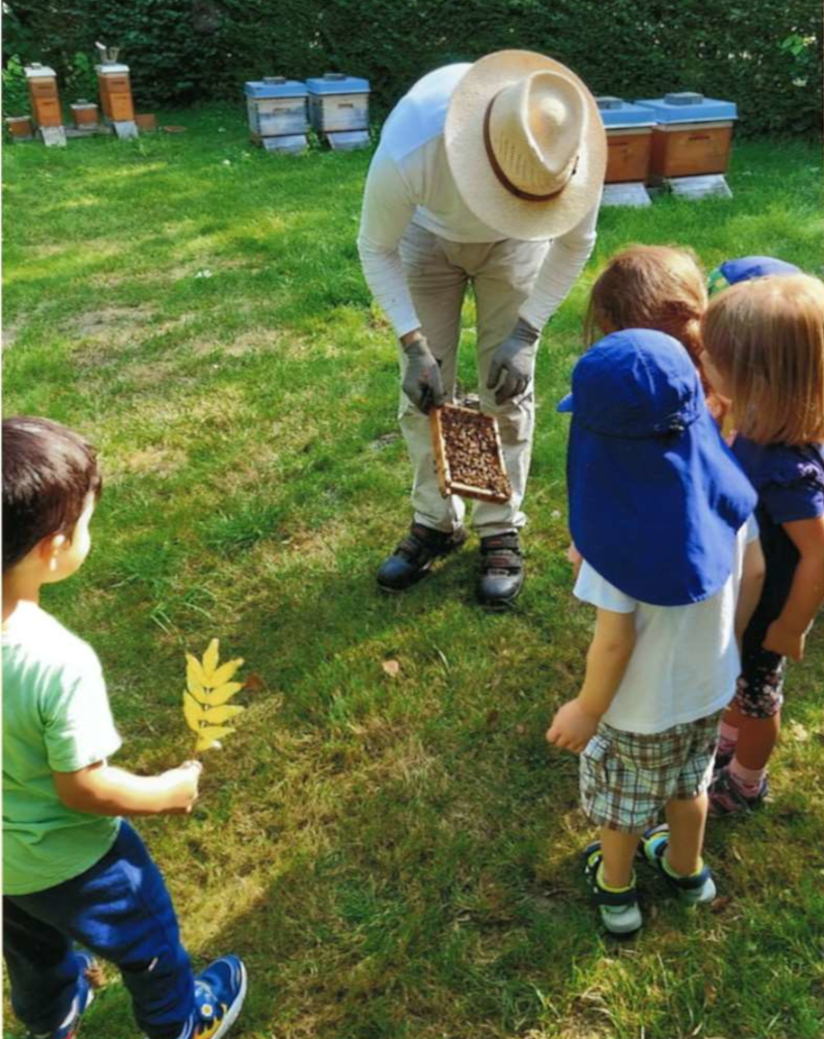
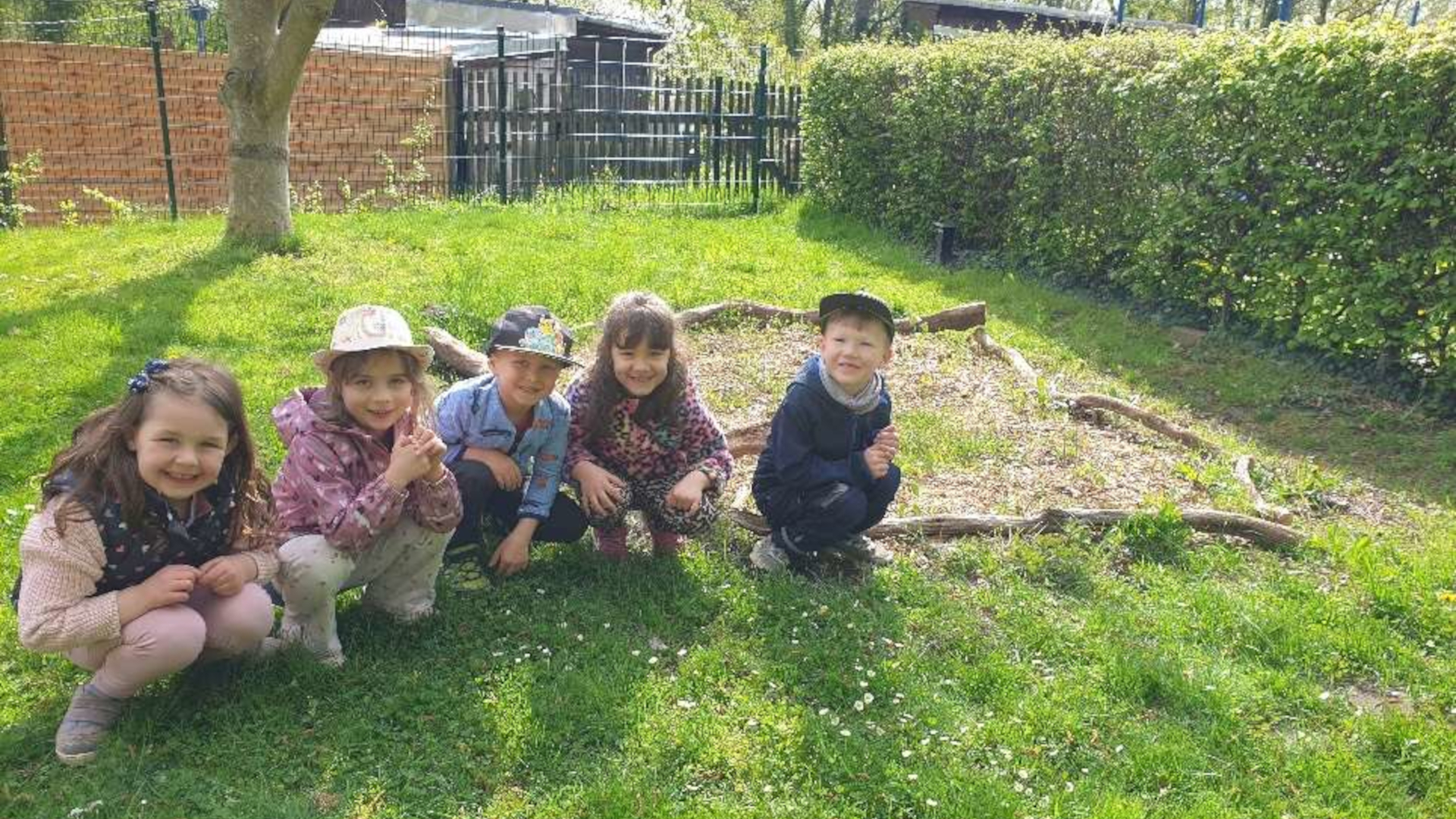
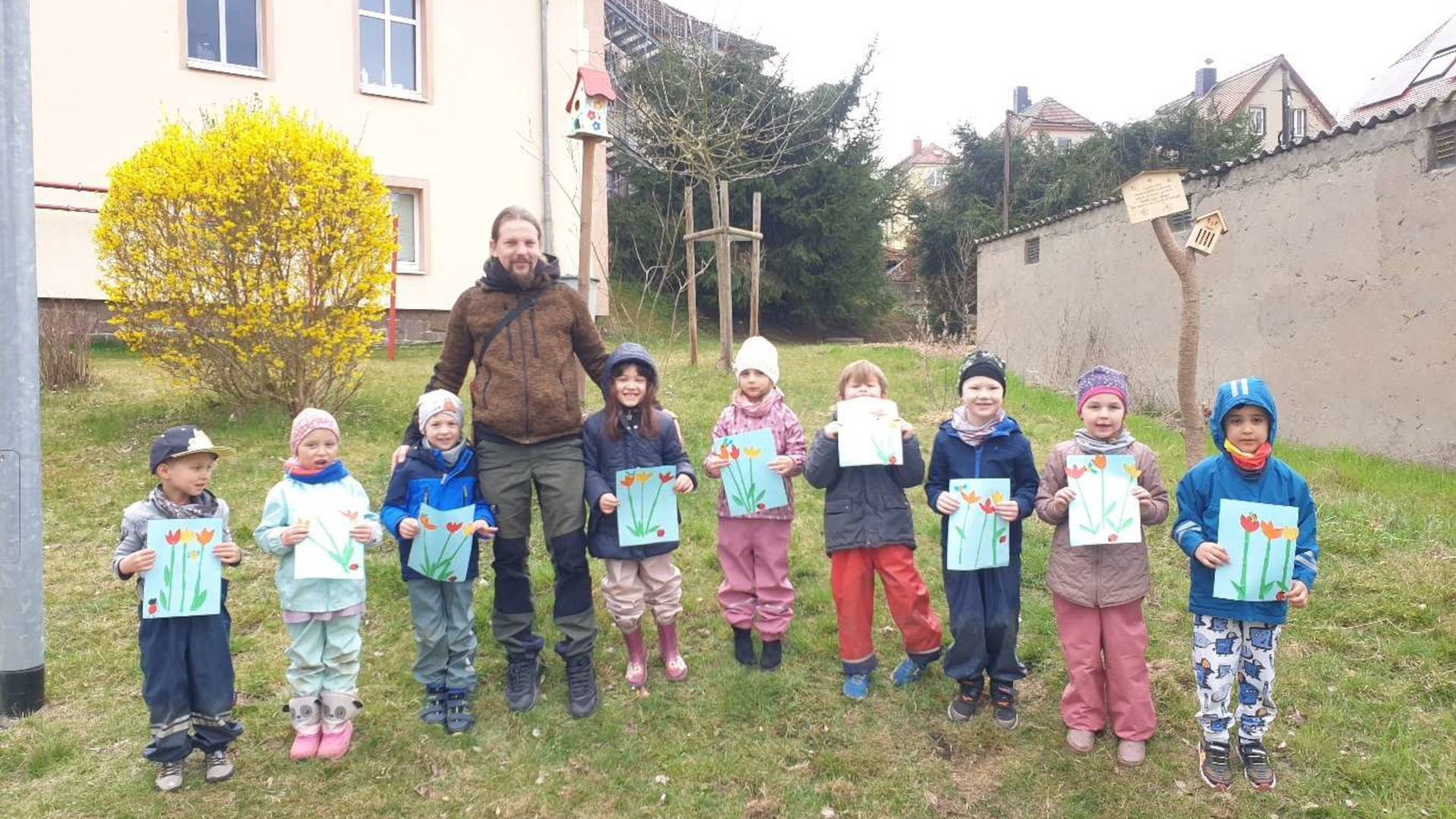
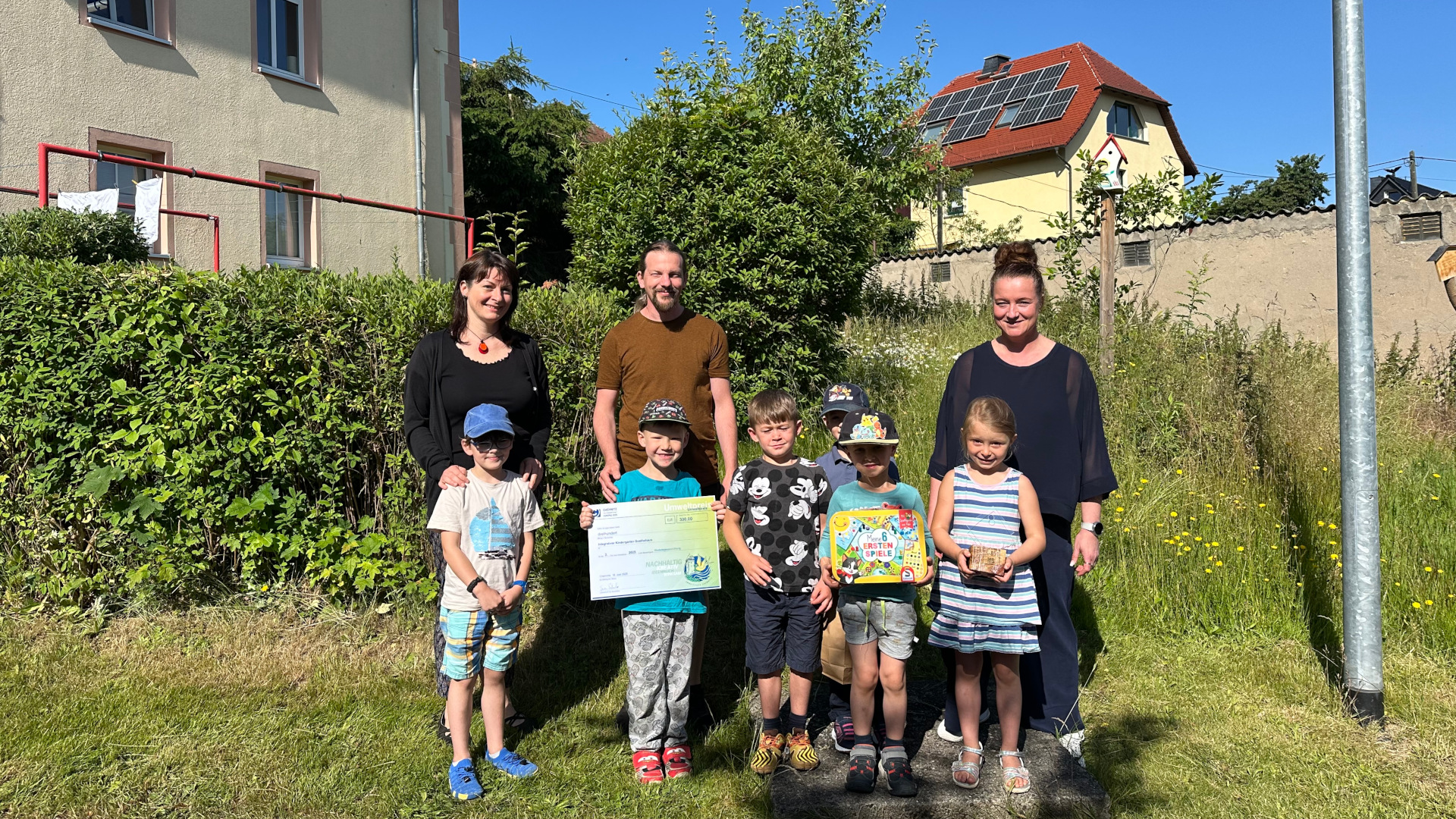
The butterfly group at the Goethehain integrative kindergarten has created a near-natural meadow for butterflies, bees and crawling beetles behind the daycare centre. Over three years, a small bed of flowering plants was turned into a living natural garden with apple, plum and cherry trees, a willow tree, painted stones, a beetle hideaway in a clay pot and a bird house.
The children also experienced nature with all their senses: They visited a beekeeper, processed elderberries and apples, built raised beds, made butterflies and sang nature songs. As part of the project, the entire garden was redesigned to be close to nature - with compost, insect hotels, birdhouses and insect-friendly plants. In this way, the children learnt through play how important it is to protect nature and the environment.
Rabennest daycare centre: environmental protection, sustainability and waste
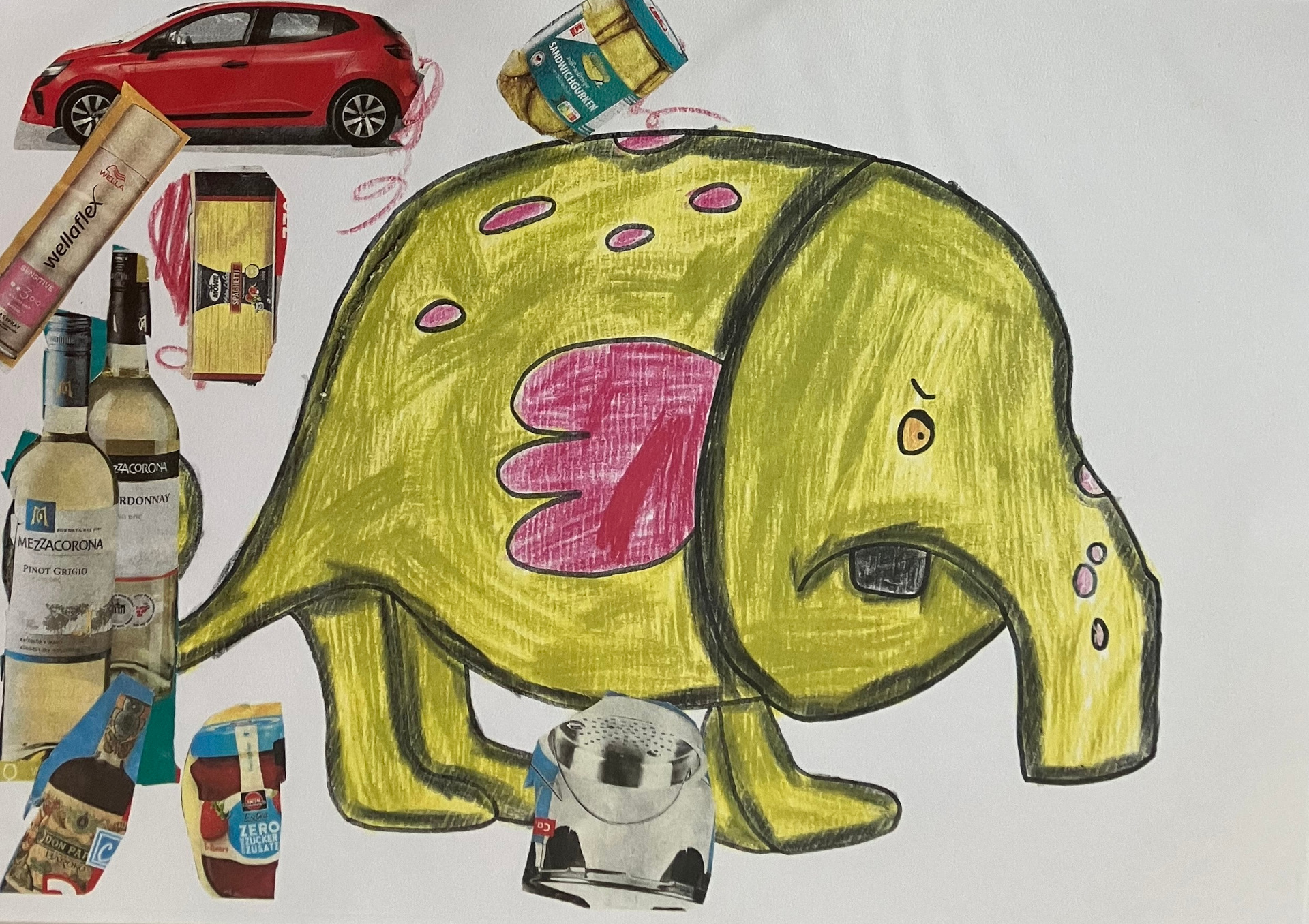
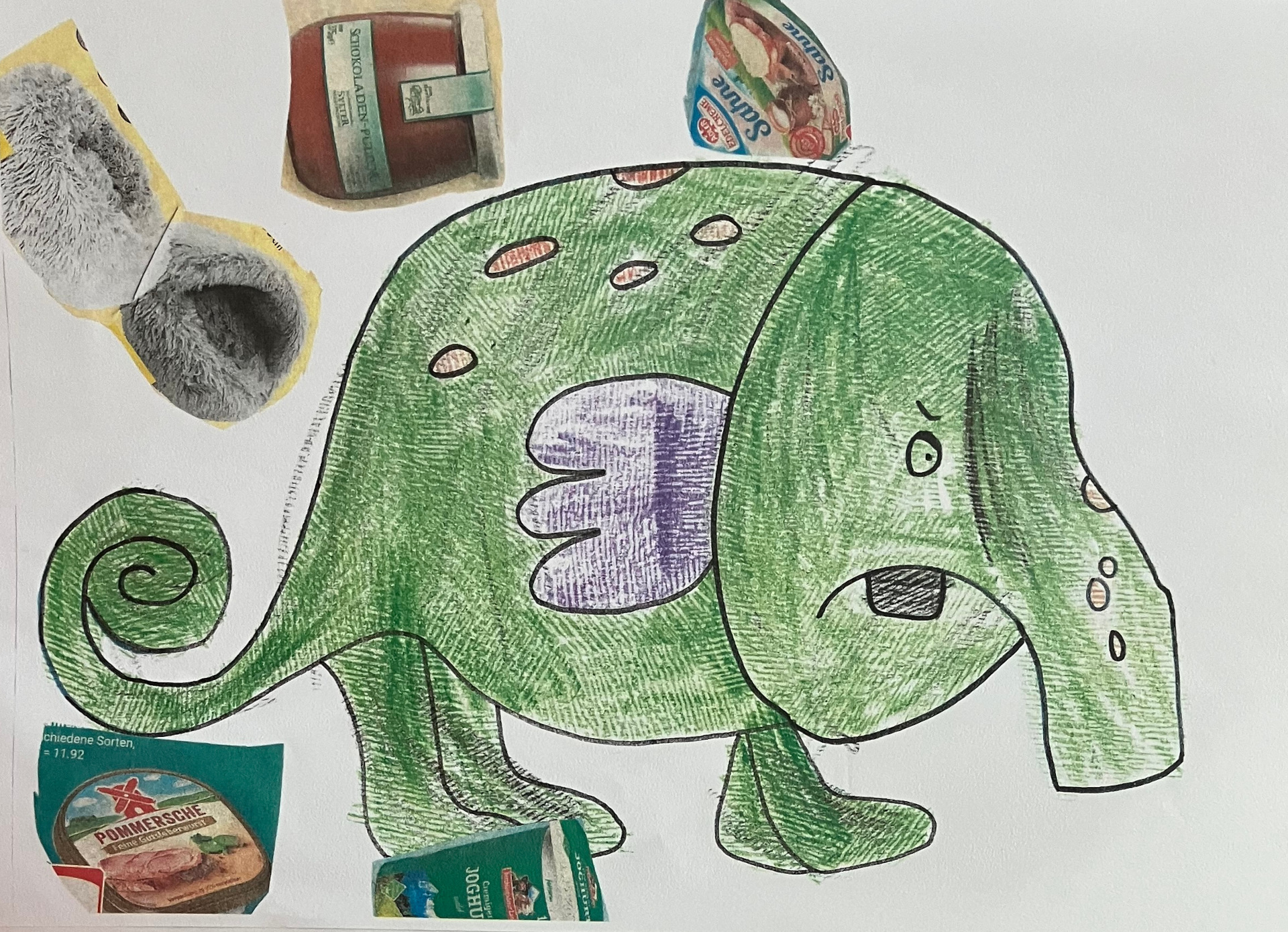
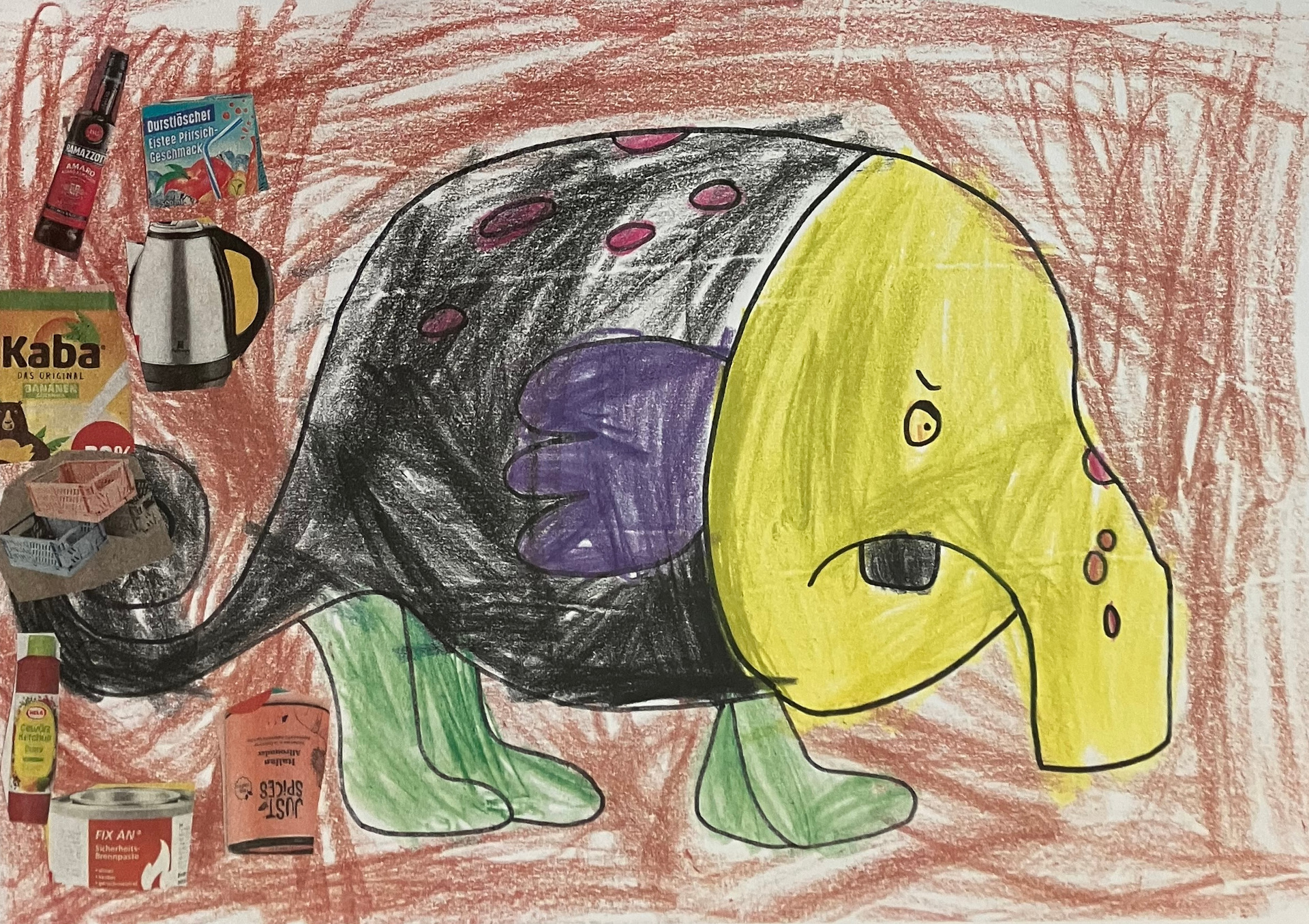
The children in the Wackelzahn group at the Rabennest daycare centre have been exploring the topics of environmental protection, sustainability and waste. Mupf, the rubbish monster, has always accompanied them on their playful journey. With the support of Becker Umweltdienst GmbH, the children learnt how to separate waste correctly. They also carried out a rubbish collection campaign around their daycare centre and were amazed and dismayed at how much rubbish is left behind in nature.
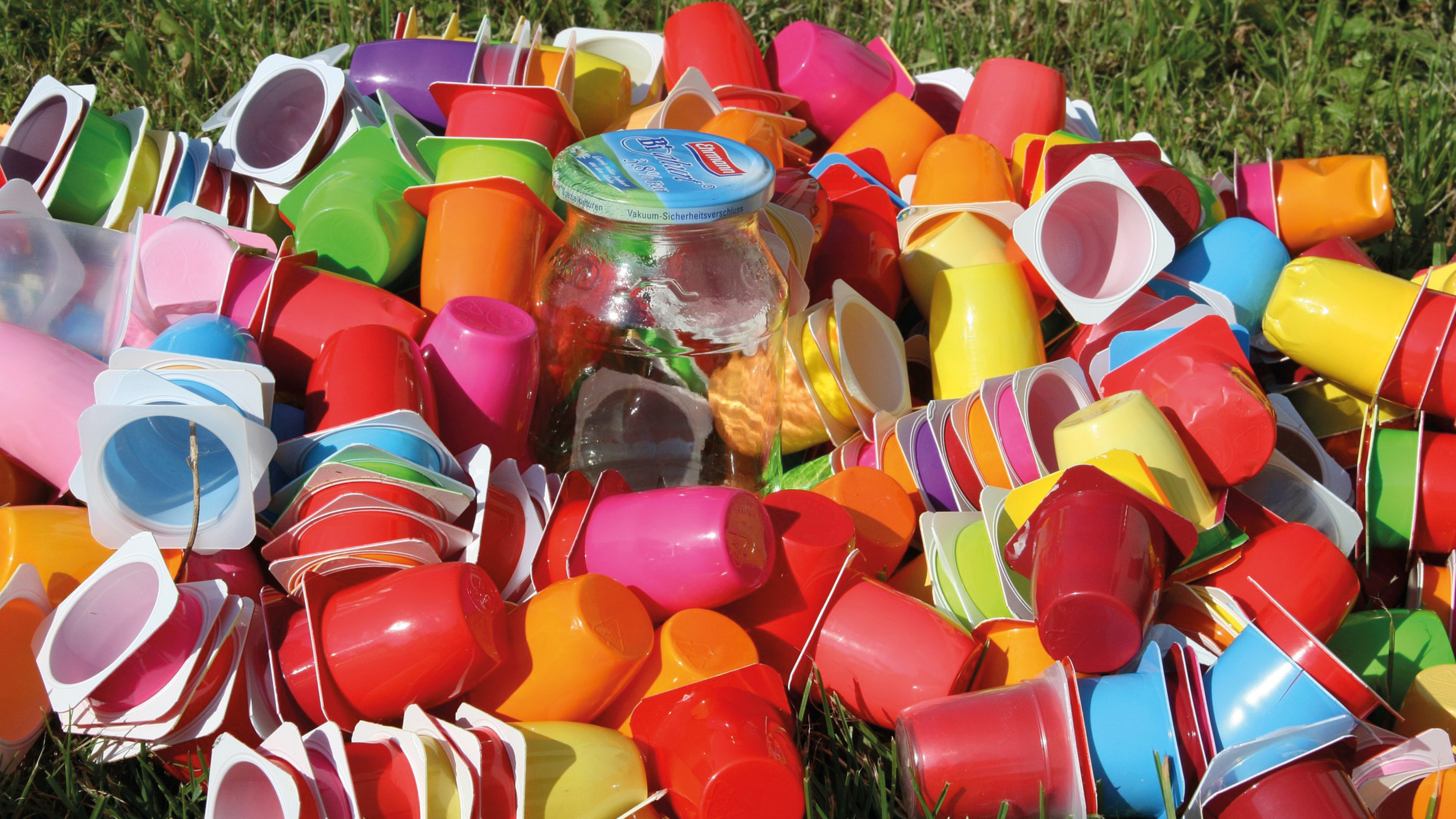
During the preparations for their carnival party, the children learnt that it is also possible to create reusable things from rubbish. They made garlands out of paper, newspapers and yoghurt pots.
What's more, the Wackelzähne didn't just tackle the issue of waste: they also planted vegetables and learnt how important it is to handle food sustainably and what you need to grow it. By the end of the project, the children had become little experts in the field of sustainability.
Schlossteichzwerge daycare centre: The ladybirds
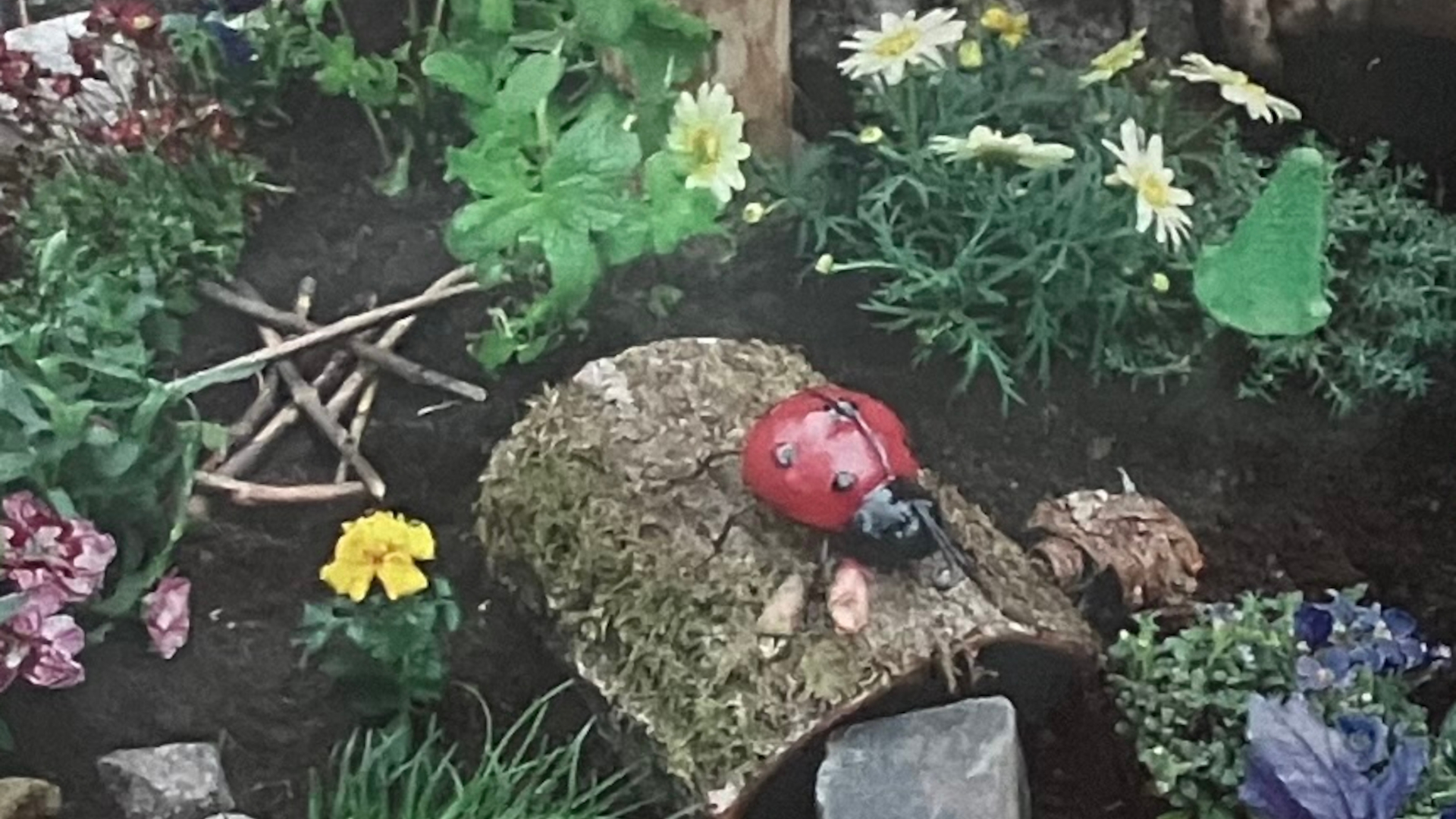
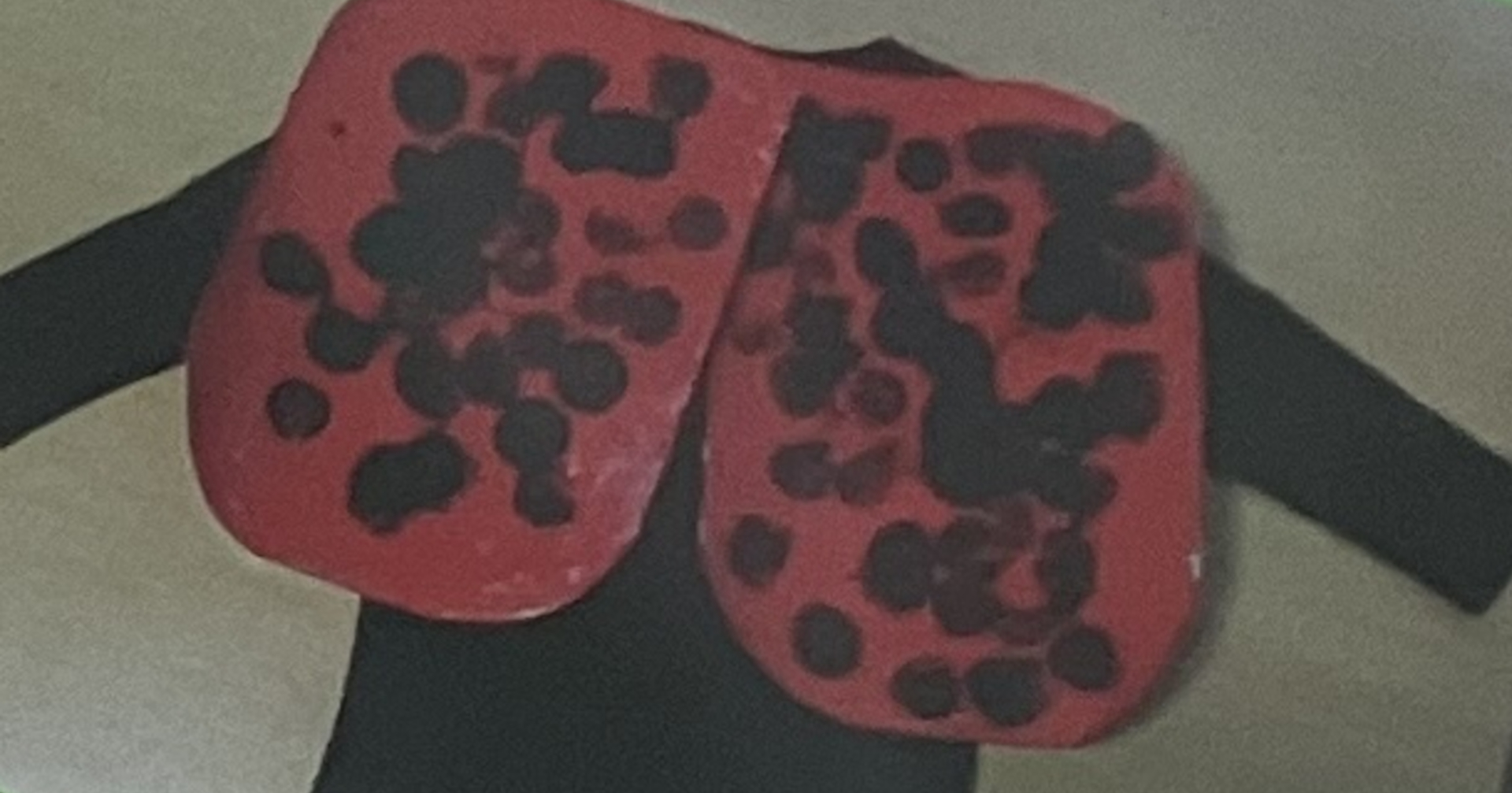
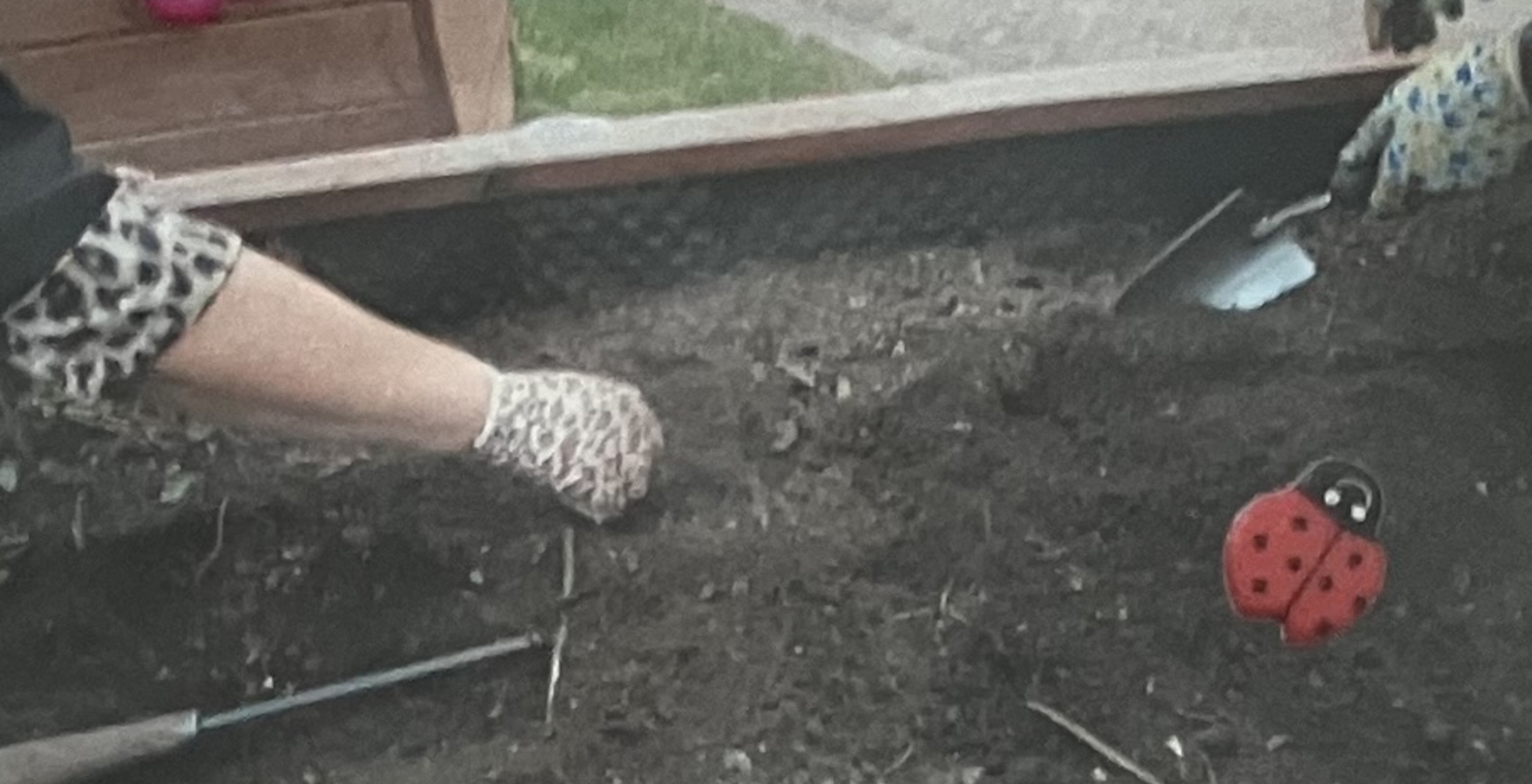
As part of their project, the children from the yellow and green groups at the Schlossteichzwerge daycare centre took a close look at the ladybird. They learnt about the life cycle, lifestyle and benefits of ladybirds for our ecosystem. Firstly, they went on a trip to the nearby forest and observed everything very closely. Then they even bred ladybird larvae and watched them grow. Together with their parents, the children also gave the larvae and adult ladybirds their own place in the daycare centre's raised bed.
The children approached the topic in a playful way by making their own ladybird capes, playing a ladybird board game and singing various songs about ladybirds. By the end of the day, all the children were very familiar with the ladybird and its importance for our natural world.
Kita Flohzirkus: Nature and the environment - the playful way to more sustainability
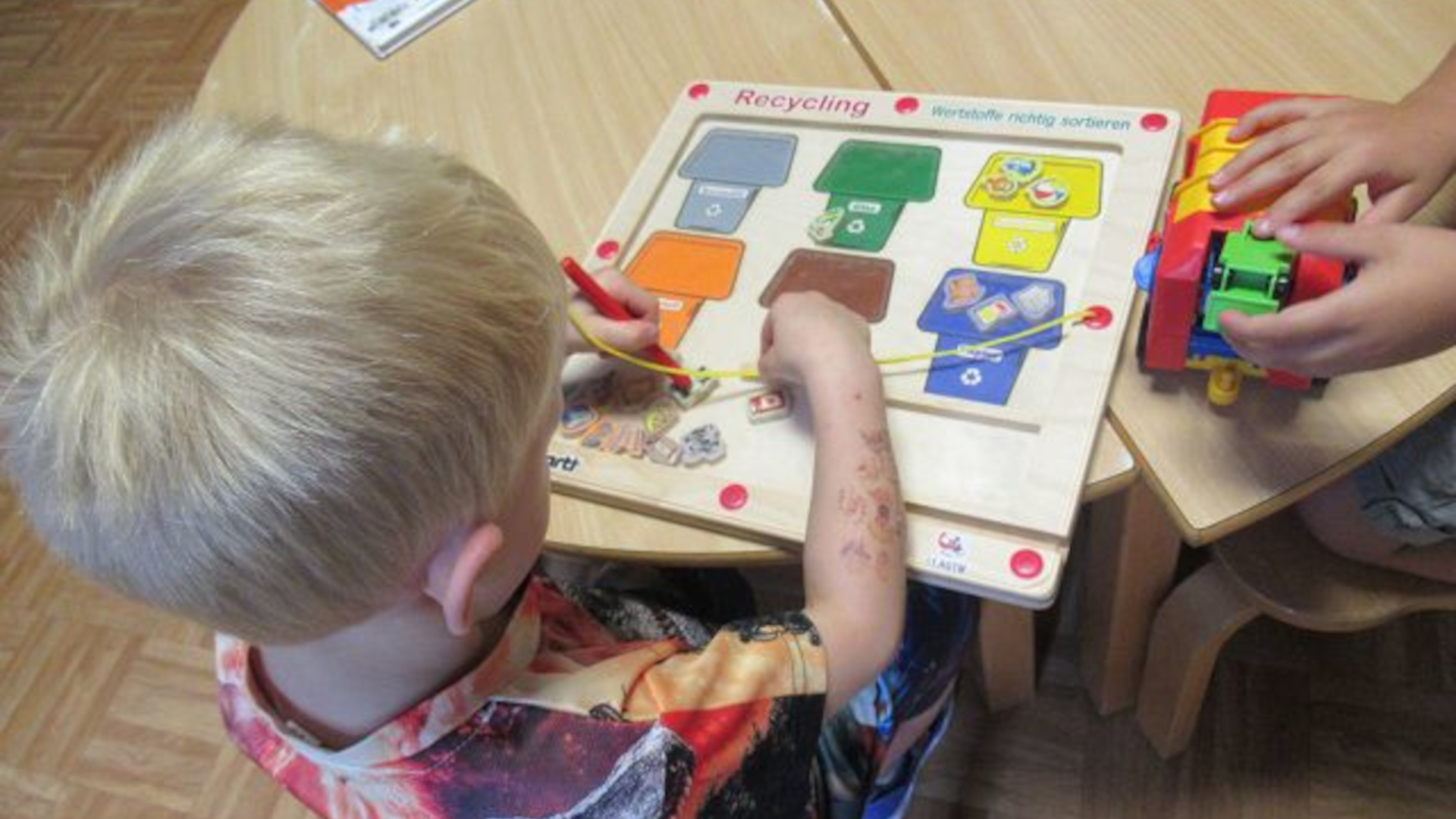
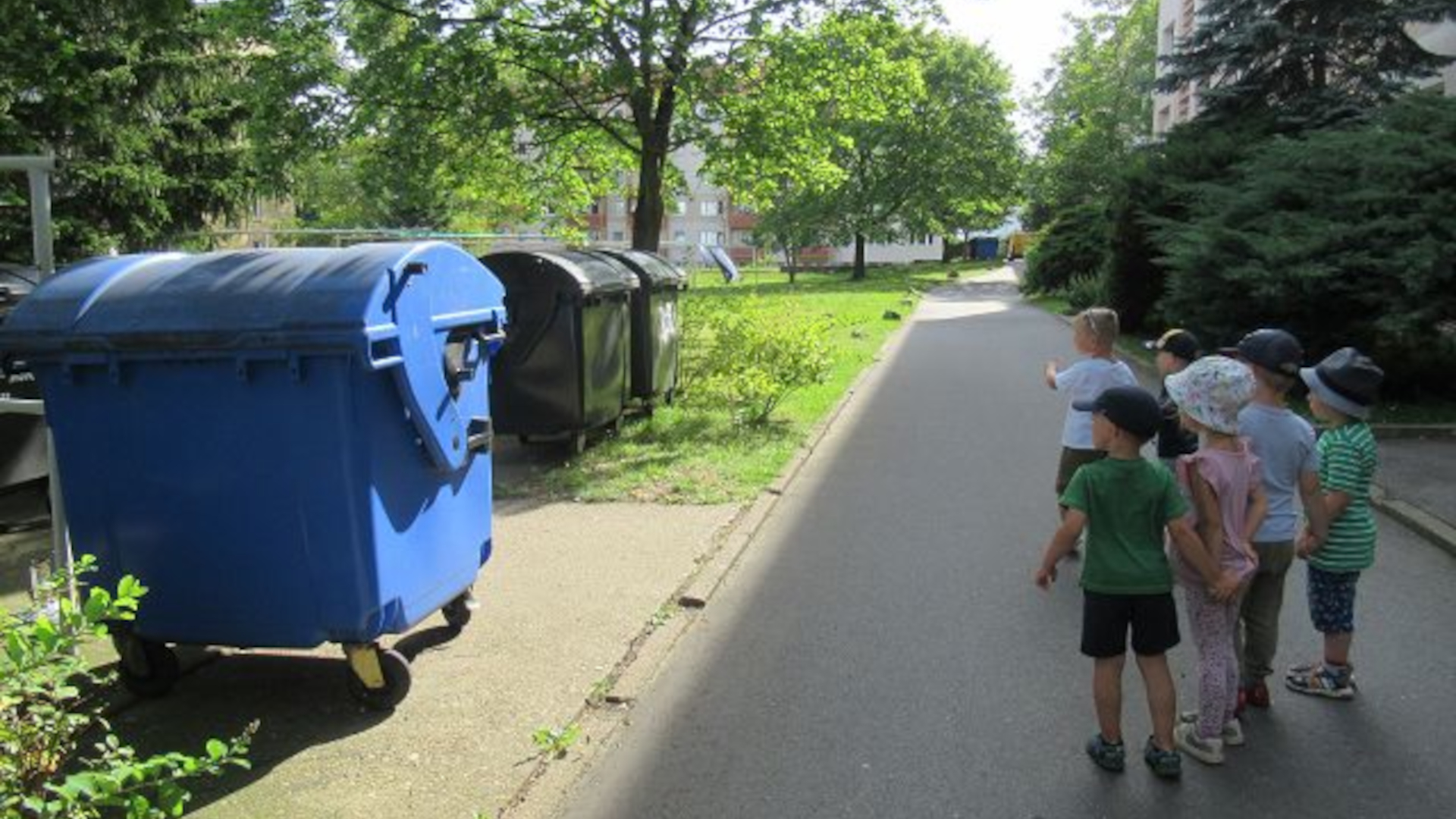
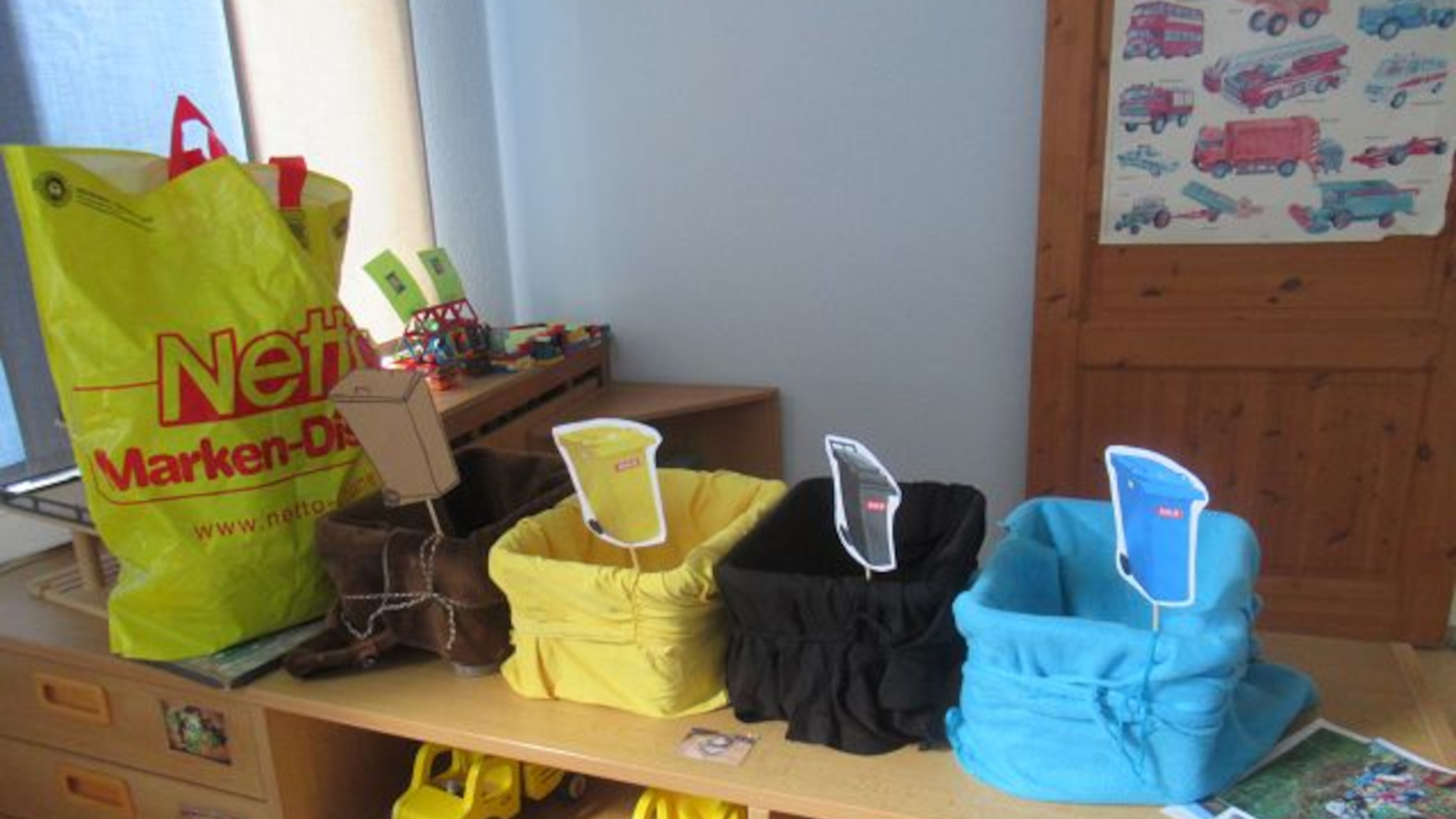
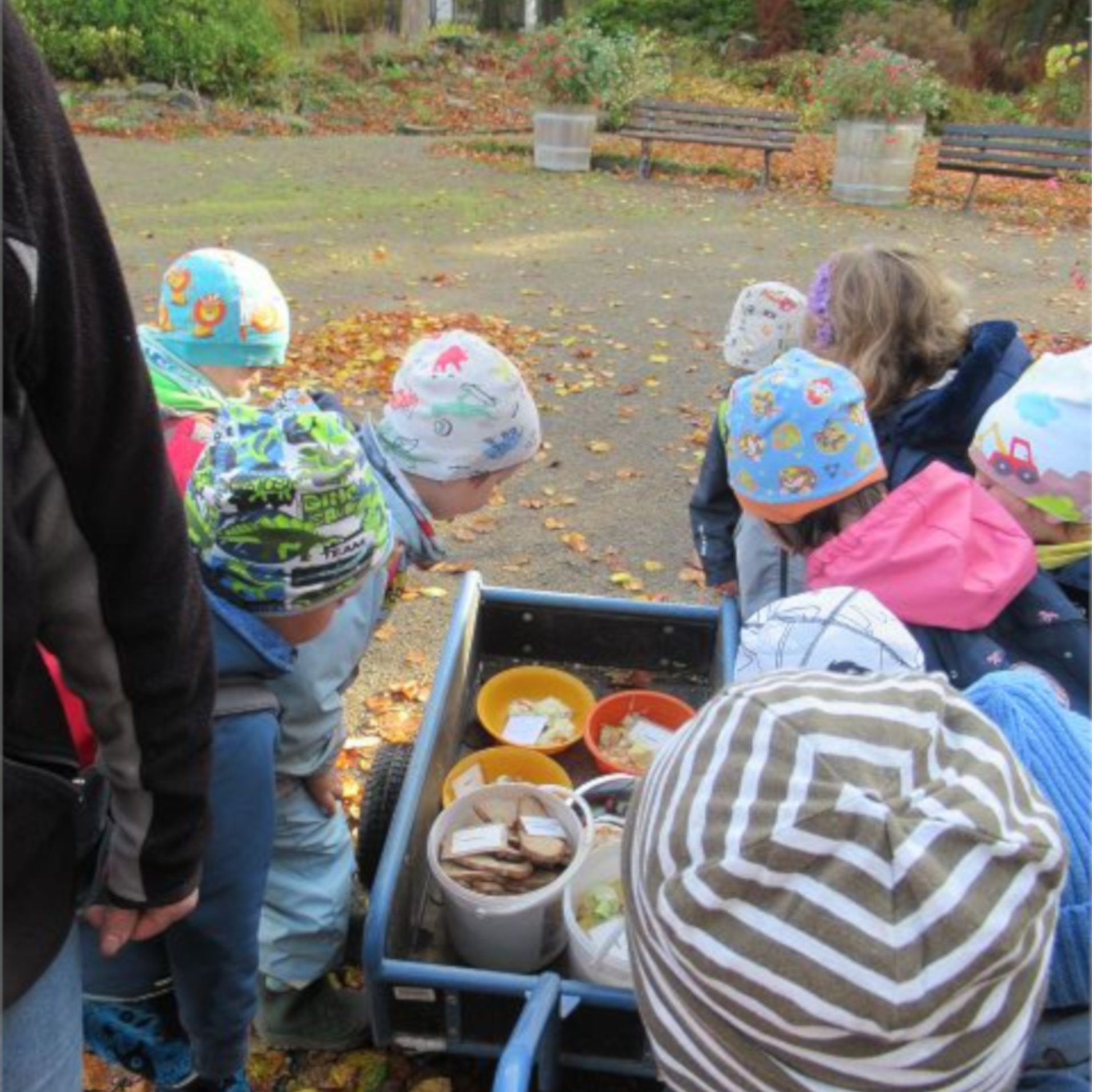
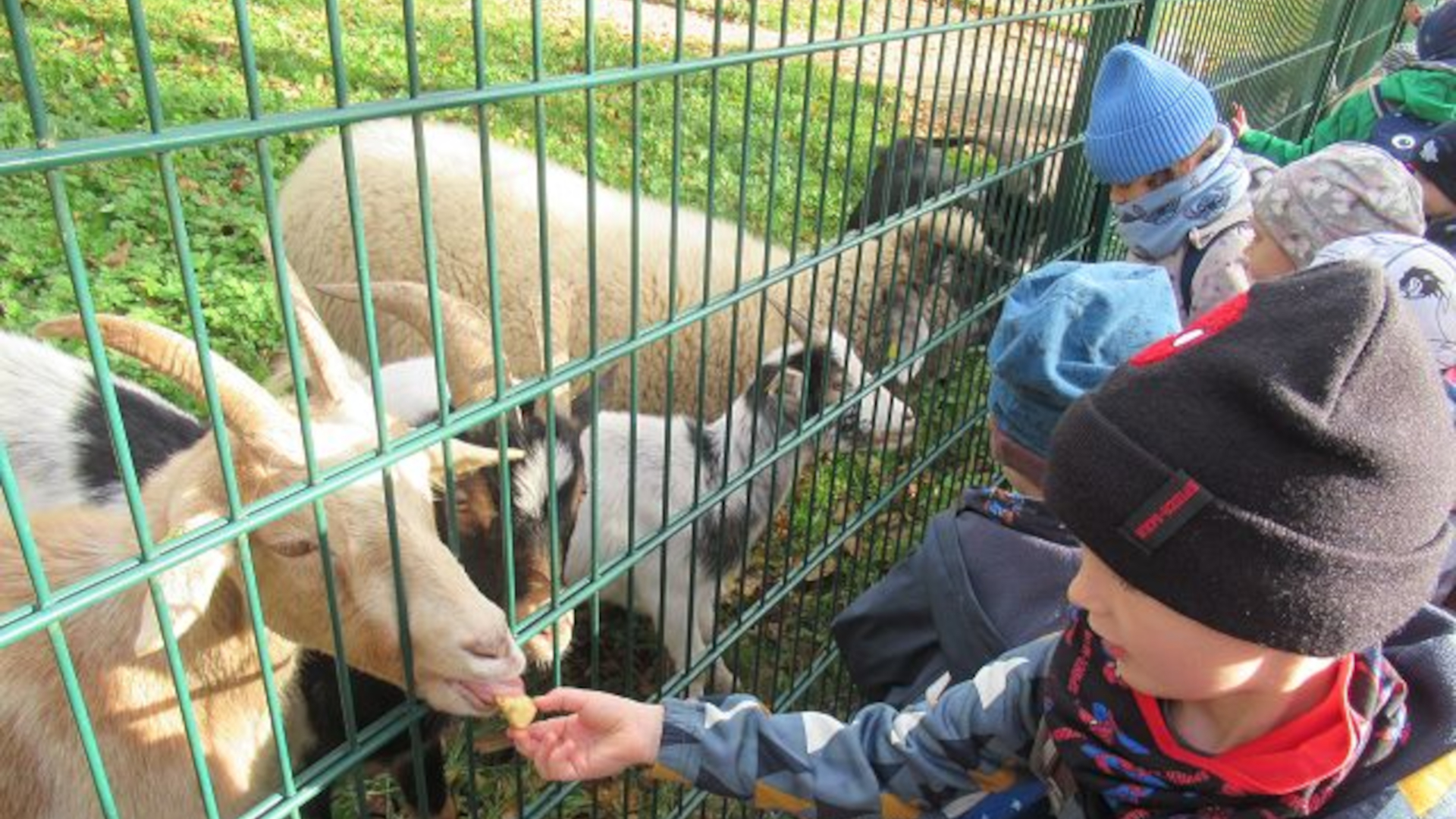
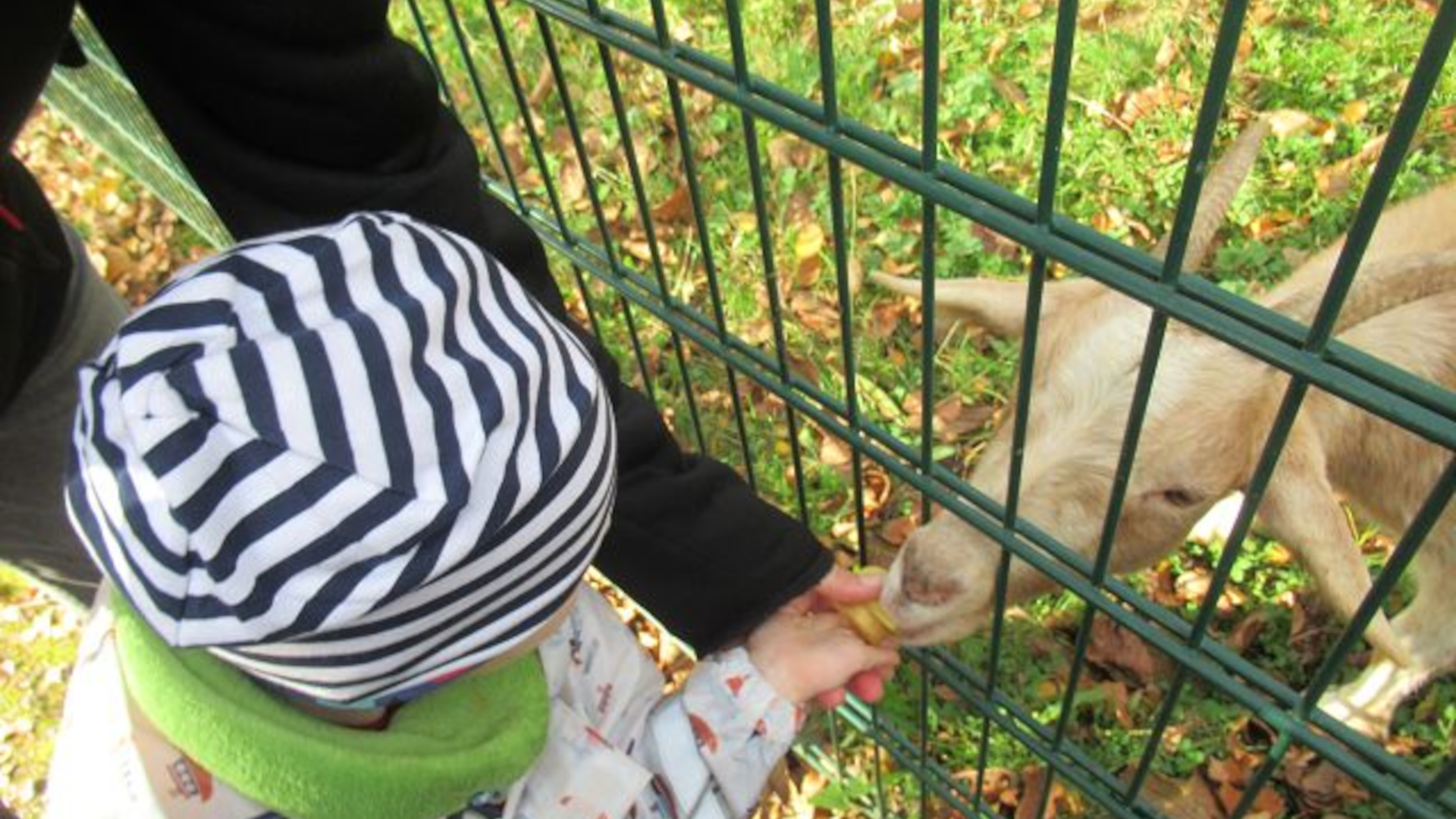
The "Floh-WG" group unit at the Flohzirkus daycare centre focused intensively on the topic of environmental education and sustainability from September to October 2024. The children learnt about nature, the environment and the responsible use of resources through play. The content of the project included environmental protection, waste separation, animal and plant protection and the four elements.
One highlight was the final excursion to the botanical garden. The project also resulted in the monthly action day "We're going to collect rubbish for a clean Wittgensdorf", where the children actively contribute to rubbish disposal - equipped with suitable materials for safety and visibility.
Diakonische Kita Kastanie: ESD project: My friend the tree
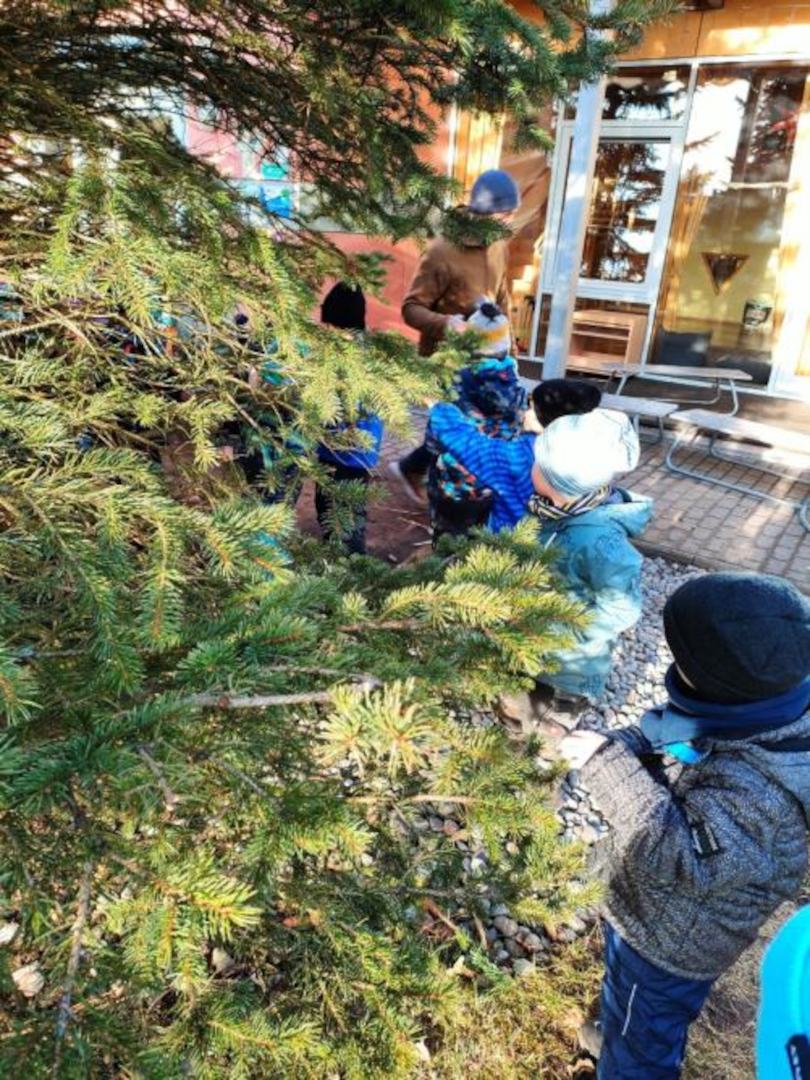
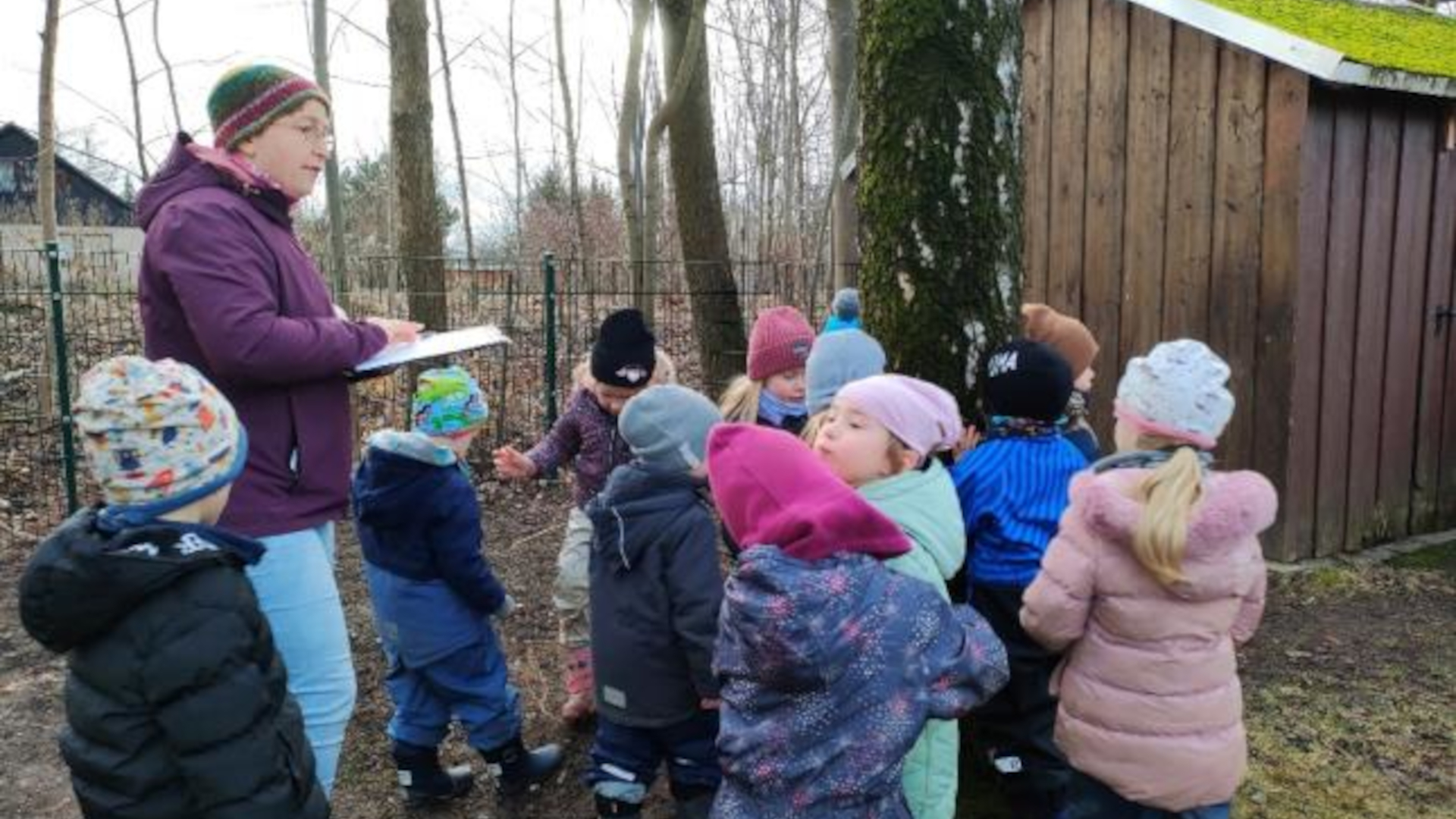
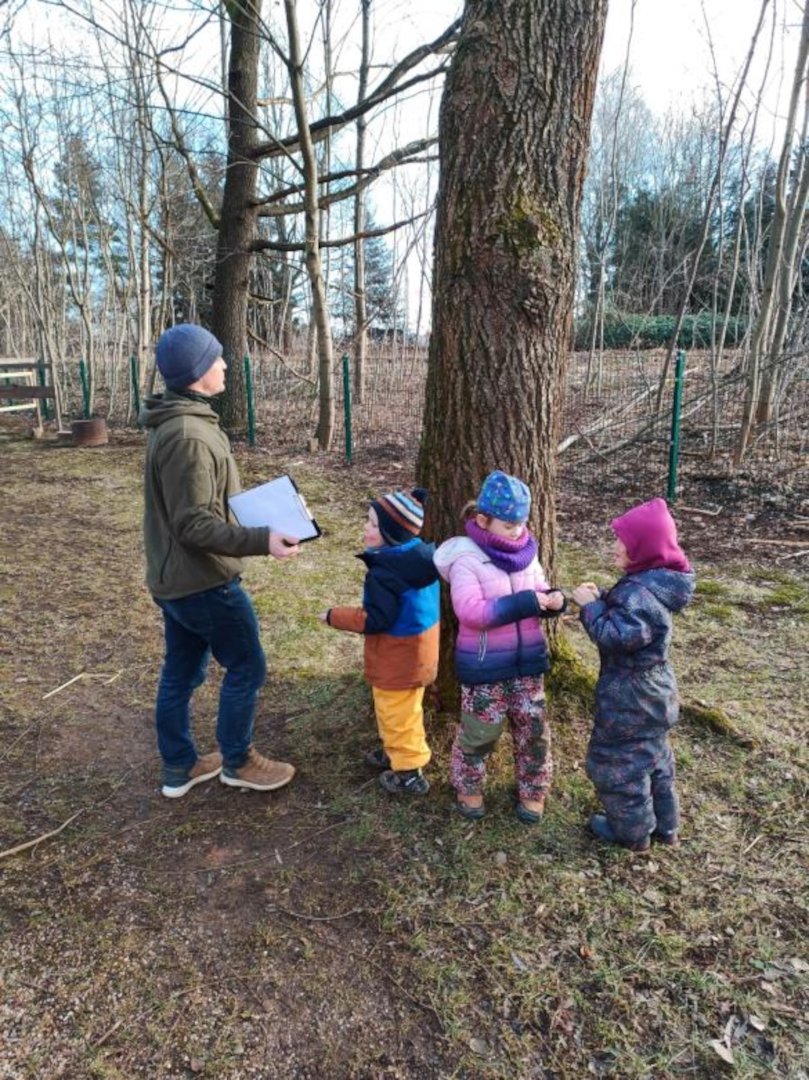
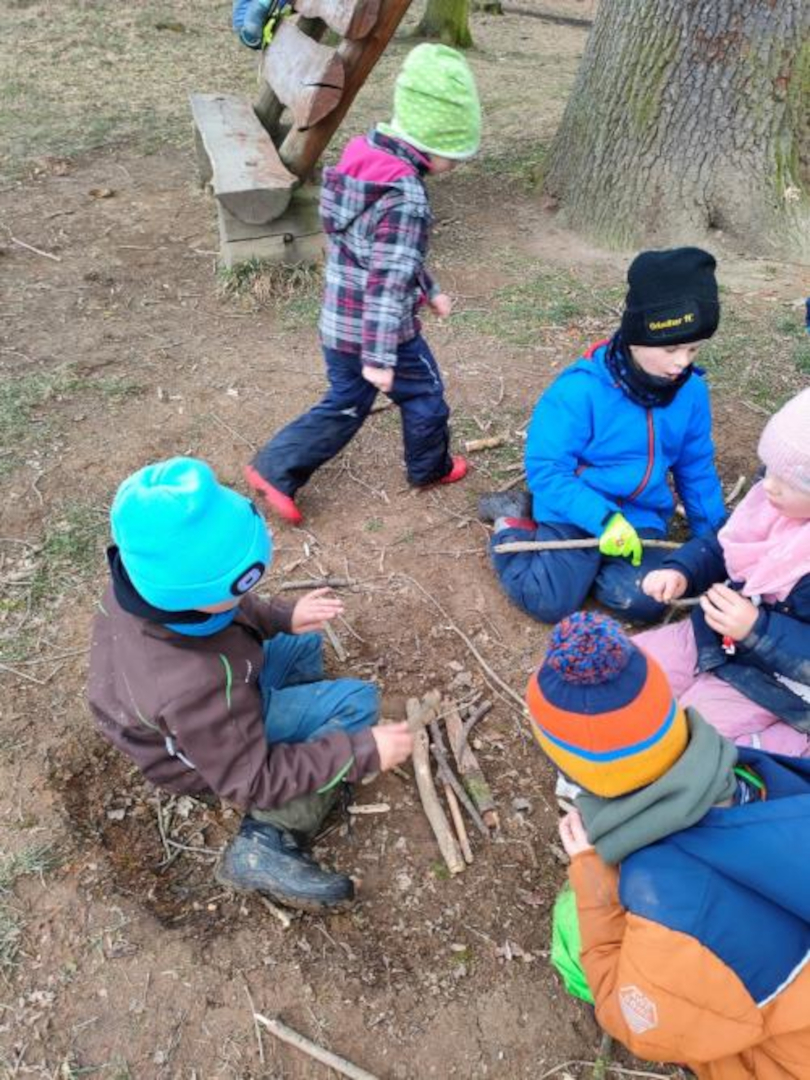
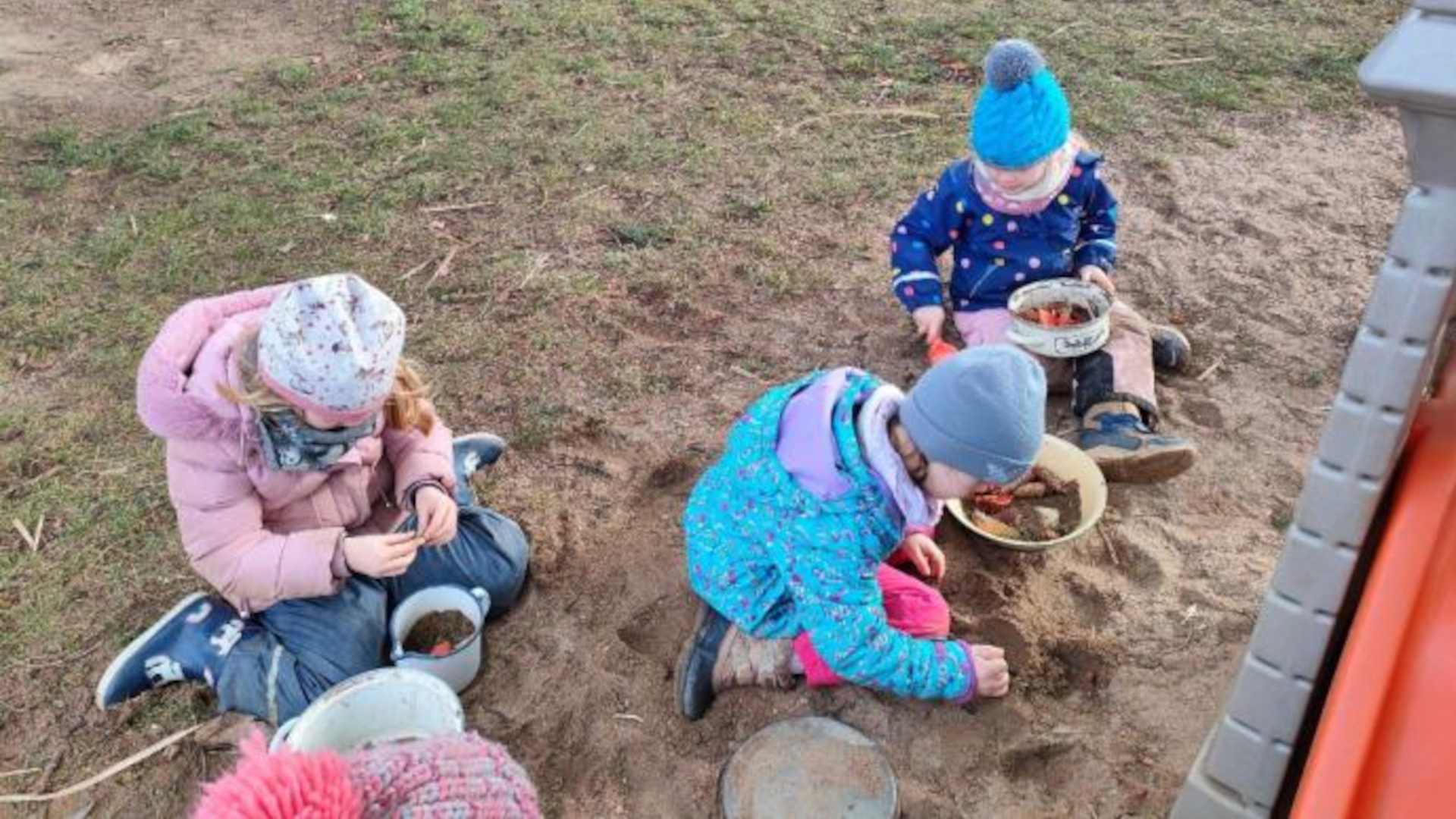
The Diakonische Kita Kastanie has been an ESD pilot centre since summer 2024 and regularly cooperates with the "Education for Sustainable Development" (ESD) service centre in the Central Saxony and Erzgebirge regions. The project "My friend, the tree" was developed within this framework. The starting point was the large number of trees on the daycare centre grounds. The children got to know their trees in detail and were able to recognise and name them at the end of the project. The children took on tree sponsorships together with their parents. This created an emotional bond between the children and the trees and nature.
The project was rounded off with the creation of signs designed by the children and parents. These self-designed nameplates were made from weatherproof material and attached to the corresponding trees on the grounds.
First Chemnitz kindergarten model: "Grow, care for and harvest your own tomato plants and herbs", "Upcycling cardboard tubes into a garden fence", Habitat for insects - fruit for everyone! "Saxony plants together - 1000 fruit trees campaign"
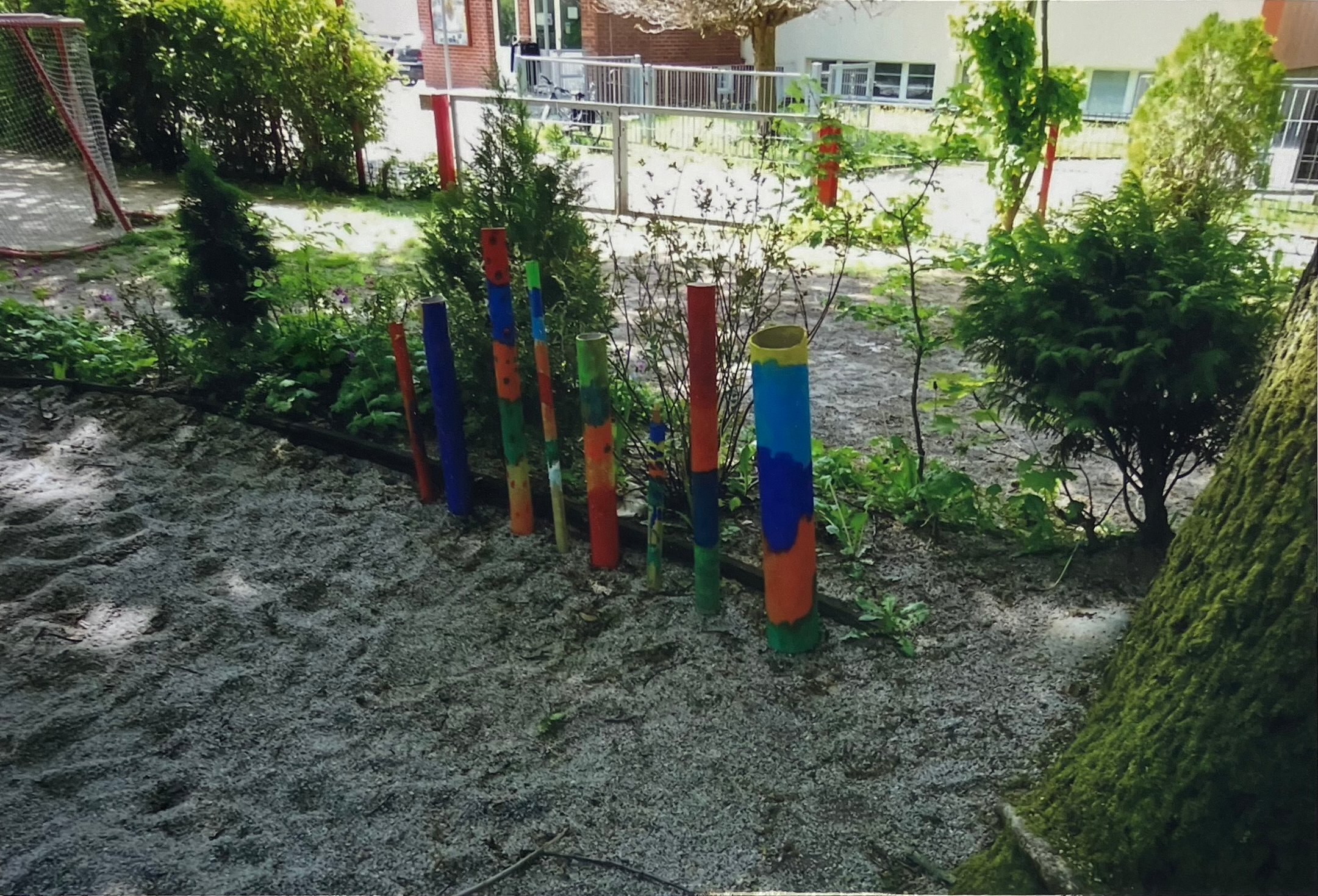

The children of the butterfly group, the seahorse group, the kangaroo group and the mouse group of the First Chemnitz Kindergarten Model submitted three projects together for the Chemnitz Environmental Award. The kangaroo group initiated a special kind of upcycling project: they designed large cardboard tubes and erected a colourful fence in the garden. The colourful tube fence was closely observed by the children over the seasons and is still standing today. They learnt that waste is not just waste and can be reused.
The children took over the sowing and experienced the growing process until the harvest. They not only learnt about the different plants, but also looked after them and rewarded themselves with delicious home-grown tomatoes, among other things. The daycare centre also took part in the "Saxony plants together - 1000 fruit trees campaign", in which the children planted five fruit trees and five fruit bushes in the grounds of the daycare centre together with their teachers and the caretaker. Everyone is now looking after the new trees and plants together and is already looking forward to the first fruits.
Kita Buntspechte: Garden gnomes and herb witches
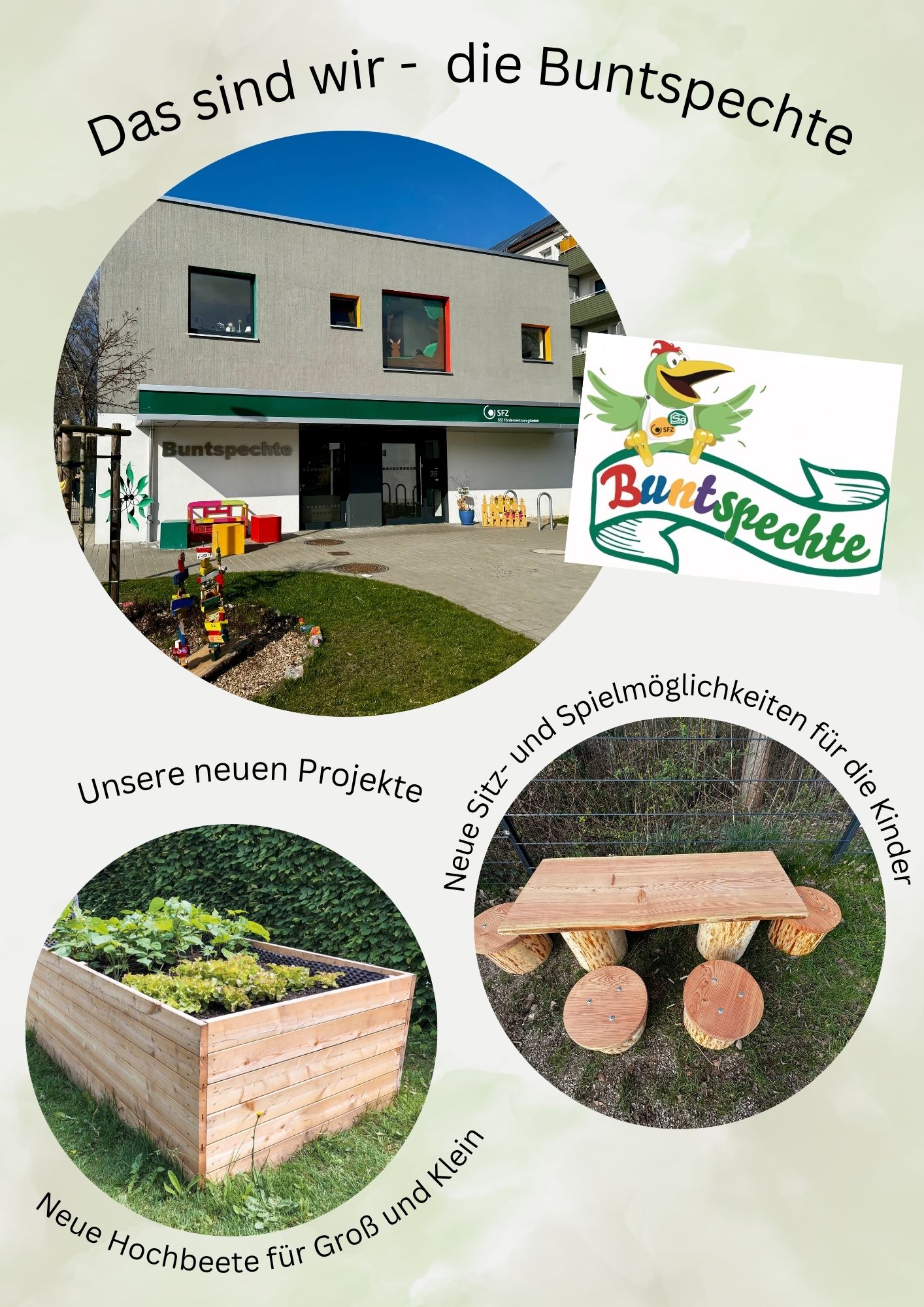
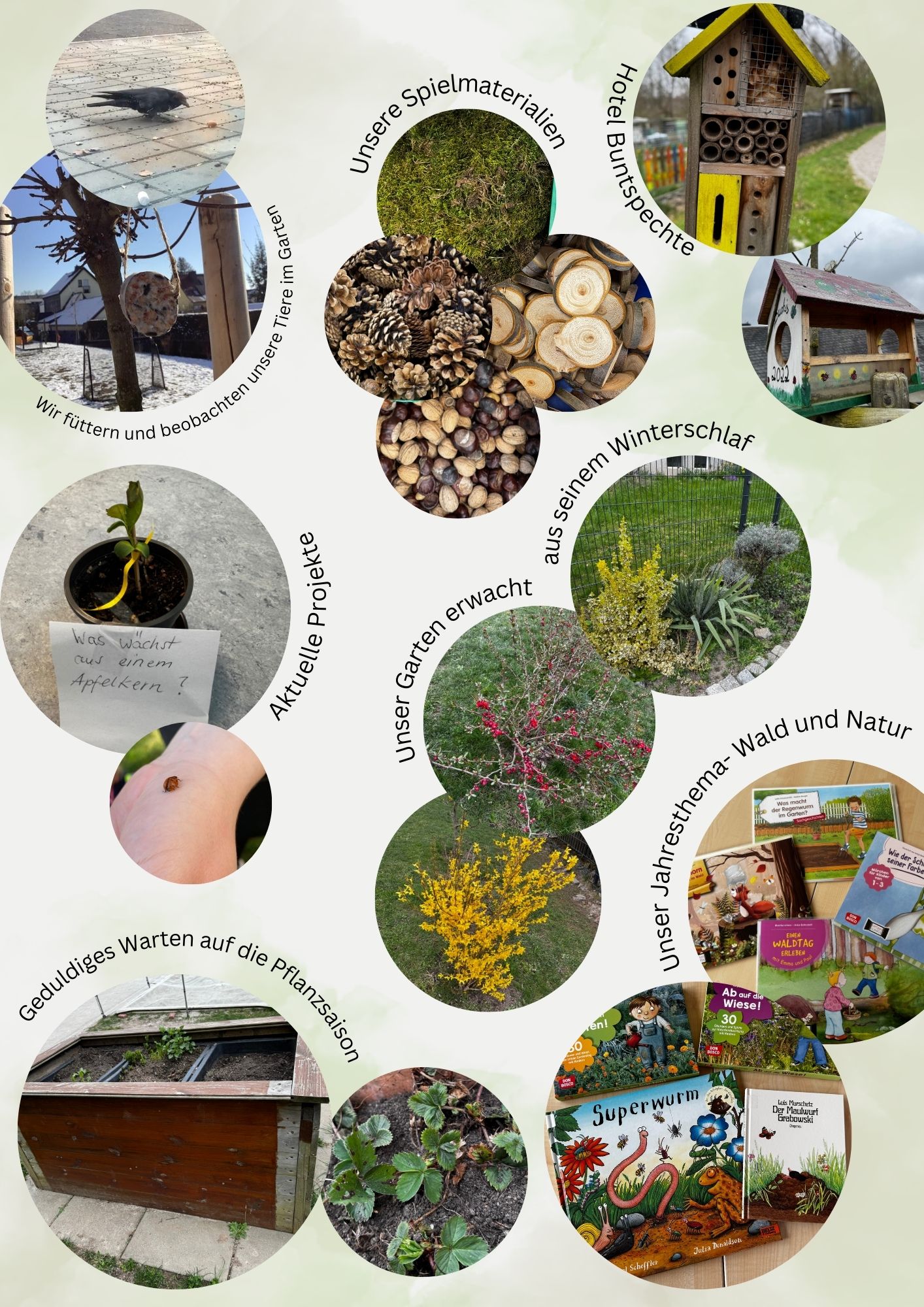
The Buntspechte nursery started a joint project with trainees from the vocational training centre under the auspices of the SFZ Förderzentrum. Every year, they choose an annual theme that allows the children to experience nature over a period of months. In times of digitalisation, the aim is to create a balance through experiential learning in nature.
Weekly excursion days to the forest and a team day in the countryside have been added. The garden was redesigned to be close to nature and raised beds were created, which were and are built, planted and maintained by children together with trainees from the wood workshop and horticulture department. Care and harvesting became part of everyday life at the daycare centre, accompanied by joyful learning and homemade strawberry cake.
Kindergarten Pünktchen: A piece of nature back with every step
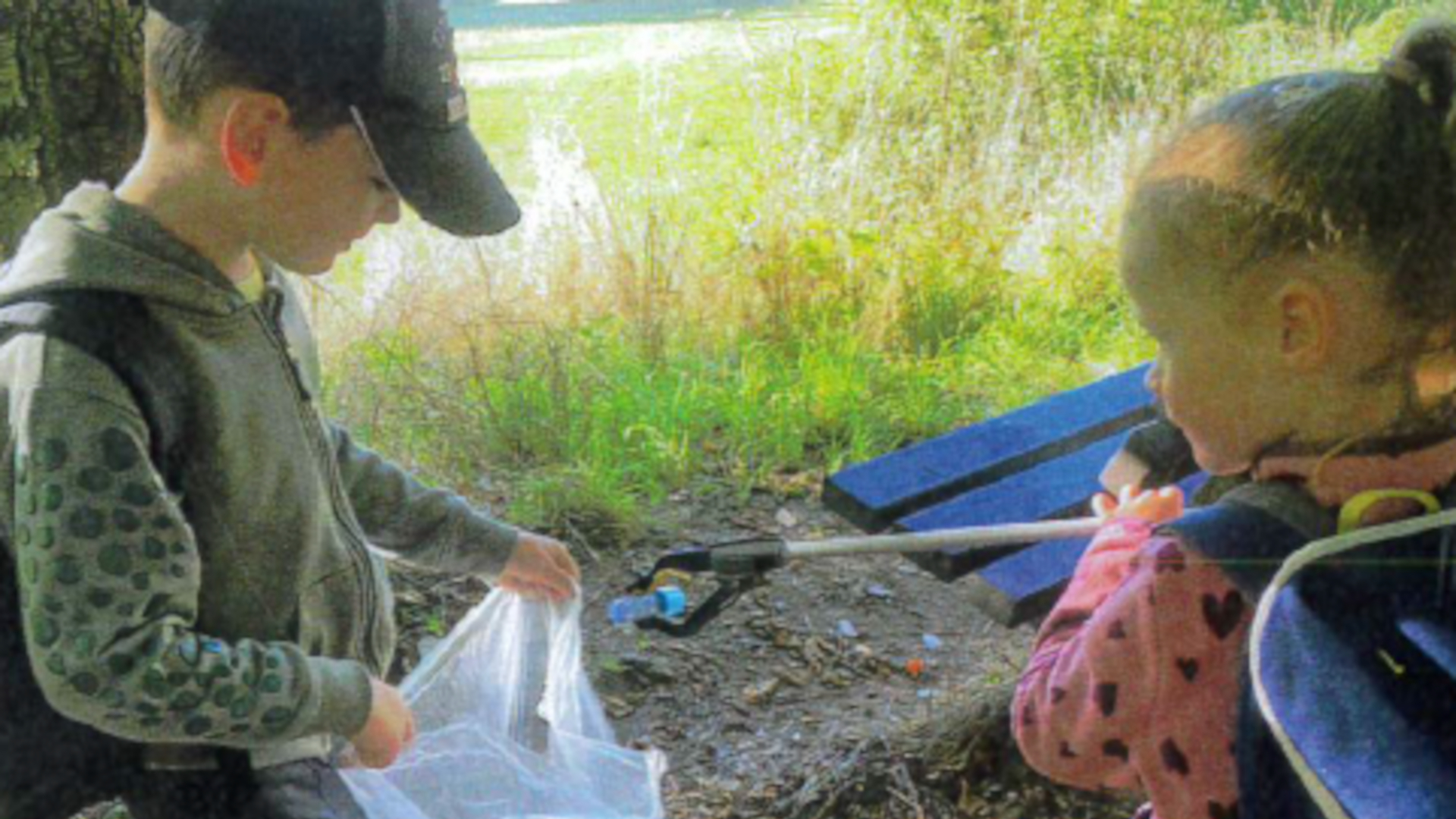
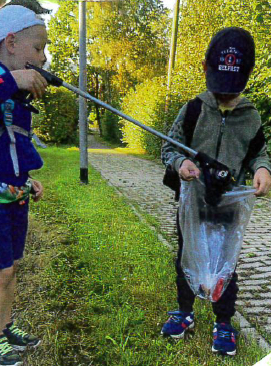
The children in the frog group took back a piece of nature with their project "With every step". Since 2023, the children have completed five forest and outdoor weeks. They noticed that there was a lot of rubbish in their neighbourhood on the way to Harthwald. Instead of carelessly leaving the rubbish lying around, the children picked it up with grabbers and took it back to the daycare centre.
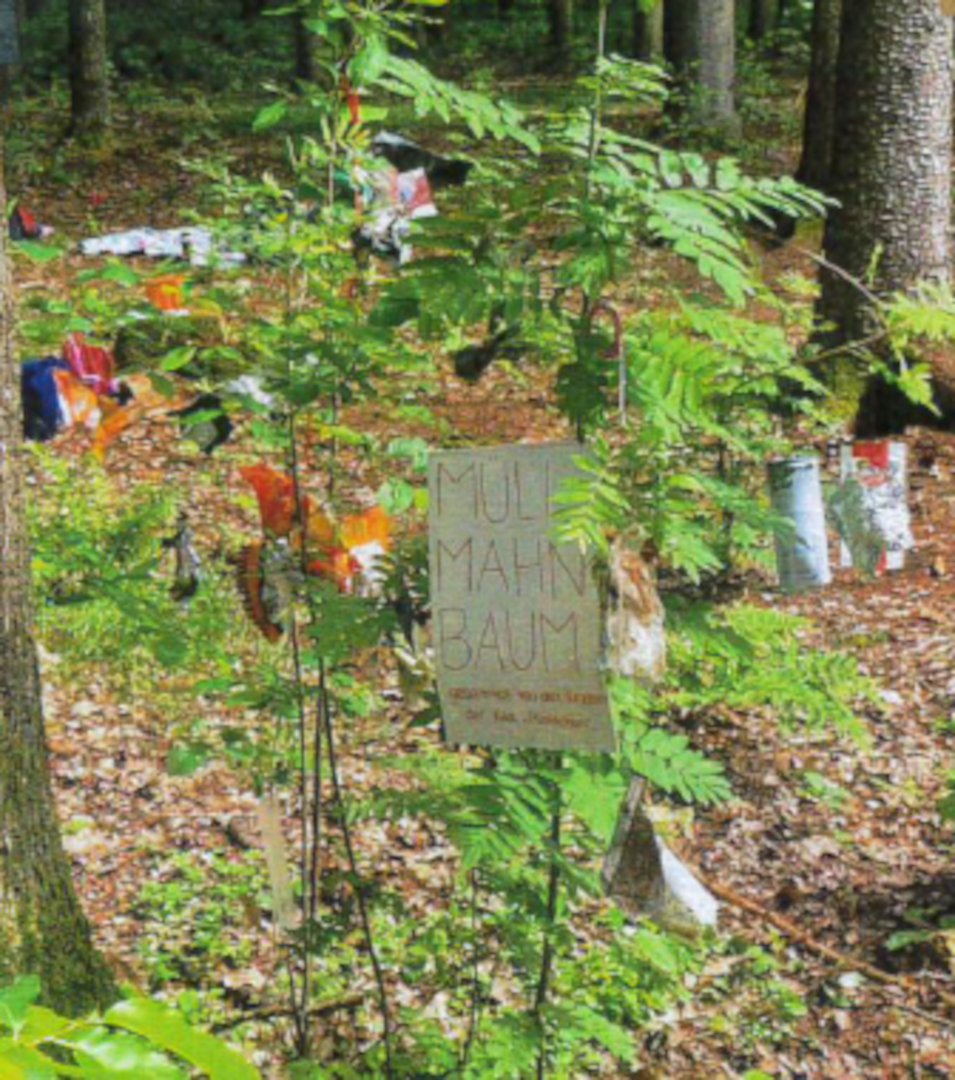
They repeated the rubbish collection every day of the forest and outdoor week. Day after day, the children were amazed at how much rubbish was lying on the paths, even though they had already collected it the day before. Above all, they found plastic, paper and glass rubbish as well as huge amounts of cigarette butts. As a reminder, the children decorated a rubbish reminder tree in the forest to draw the attention of forest visitors to the fact that rubbish does not belong in the flora.
As part of the project, the children learnt a lot about separating rubbish, treating the environment with respect and protecting the environment.
Am Hohen Hain daycare centre: The environmental monsters are on the loose to save our world


The little environmental monsters at the Bona Vita daycare centre "Am Hohen Hain" explored various topics as part of their project weeks. For example, they went into the forest to collect rubbish, researched how to filter pure and clean water and made colours from different vegetables. As well as learning how to separate waste correctly, they also learnt how natural materials can be used.
They also explored the decomposition process of different types of waste by burying rubbish in the daycare centre's garden and taking it out of the ground again after a certain amount of time. They realised that there are big differences depending on the type of waste. The environmental monsters also created their own paper and made their own rubbish monsters.
Kindertagespflege mezzopiano: The junior detectives: on the trail of nature
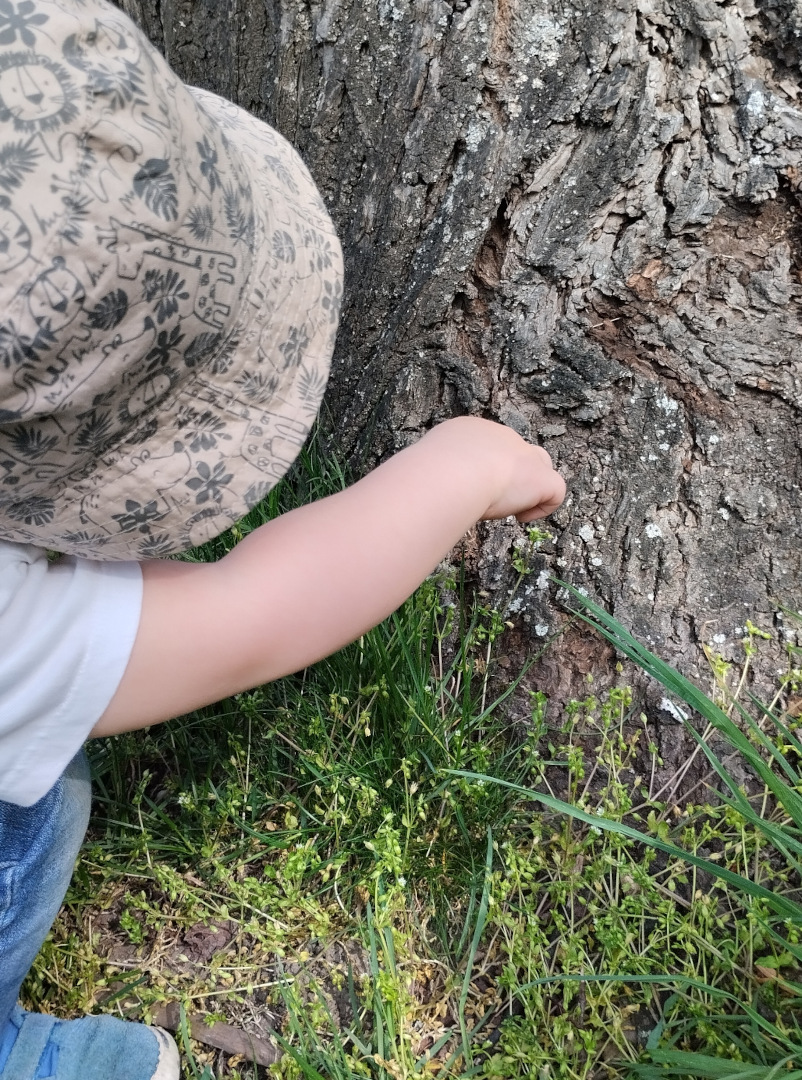
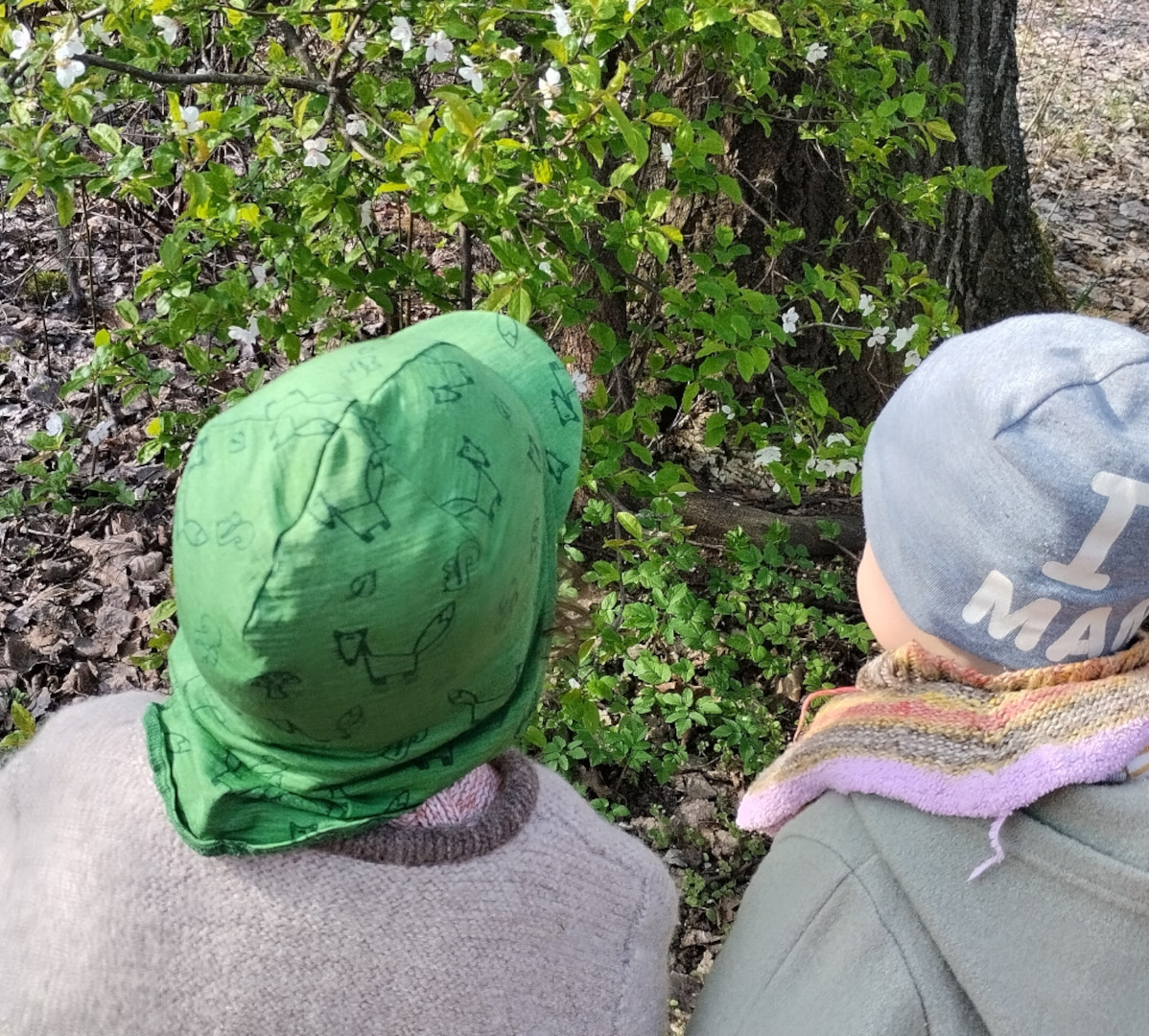
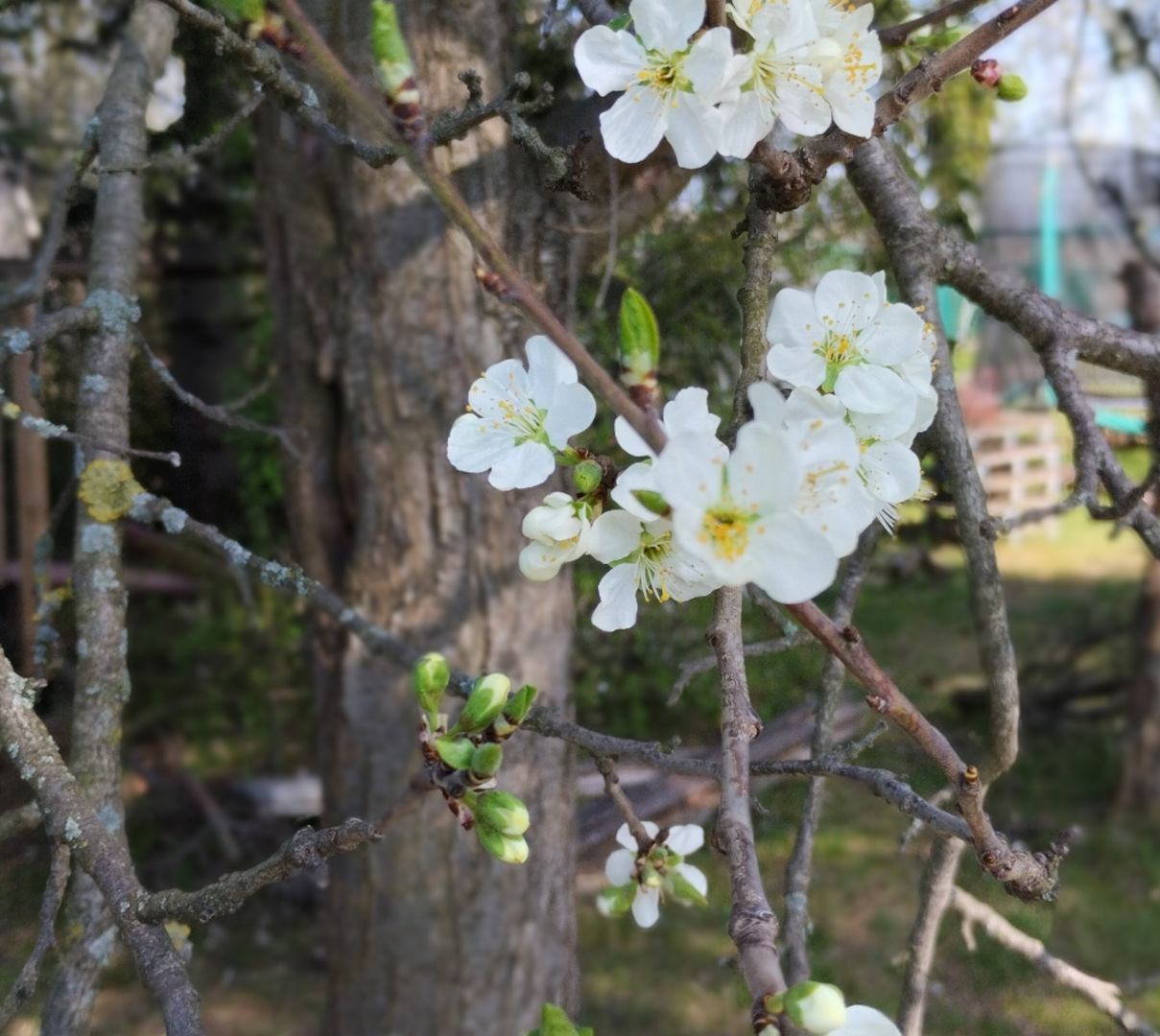
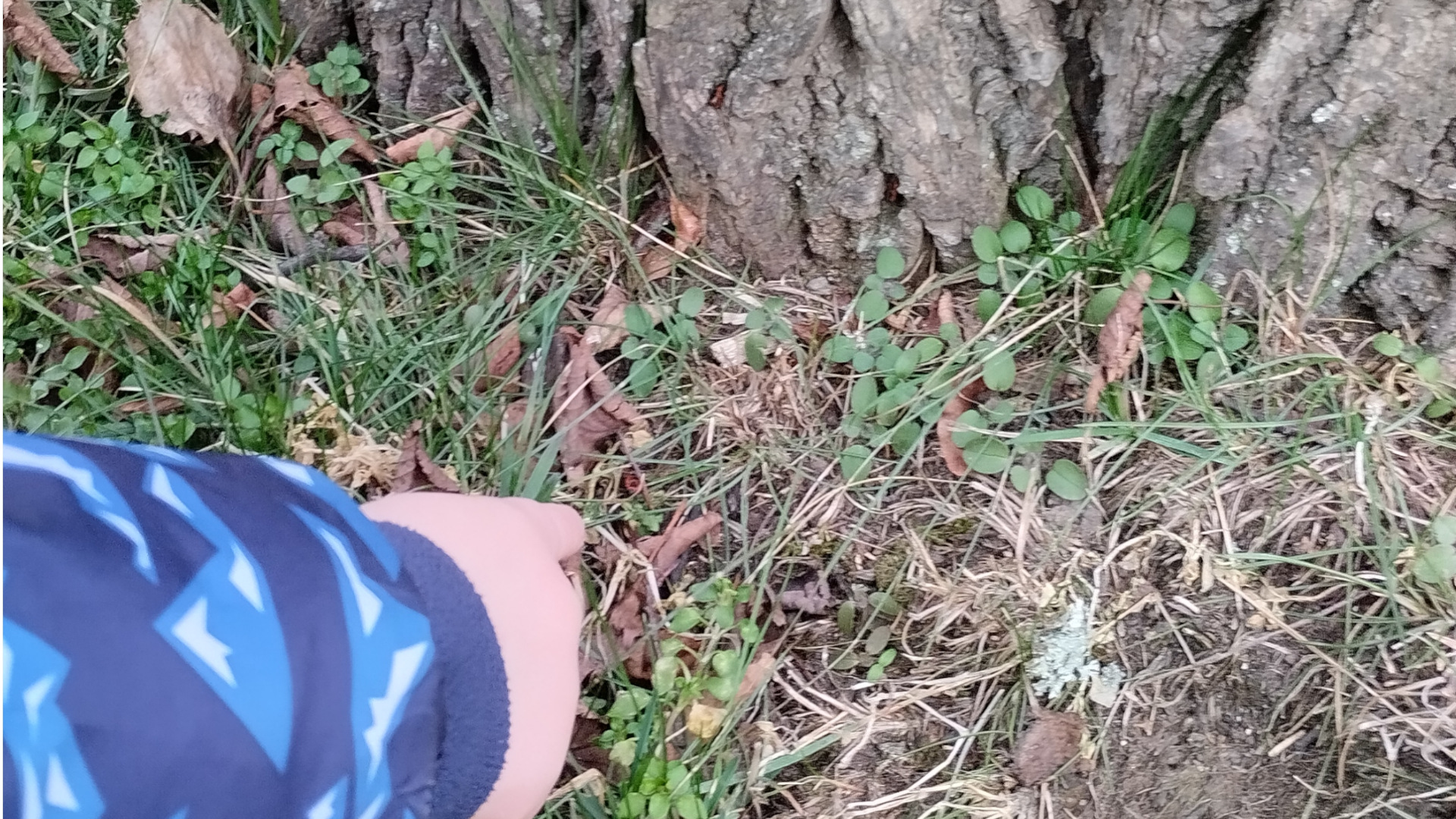
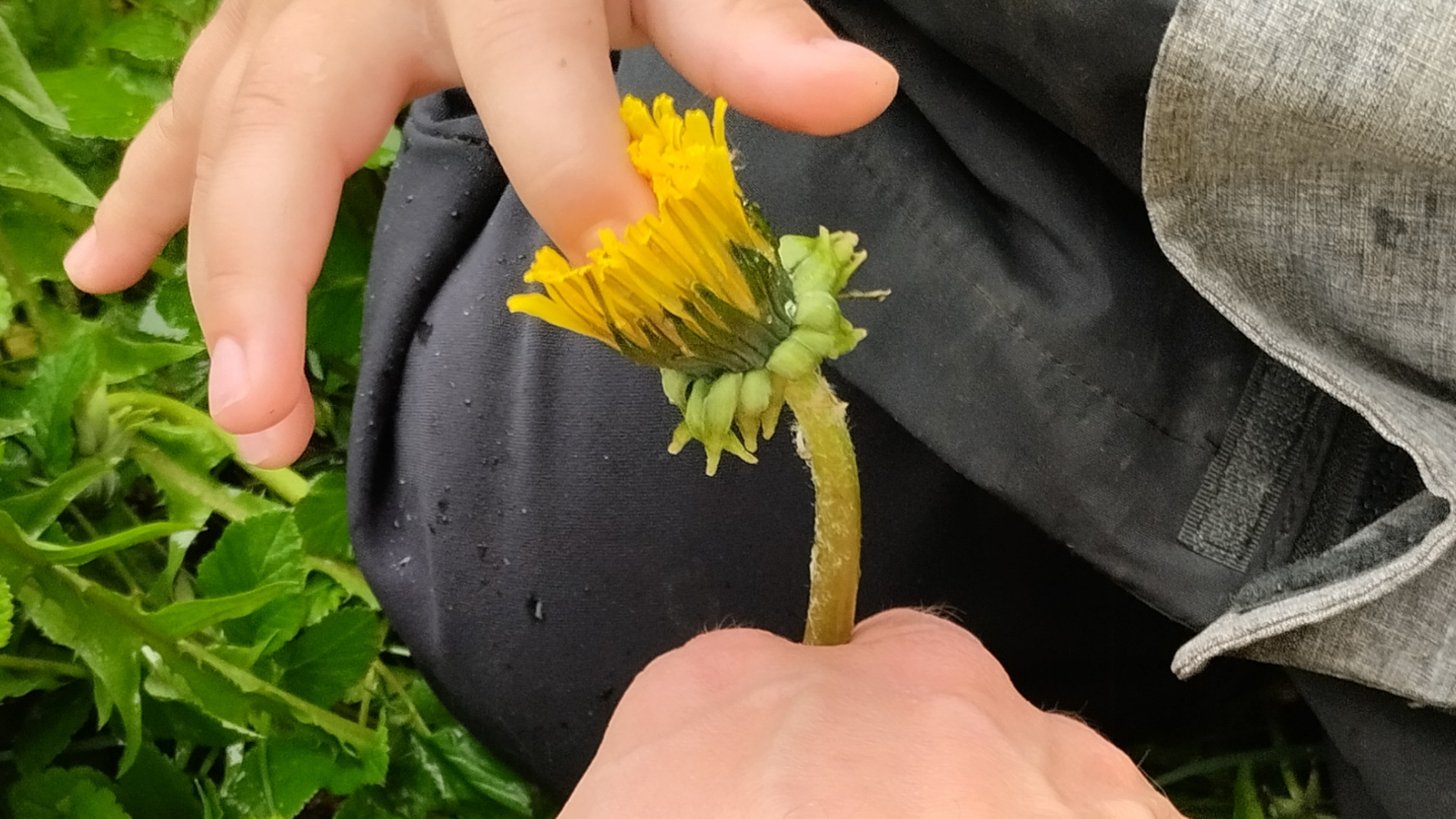
The youngest children at the mezzopiano day care centre in Chemnitz also took part in the environmental award. The little environmental detectives discovered their surroundings in a very active way: They perceived nature with their senses and marvelled at the small wonders of nature.
Projects in the primary school category
Erich Kästner Aue development centre: We do good for insects


In the summer of 2024, pupils from the Erich Kästner Förderzentrum Aue discovered ladybird eggs in the school playground and began to study the development of ladybirds and insects in general. They observed the development process directly on site, documented it with photos and informed their classmates via posters. In order to specifically attract insects and provide them with a new habitat, they created flower beds in flower boxes and finally built their own insect hotel with great enthusiasm.
Along the way, they learnt a lot about the importance of insects and how to create habitats for them. Supported by their teachers, they also planted the school grounds with insect-friendly rose bushes.
Grundschule Sonnenberg: The worm box - little helpers in the classroom for a greener world

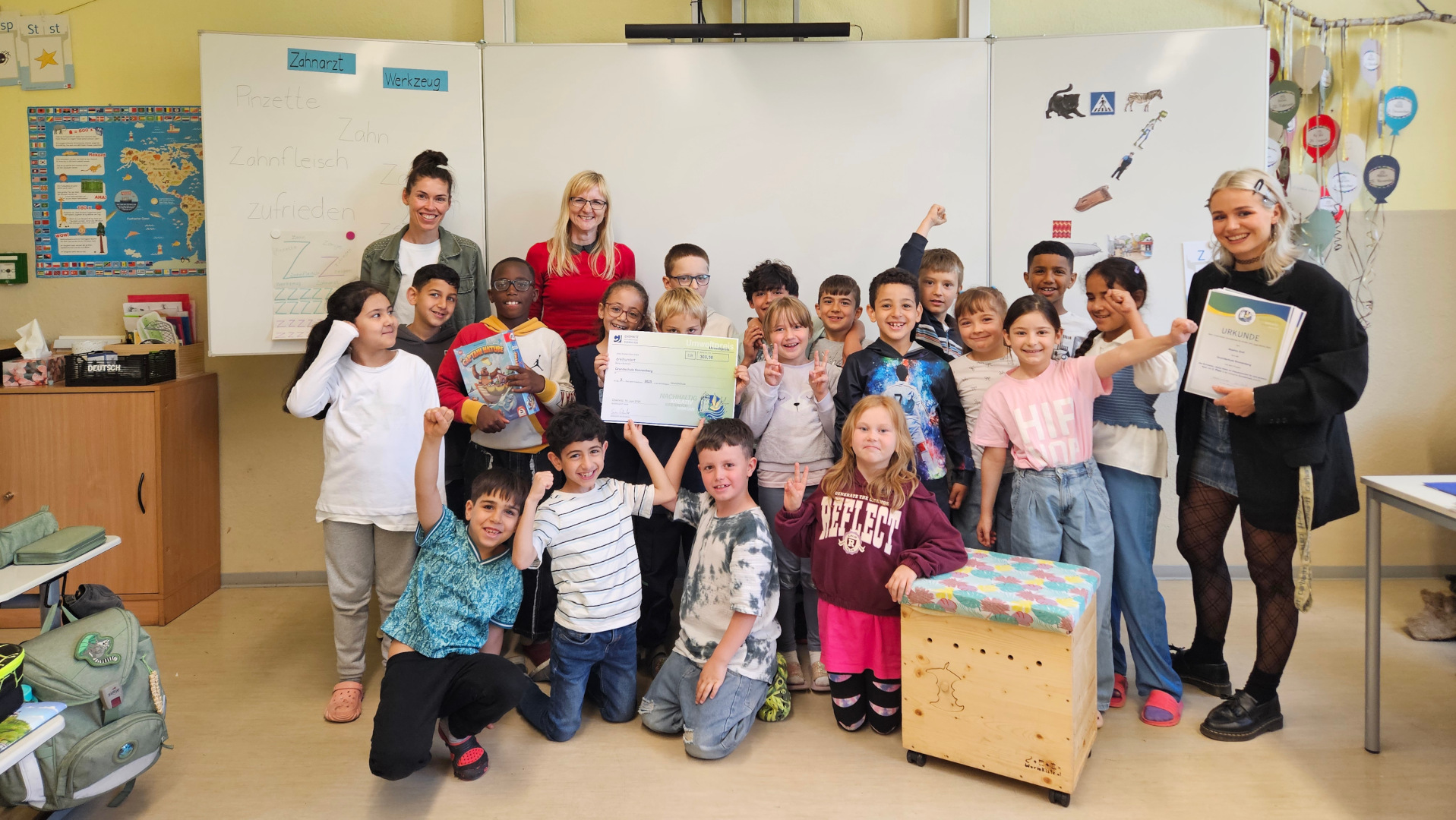


Pupils in Year 1 at Sonnenberg primary school transformed their organic waste into valuable soil with the help of earthworms. To do this, they built a worm box from a kit as part of their interdisciplinary lessons. Once built, the worm box could be prepared for the earthworms to move in. The children filled the box with substrate, coconut fibres, moist potato shreds and water. Afterwards, 500 worms of the species "Eisenia fetida" were able to move into the box.
The children took it in turns to look after the worm box and the earthworms. They fed the worms with the organic waste and added a mineral mixture every three weeks. Every 6 months, 1 kilogram of worm hummus can be obtained from 10 kilograms of organic waste. The children use the worm hummus for the school garden and for houseplants. During the project, the children also learnt about the importance of sustainability and began to think in cycles.
gruuna Schule gGmbH: Kids & Plants
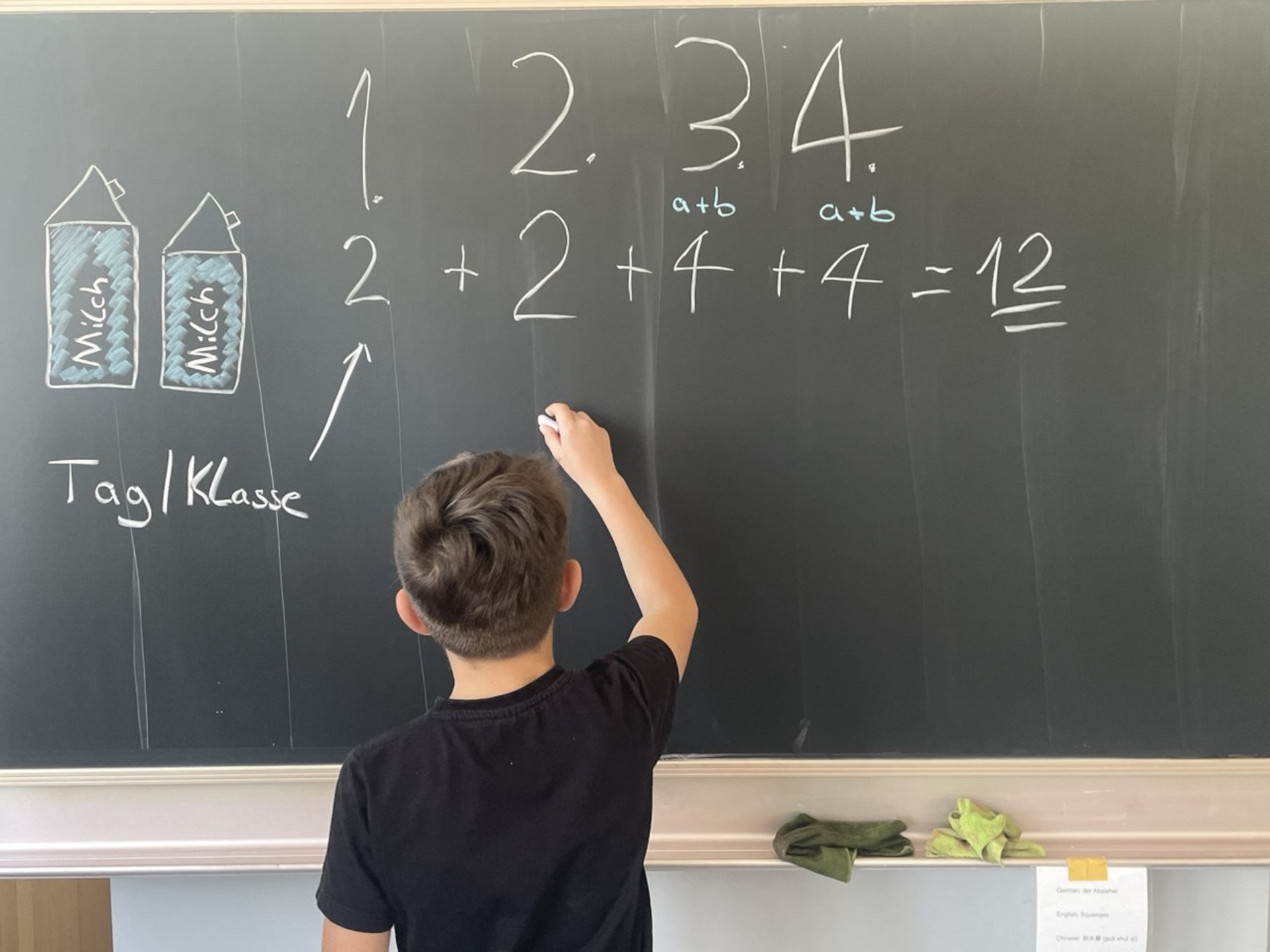
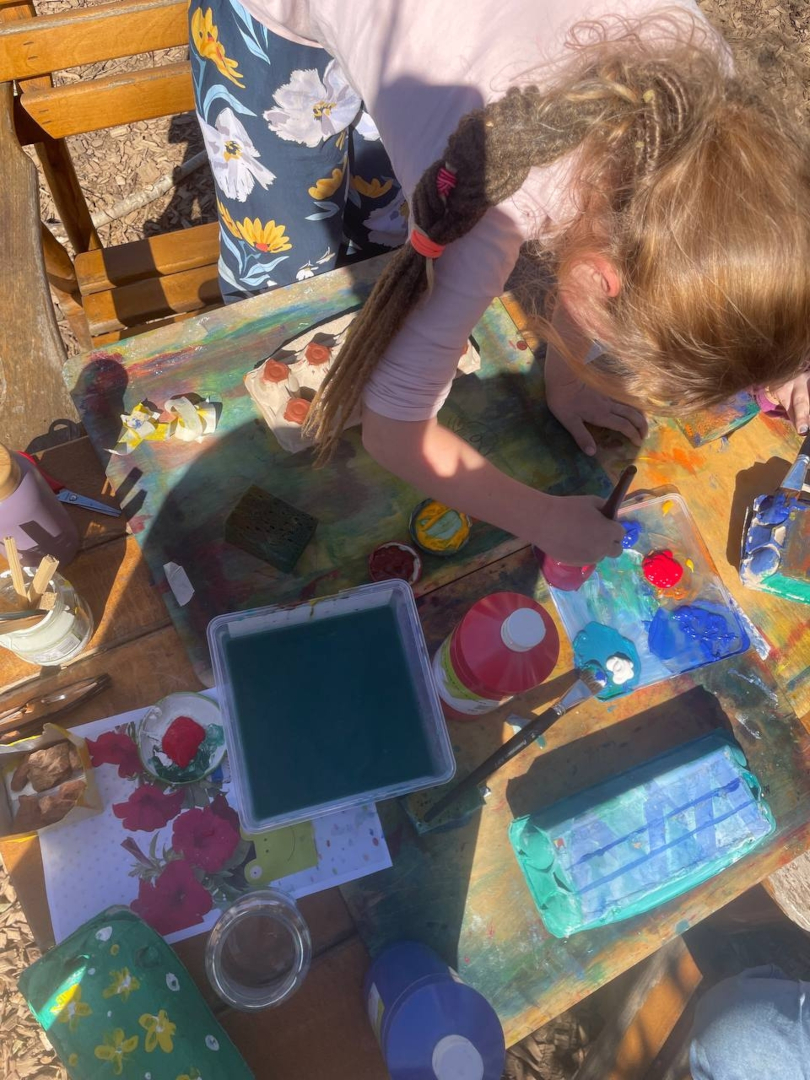
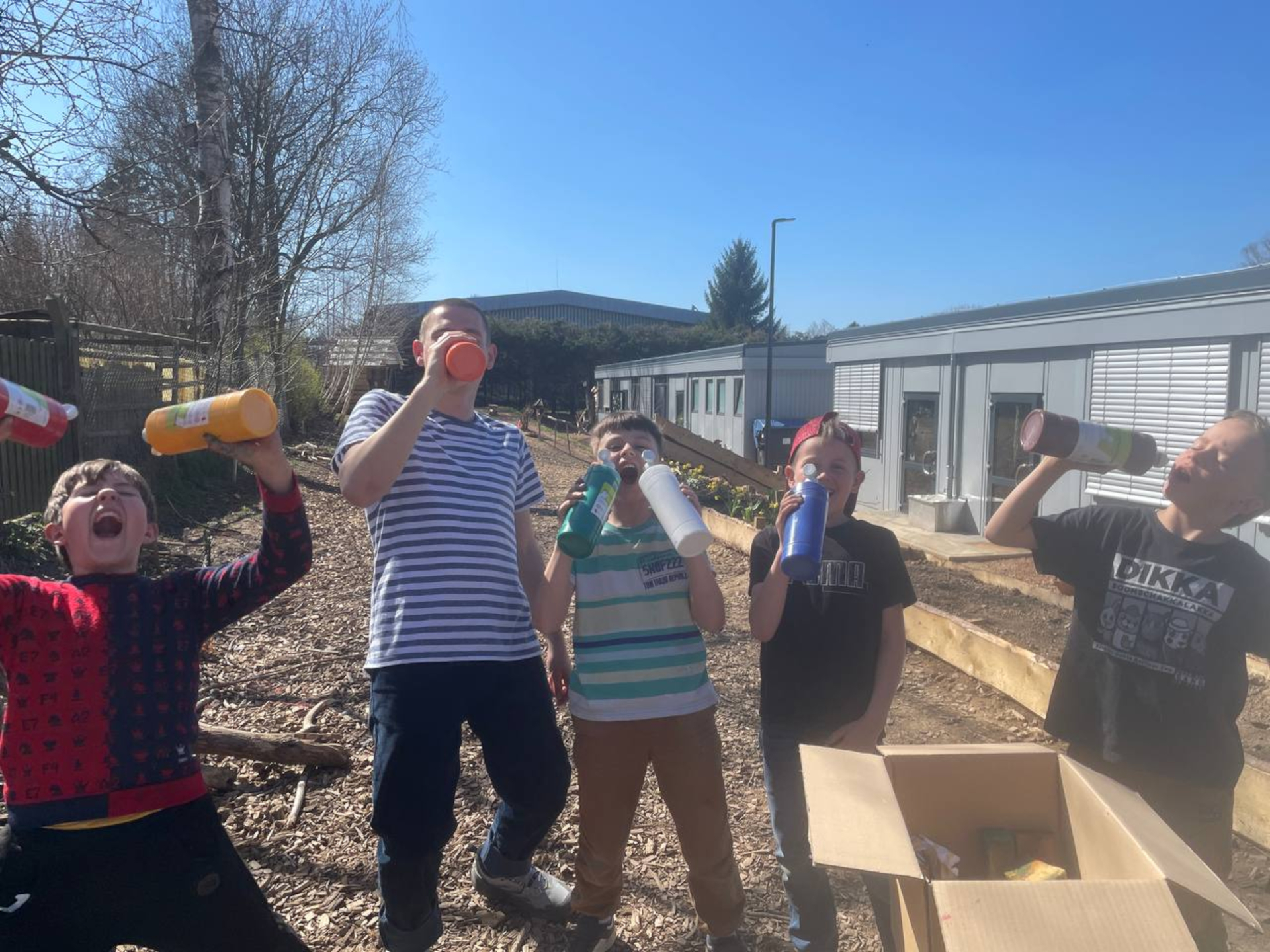
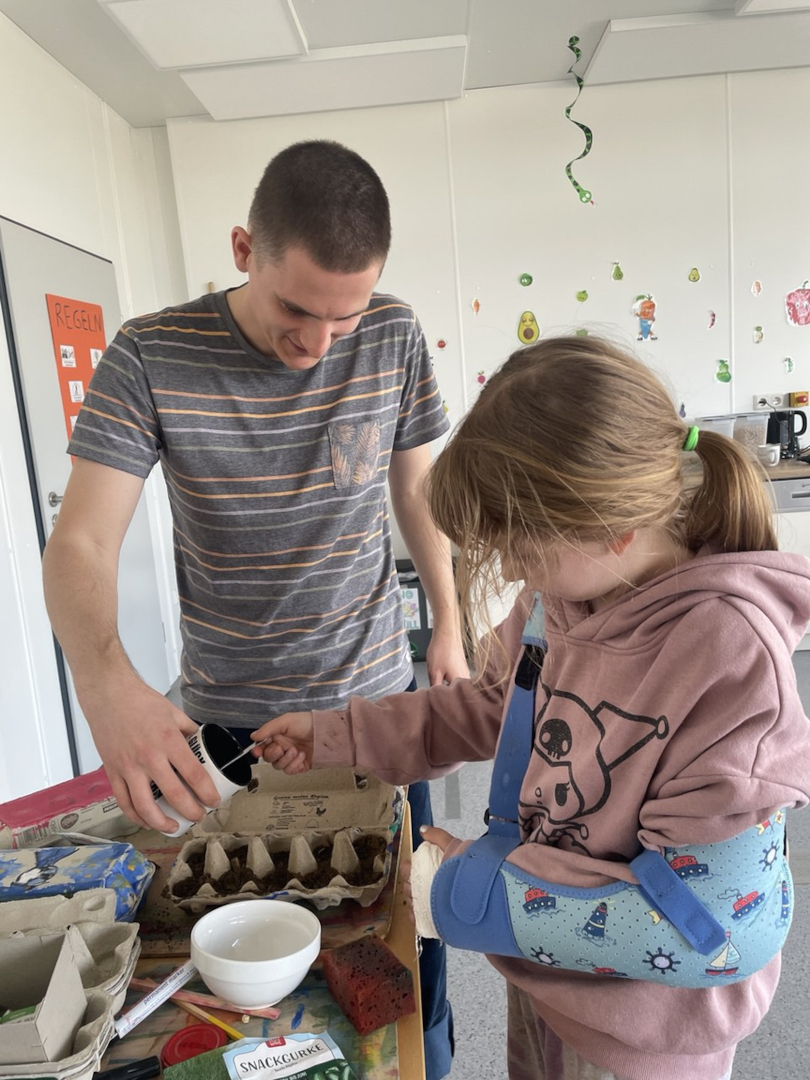
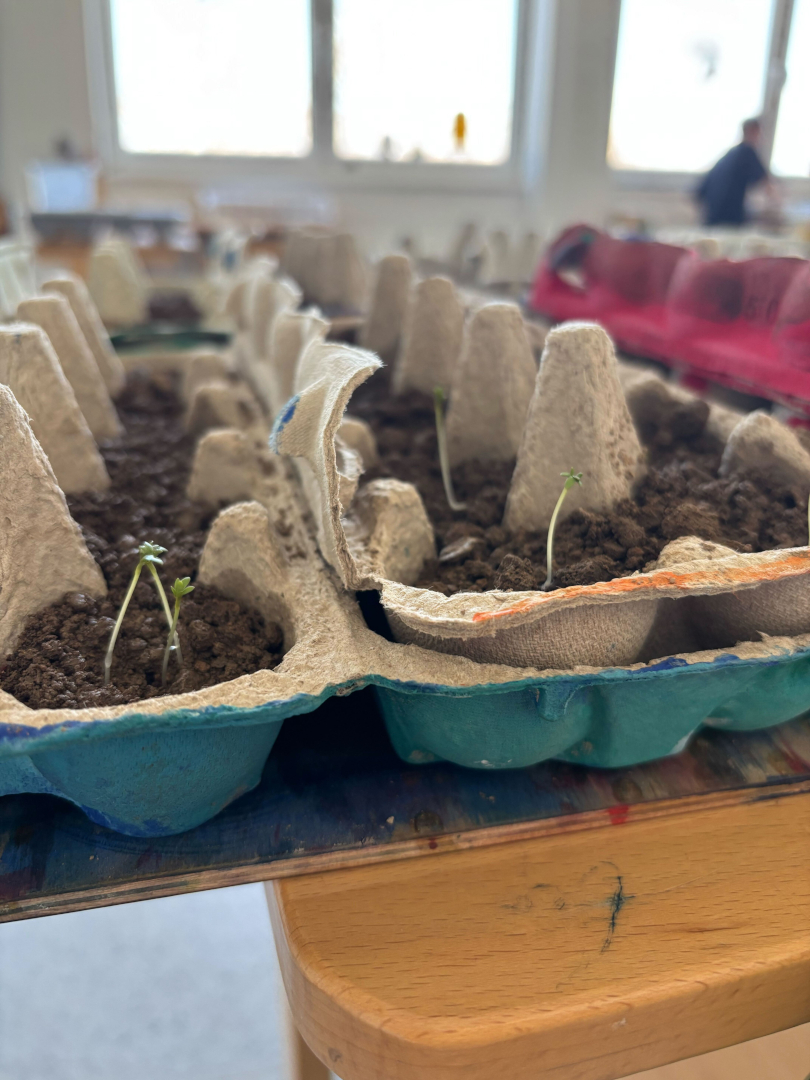
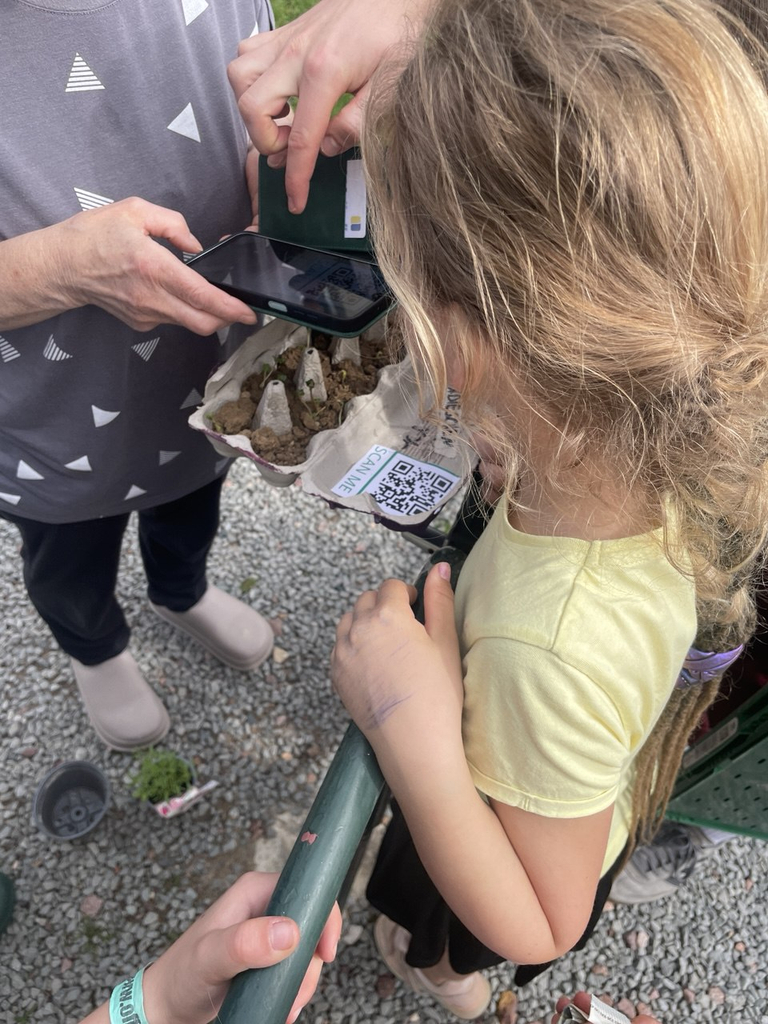
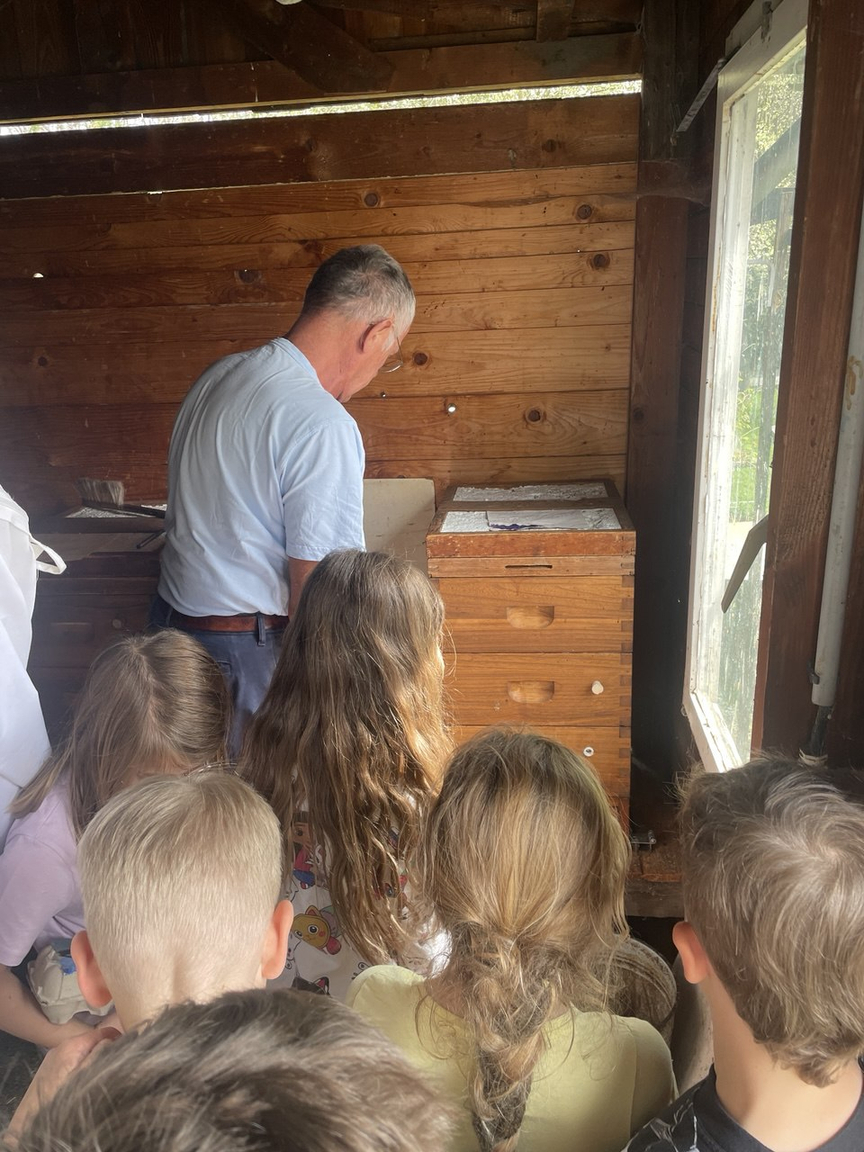
Class 3b at gruuna Schule gGmbH discovered that they use a lot of milk and egg cartons each week. Together with their teachers, the children thought about how they could reuse the packaging sustainably instead of throwing it away. They came up with the idea of planting flowers and herbs in the cartons and redesigning them.
The children then took the newly designed and planted boxes to the school's neighbours and gave them the planted boxes as a gift, using a QR code to draw attention to the issue of sustainability. The neighbours thanked the children warmly and showed them what good they were doing for nature in their gardens.
Rudolfschule: 1, 2, 3, 4 - we remove this rubbish
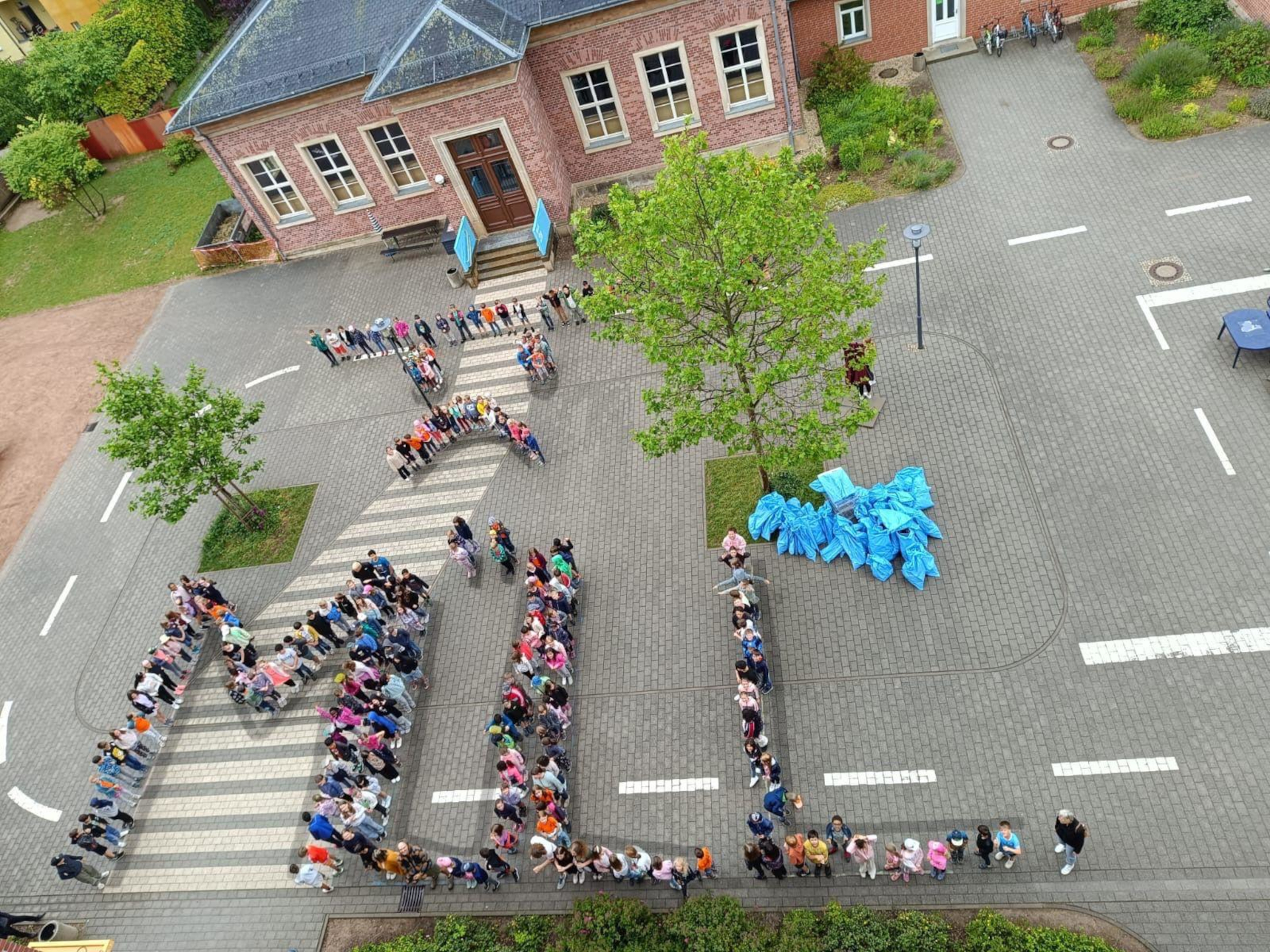
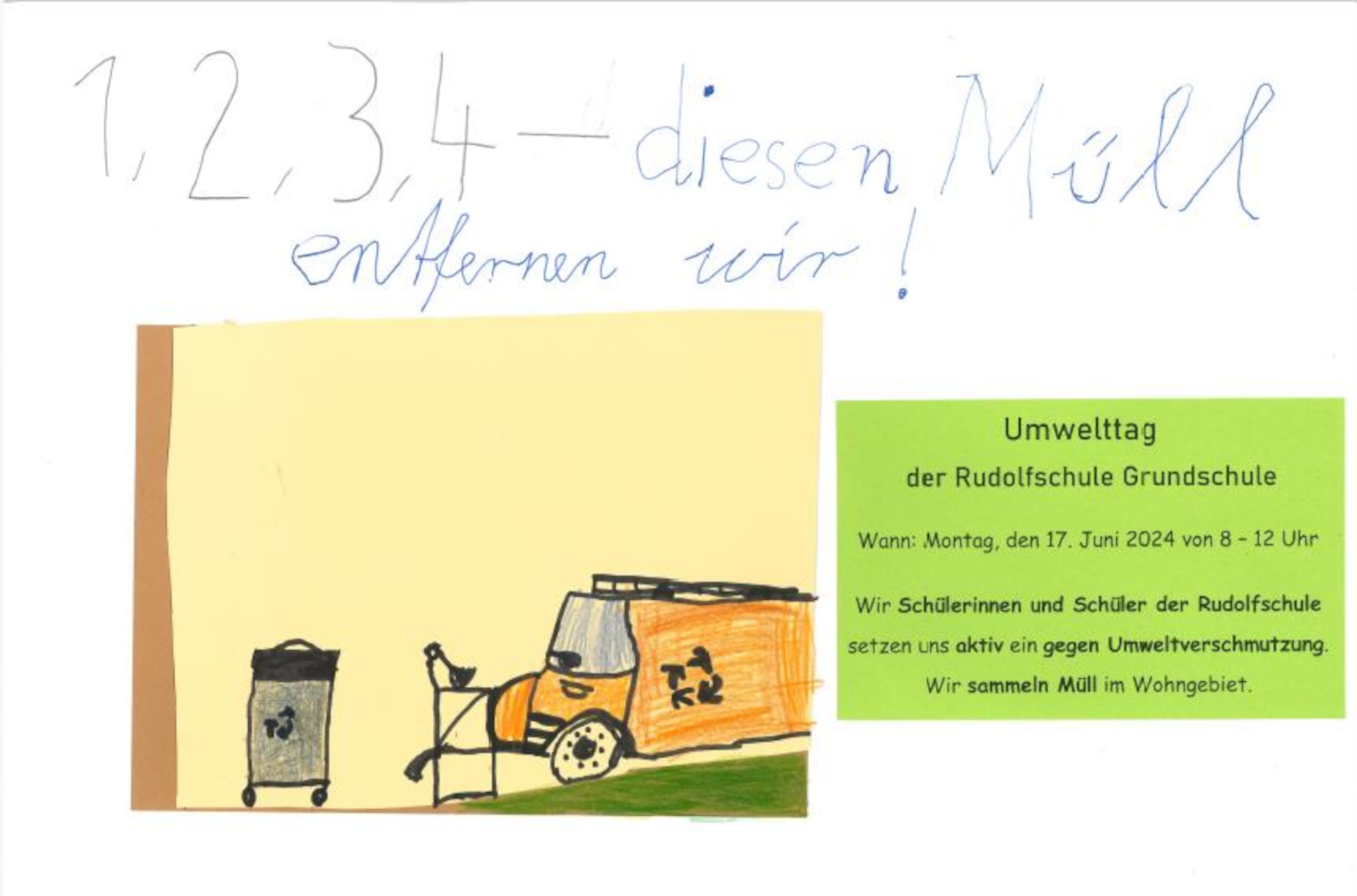
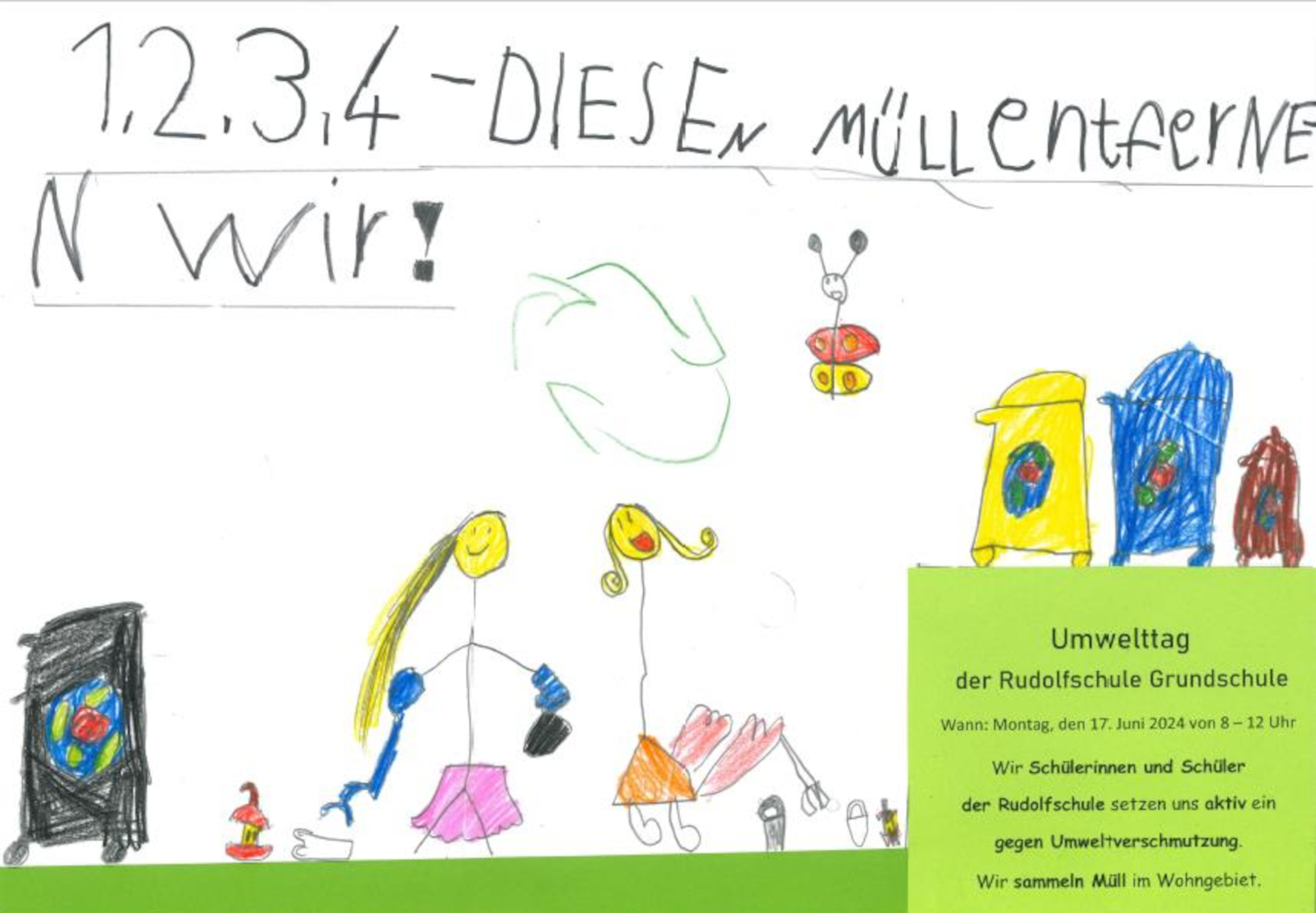
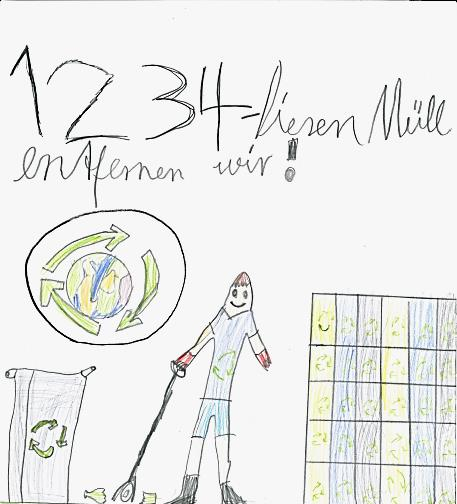
In June 2024, Rudolf School organised an Environment Day on the initiative of the pupils. Around 270 children, teachers, parents, partners and cooperation partners of the school took part in the day of action. All classes collected rubbish around the school and took part in various workshops at the school. For example, the pupils learnt about water pollution and tested their knowledge of waste separation.
The fourth-graders also learned about climate change and the impact of individual behaviour through theircarbon footprint. Local residents were also informed about the projects by means of posters they had designed themselves.
Hort am Stadtpark: kitchen garden


The children at the after-school care centre at the Stadtpark implemented various environmental projects. These included collecting rubbish, building insect hotels and hedgehog houses, creating an after-school garden with a herb snail and insect meadow as well as caring for birds and hedgehogs. The children learnt a lot about sustainability and the conscious use of resources. Participation strengthened environmental awareness and should remain an integral part of the after-school programme in the future.
Hort Hoffmannsstraße 35/Pablo Neruda Primary School: The rubbish detectives from Pablo Neruda Primary School
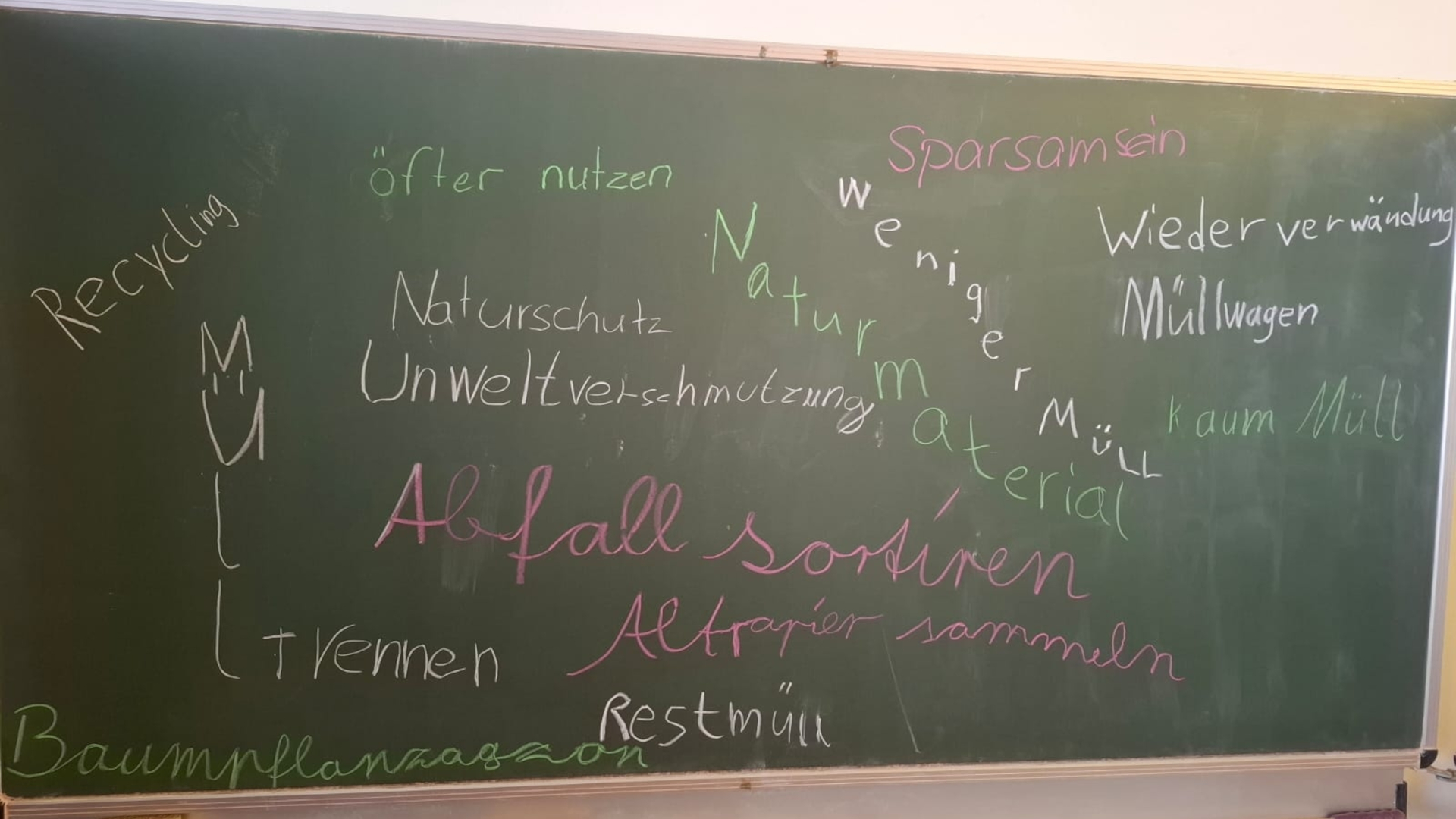
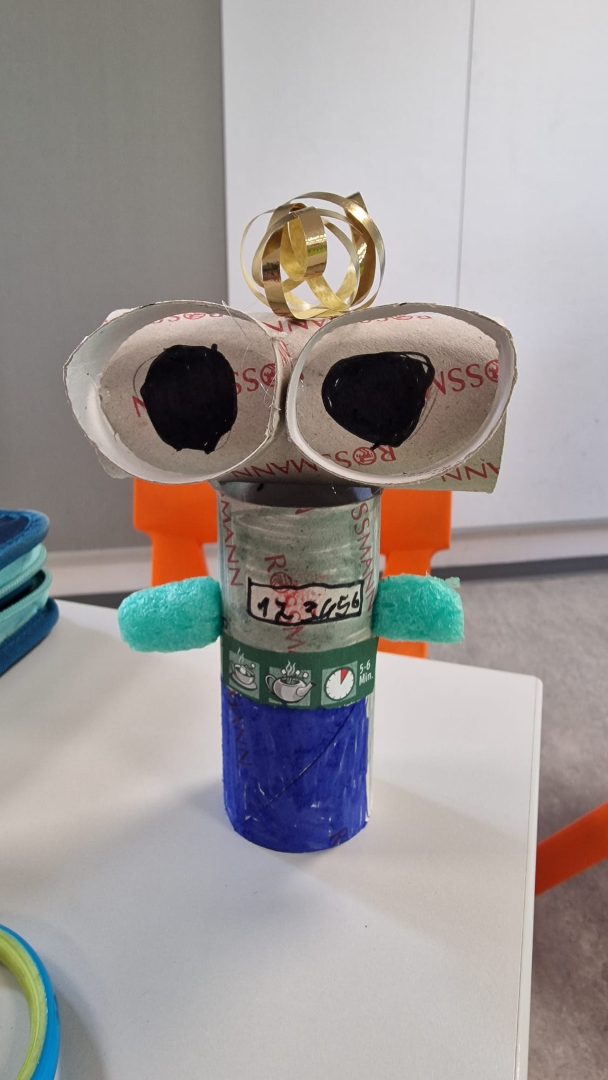
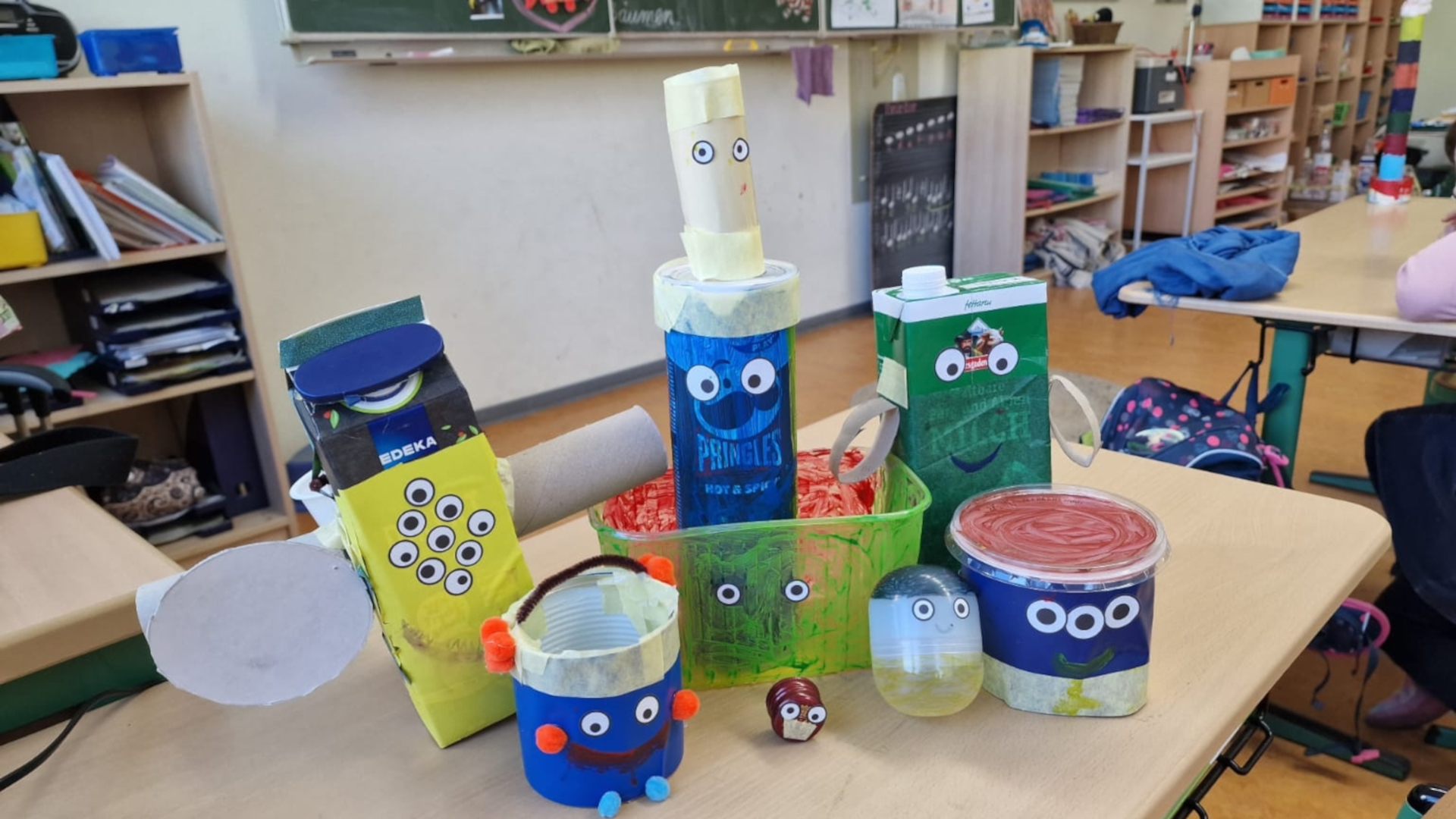
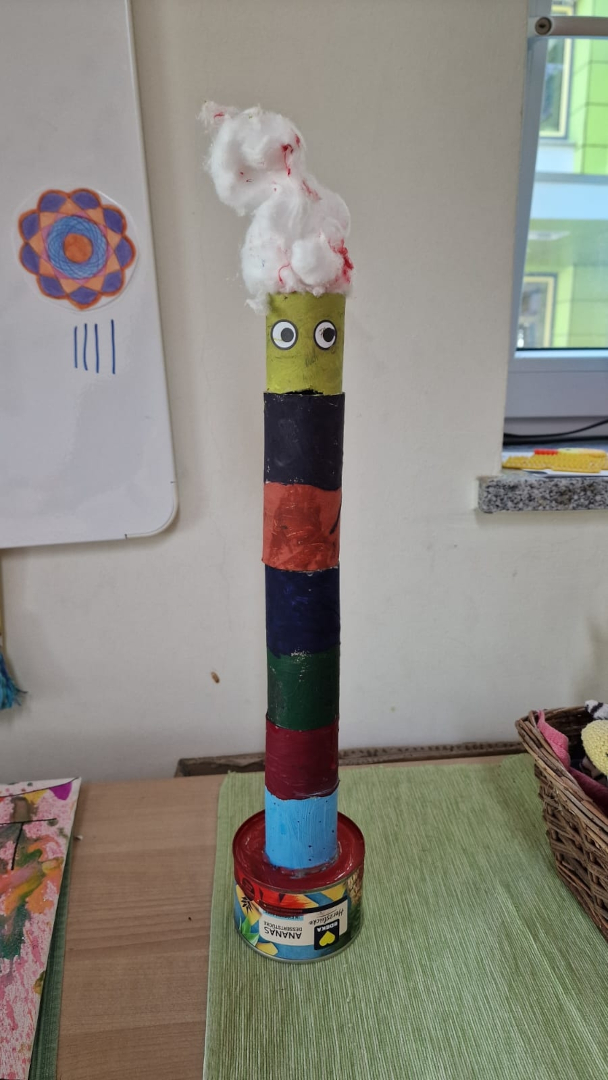
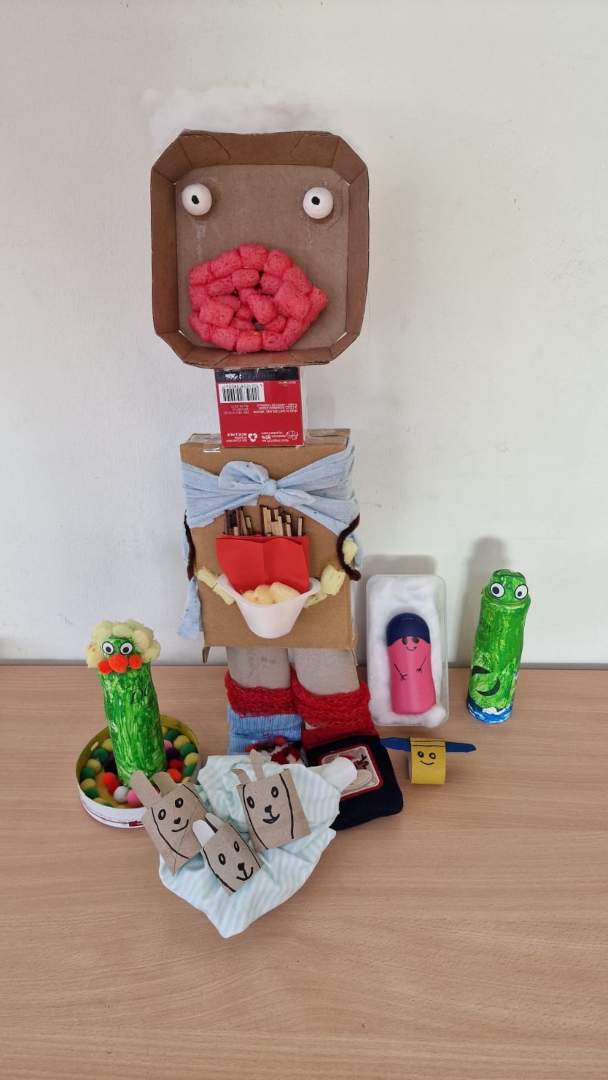
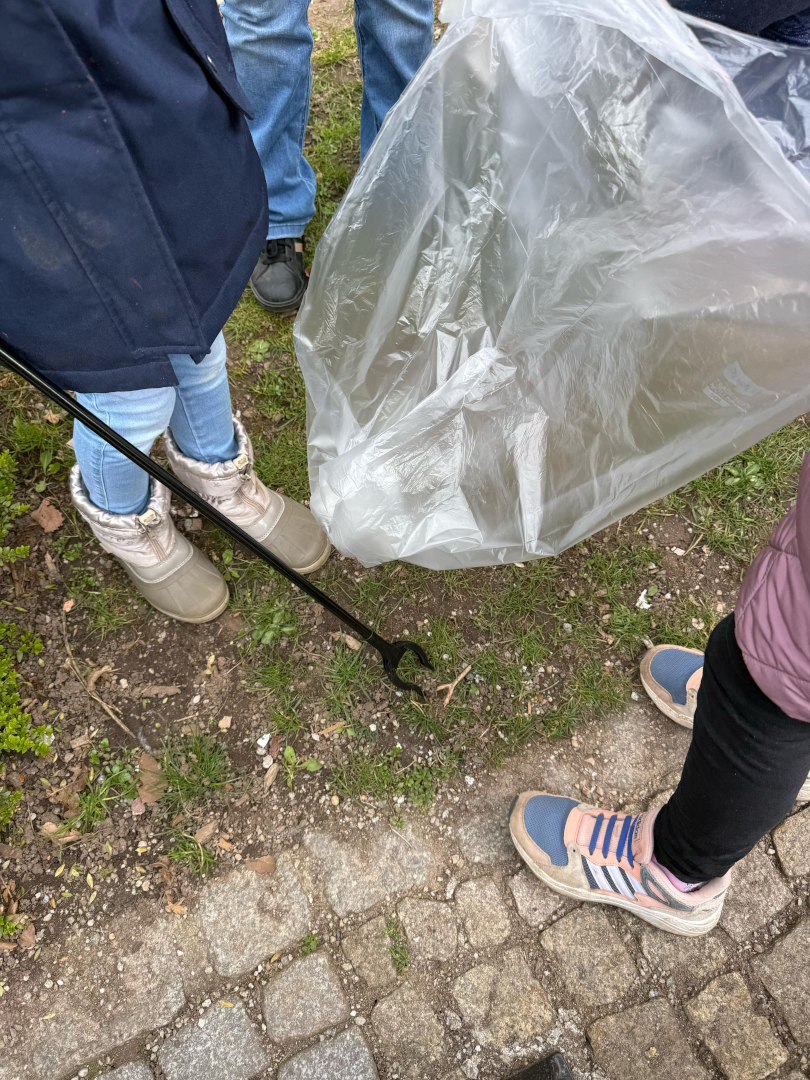
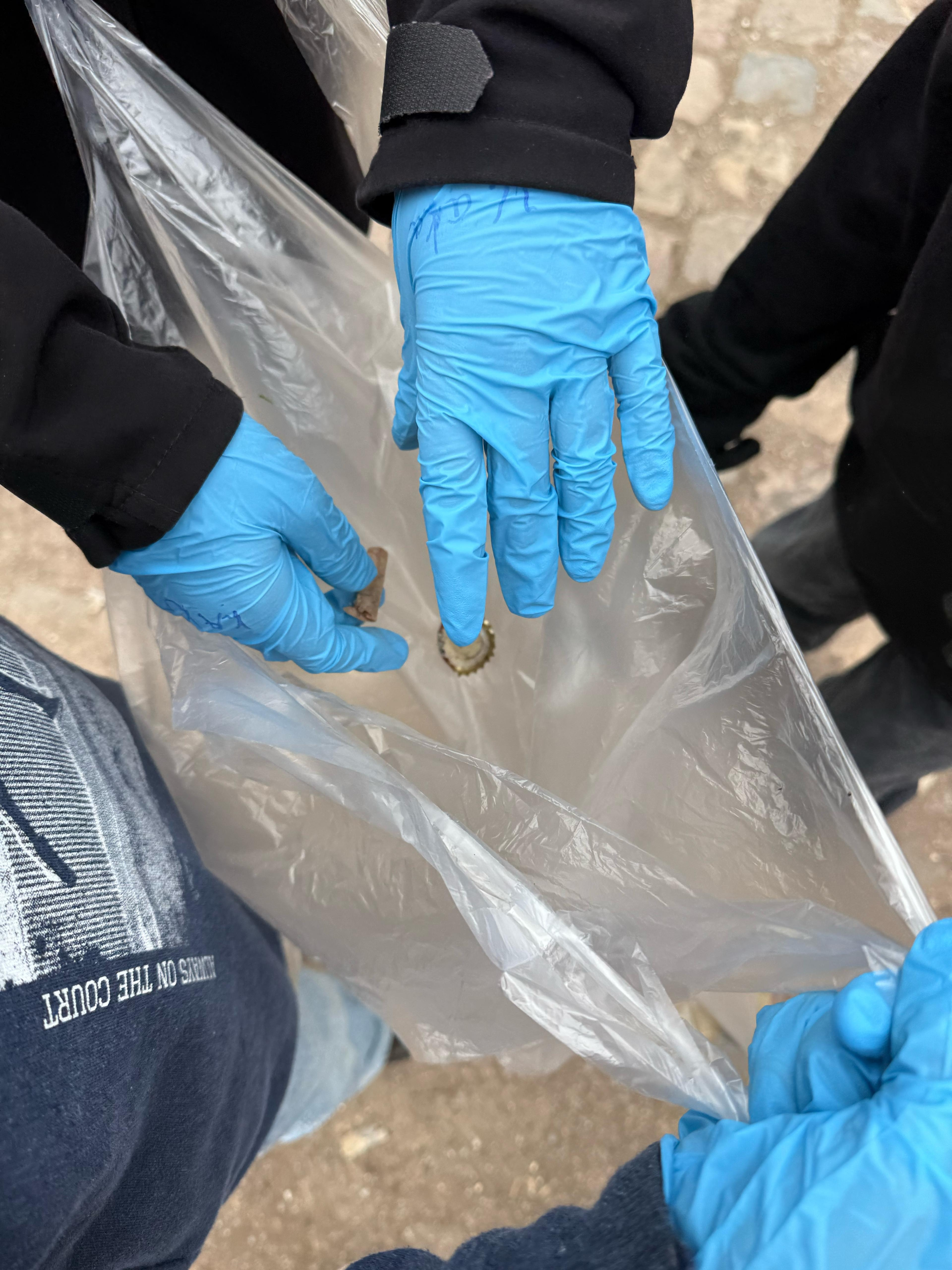
At the Pablo Neruda primary school in Chemnitz, 73 children in Year 3 took part in the "Waste Detectives" project. The children developed an awareness of waste separation, waste avoidance and sustainability. The project ran from March to April 2025 and included creative, cognitive and practical activities such as film screenings, craft activities with recycled materials, educational games and a joint waste collection excursion. The project was supported by parents, ASR Chemnitz and the educational staff. The children were motivated and showed great interest in environmental protection - the project had a noticeably positive impact on their environmental behaviour.
Hort Pfiffikus: How sunflowers emerged from a full lunch box
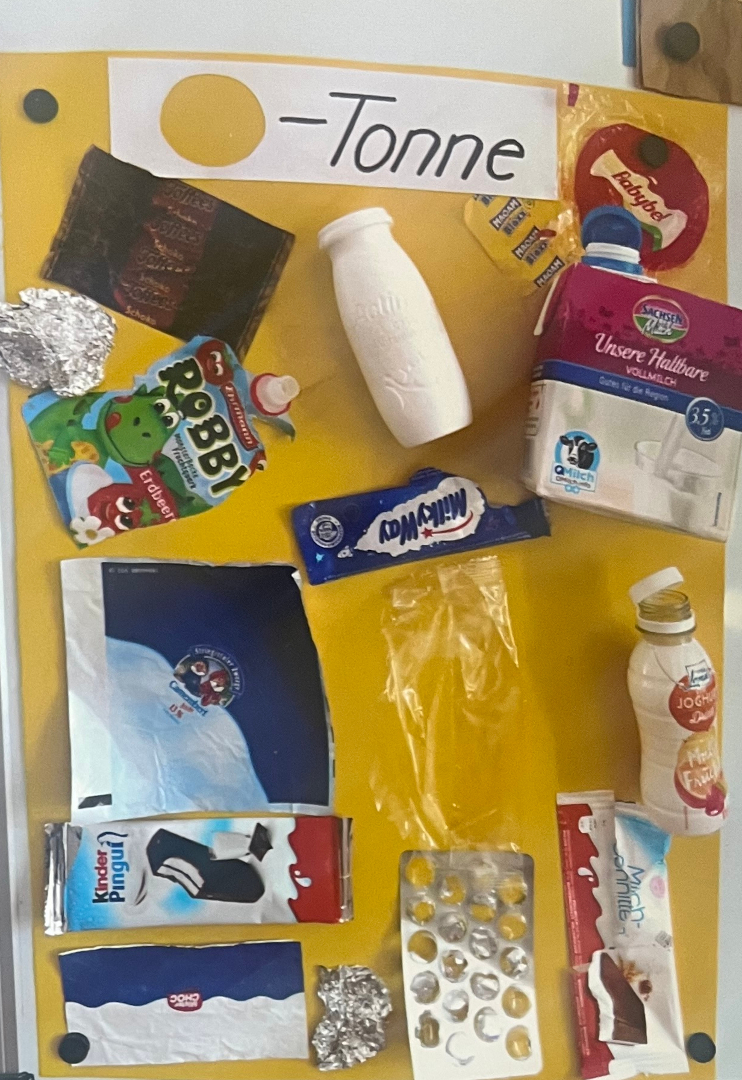
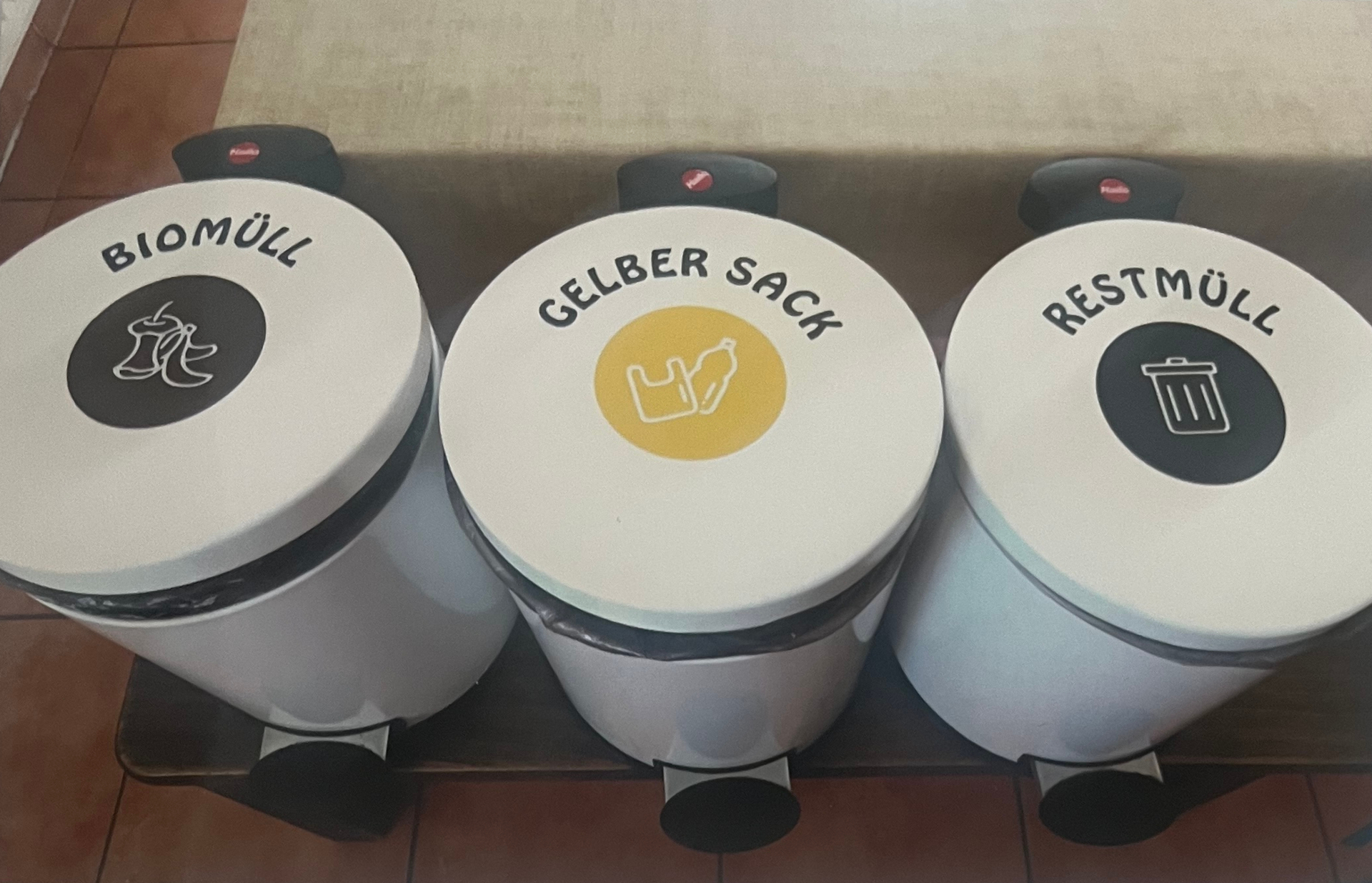
The children at the Pfiffikus after-school care centre took a closer look at the correct way to separate waste with their project. As part of the project, they created posters for the various rubbish bins. The children attached their own rubbish to these posters to make it easier for them to memorise the correct classification. The posters were displayed in the daycare centre. The rubbish bins were also labelled accordingly. As a result, all the children became little environmental rangers and are now aware of the topic of waste separation.
The project also made the children realise that you don't have to wrap everything up again. As a result, more and more unnecessary packaging disappeared from the lunch boxes. In this way, the children are helping to avoid waste.
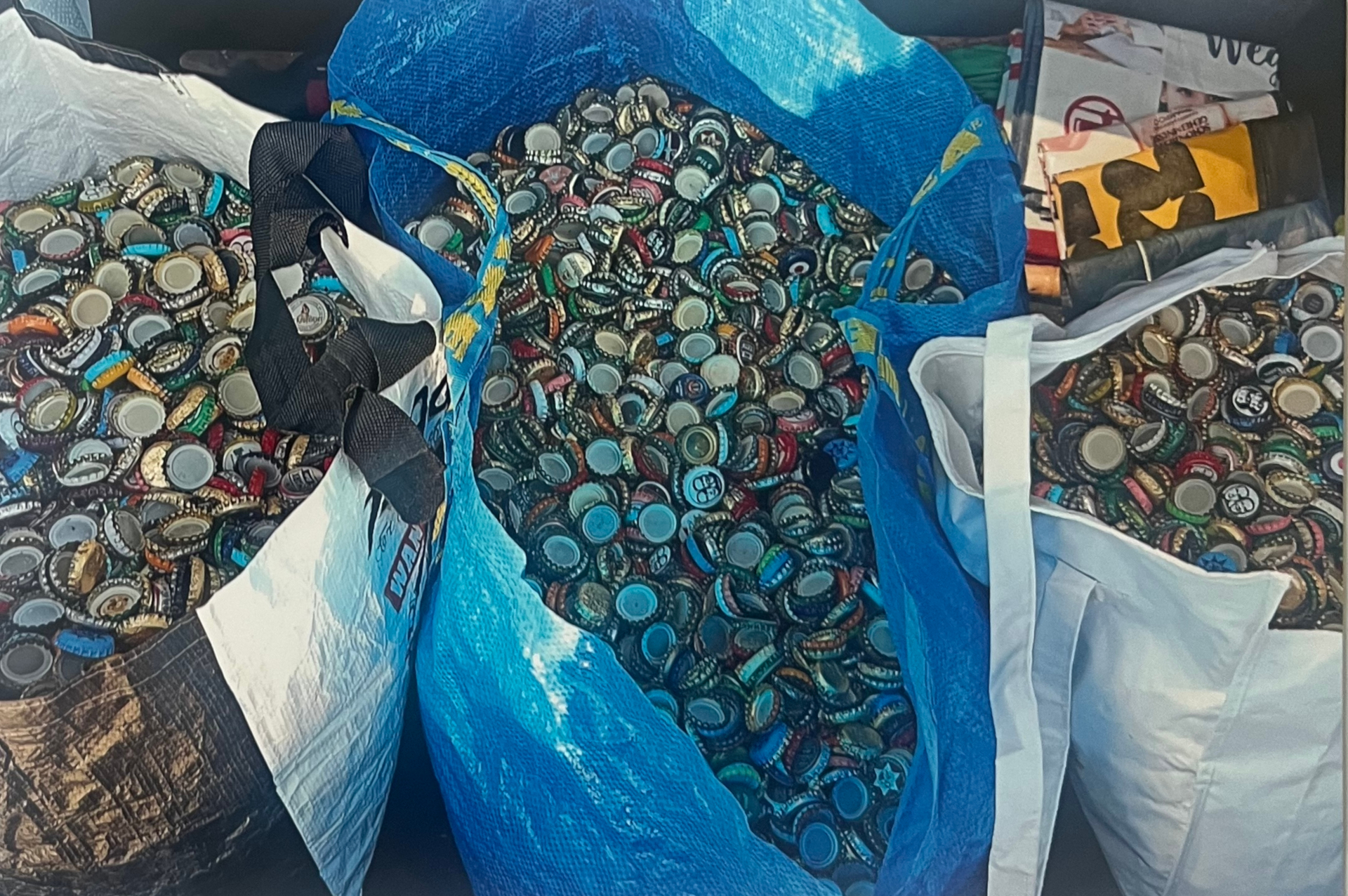
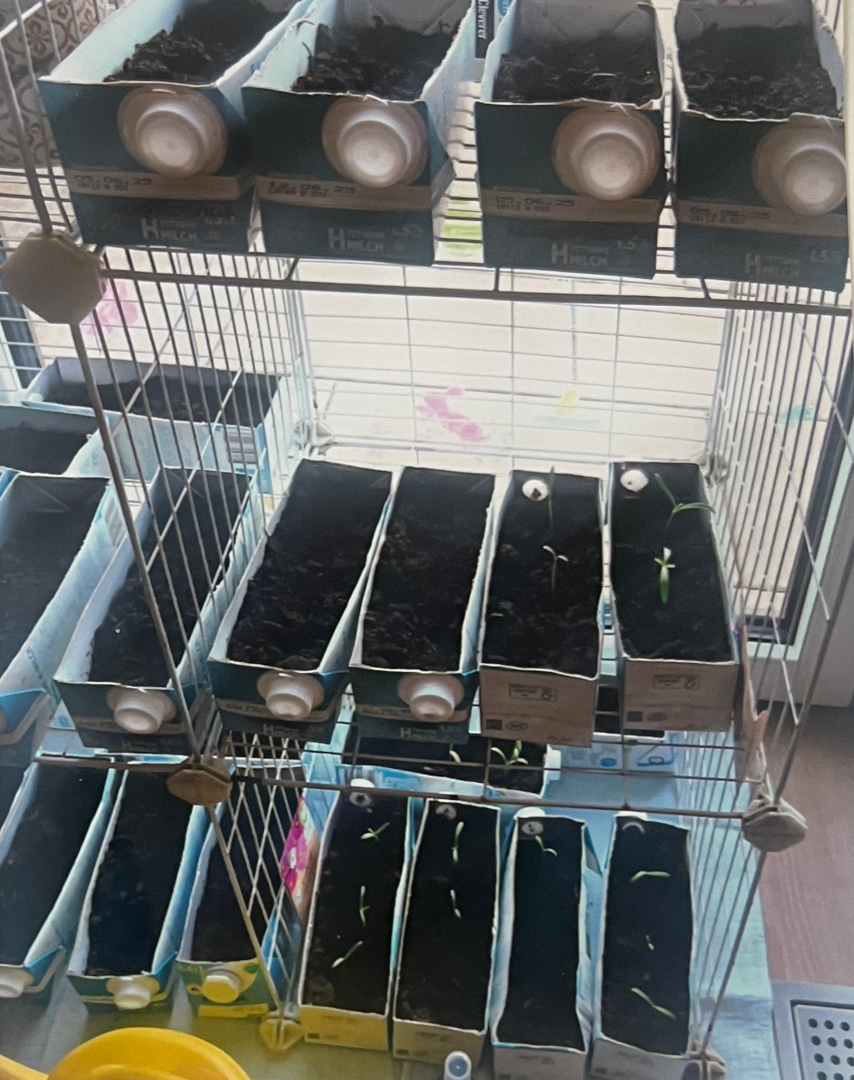
The children also collected crown corks for a Limbach zoo initiative and upcycled old milk cartons into small flower beds. The plants that grew in the milk cartons were then planted in the garden of the day-care centre to create a habitat for small animals and insects.
Terra Nova Campus - The school of discovery: Apple dreams


The Nature Lovers elective course at the Terra Nova Campus focussed on the apple, as there are several apple trees on the site. They first researched the topic and listened to a lecture before creating information boards for the school building. The children also painted and made various things, such as their own apple blossoms. The project was crowned by tasting different types of apples and cooking and baking with apples together.
Hort Rudolfschule: Winter birds


The "Umweltfreunde" ("Environmental Friends") support programme at the Rudolf School after-school club focused on winter birds. During the eight-week project, the children familiarised themselves with local bird species and their habitats. They also observed birds from their school grounds. They spotted blue tits, great tits, blackbirds, a woodpecker and ravens.
To further familiarise themselves with the topic, the children painted the different bird species and made models of the birds out of salt dough. The knowledge they learnt was tested with a quiz. To ensure that the birds find enough food in winter, the pupils made bird food cones and distributed them around the school grounds. As further support, they installed a total of four nesting boxes on the school grounds.
Terra Nova Campus- Die Entdeckerschule: Theatre play "The forest and the forest fairy in danger"


Pupils from the Terra Nova Campus's "Creative Dancing" elective course have been involved in environmental projects for years. Five children developed a theatre piece called "The forest and the forest fairy in danger", which focuses on the importance and need for protection of the forest. Through dance, drama and an accompanying comic strip, they brought their message to the stage in front of primary school pupils. The children showed great environmental awareness and concrete ideas for protection. In future, the play will be performed in nature, set to music and distributed in various formats.
AWO Hort Reichenhain: Bee protection in the Hort Reichenhain


As part of the annual theme of sustainability, the children at the Reichenhain after-school care centre spent the Easter holidays working on the topic of bee protection. They realised that there were hardly any flowers on the nursery meadow and therefore only a few bees. Together, they researched bee species and their favourite plants and designed two posters - one on bee protection and one on flowering meadows.
They then planted an old rubbish bin and another container with bee-friendly seeds. The children also made a swarm of bees from iron-on beads as a souvenir. The project promoted both knowledge and commitment to the protection of bees.
Harthau primary school: The meaning of life - in the centre of the donut
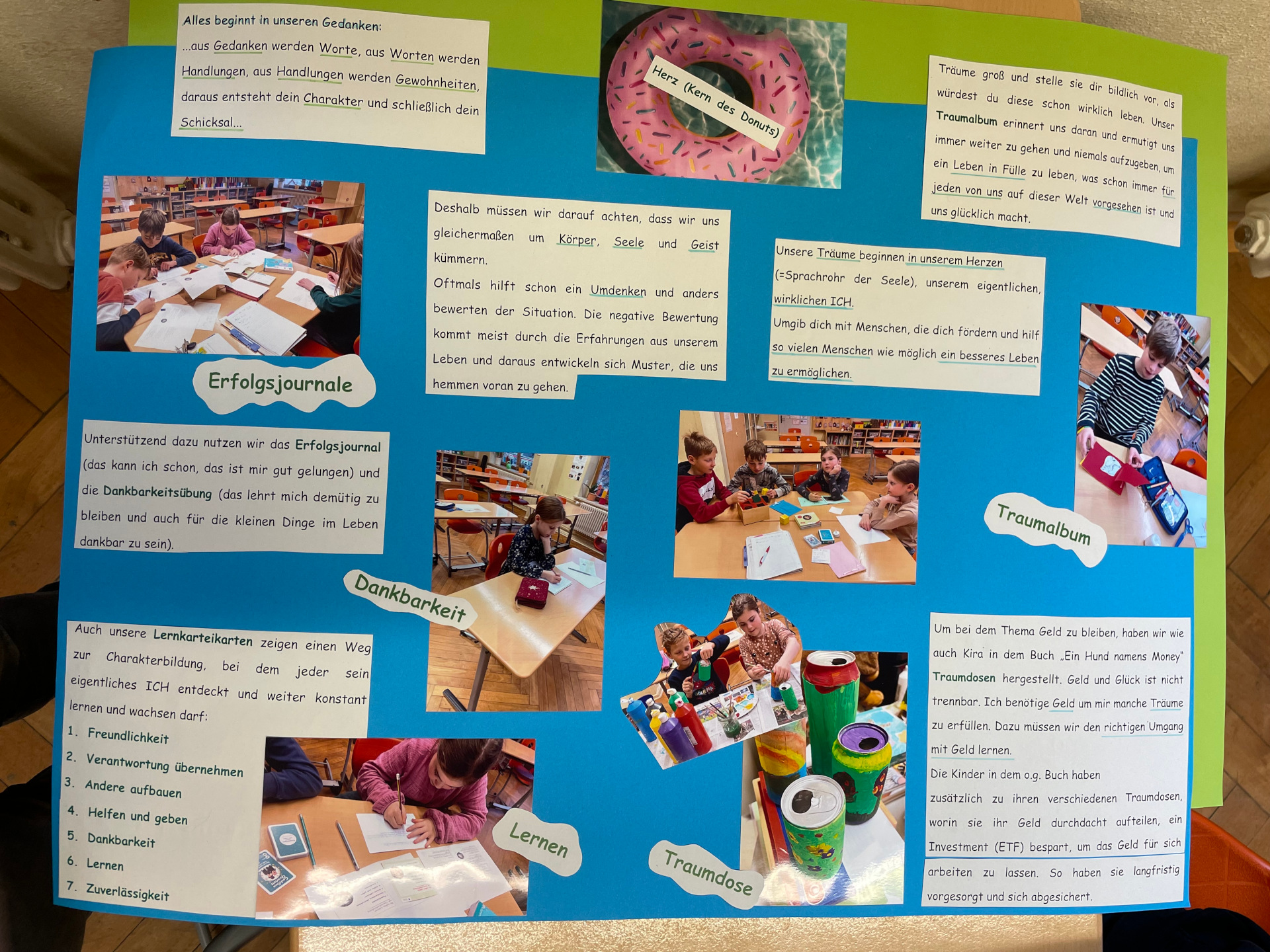
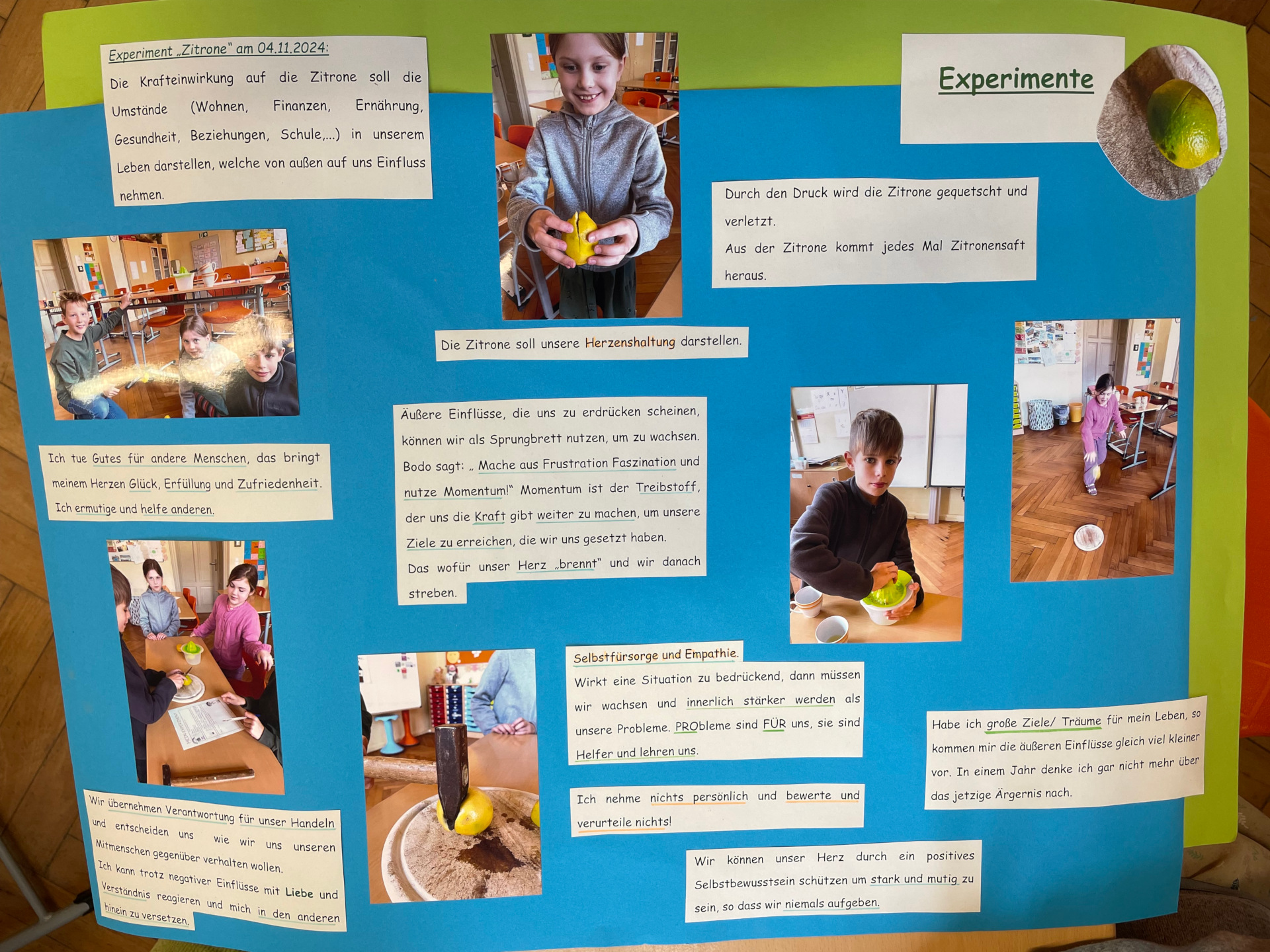
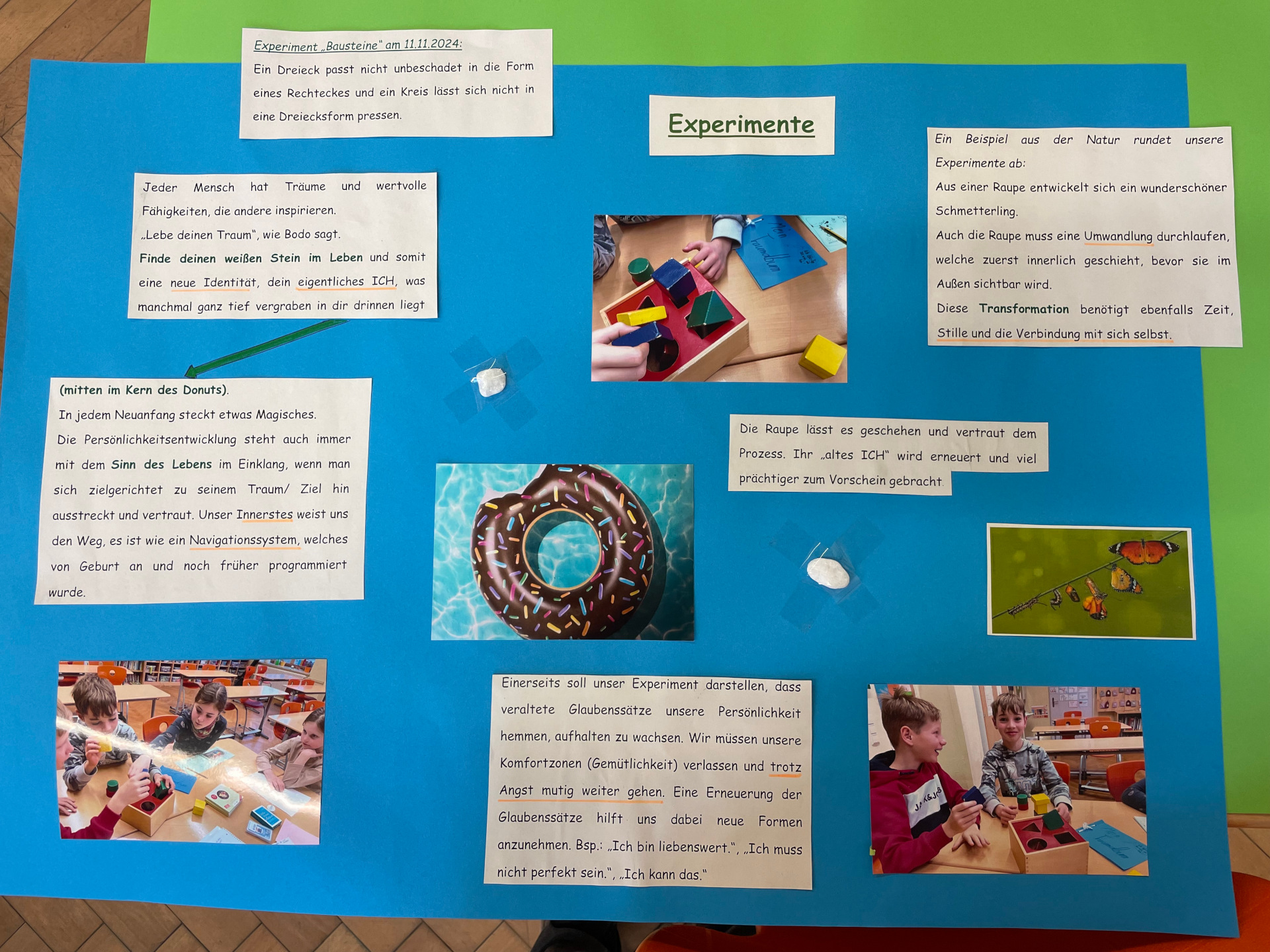
The project "The meaning of life - at the centre of the donut" aimed to motivate as many people as possible to take responsibility for themselves and their environment in order to lead a fulfilled and sustainable life. Inspired by Bodo Schäfer's "A Dog Called Money", the children explored topics such as personal development, dreams, gratitude and dealing with money. Through discussions, creative work and experiments, they learnt how external influences shape their attitude and how they can grow with positive beliefs.
Projects in the Grades 5 to 8 category
Burgstädt secondary school: "On the way" - project series for the ecological upgrading of the school route
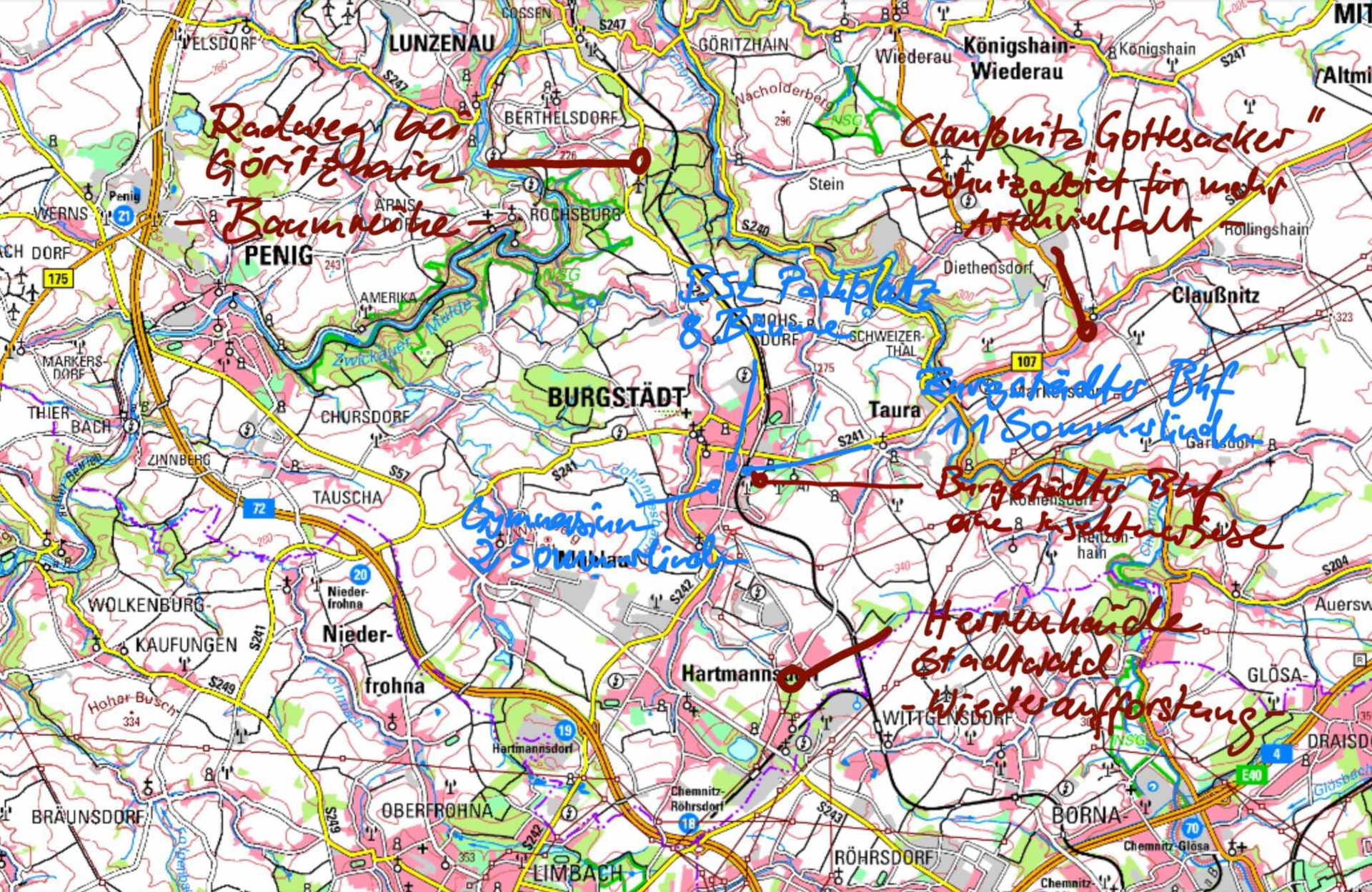
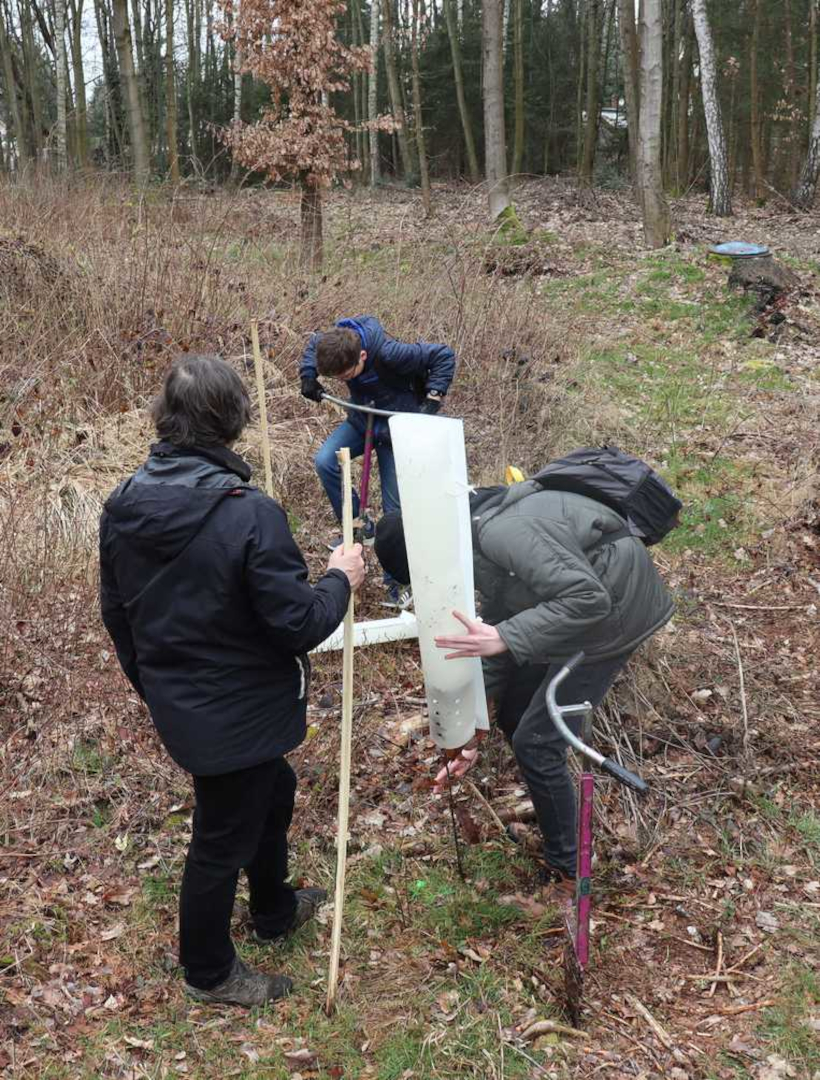
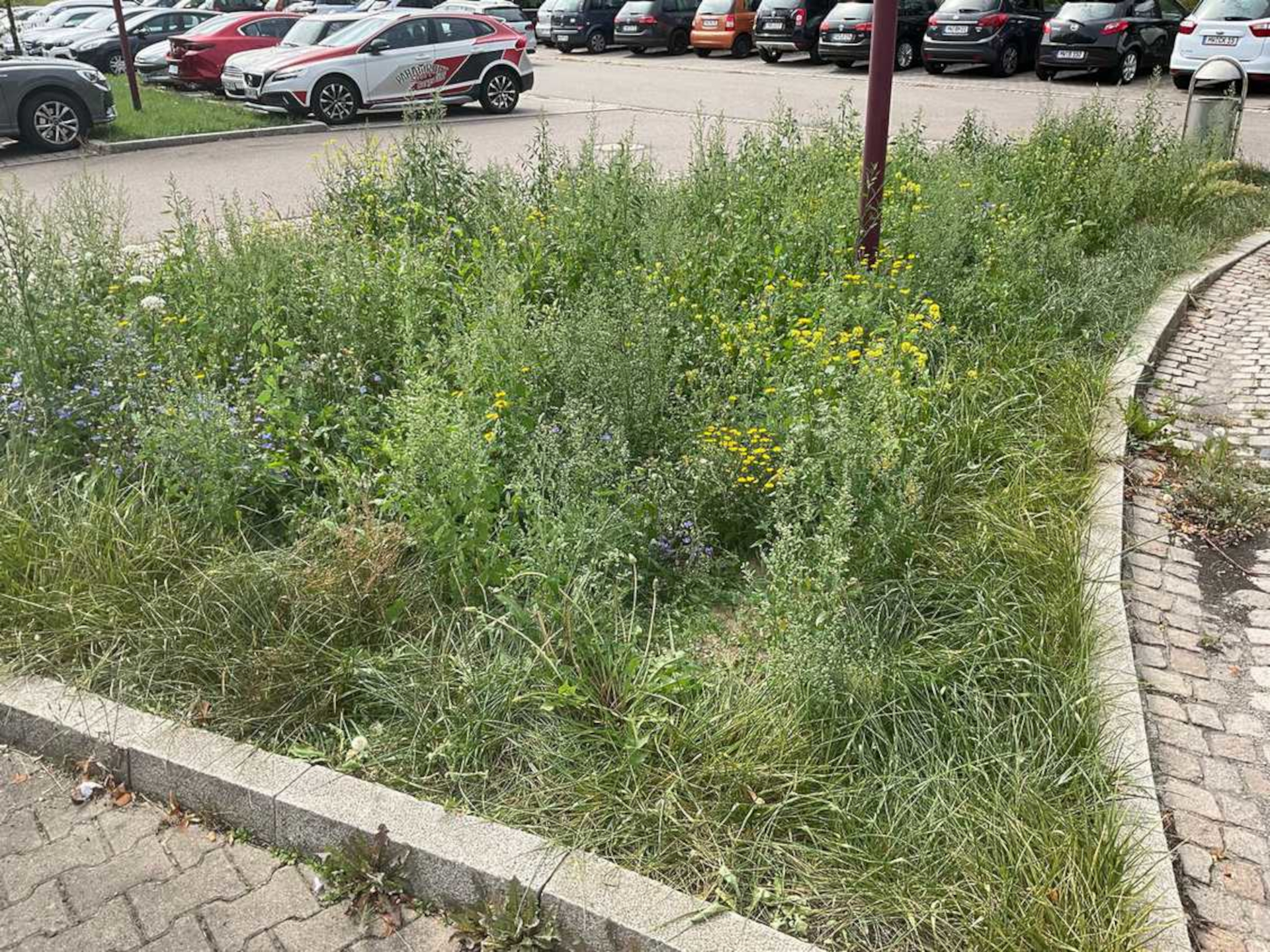
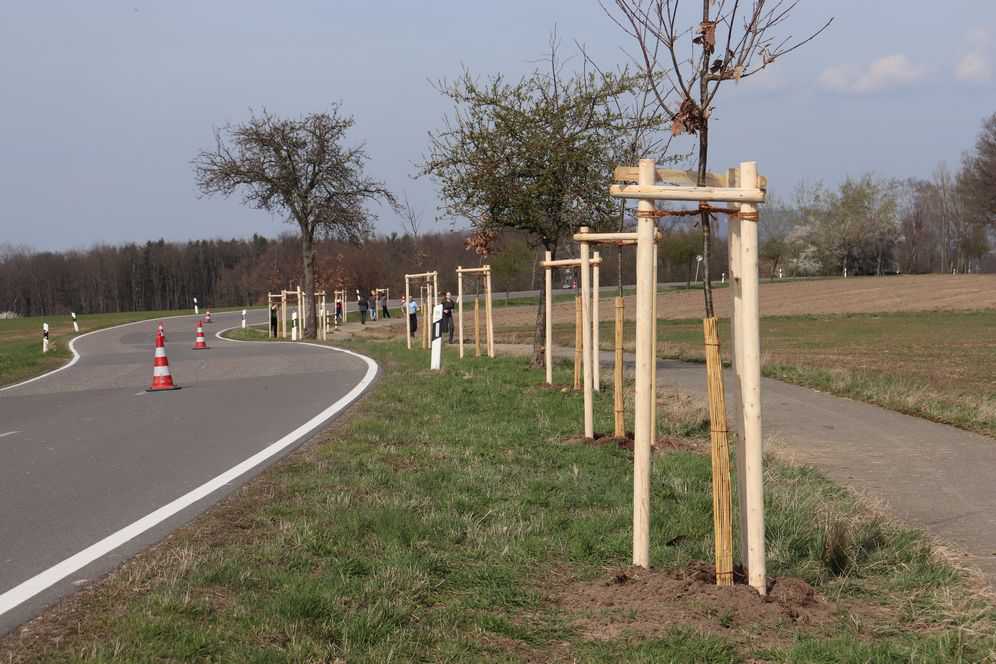
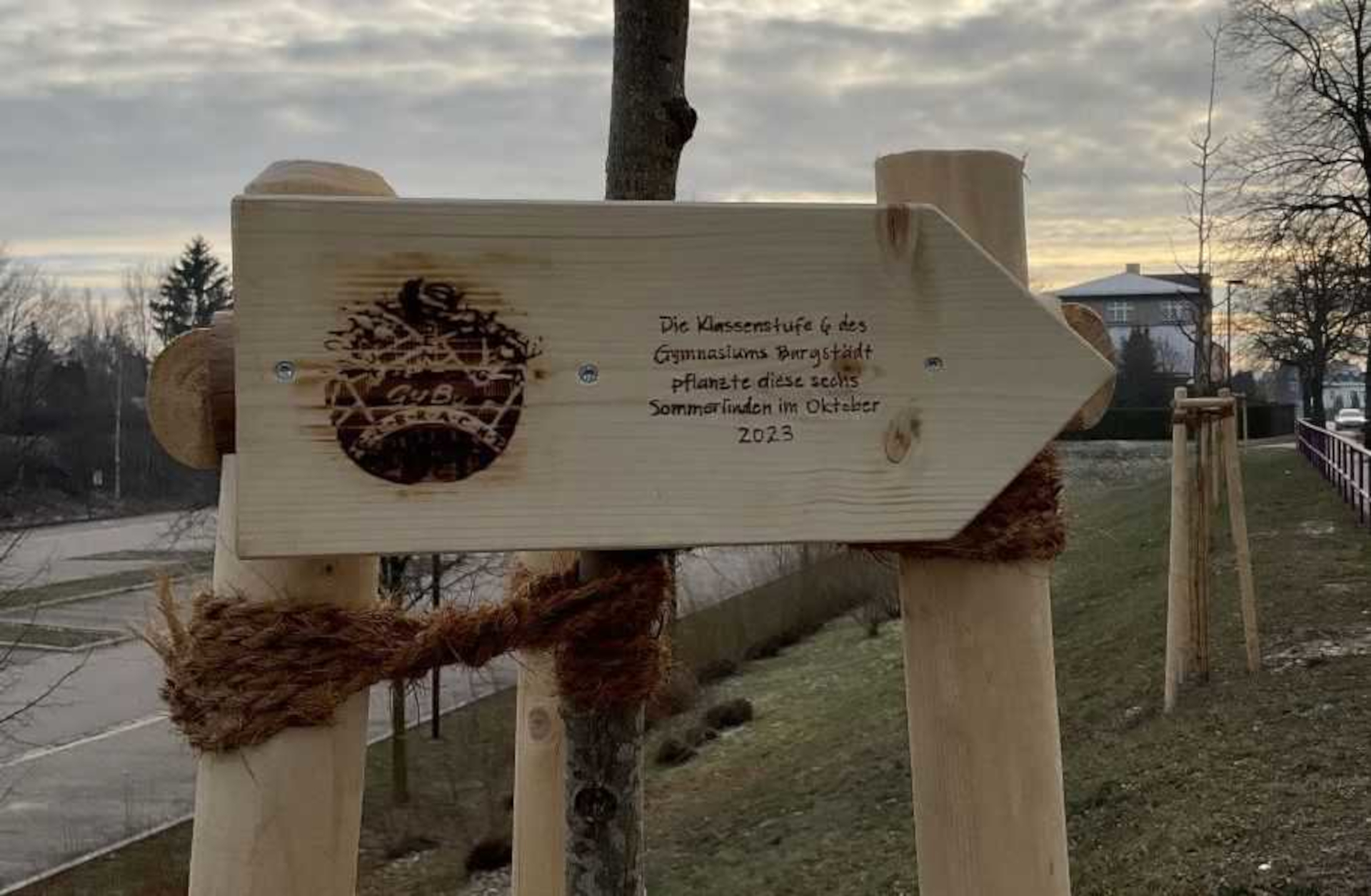
To mark its 30th anniversary, Burgstädt secondary school initiated the project series "Auf den Weg gebracht" ("On the way") to ecologically enhance school routes and thus actively contribute to climate protection and biodiversity. Through planting campaigns, the creation of insect meadows and continuous renaturalisation, pupils help to shape their environment together with their home communities. The projects promote a sense of responsibility, practical skills, cohesion in the classes and a connection with their home and school. The projects are financed through co-operation with local authorities, NABU, government agencies and donations. The project series serves as an impulse for other classes and is constantly growing.
Untere Luisenschule: Environmental protection and democracy
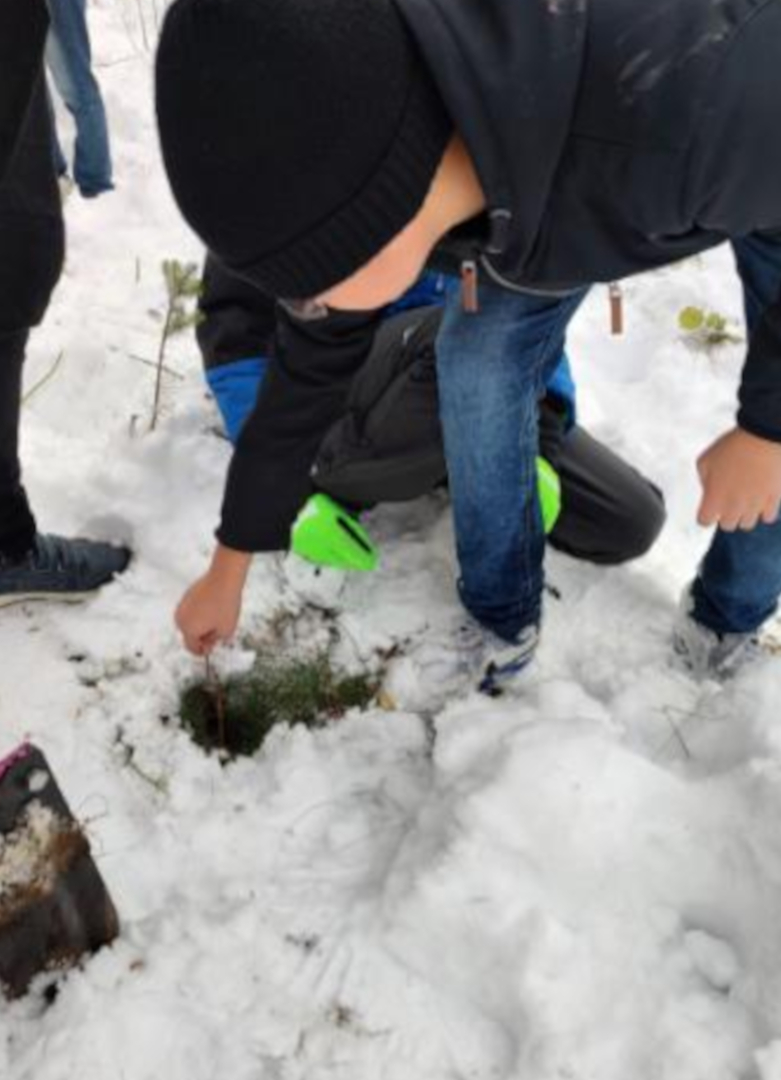
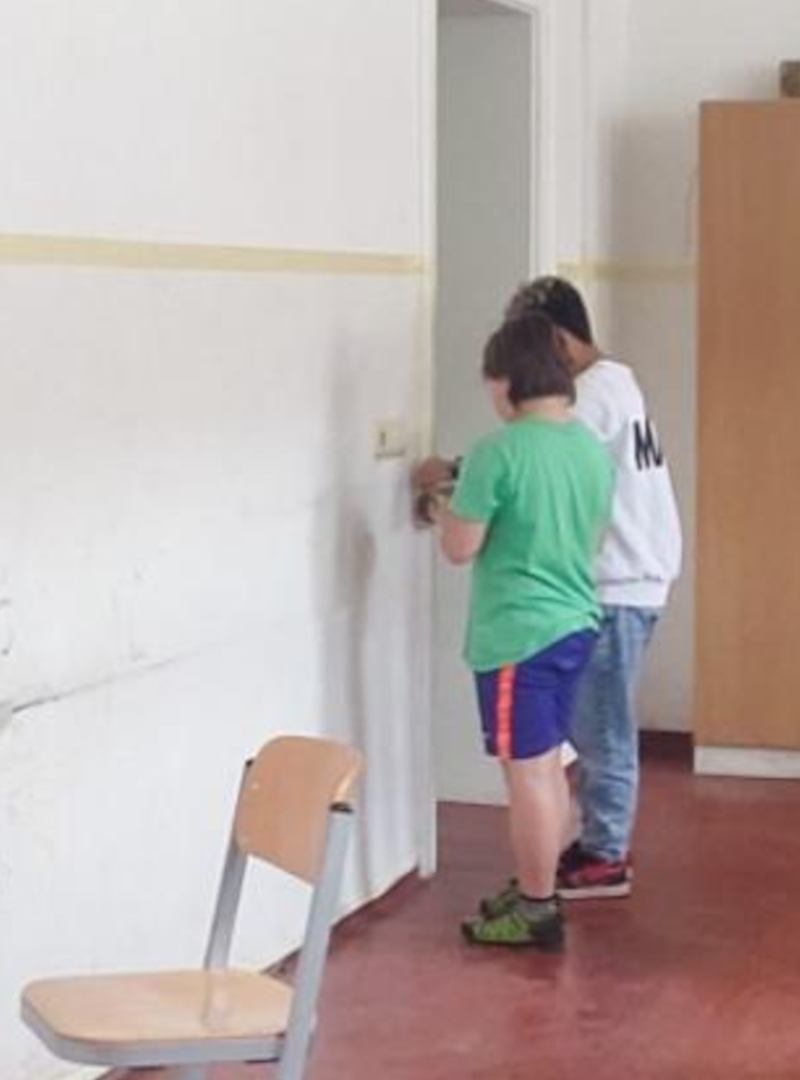
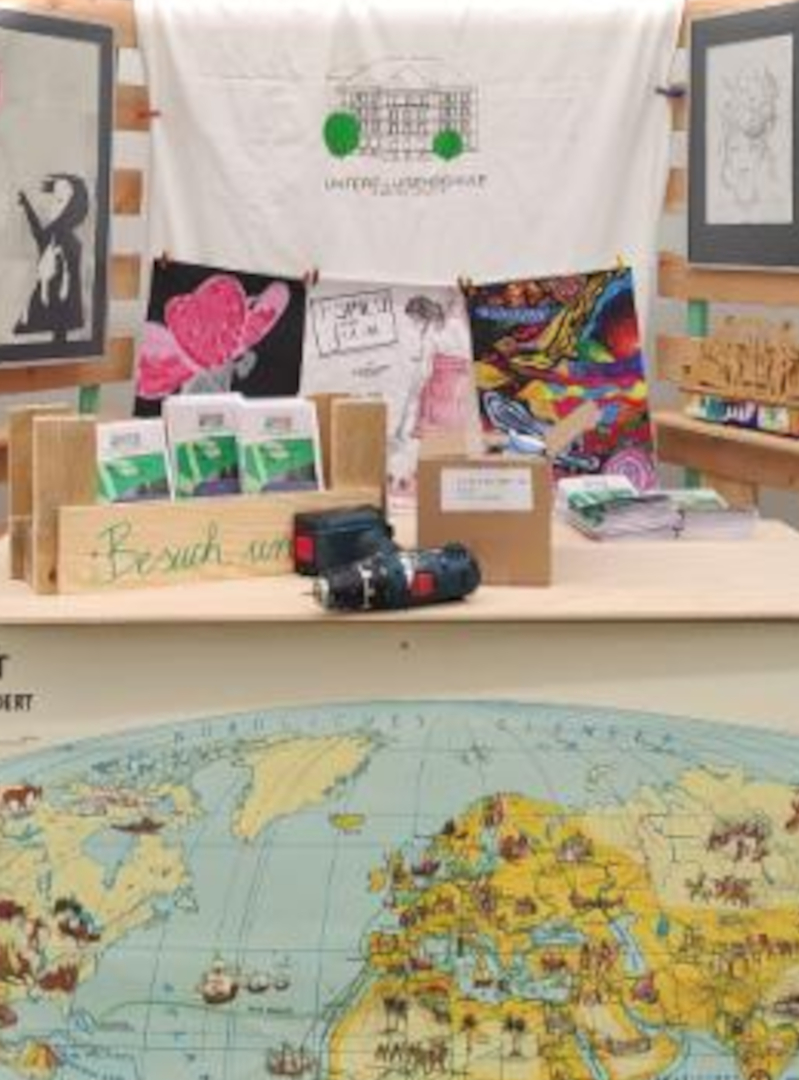
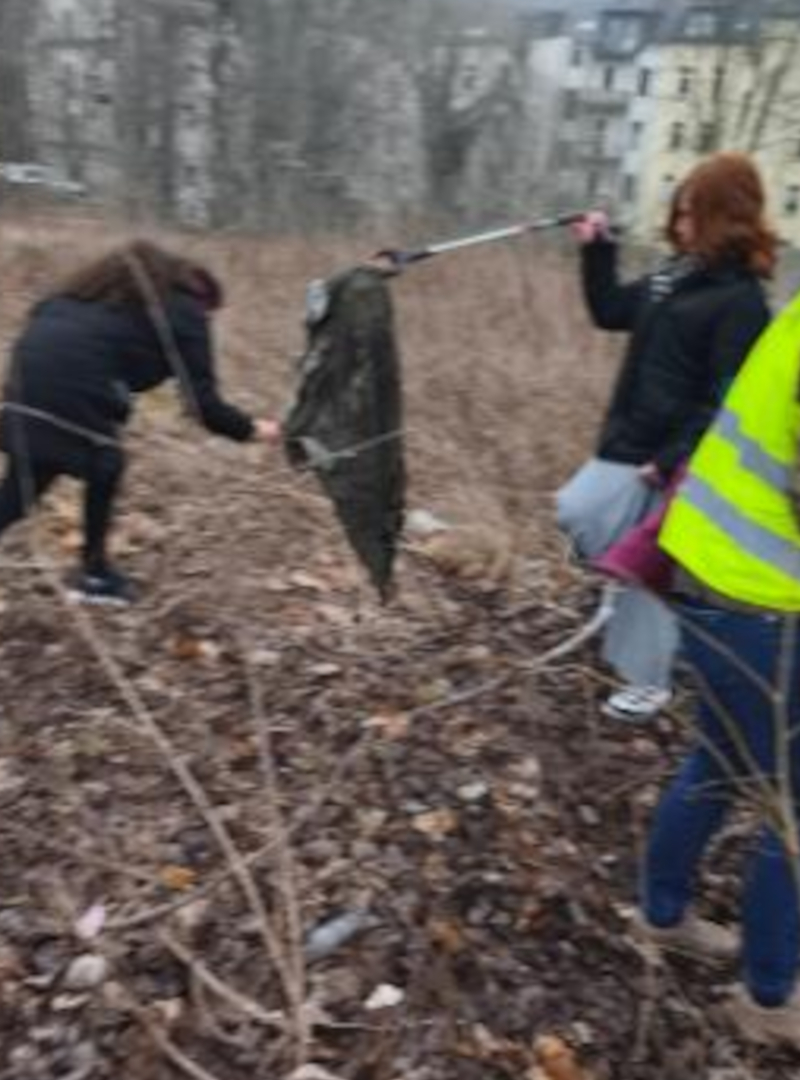
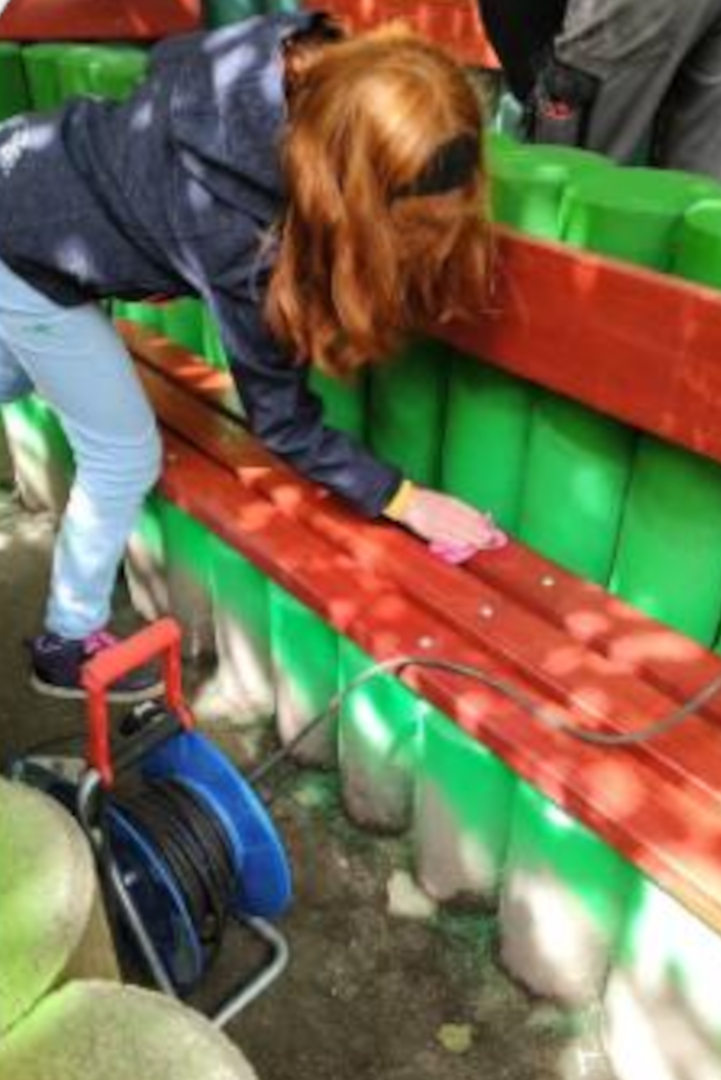
The democracy group at Untere Luisenschule Oberschule consists of around 17 pupils from years 5 to 10 and is committed to democracy education, political participation, sustainability and children's rights. It focuses on tolerance, diversity and the fight against racism. The group organises workshops, political talks and works closely with partners and the school management.
In the area of environmental protection, it is involved in waste separation, planting campaigns, neighbourhood clean-ups and sustainable school design with upcycling and nesting boxes. They also engage in dialogue with politicians on environmental and sustainability issues. For the 2025/26 school year, the group plans to get more classes involved in waste collection campaigns, expand waste separation, strengthen sustainable education, create exercise programmes in the school playground and plant more trees. Their aim is to live environmental protection as a holistic, everyday education and to promote children and young people as active shapers of the environment.
More information on the activities of the democracy group can be found on Instagram.
Terra Nova Campus - The Discovery School: The development of a project in the school action area - The elective course "Students get active"


At the Terra Nova Campus, the elective course "Students get active - nature and media design" arose from the desire of students to get involved in environmental and climate protection. The course was launched in the 2024/25 school year with five pupils from Years 7 and 8 and deals with topics such as sustainability, plastic avoidance and environmentally friendly consumption. Among other things, the young people organised participation in STADTRADELN, made upcycling trophies from old bicycle parts and produced products such as rubbish bags made from newspaper, bath balls and beeswax cloths. These were presented and sold at the open day, complemented by information and hands-on activities on the topic of plastic avoidance.
One highlight was the waste avoidance action week, in which 17 classes took part. Workshops were offered (paper making, waste collection, DIY products) and a total of over 84 kilograms of waste was collected. The campaign was supported by teachers and the neighbourhood management. The course not only raises environmental awareness, but also motivates pupils with very different skills through practical, self-determined work. The experience is now to be passed on - among other things through a model project on rubbish swirls and the replica of an ocean cleaner for the classroom.
Dr.-Wilhelm-André-Gymnasium: The most important goals of our time

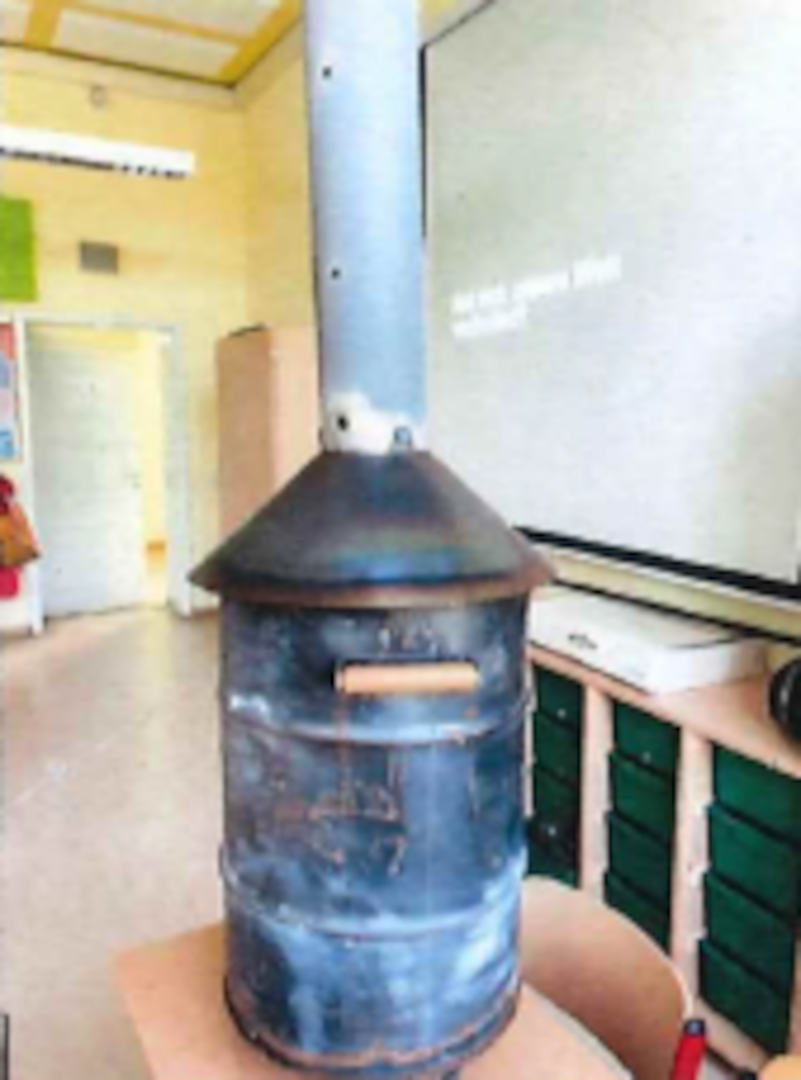
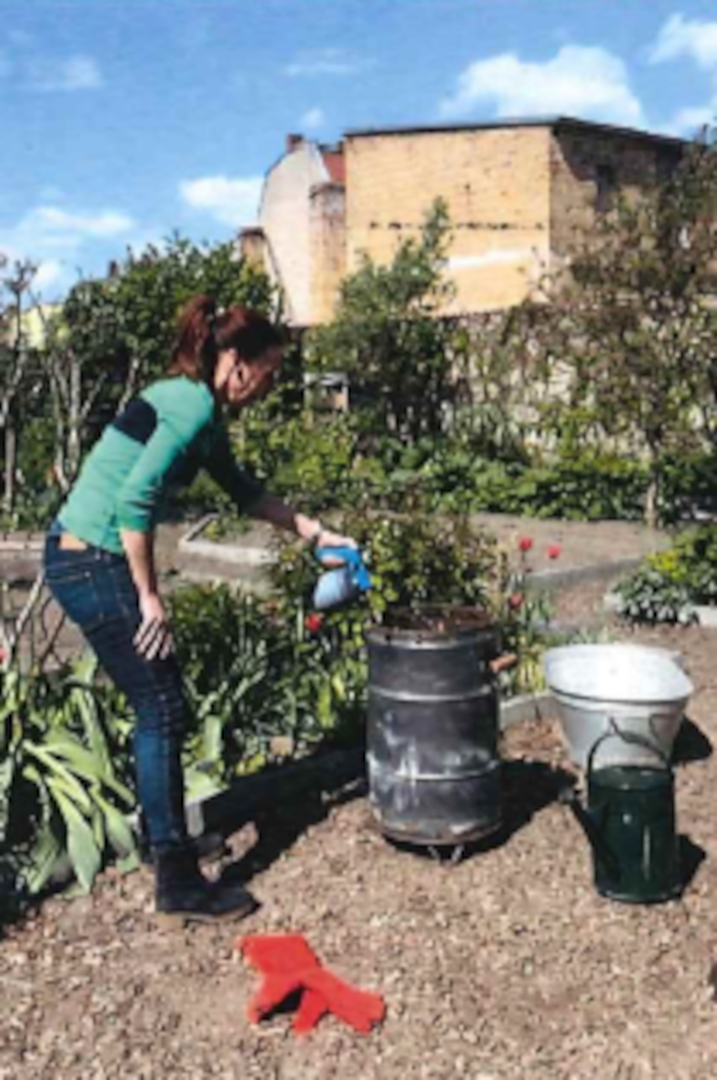
As part of a project day with weather presenter Michaela Koschak, class 5-4 at Dr Wilhelm André Grammar School looked at the 17 Sustainable Development Goals of the United Nations. The children formed teams and learnt about one of the 17 goals and presented it to their classmates. The project day was rounded off by Harald, the charcoal stove. Harald produces nutrient-rich soil from faeces. This is ideal for growing vegetables or plants in general. It enables people in Africa, among other places, to grow food to combat hunger. The pupils at Dr Wilhelm André Grammar School also used the fertiliser in their school garden and are already looking forward to the hopefully bountiful harvest.
However, the project did not end with the day. The children had a week to work even more intensively on their chosen sustainability goal. After the week, Mrs Koschak was waiting for the children with a microphone - they were now allowed to explain their sustainability goal themselves in a short podcast. These recorded explanations can now be listened to all over Chemnitz and the world to find out more about the sustainability goals. The children are using posters at schools to draw attention to the goals and thus make their contribution to sustainability.
A result for Goal 3 can be listened to online.
Parzivalschule Chemnitz: Cold smoking
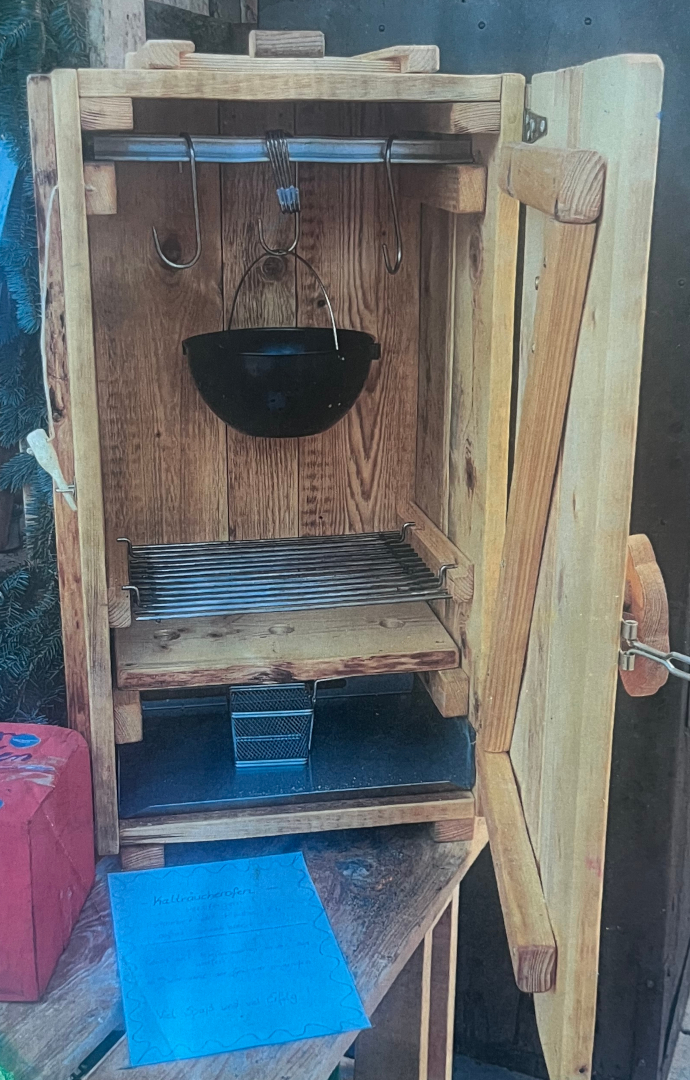
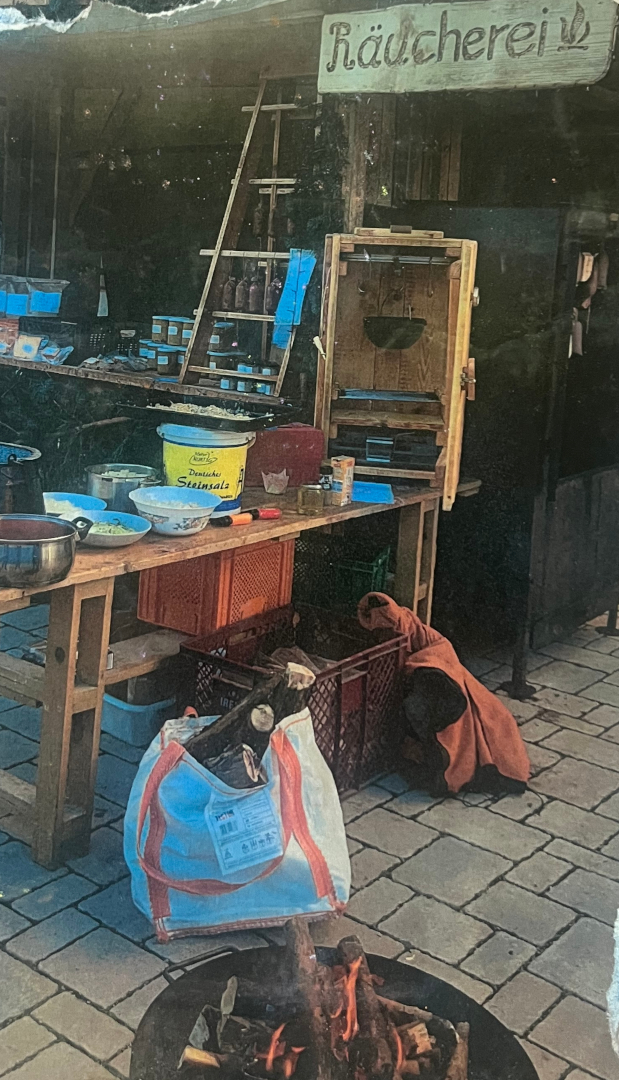
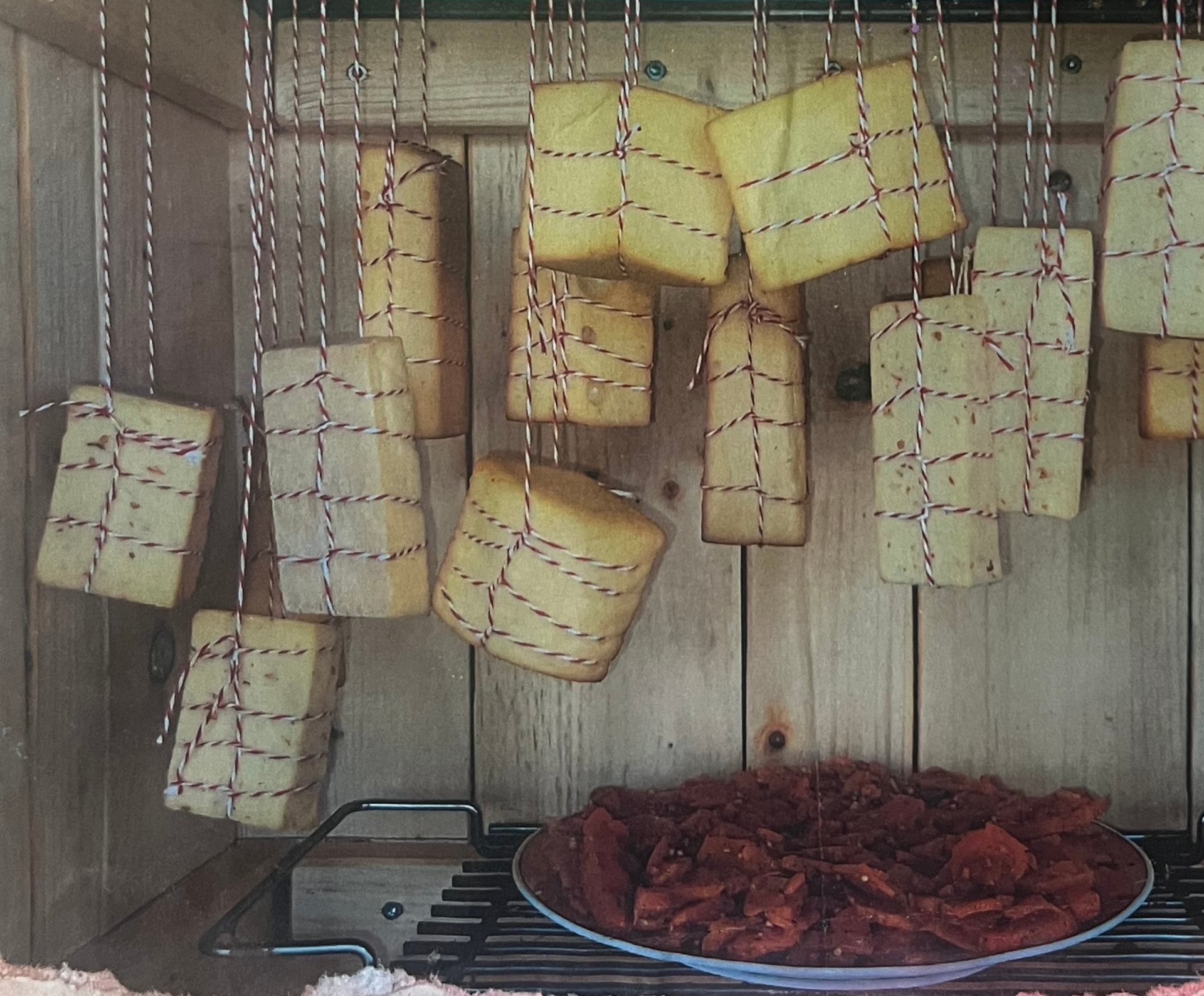
Class 8b at the Parzival School in Chemnitz focussed on cold smoking this year - a traditional method of increasing the shelf life of food. They built their own cold-smoking oven from recycled wood. The students then smoked various types of cheese, tofu and even vegan smoked salmon at a maximum temperature of 25 degrees Celsius. They sold the smoked food at their Advent bazaar and auctioned off the smoker.
Heinrich-von-Kleist-Oberschule: Maintenance and installation of green spaces at Kultur.Palais.Lichtenstein


The Heinrich von Kleist Secondary School cooperates with the town of Lichtenstein/Saxony in maintaining the green spaces of the Kultur.Palais.Lichtenstein. The seventh-graders maintain the Palais as part of their business, technology and home economics lessons and learn practical gardening skills that can also benefit the environment.
Projects in the category ‘Years 9 to 12 and young people up to the age of 20’
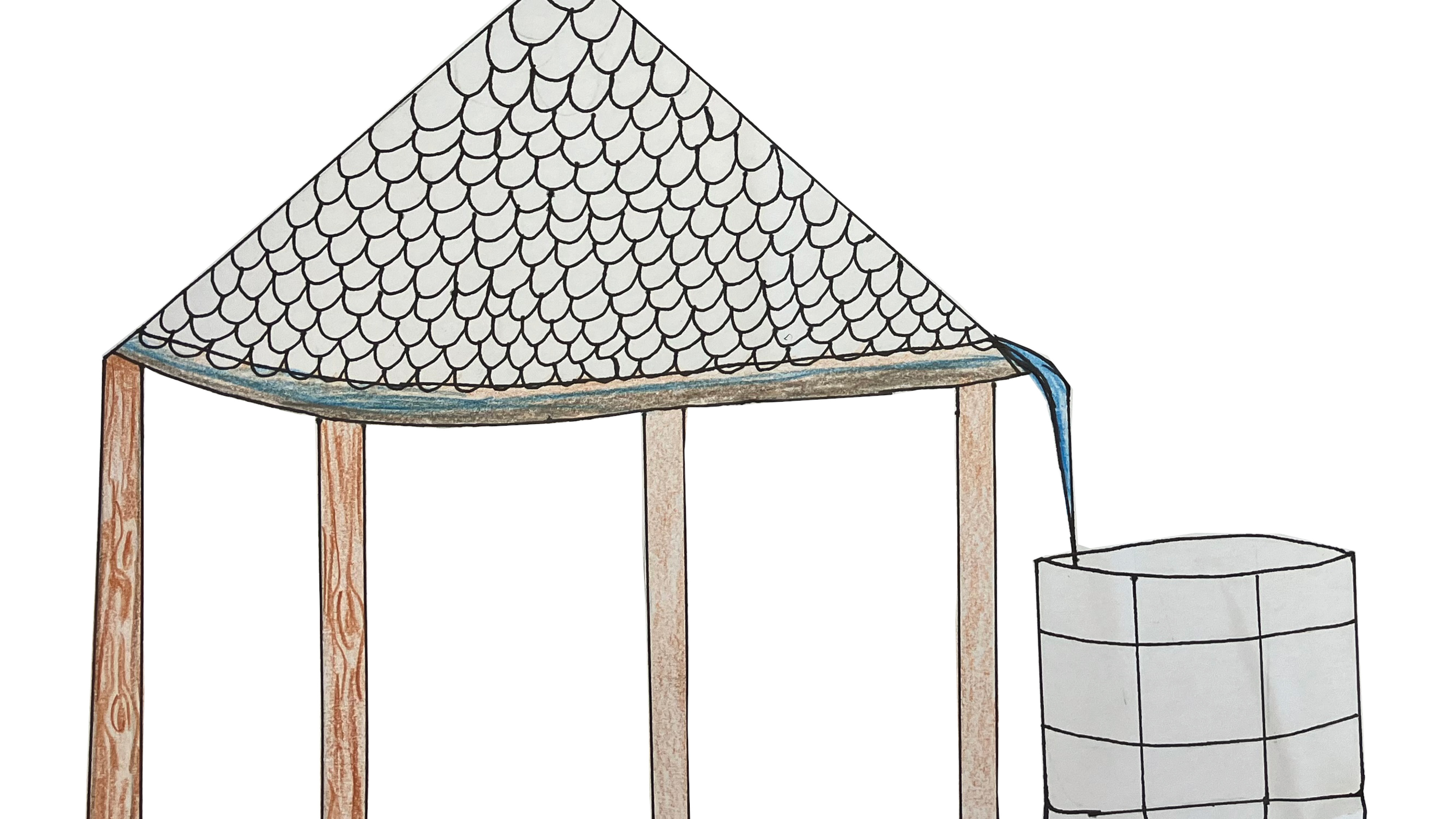
Nick Peukert: The influence of different roof coverings on the thermal behaviour of buildings
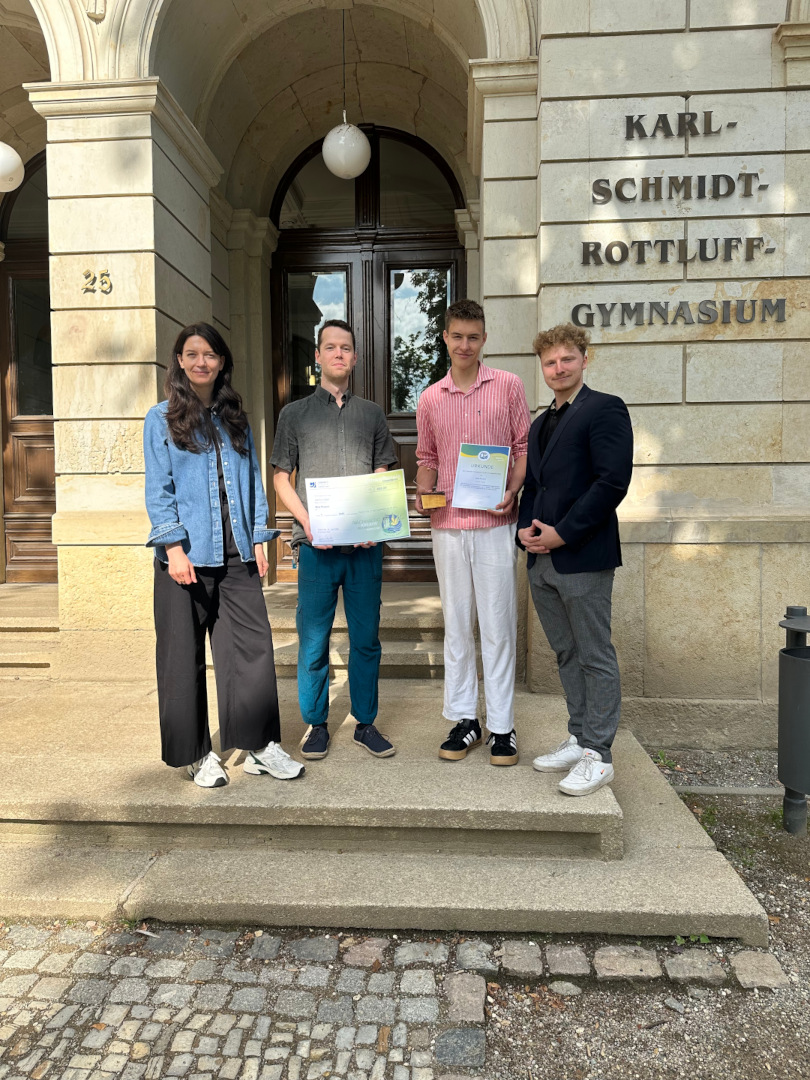
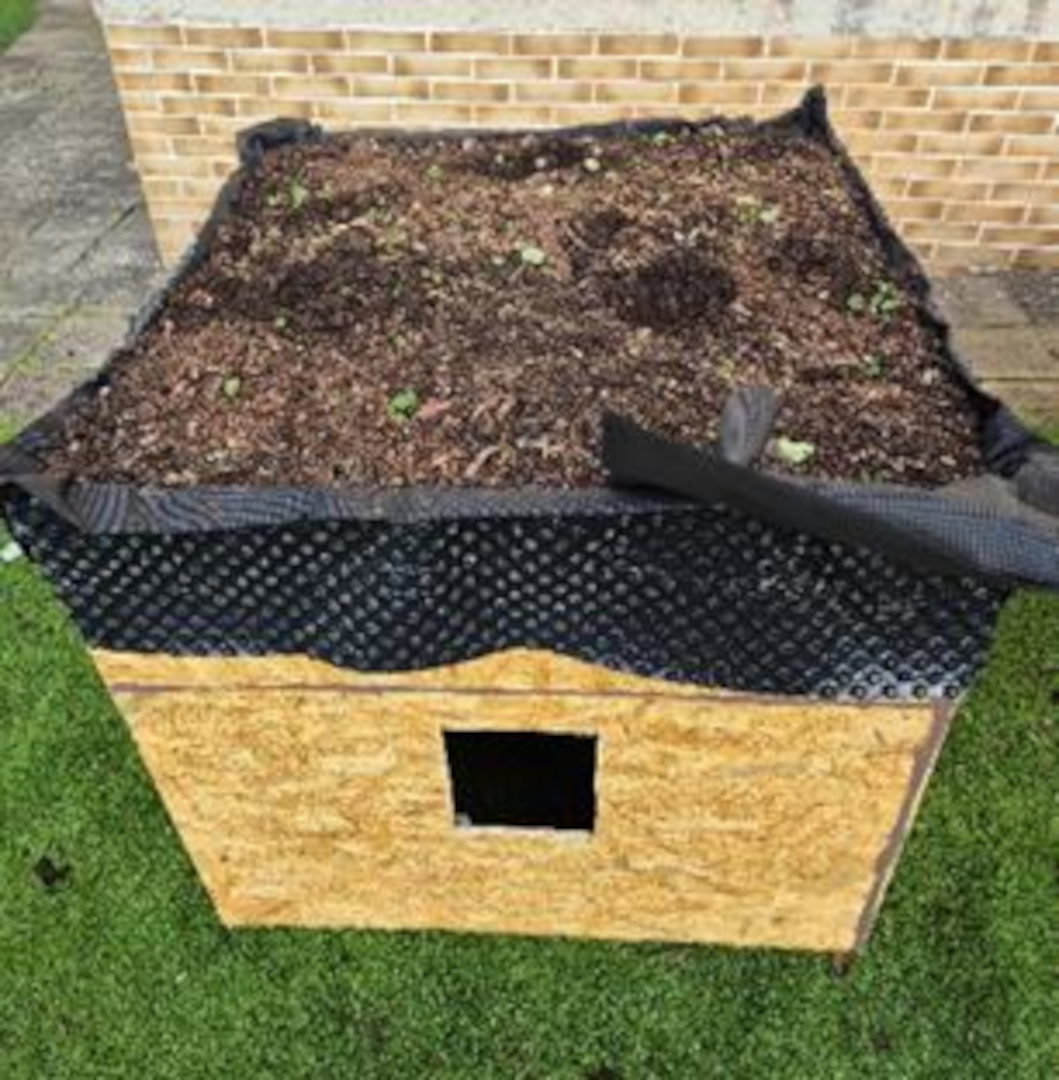
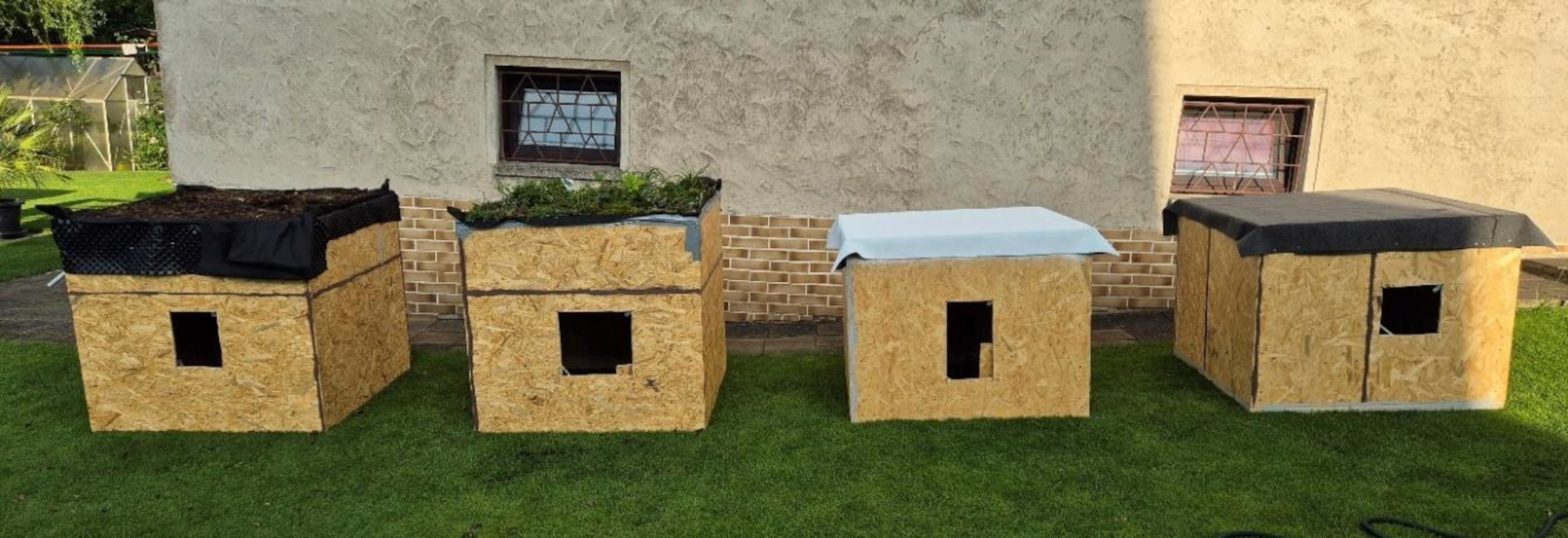
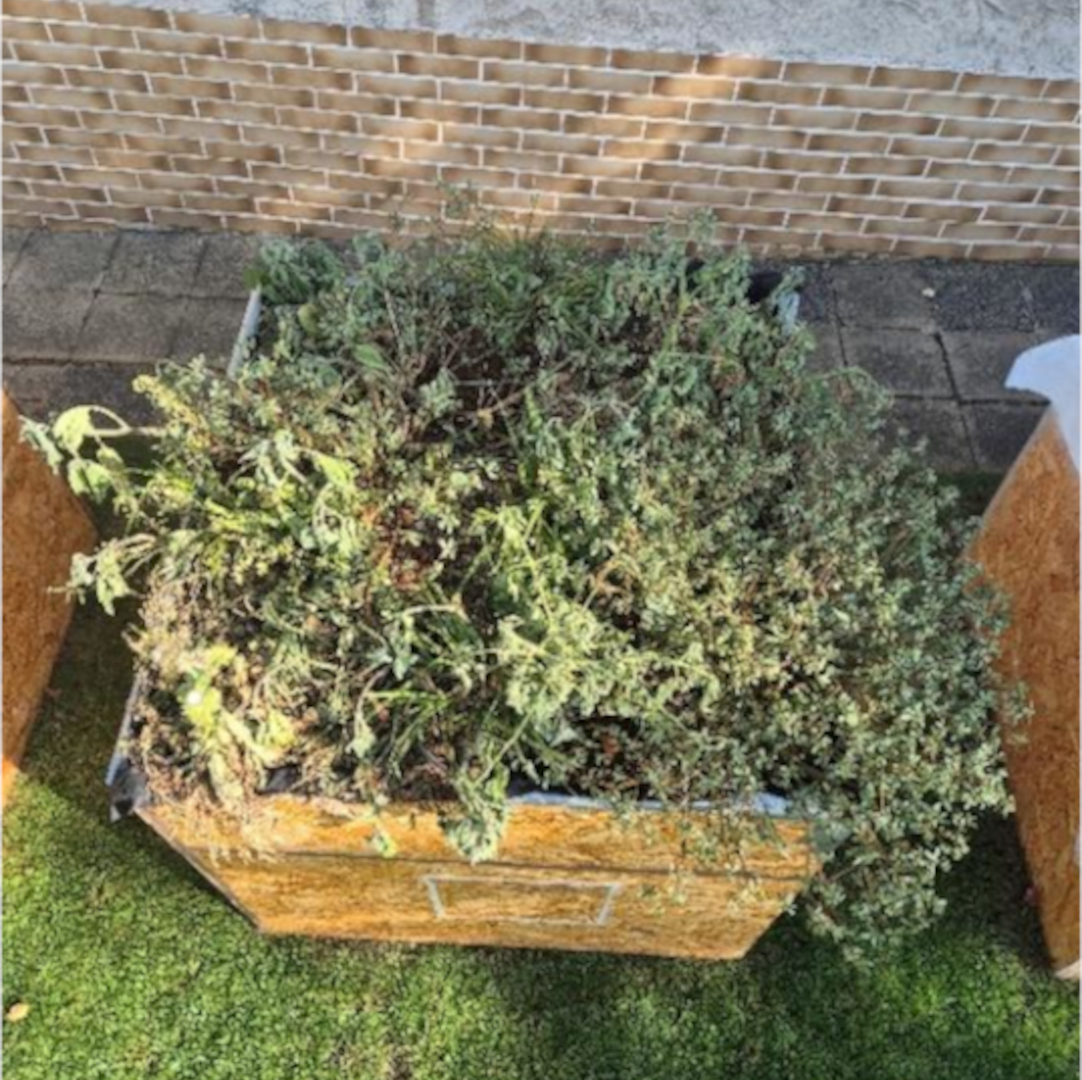
As part of his special learning achievement, Nick Peukert investigated the influence of different roof coverings on the thermal behaviour of buildings. Scientific studies often only deal with the effects of green roofs on the heat island effect, but not with the effect on the building itself. Mr Peukert investigated the effect in his own experimental setup and came to the conclusion, among other things, that green roofs and white roofs can have a noticeably positive influence on the heat balance of a building, or the attic, in the house and thus have a beneficial effect on people's well-being.
Bethanien training centre for healthcare professions: Building nesting boxes to preserve biodiversity

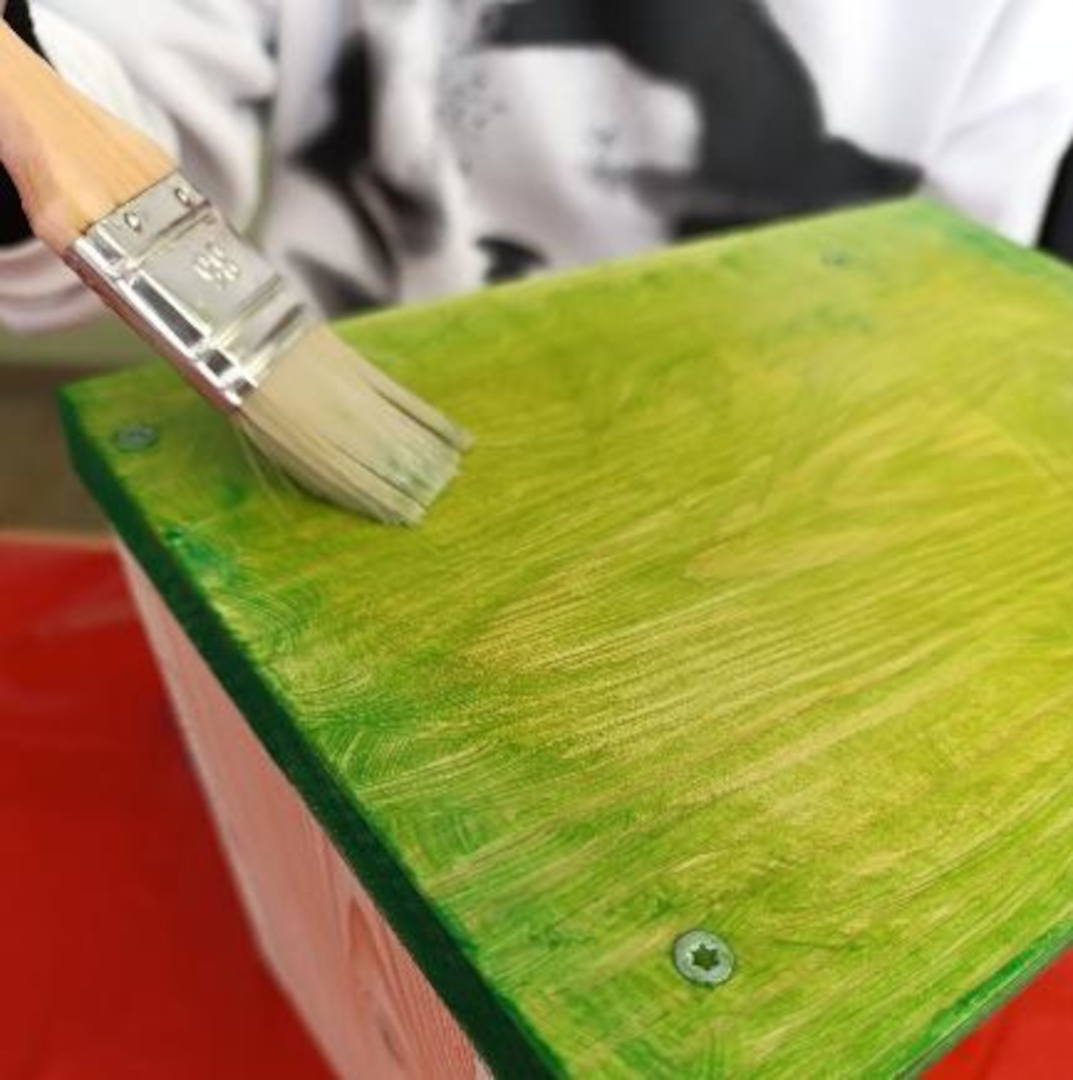
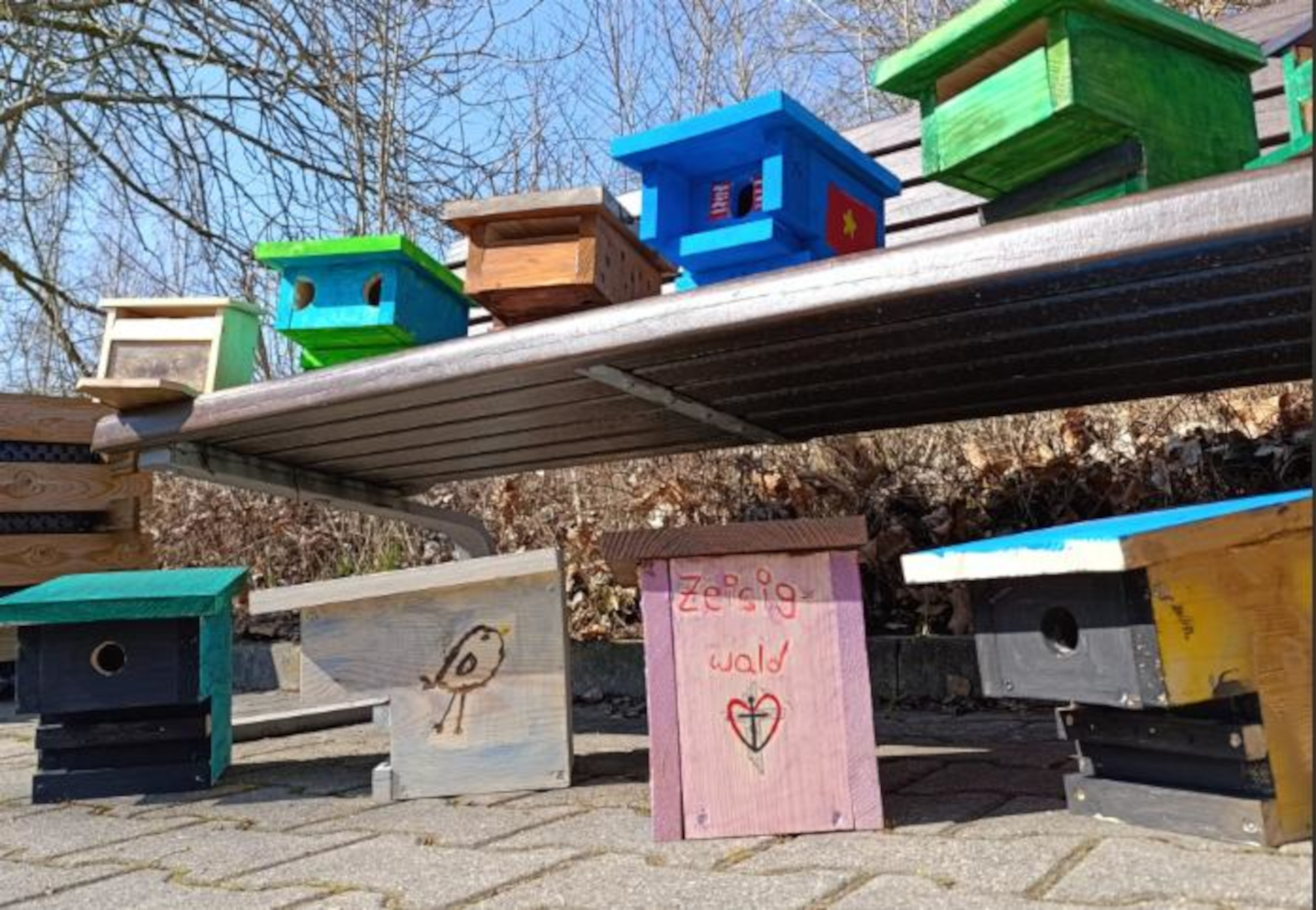
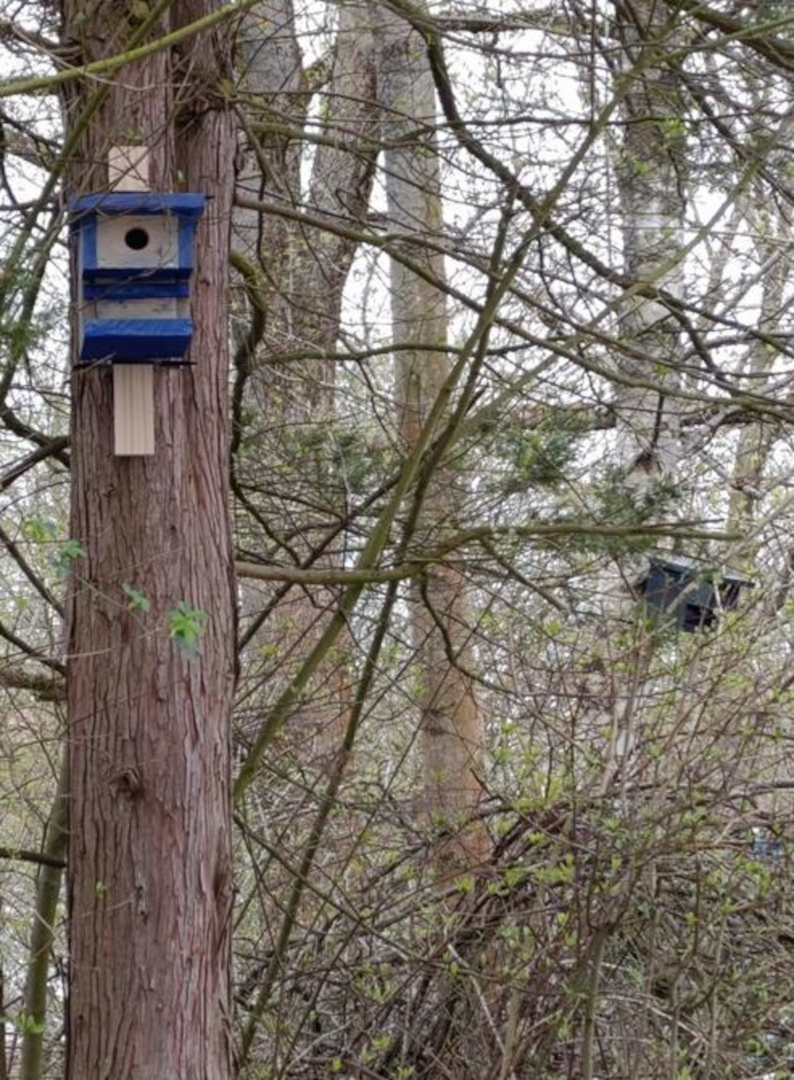
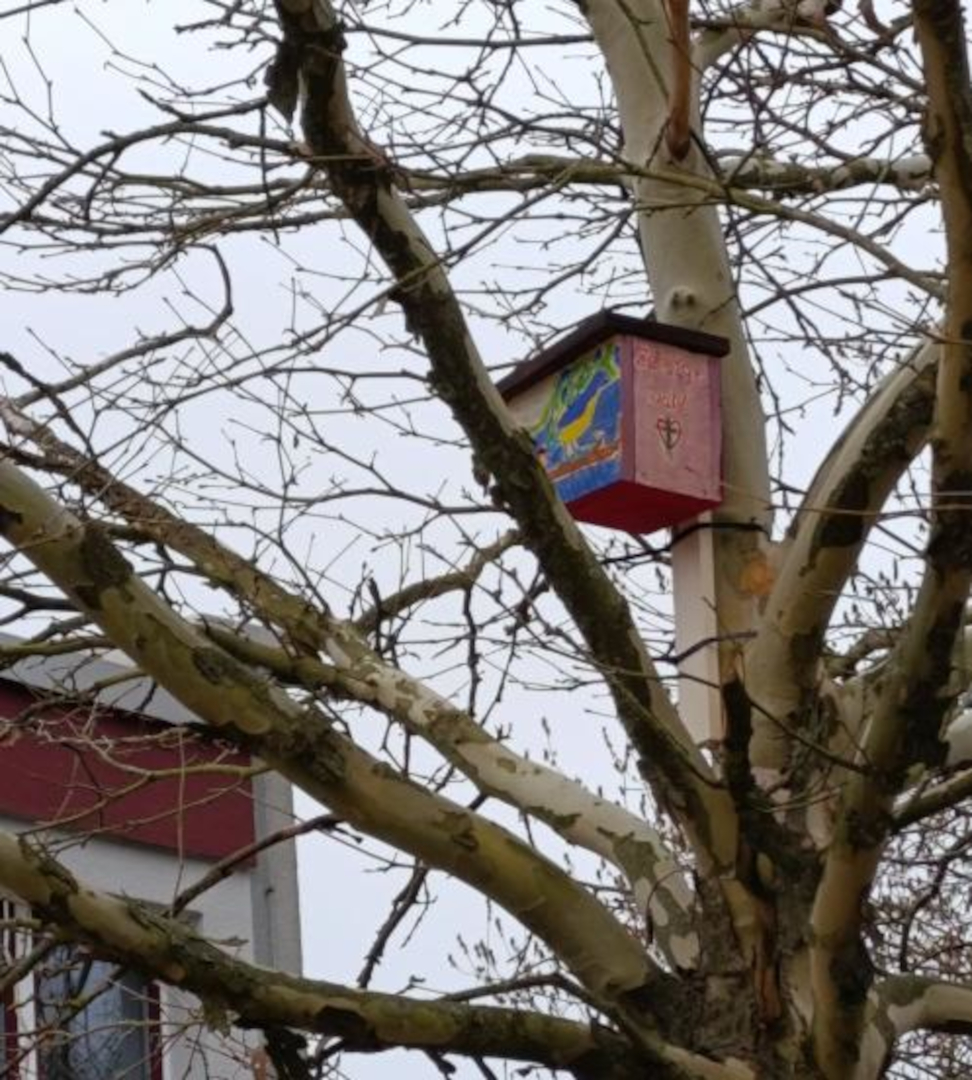
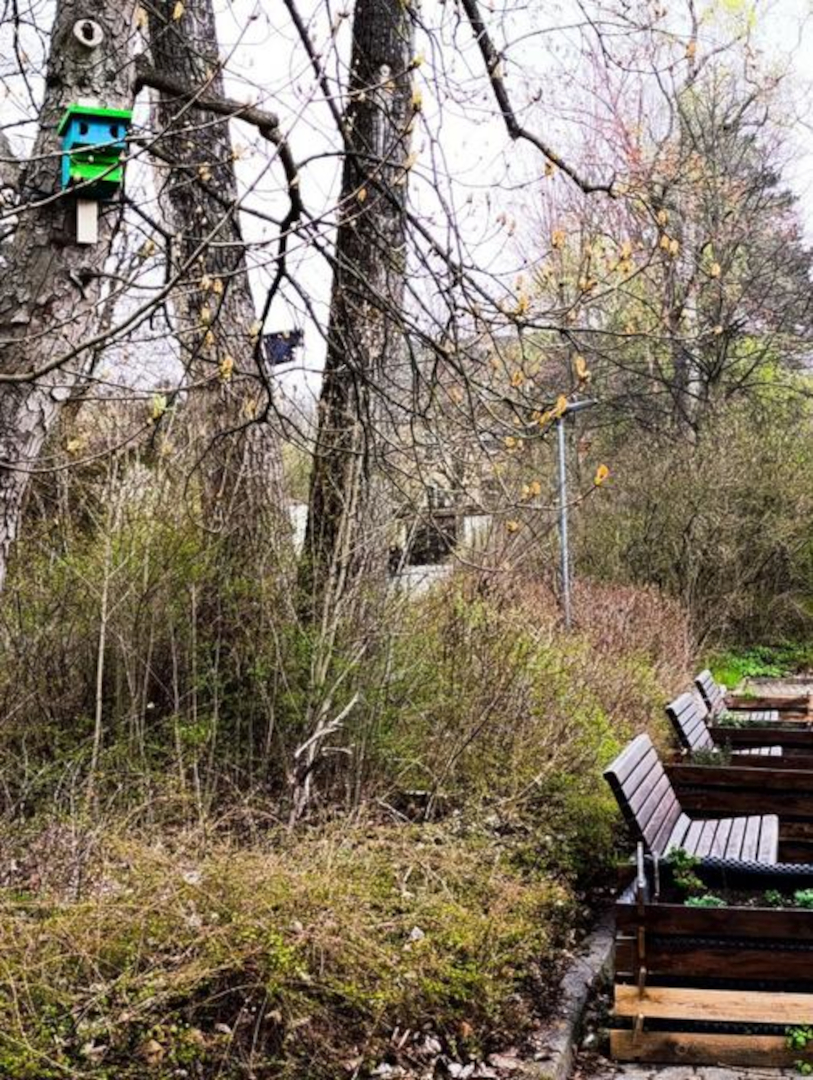
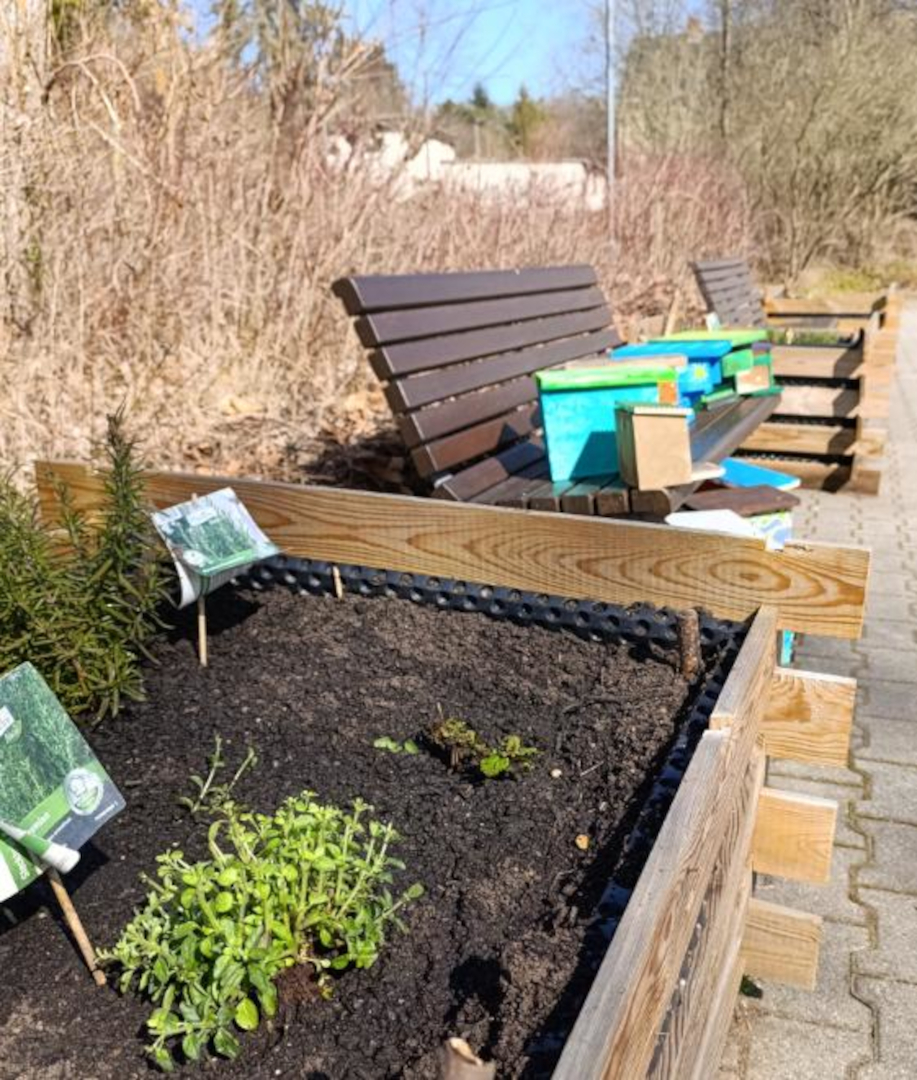
This year, class H23 actively promoted environmental protection by building nesting boxes for birds and feeders for squirrels. The project is part of the school's long-term environmental concept, which aims to preserve biodiversity and is designed to be sustainable through care, observation and the involvement of future classes. The pupils researched the living conditions of native animals and documented their work creatively in order to raise awareness in the school. The link between environmental commitment and vocational nursing training, which promotes values such as responsibility and empathy, is particularly important. At the same time, the raised bed project was continued, which serves as a place of learning, supports biodiversity and is maintained by the pupils themselves. Both projects promote sustainable thinking and practical environmental awareness within the school community.
Sächsische Sozialakademie gGmbH Berufsbildende Schulen Lene Voigt: Das etwas andere Kochbuch - Bunt wie die Welt, so wie sie uns gefällt
The "Colourful School" project, which has established a new, creative learning culture, has been running at the Lene Voigt Vocational School of SSA gGmbH Chemnitz since the 2022/23 school year. In the 2023/24 school year, the focus was on the topic of "Future", divided into seven areas: Education, Food, Culture, Arc of Life, Fashion, Environment and Communication. The pupils created a variety of contributions such as upcycling fashion, animated films, theatre plays and ideas for sustainable coexistence for all generations. The results were presented throughout the school building on "Open Day" in February. One of the highlights was a self-created cookbook on climate-friendly nutrition that combines favourite recipes (including vegan and using leftovers) with information on sustainability, nutrients and seasonality. This was submitted for the environmental award.
BSZ für Technik und Wirtschaft "Julius Weisbach" Freiberg: "Sustainable cooperation on the topic of sustainability" - interdisciplinary teaching of the BSZ Freiberg at the TU Chemnitz
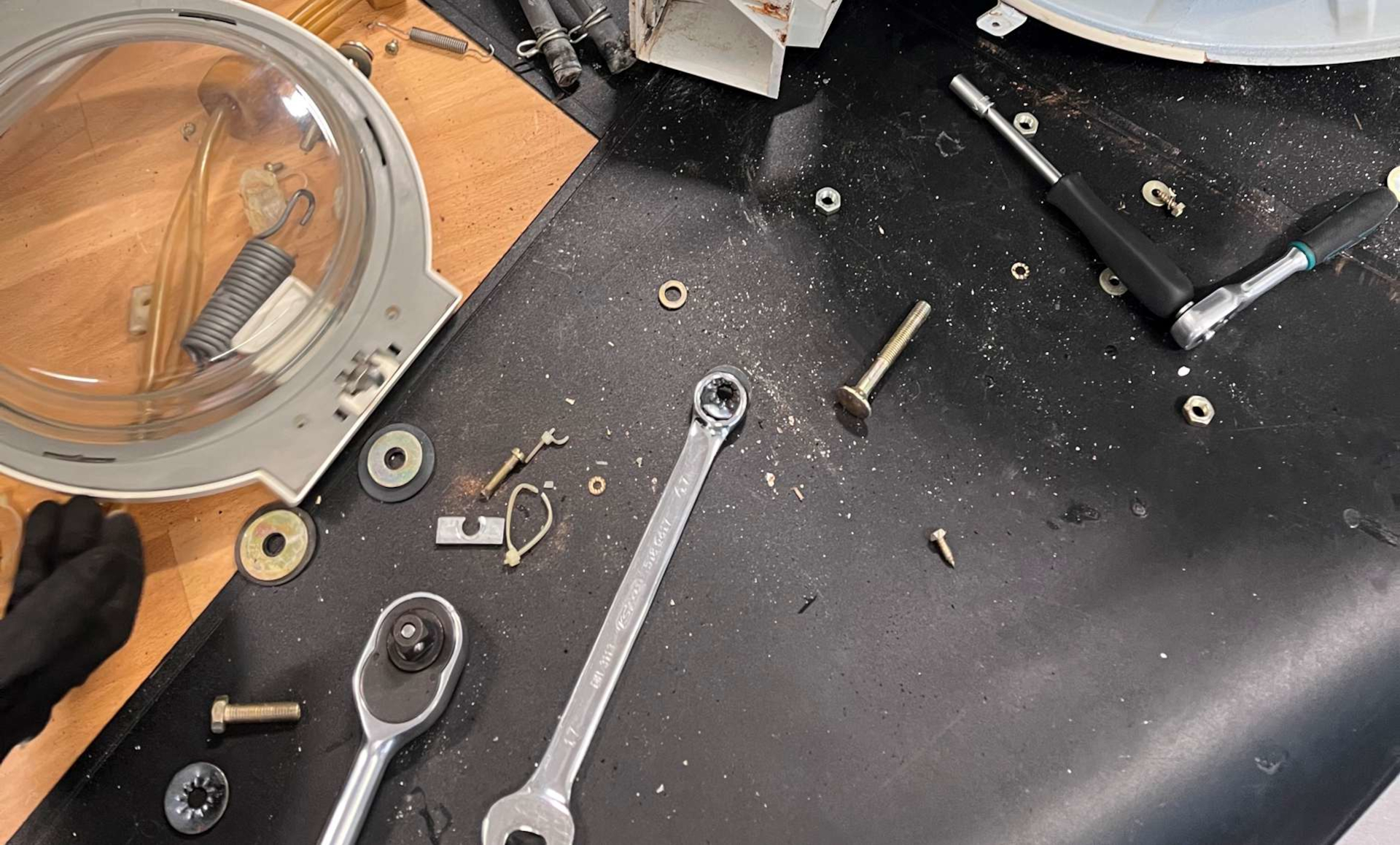
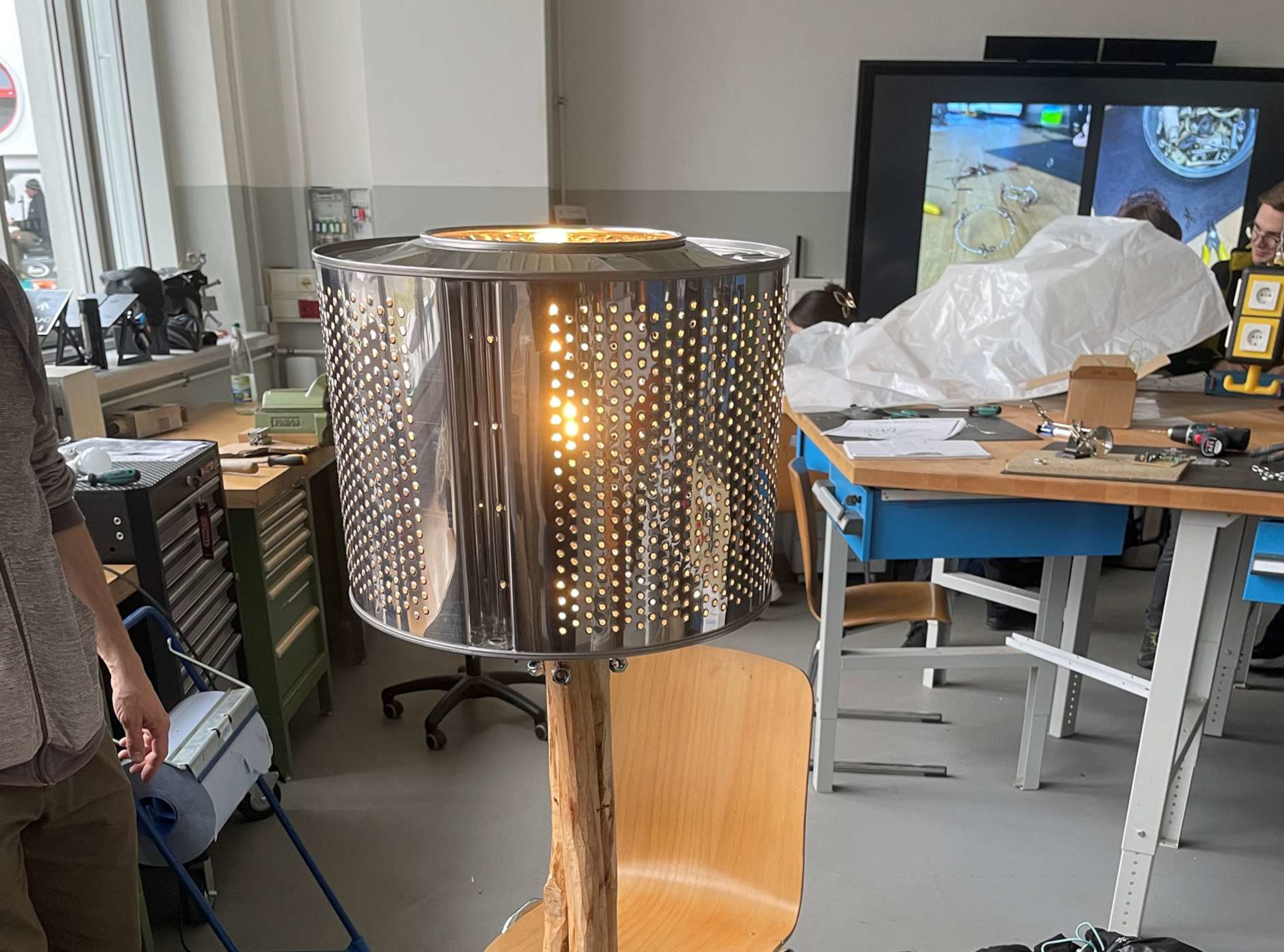
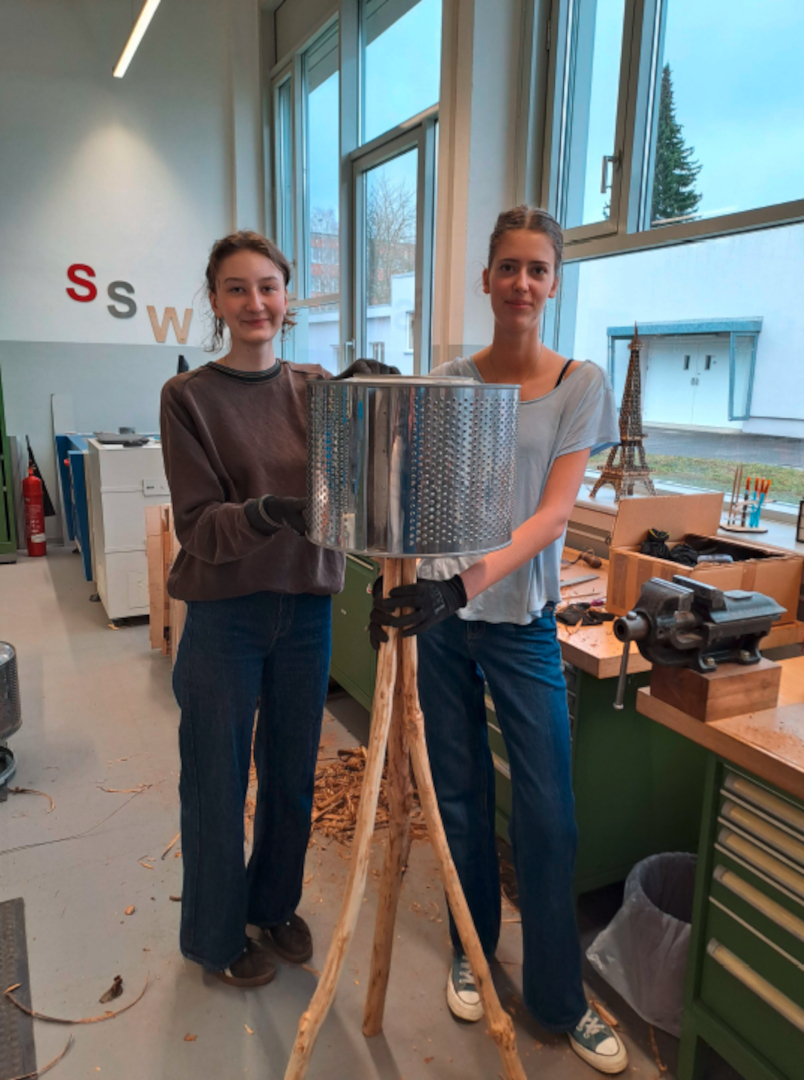
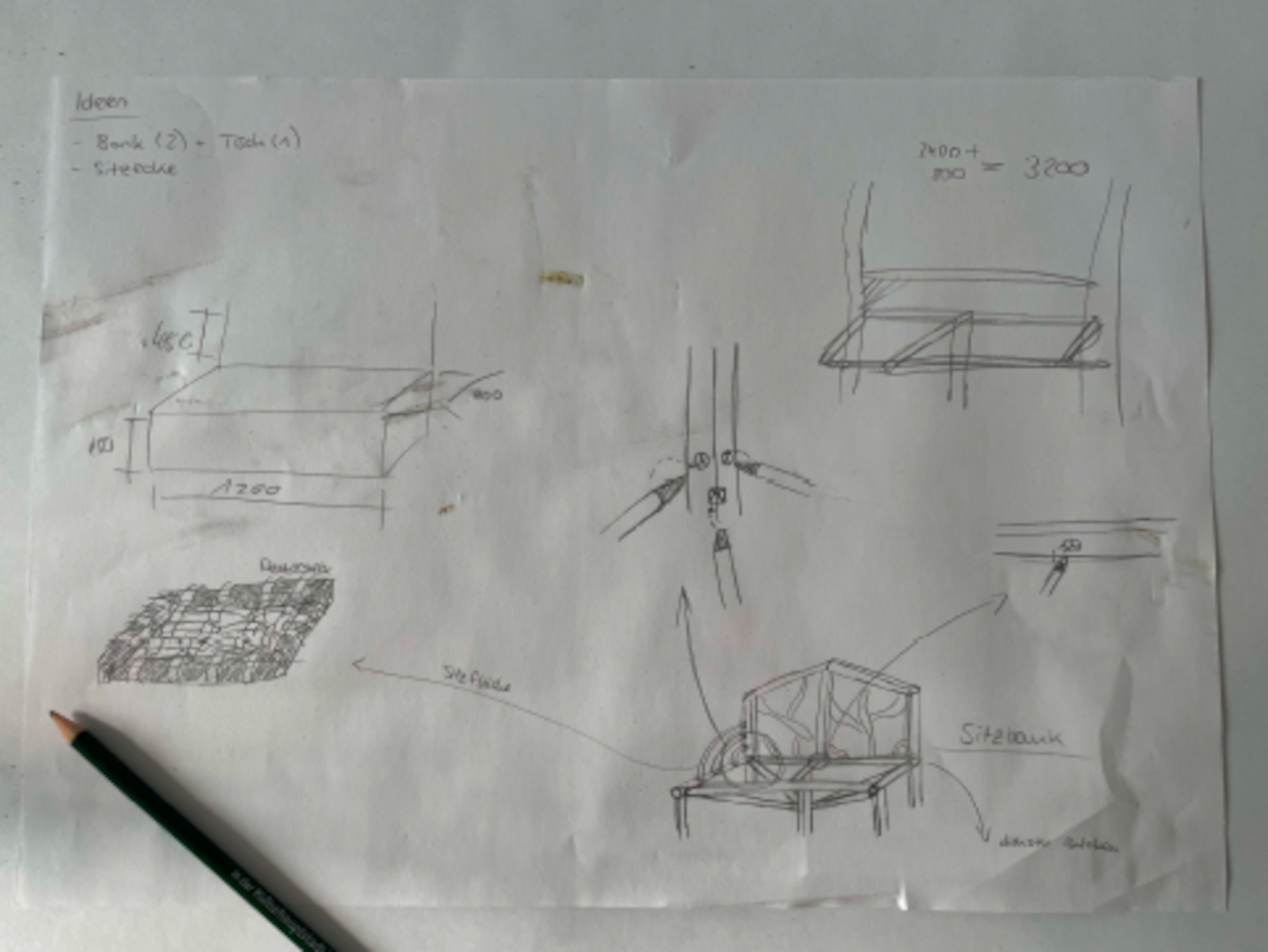
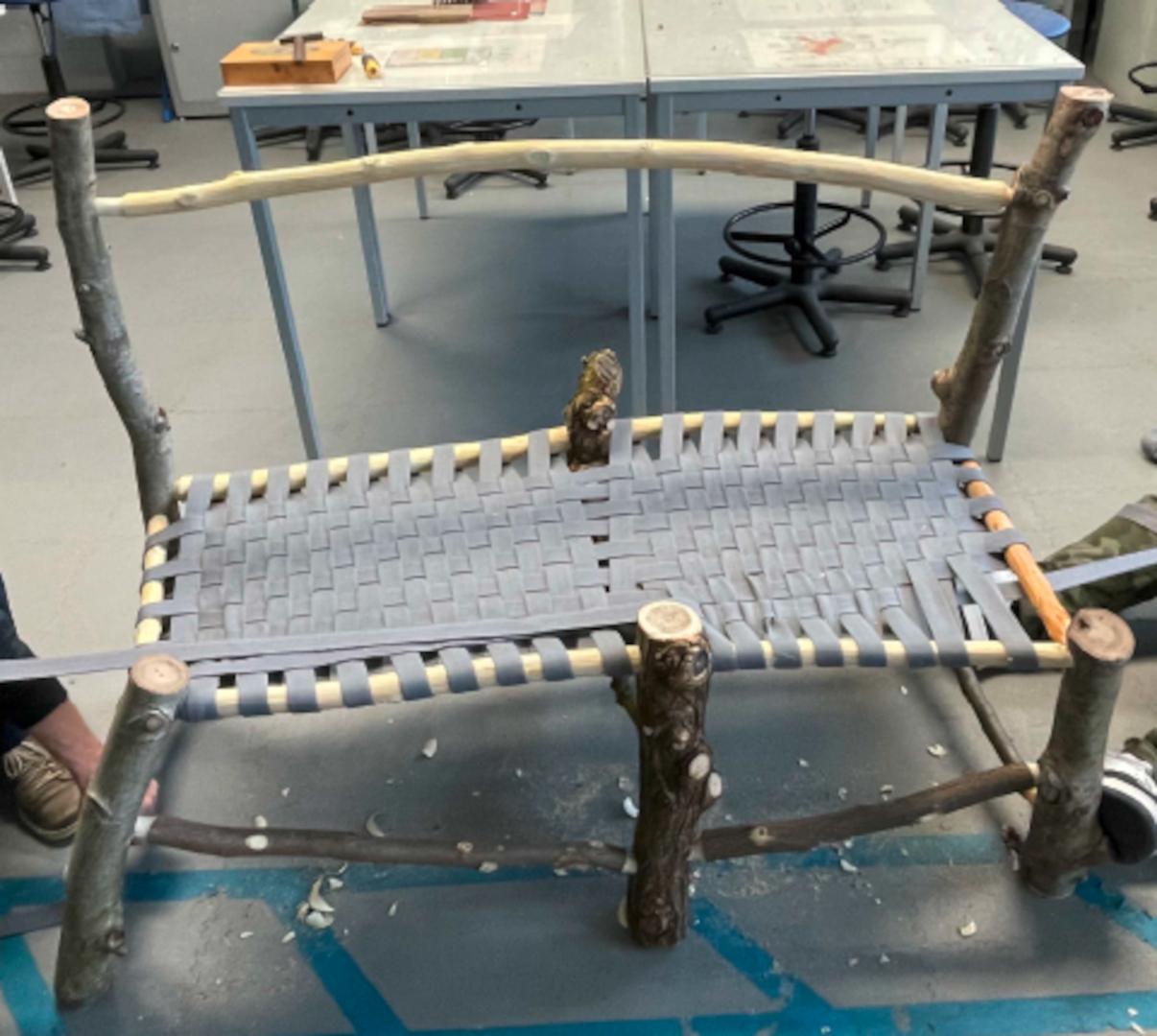
Since 2019, the "Julius Weisbach" Vocational School Centre in Freiberg has been taking part in interdisciplinary teaching at Chemnitz University of Technology every year with its 11th grade classes. Since 2023, the focus has been on the topic of "sustainability". The pupils slip into the role of students for a week and attend workshops, lectures and presentations from various faculties.
In interdisciplinary formats - for example on upcycling, greenwashing or human rights - they learn in a practical and scientifically sound way how sustainable action works. The "Greenwashing" workshop was particularly creative, turning an old washing machine into a lamp, a fire bowl and pieces of jewellery, among other things. The event not only promotes specialised knowledge, but also creativity, environmental awareness and study orientation and is now an integral part of the school year at BSZ.e
Käthe Kollwitz Gymnasium Zwickau: Bringing sustainability to life
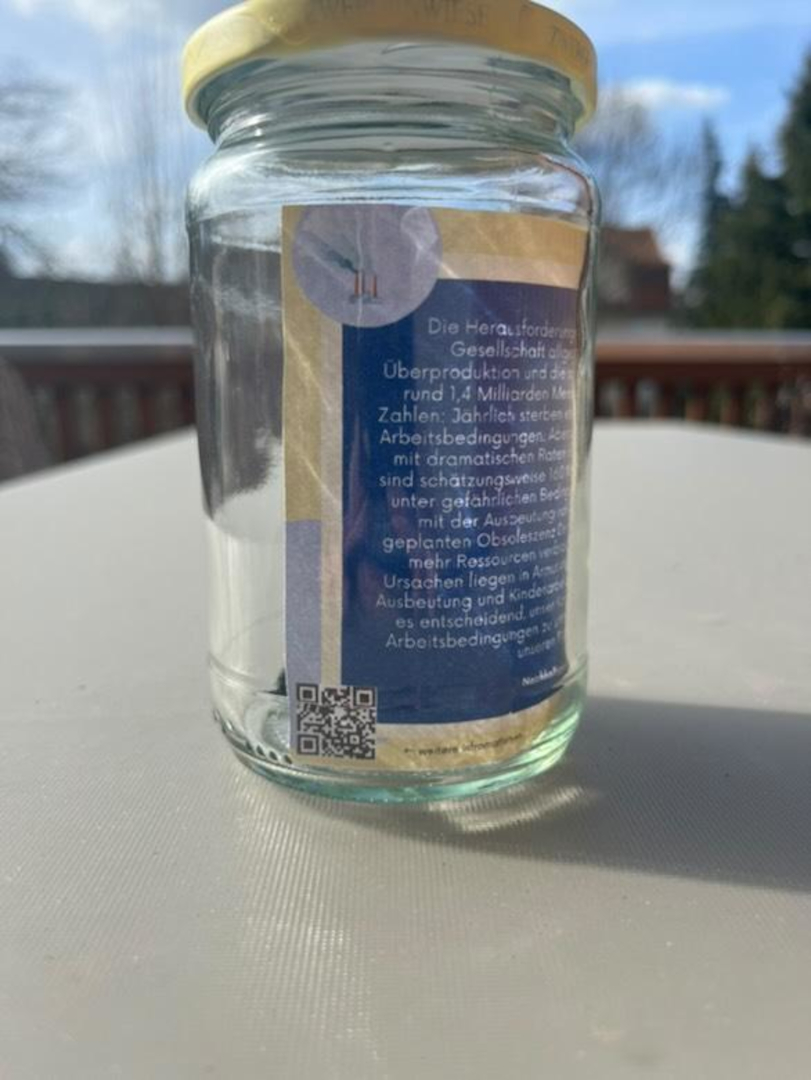
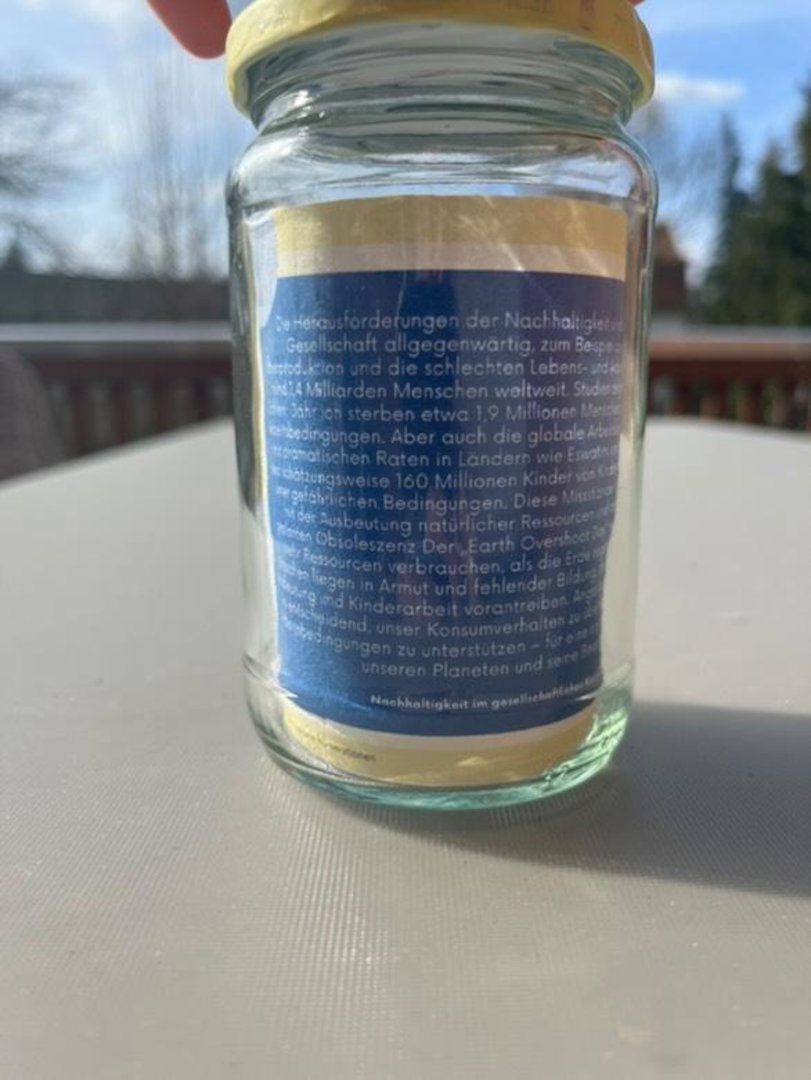
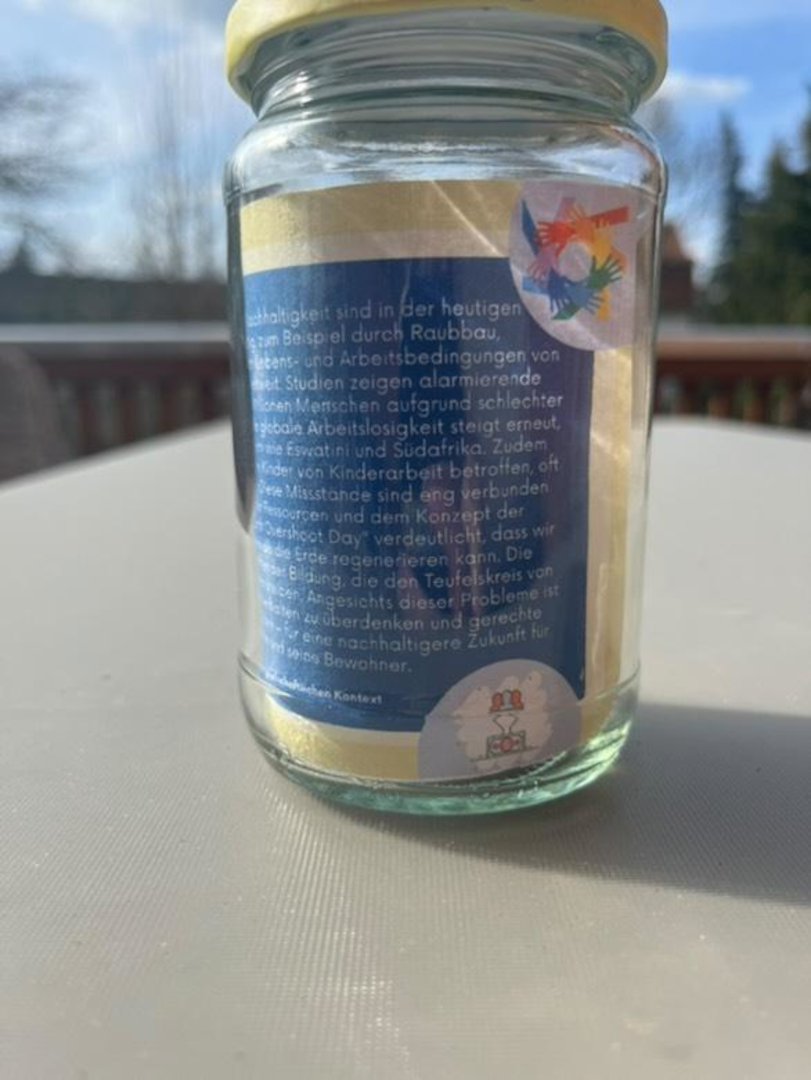
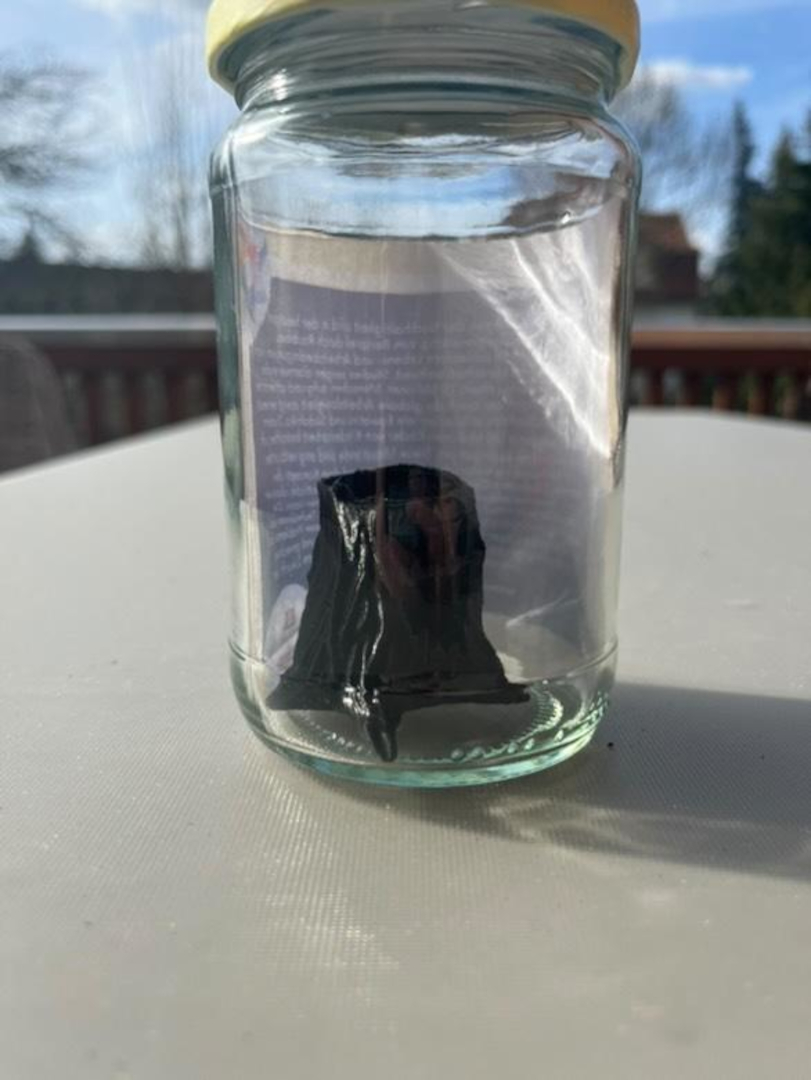
Eight committed pupils are actively involved in environmental and sustainability issues together with teacher Mr Plänitz and SchülerLab Zwickau (WHZ). Two main projects were implemented in the 2024/25 school year:
- Geocaching route at the swan pond: an interactive route with five stations on topics such as marine pollution, the textile industry, energy, consumer behaviour and environmental initiatives. Each station offers information, puzzles and 3D-printed objects made from recycled materials. The route is designed to playfully raise awareness of sustainability and is accompanied by a geocaching app.
- Kick-off event "Experience sustainability" (13 June 2025, WHZ): An event with lectures (for example on fast fashion and drug consumption), hands-on stations (for example upcycling, experiments, waste separation) and a panel of experts. The aim was to impart knowledge in a practical way and encourage active engagement with sustainability.
The projects combine environmental education, digital media, creativity and personal initiative - practical, sustainable and effective for the public.
Vocational school at the BBW Chemnitz of the SFZ Förderzentrum gGmbH: Redesign of the perennial beds according to the Frab concept by N. and S. Pop - focus on insect friendliness and long flowering period
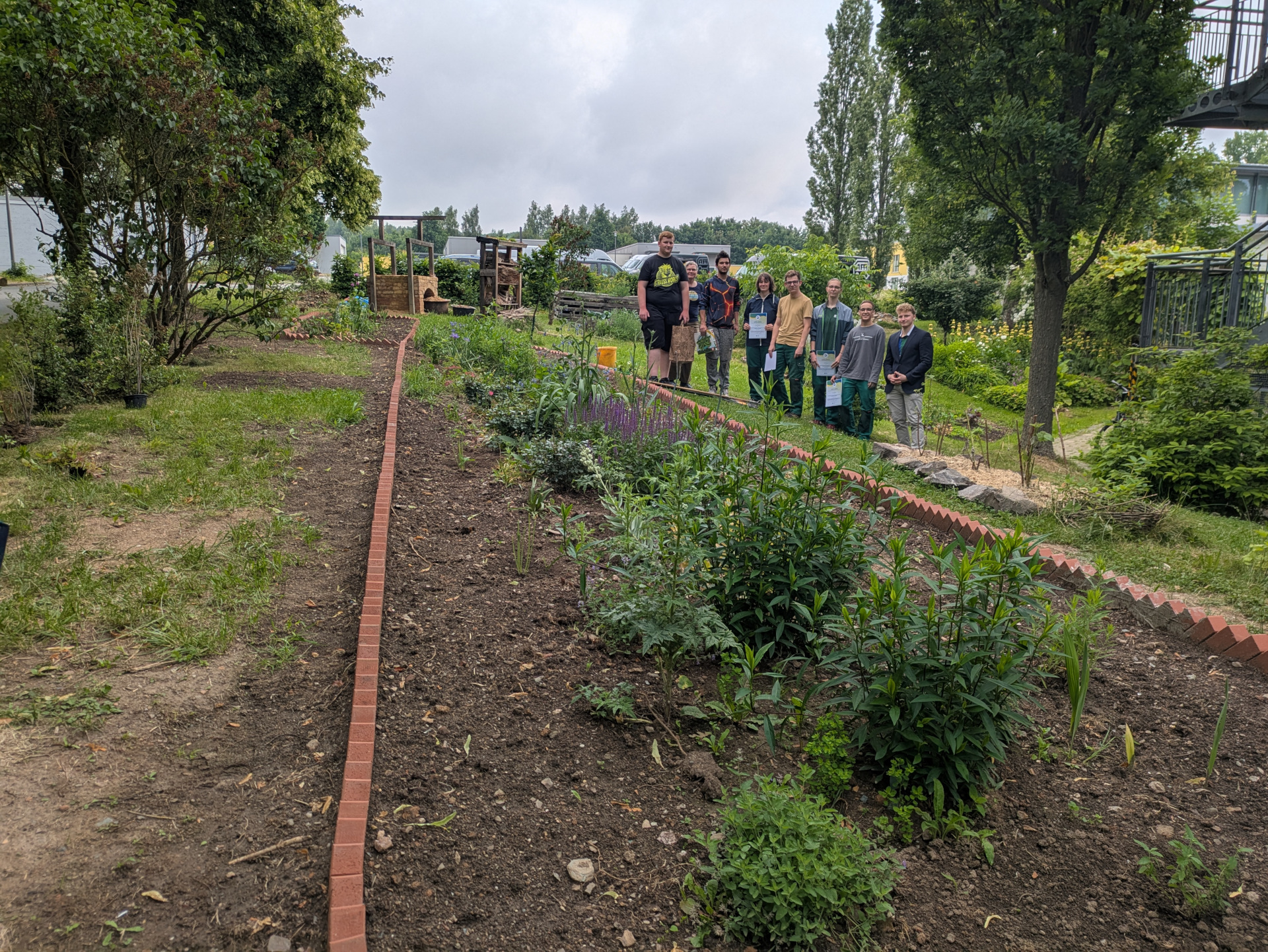
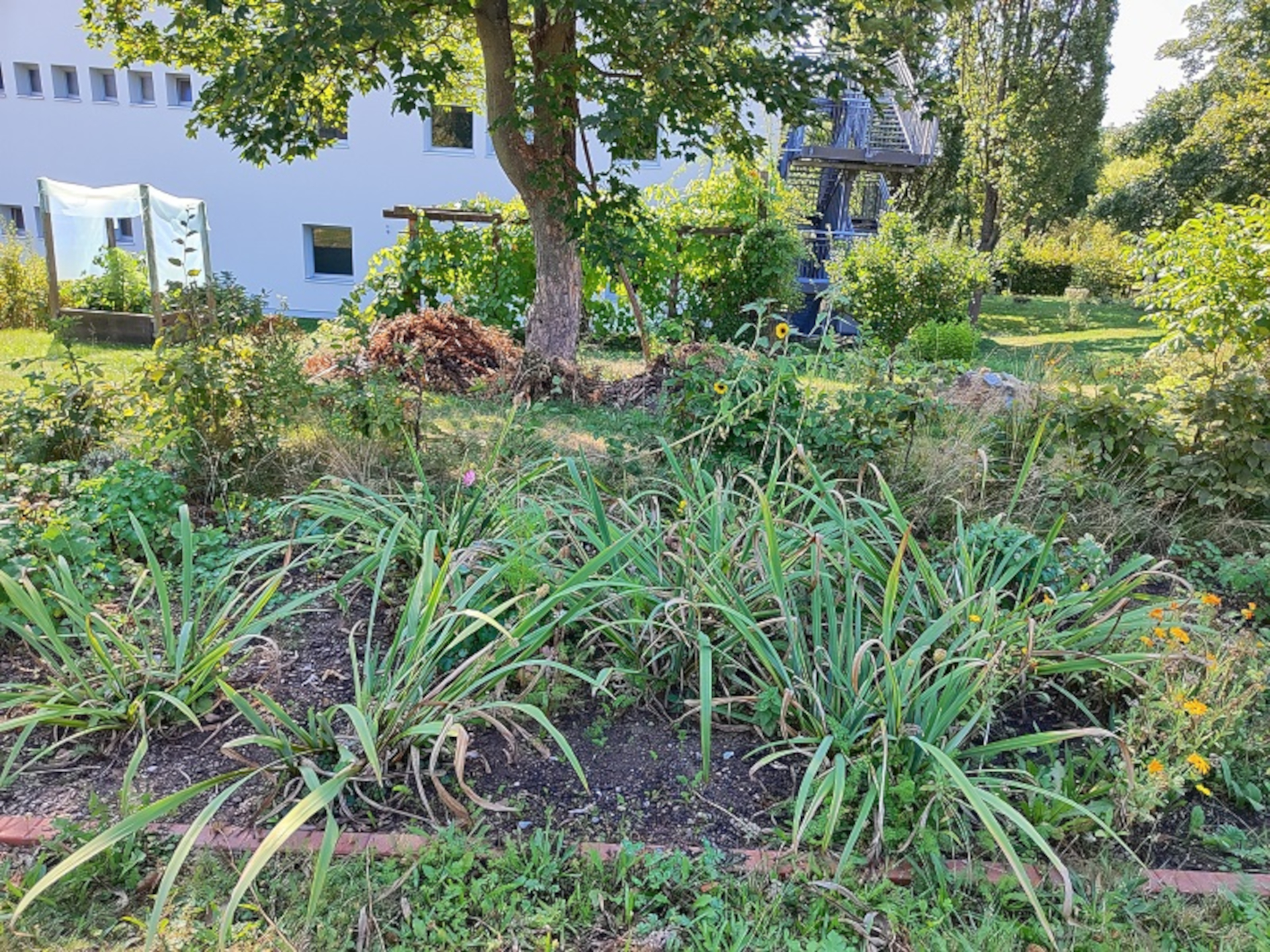
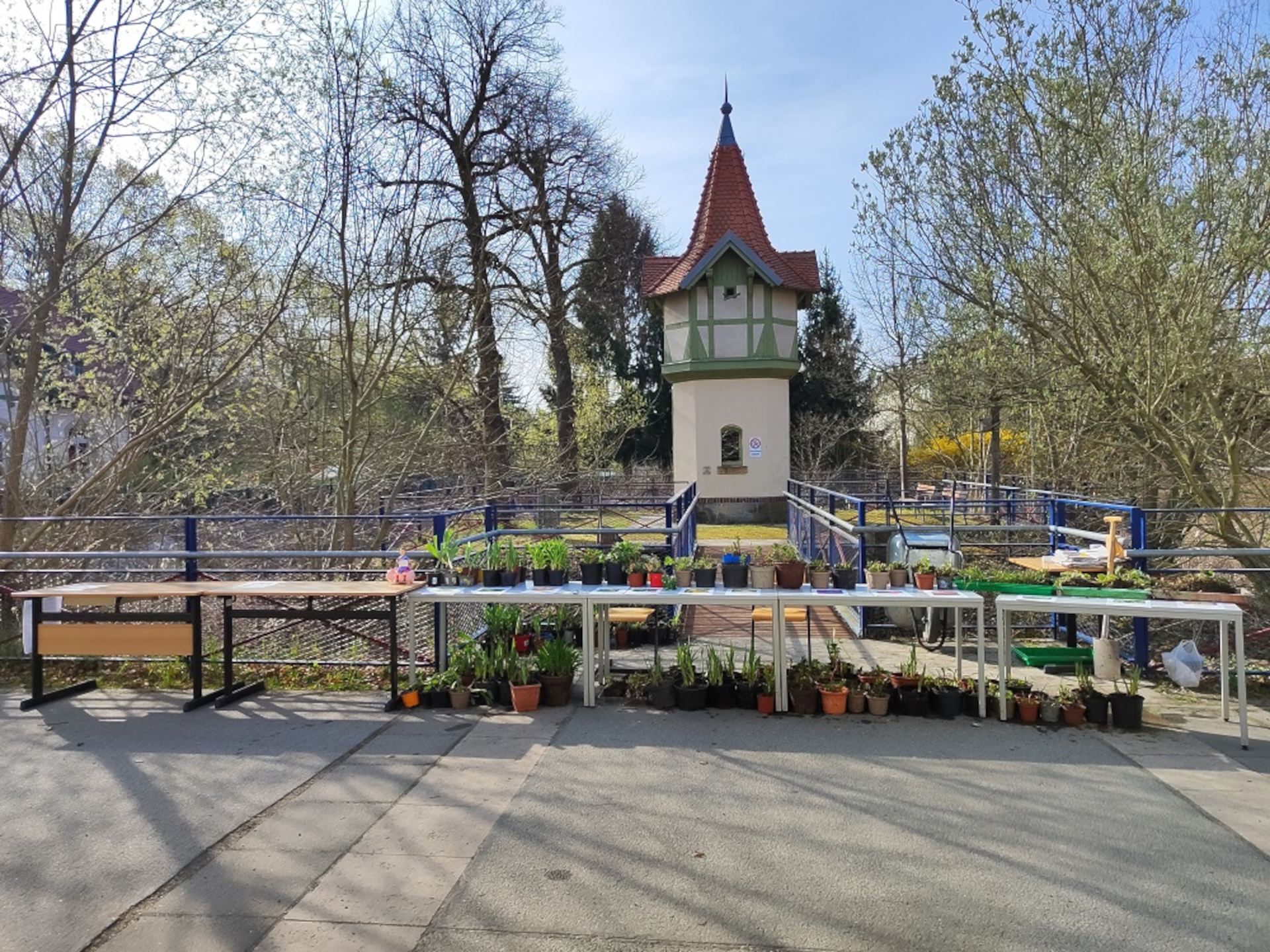
The students in the first year of horticulture at the vocational school at BBW Chemnitz dedicated themselves to redesigning the perennial beds in the near-natural school garden. The aim of the project was to create insect-friendly beds with a long flowering period - inspired by the colour concept of Nori and Sandra Pope's Hadspen Garden. Each bed was designed with a specific colour in mind and planted with perennials that bloom continuously from spring to frost.
Work began in autumn 2024 with an inventory of the existing plants and a theoretical examination of perennials, annual flowers, biodiversity, insect-friendliness and resource conservation. This was followed by soil preparation, the planting of donated flower bulbs and initial planting plans. In spring 2025, existing perennials were moved, new perennials were added and a plant exchange was organised to procure more plants in a resource-saving manner. The project was supported by 2nd and 3rd year apprentices. The project promotes both technical and ecological skills and sensitises the trainees to biodiversity, climate change and sustainable design in horticulture.
Projects in the day-care centre category
Drosselsteig daycare centre: Research for "Chemnitz shines"

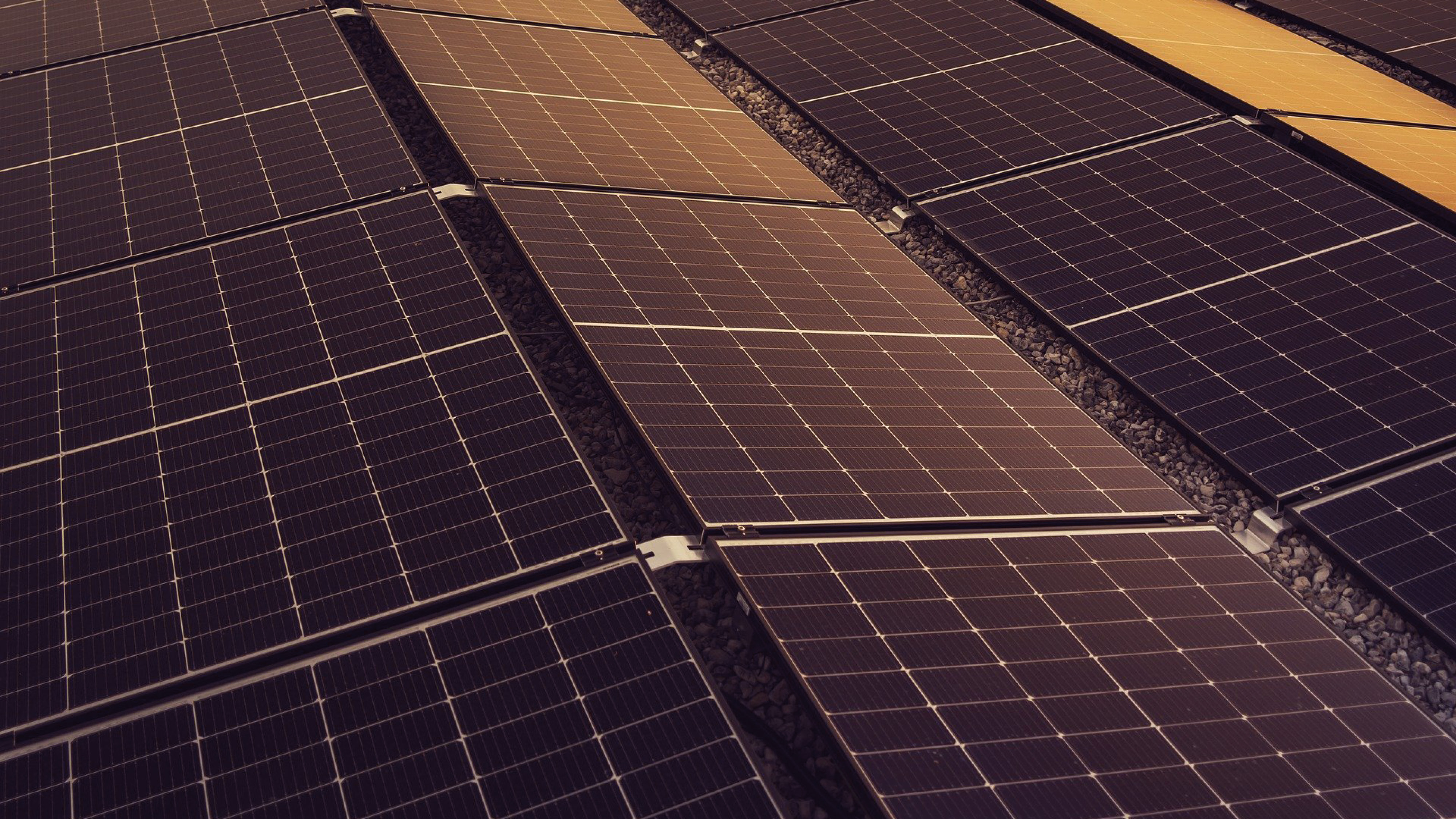
The children from the Drosselsteig daycare centre's research group took part in the "Chemnitz shines" exhibition at the Chemnitz Industrial Museum as part of their project. The participants first learnt about the topic of "light". They discovered that electricity is very important for generating light.
As a result, they asked themselves where the electricity from the socket actually comes from. They realised that electricity can be produced from fossil fuels, such as coal or gas. However, the children realised that "(...) the best electricity (...) comes from renewable energy sources." They researched the elements wind, water and sun and how electricity can be generated from them.
from them. They carried out various experiments.
Evangelical kindergarten Apfelbäumchen: The magic of herbs
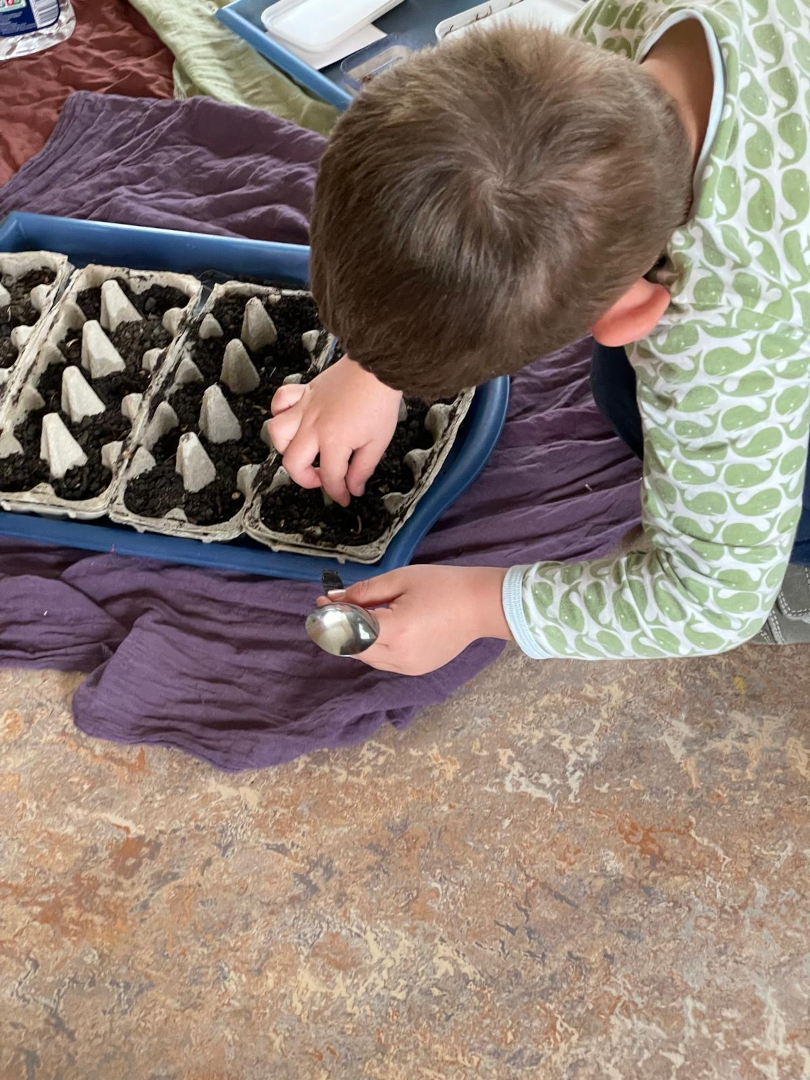
Herbs not only flavour our food, they can also awaken an interest in understanding their origins and the processing of food. This interest was awakened in the children at the Apfelbäumchen Protestant daycare centre. The 37 children involved in the project first looked at the question of what plants actually need to grow.
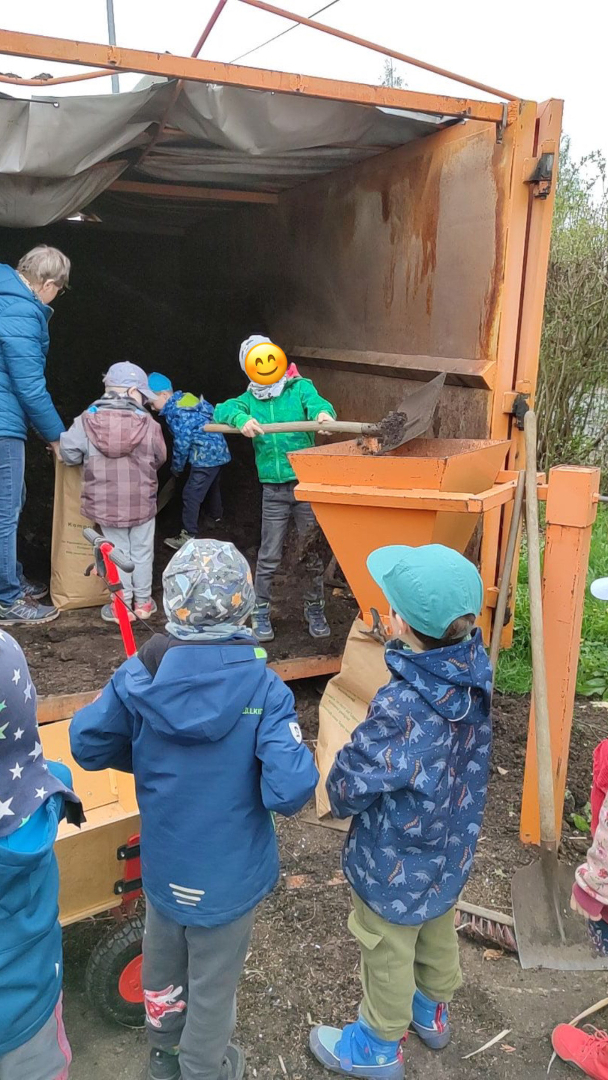
Once they had acquired this knowledge, they created a new raised bed in the centre, for which they first collected soil from the waste and city cleaning company. They then cleared the bed of leaves and leftovers from the previous year. They sowed new herbs and plants and continue to look after the new bed. Creating a herbarium and colouring herbs expanded the offer and encouraged close observation.
Kita Sonnenschein: My environment and I - how can we learn to deal with it better?
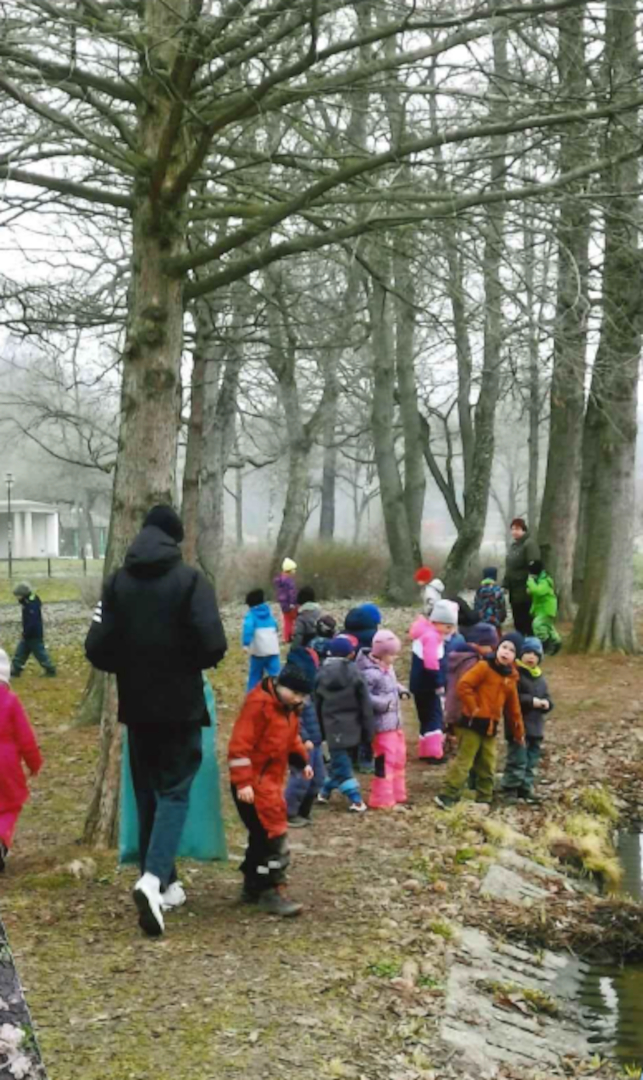
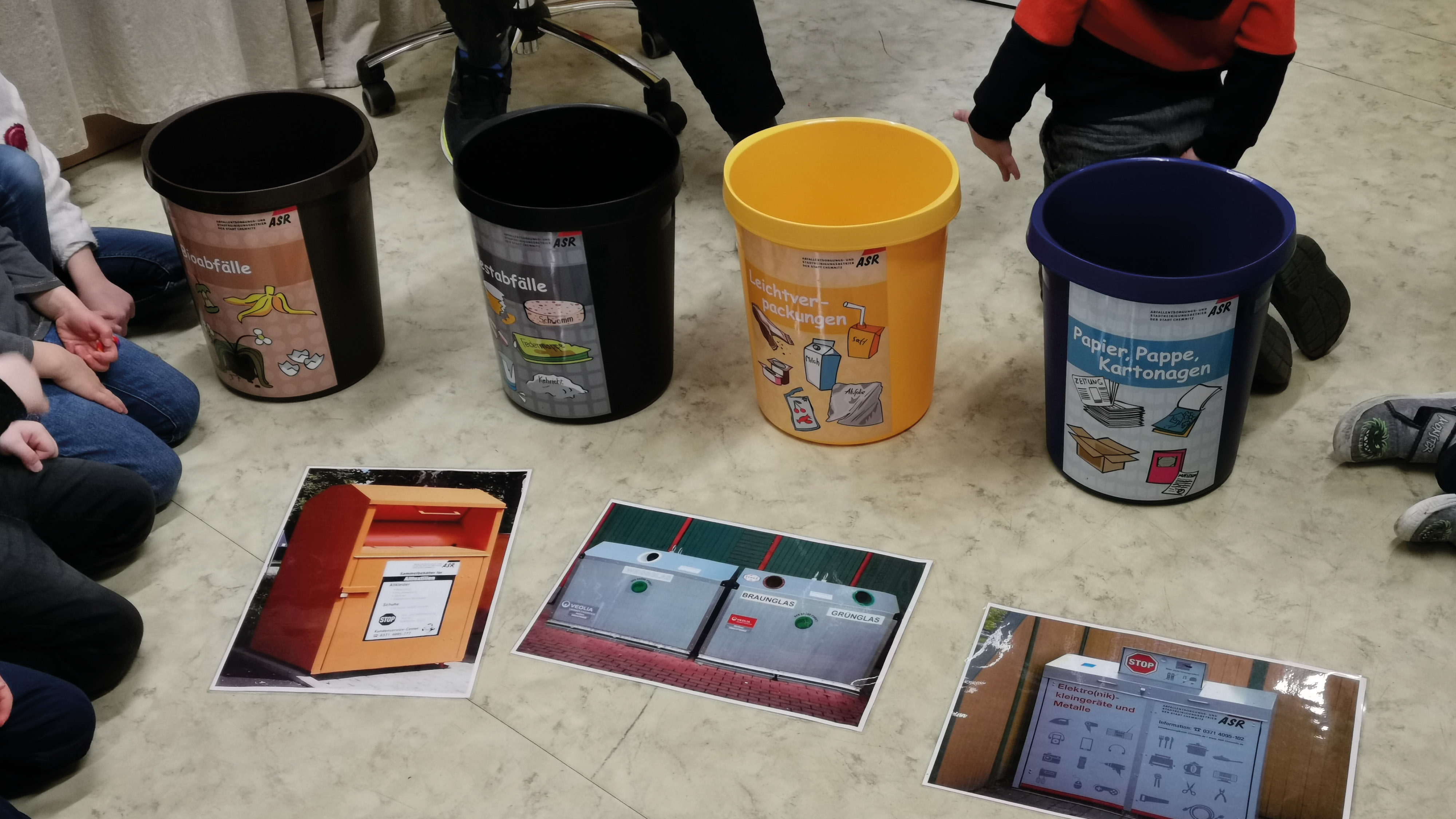
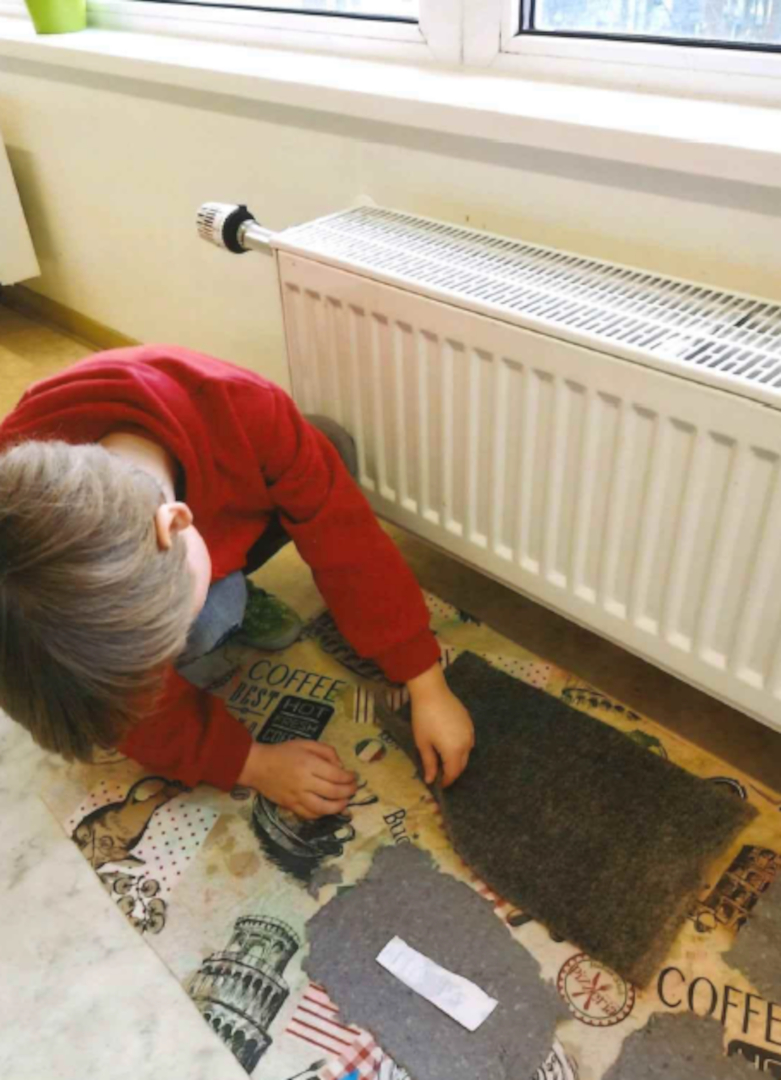
In their last year at the daycare centre, the pre-school group got to know the city of Chemnitz very well. On their excursions to places of interest, such as the Karl Marx Monument, they repeatedly noticed carelessly discarded rubbish. The children then wanted to explore the topic of rubbish.
Where does rubbish come from? How can rubbish be reused? When should rubbish be disposed of for good? These and other questions were on the children's minds. Their questions were answered using the story of the paper cycle, among other things. The children quickly realised that the waste needed to be well sorted in order to produce recycled paper. They made new paper from the sorted paper waste and then tested their knowledge on a waste separation worksheet.
Kinderhaus Pusteblume: Experience sustainability in the garden
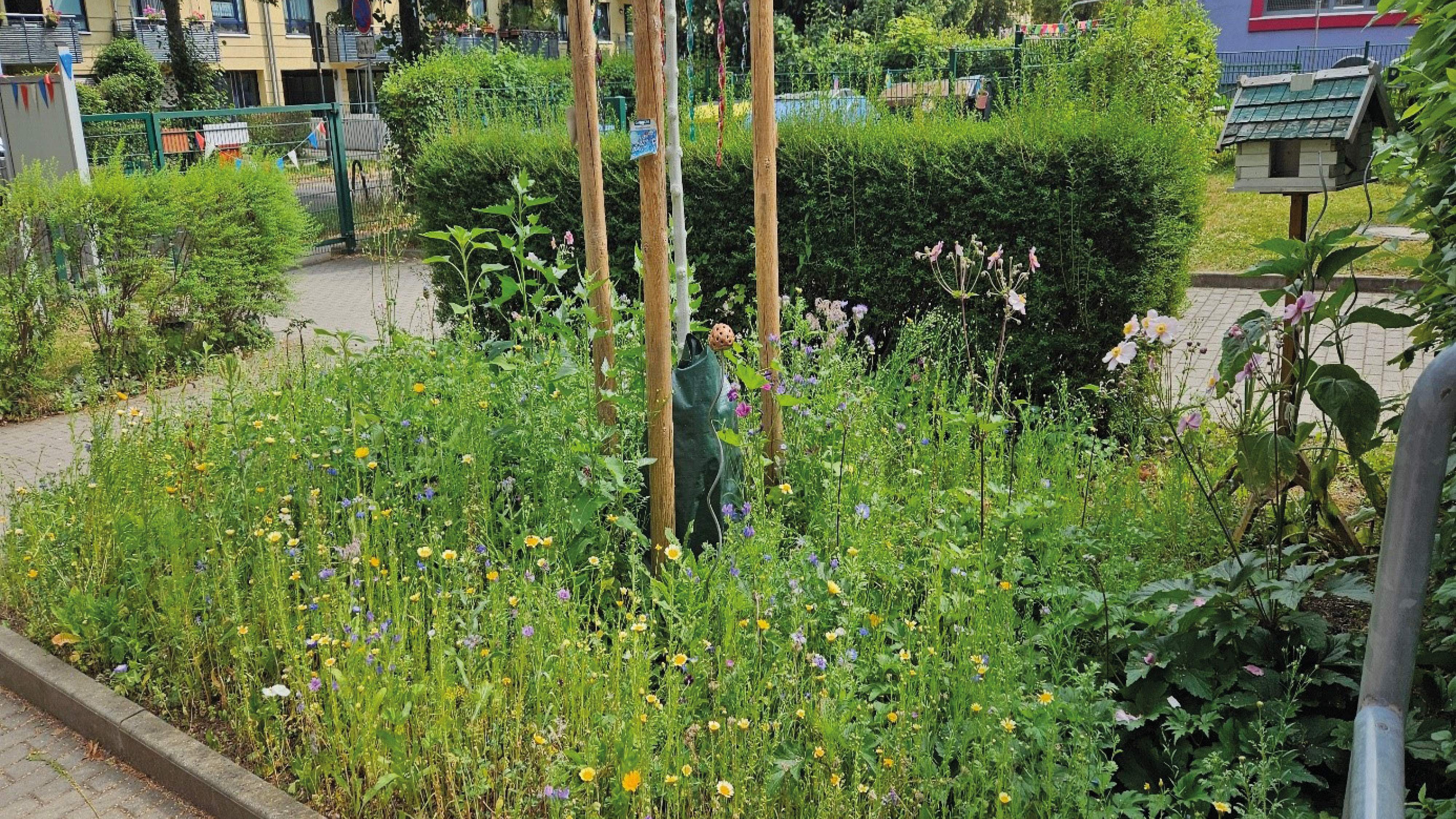
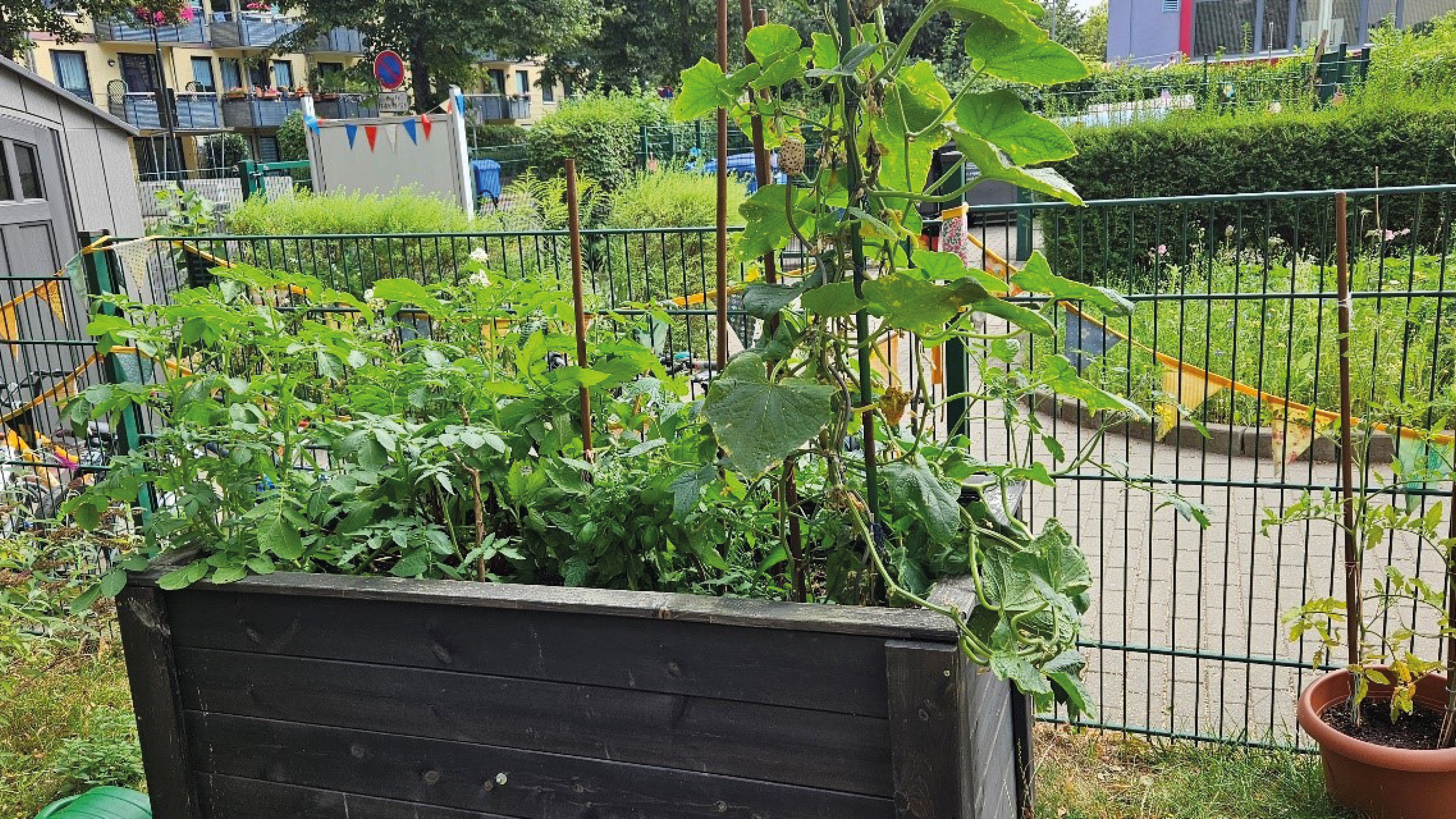
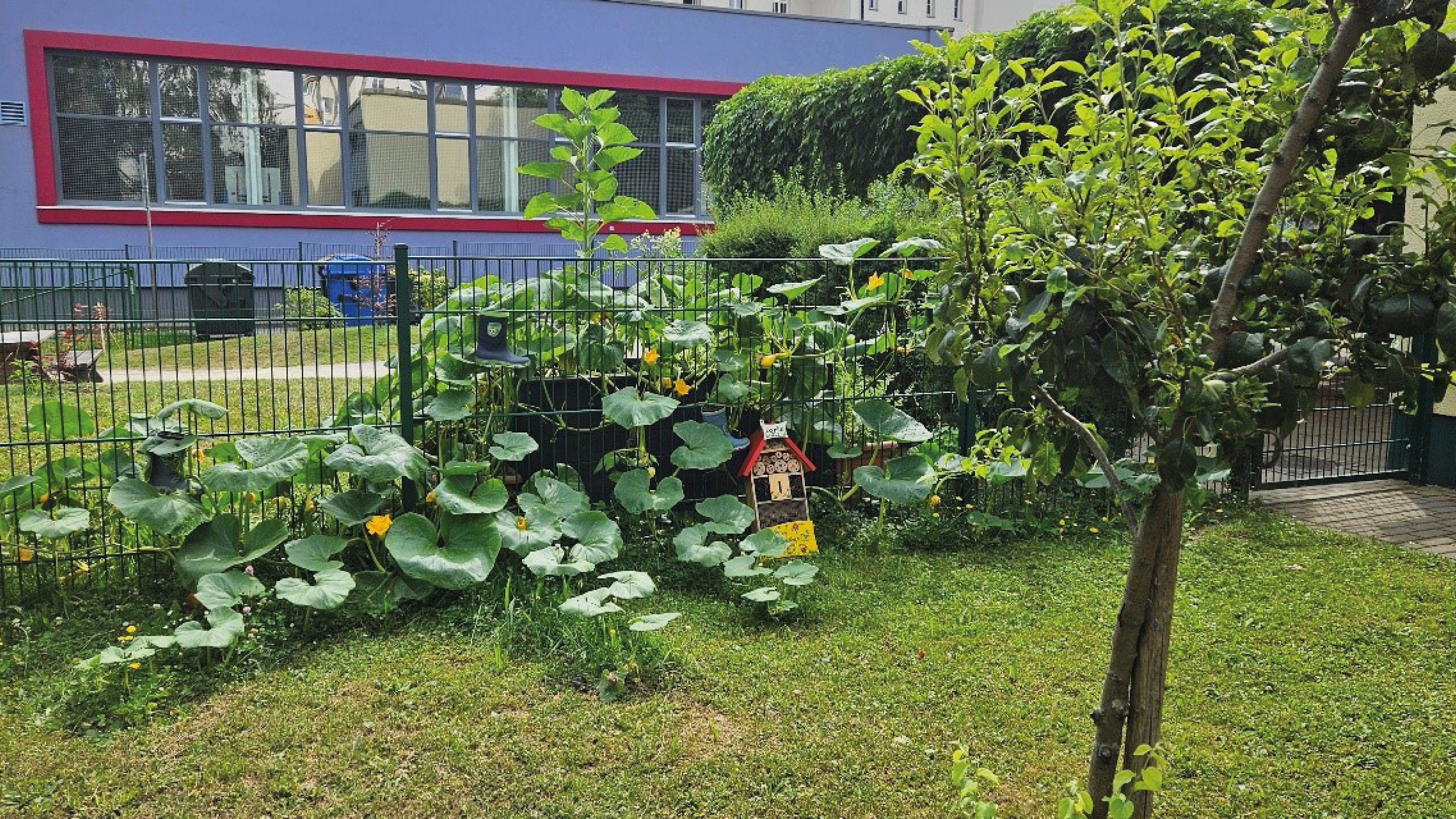
The children, parents, teachers and members of the intercultural garden "Bunte Erde e. V." have redesigned the garden at the Pusteblume children's house. The aim is to use the garden as a holistic educational space and to make the cycle of nature recognisable and tangible for the children.
The starting point for the project was the donation of two raised beds by the parents of one of the children. The beds were then initially filled with soil and other natural materials to create a nutritious soil. In spring 2024, the children were then able to plant the newly created areas. Nasturtiums and various types of vegetables were planted. Various types of herbs were also added to the healthy range. The various fruits were then harvested and processed by the children themselves.
Caritas Kita Schatzkiste: We become little climate heroes
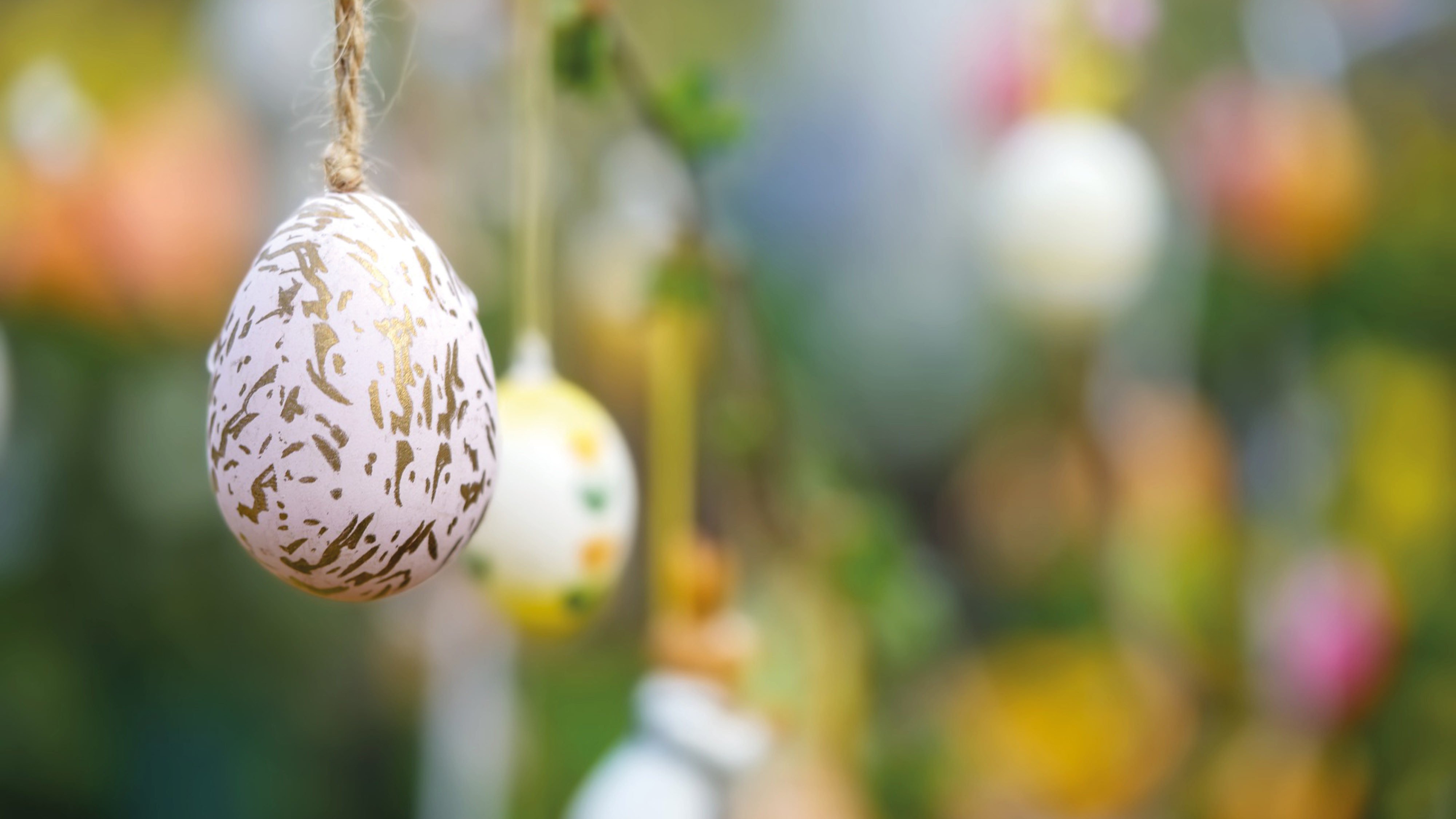

The children at Caritas Kita Schatzkiste became "little climate heroes" in the course of their project. The project participants organised project weeks on the topic of the environment from Ash Wednesday to Easter. In a conference, the children themselves decided which topics they wanted to address. They collected their ideas on two large posters and presented them to their parents.
The resulting activities became weekly stations during Lent.
Among other things, they dealt with the forest, waste separation, recycling and
recycling and the topic of smog and environmental pollution. For Easter, they made Easter baskets from small tissue boxes. Together with the children, they created their own marble game on the subject of smog and the environment.
KIta Bunte Kinderwelt: Waste and sustainability
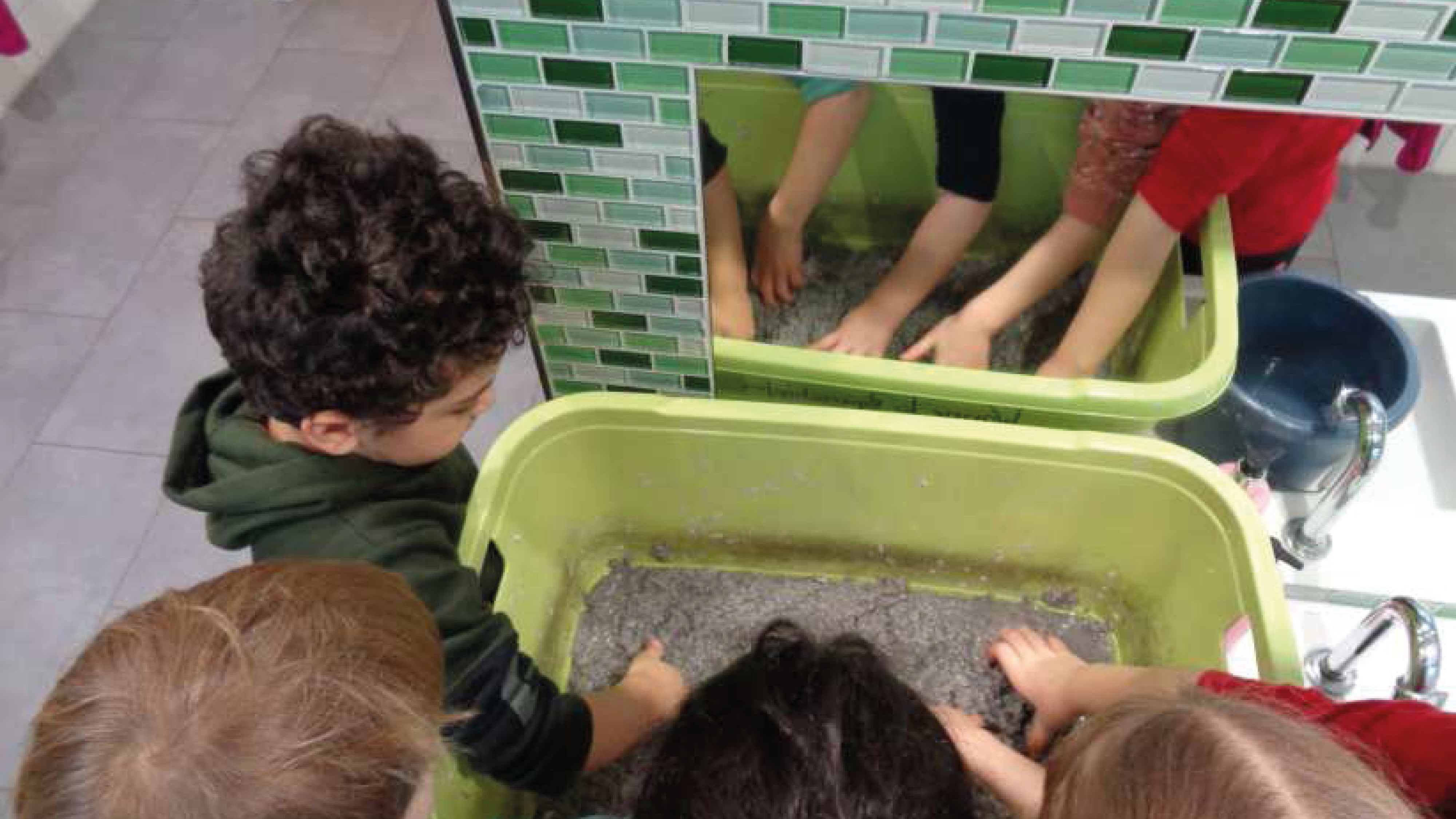
From January to March 2024, the Panda Bear preschool group at the Bunte Kinderwelt daycare centre engaged in numerous activities related to the topic of waste. In a playful and creative way, the children learnt all about different types of waste, how to separate them correctly and a lot about composting and reusing materials.
For example, the children learnt how to separate waste correctly by playing a self-designed
rubbish memory they had designed themselves. They had to match the different cards to the correct bin. They also made paper together, put together different types of paper using posters and
paper and made pencil boxes out of milk cartons. The children also learnt about composting waste. Each child planted their own cress on their own compost. The children were supported by the waste and city cleaning company with various materials.
Kindertagespflege mezzopiano: Insect happiness - we support butterflies and bees
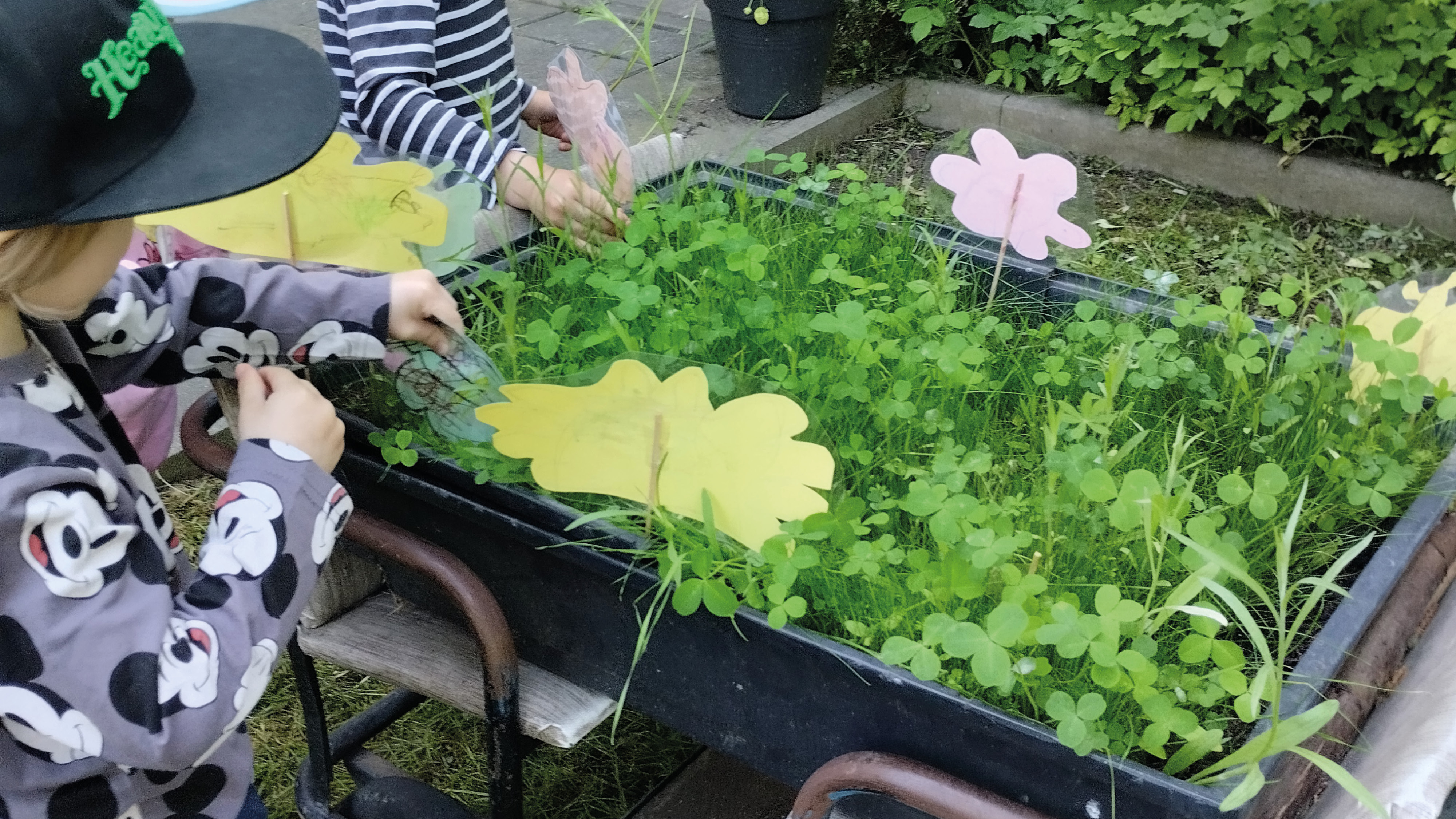
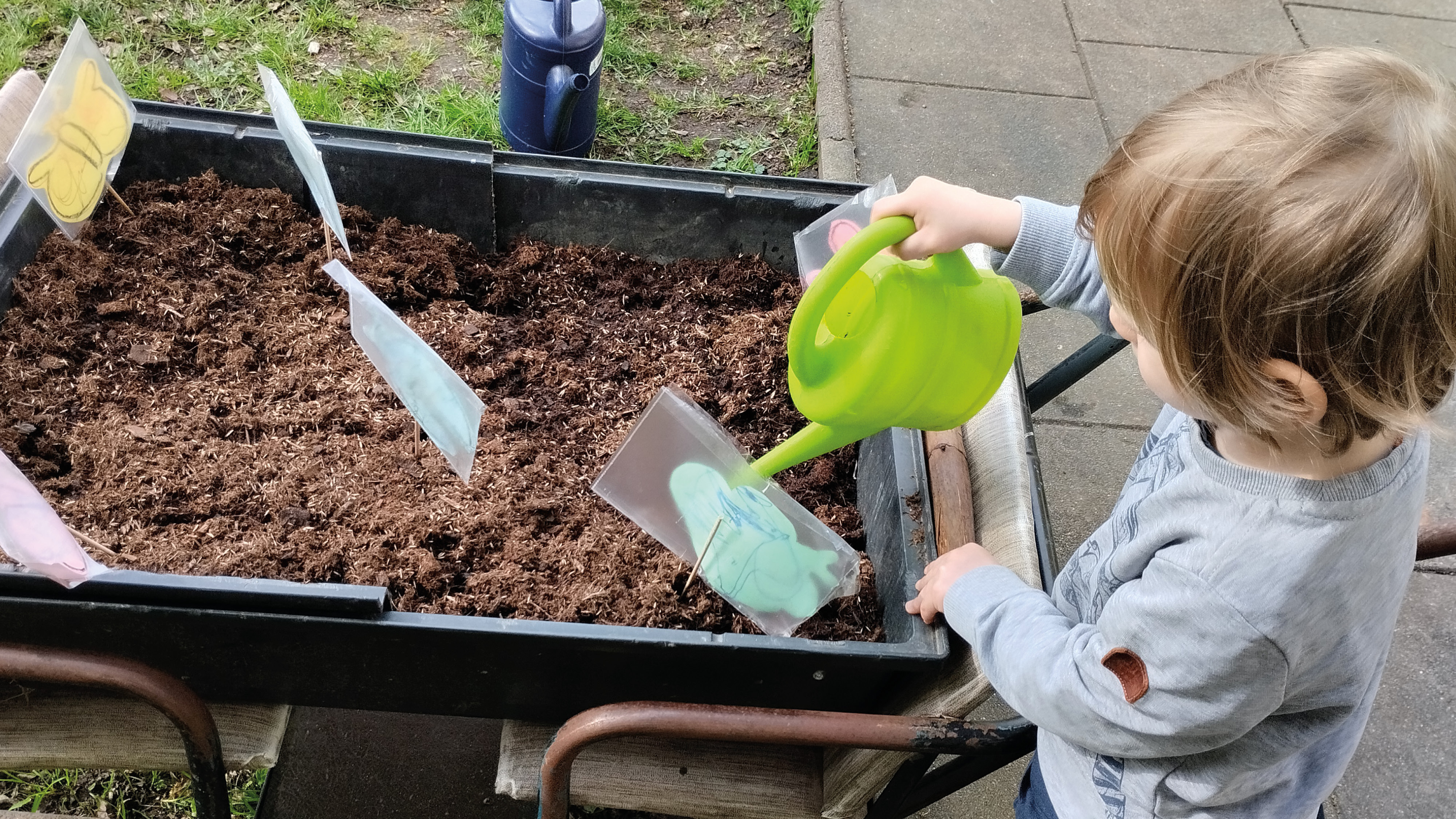
The very young people of Chemnitz also took part in the Environmental Award again this year. The children converted a former crèche van into a mobile flowering meadow. The children sang about bees and butterflies.
The children made their own little seed bombs to give to the neighbours of the day care centre. The two-year-olds also enthusiastically watered the flowering meadow and counted the flowers, which will soon develop.
Kita Bildungsinsel: A snack garden is growing behind our house
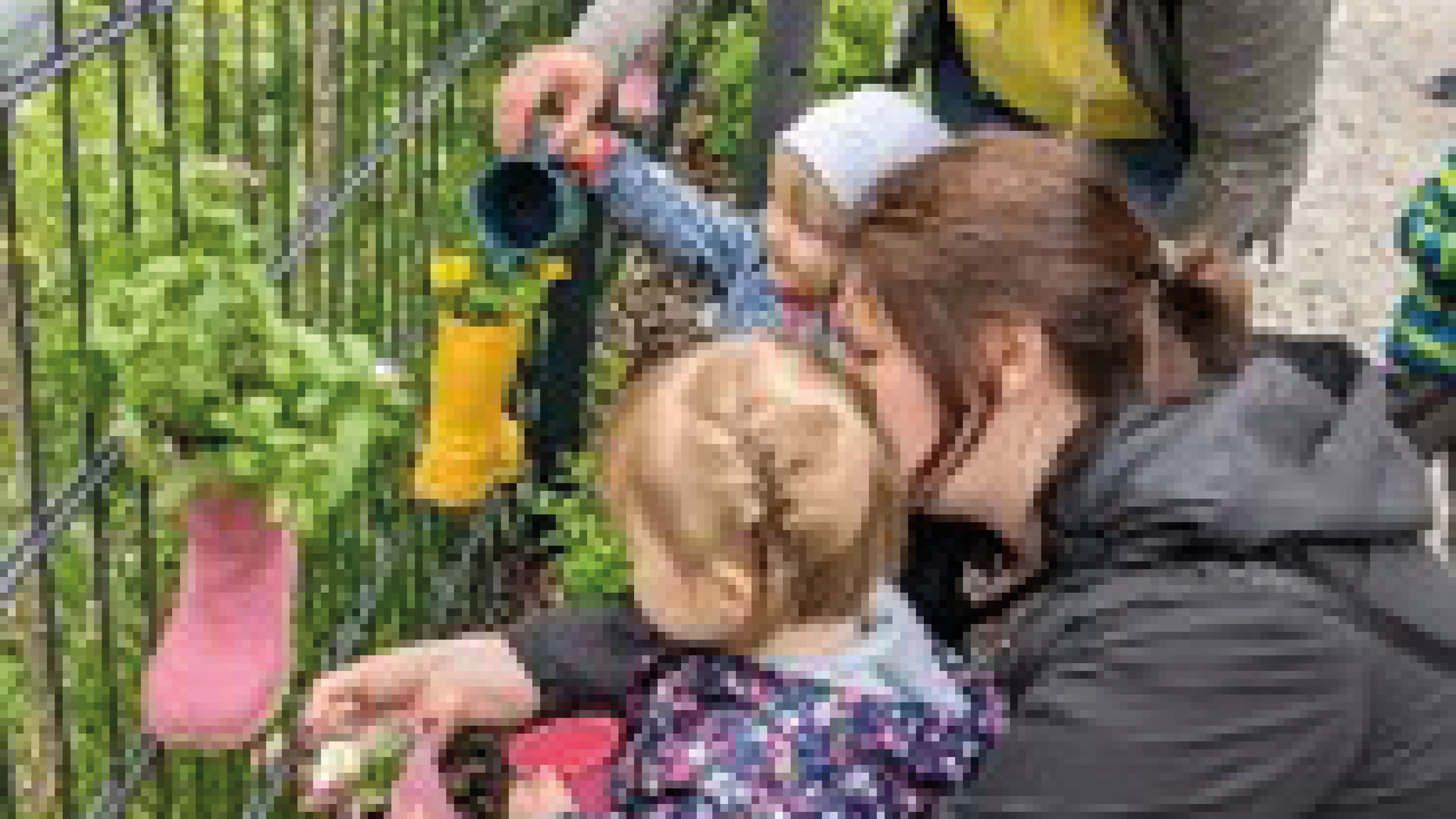
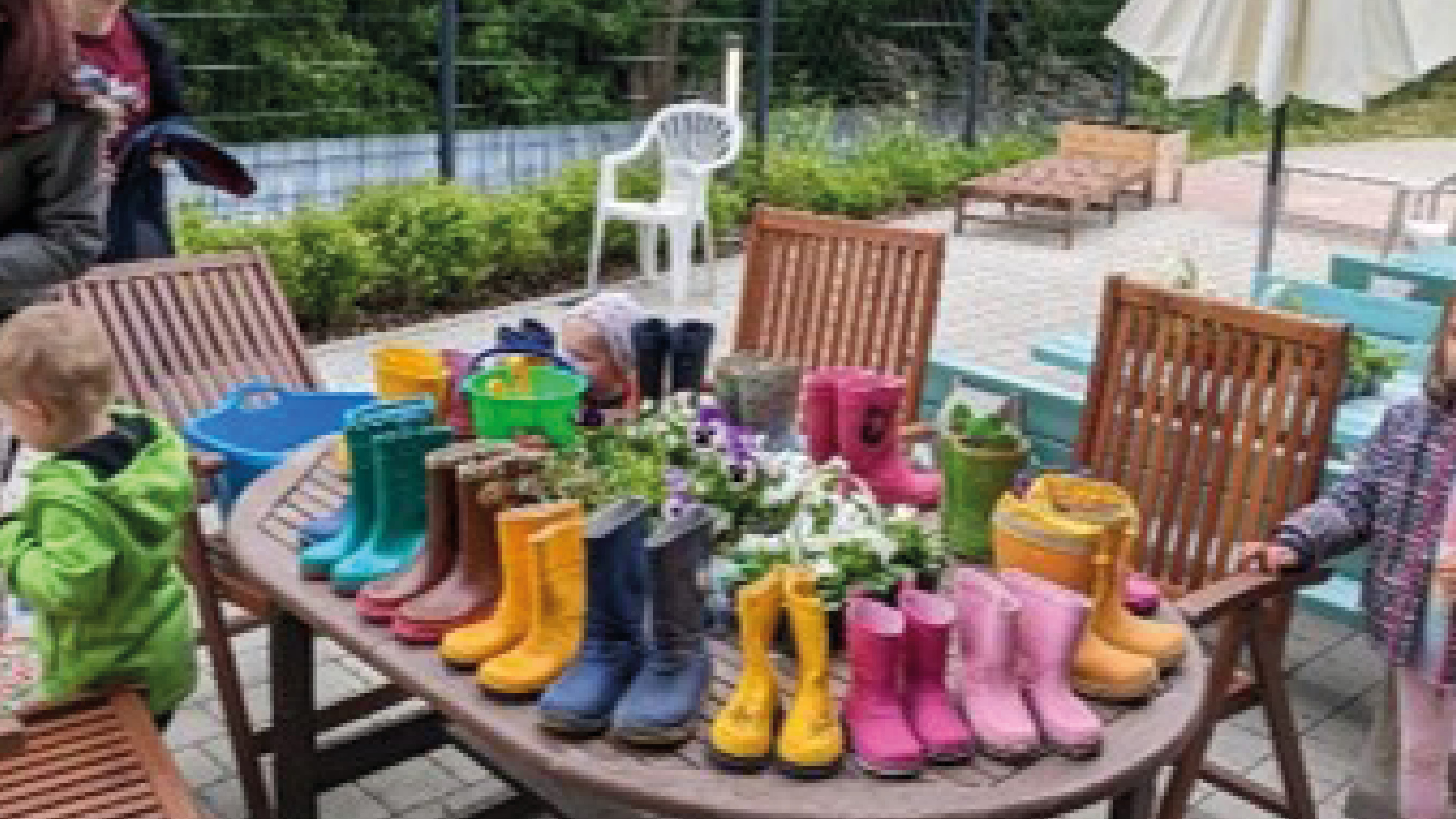
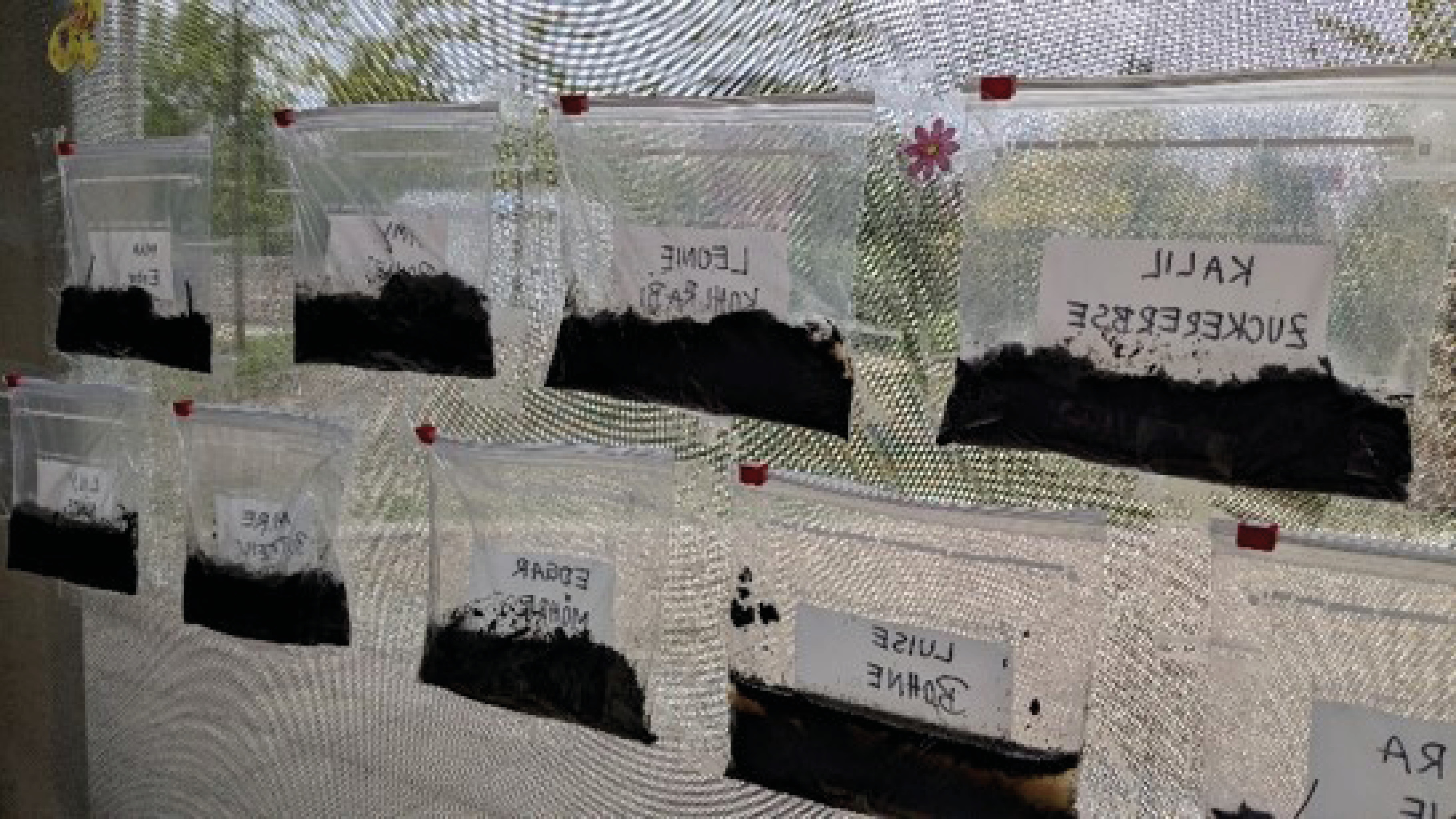
"Sustainability begins in the mind!" This was the motto under which the youngest Chemnitz residents of the Bildungsinsel daycare centre engaged with their environment. They worked on their snack garden for a whole year.
The starting point for the project was the upcycling of old wellies, which were quickly turned into flower pots. These were first used to beautify the daycare centre grounds. The children were already caring for these plants and so the idea was born to create a snack garden in the daycare centre. With the support of the parents, strawberries and much more were planted. The harvested fruit was used to cook and bake delicious dishes such as soups, cakes and even ice cream.
Kita Bildungsinsel: Raising awareness = rubbish in the environment
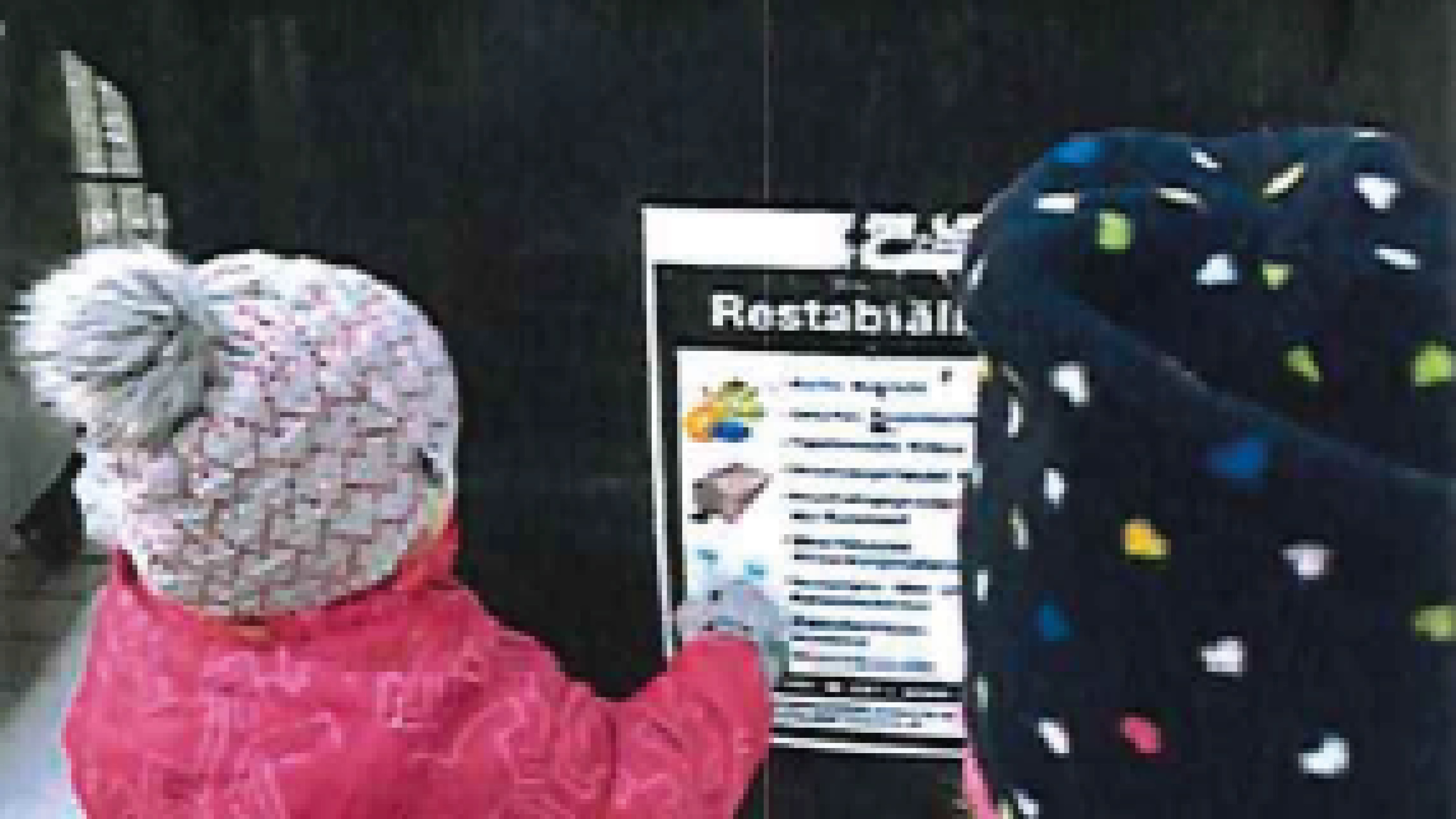
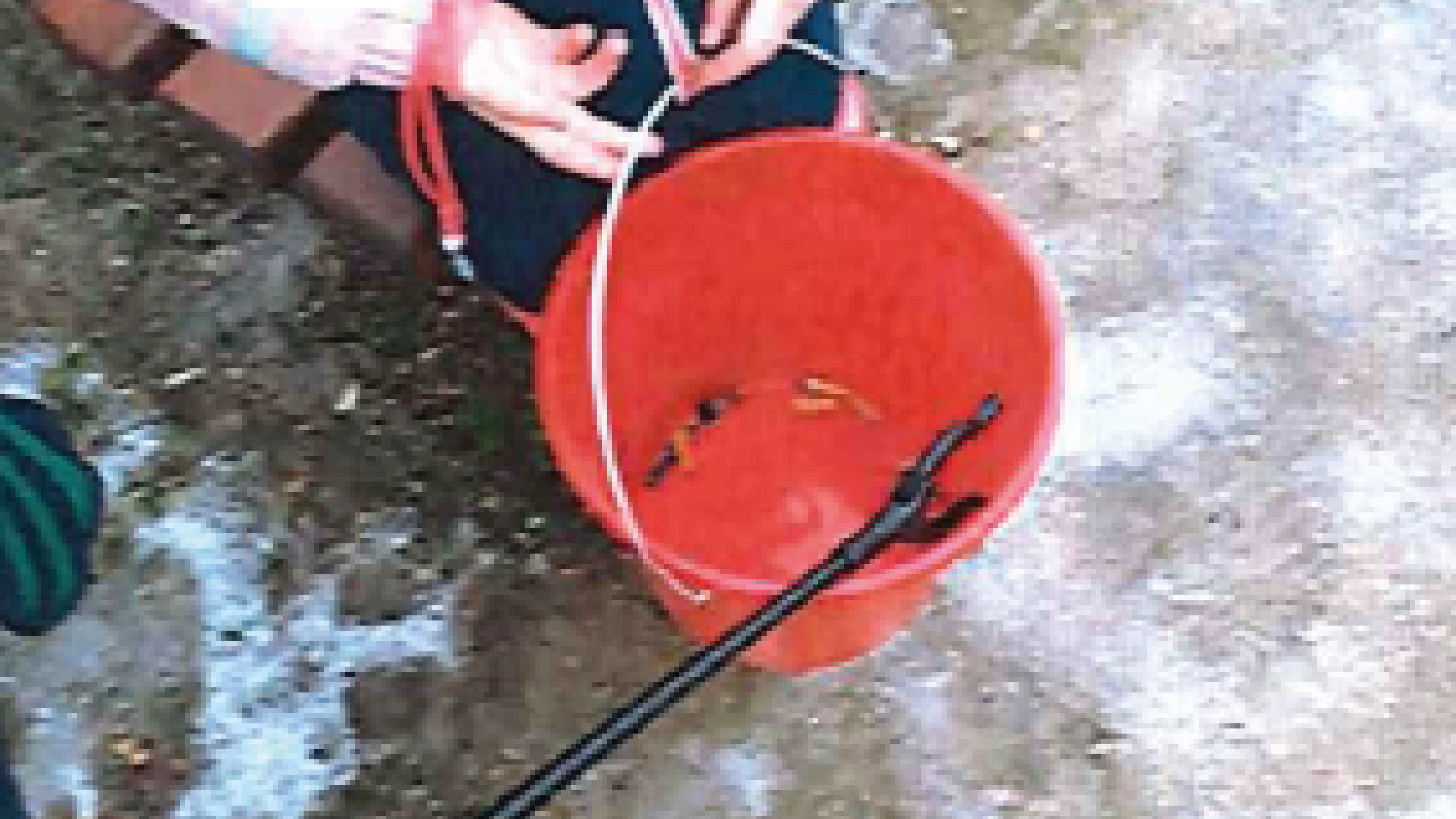
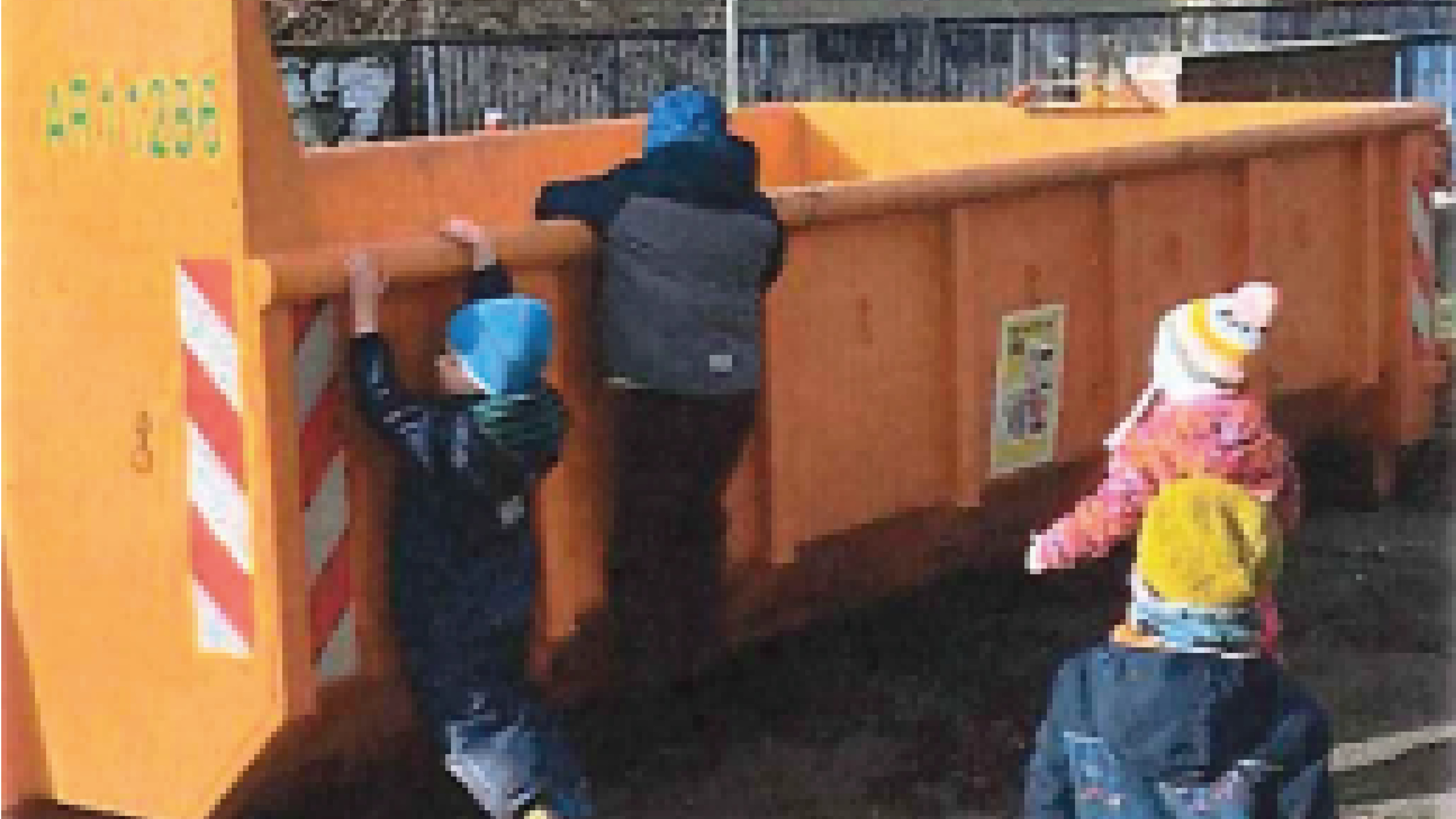
17 children from the Bildungsinsel daycare centre dealt with the topic of waste as part of their project. On their way to the daycare centre and in their surroundings, the participants repeatedly discovered rubbish that had not been disposed of properly and was simply lying around.
Using various items on loan from the waste disposal and city cleaning company, they approached the topic and learnt about correct sorting and recycling, among other things. In their own experiments, they discovered that recycling is not that easy and that some materials are more suitable than others. For example, they also created new paper and learnt about its cycle. Equipped with rubbish tongs, the little waste experts then set off to clear the area around the daycare centre of rubbish.
Projects in the primary school category
Hort Kleinolbersdorf: Rescue for the forest


In March 2023, two children from the Kleinolbersdorf after-school care centre discovered many acorns that already had small root sprouts. The children immediately had the idea of planting the seedlings, caring for them and watching them grow - a new project idea was born.
The children planted over 50 seedlings. Of these, 34 oak trees grew under their care. A permanent home then had to be found for the ever-growing trees.
a permanent home had to be found. In search of this, the children approached the local council, who quickly made an area available as well as the
wildlife protection. The trees were then planted and a new home was found. The trees can now be visited by those involved at any time.
Hort Harthau: Environmental protection, whether big or small, can be a thing for everyone
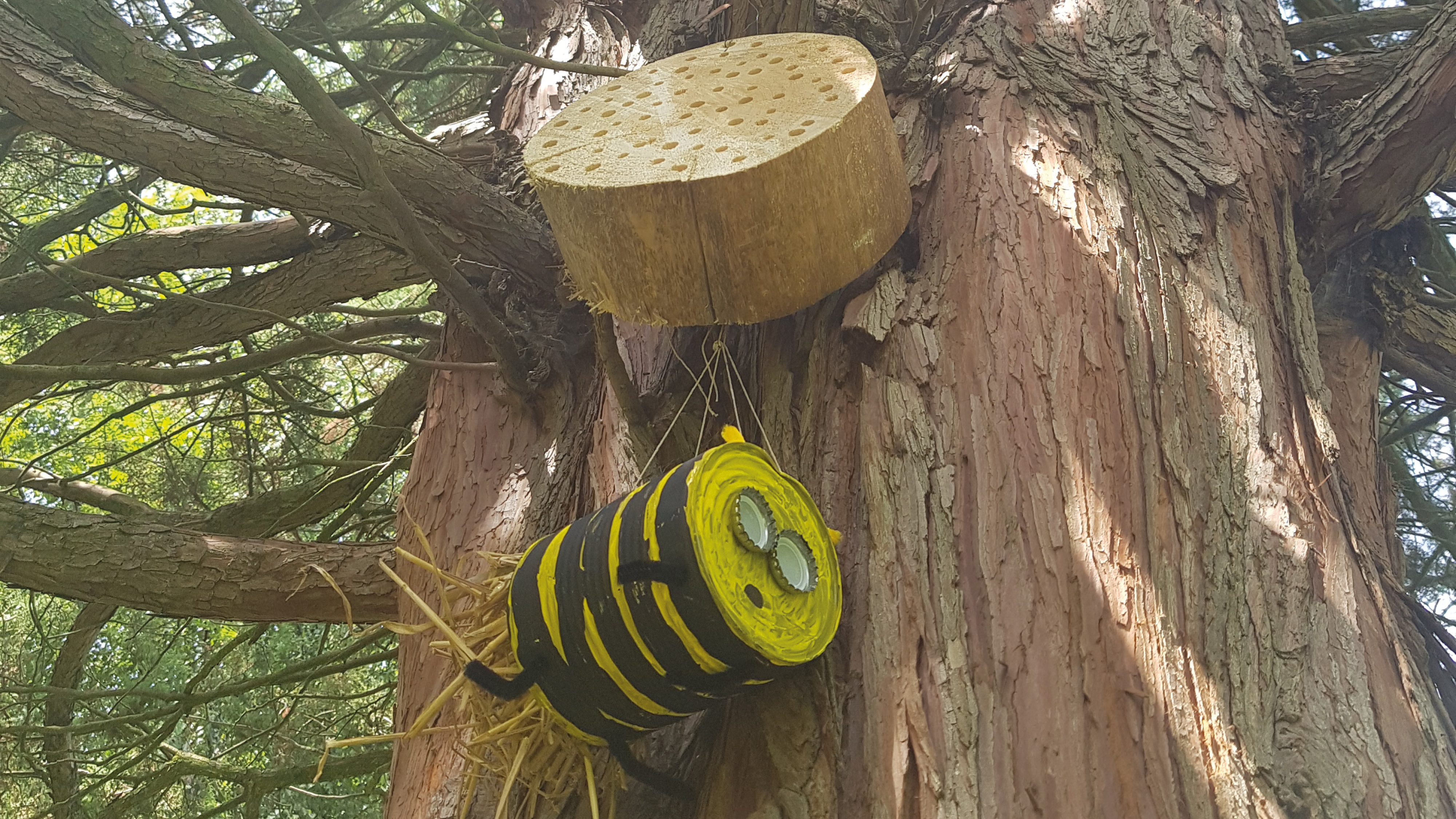
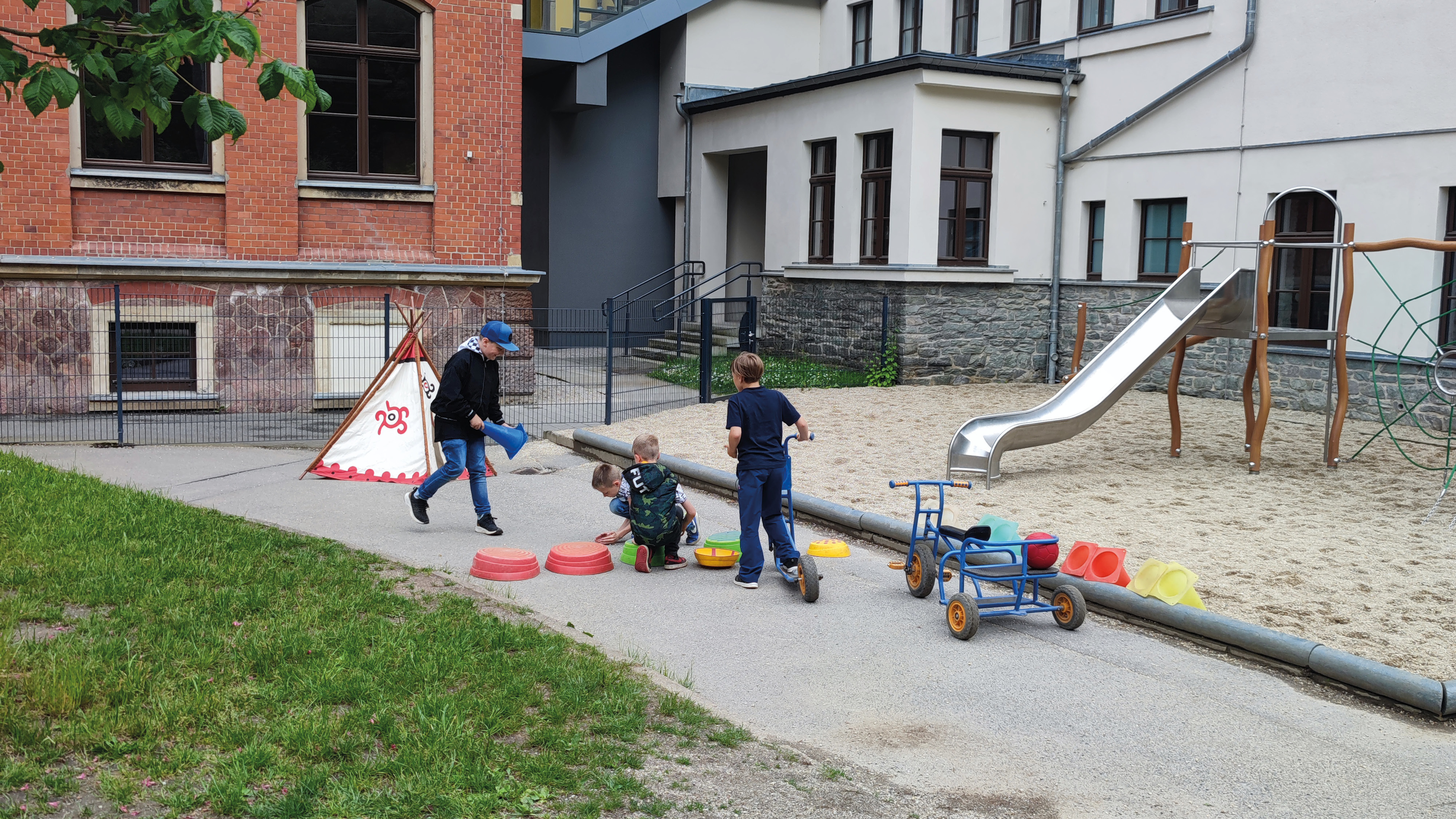
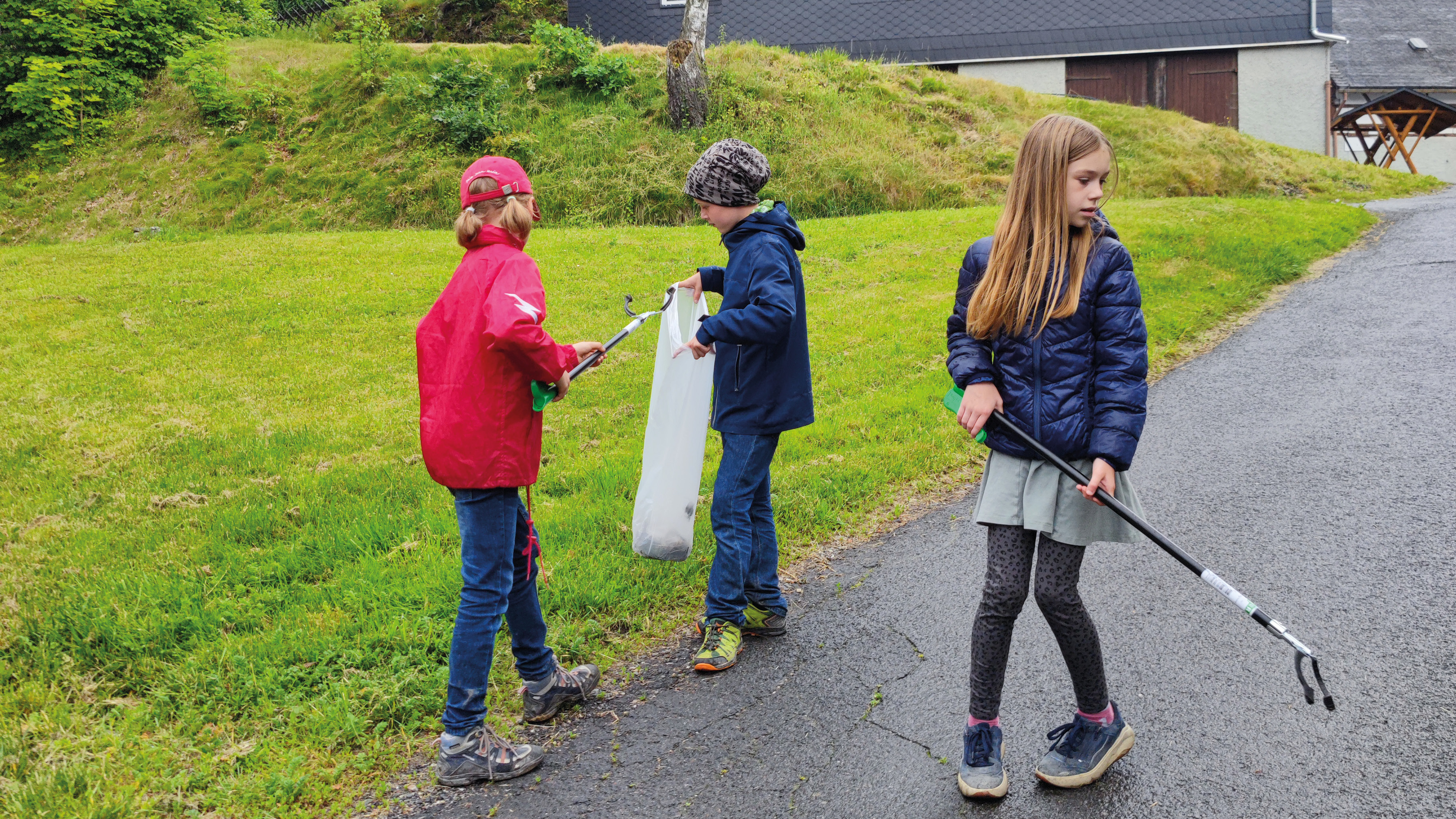
The pupils of the after-school care centre at the Klima-Grundschule Harthau focused primarily on the protection of nature and wildlife. They carried out many smaller projects that could also stand on their own. The focus was on protecting the forest and its immediate surroundings, supporting wild animals and insects and supporting charitable organisations.
To protect the surrounding forest, the children carried out regular rubbish collection campaigns. They repeatedly found a lot of rubbish, such as cigarette butts. They also learnt about the correct way to separate rubbish and played a memory game about rubbish decomposition times. They also built insect hotels, hung up home-made bird food in winter and gave gardeners tips.
Albert-Köhler-Straße after-school care centre: All-day programme Biene
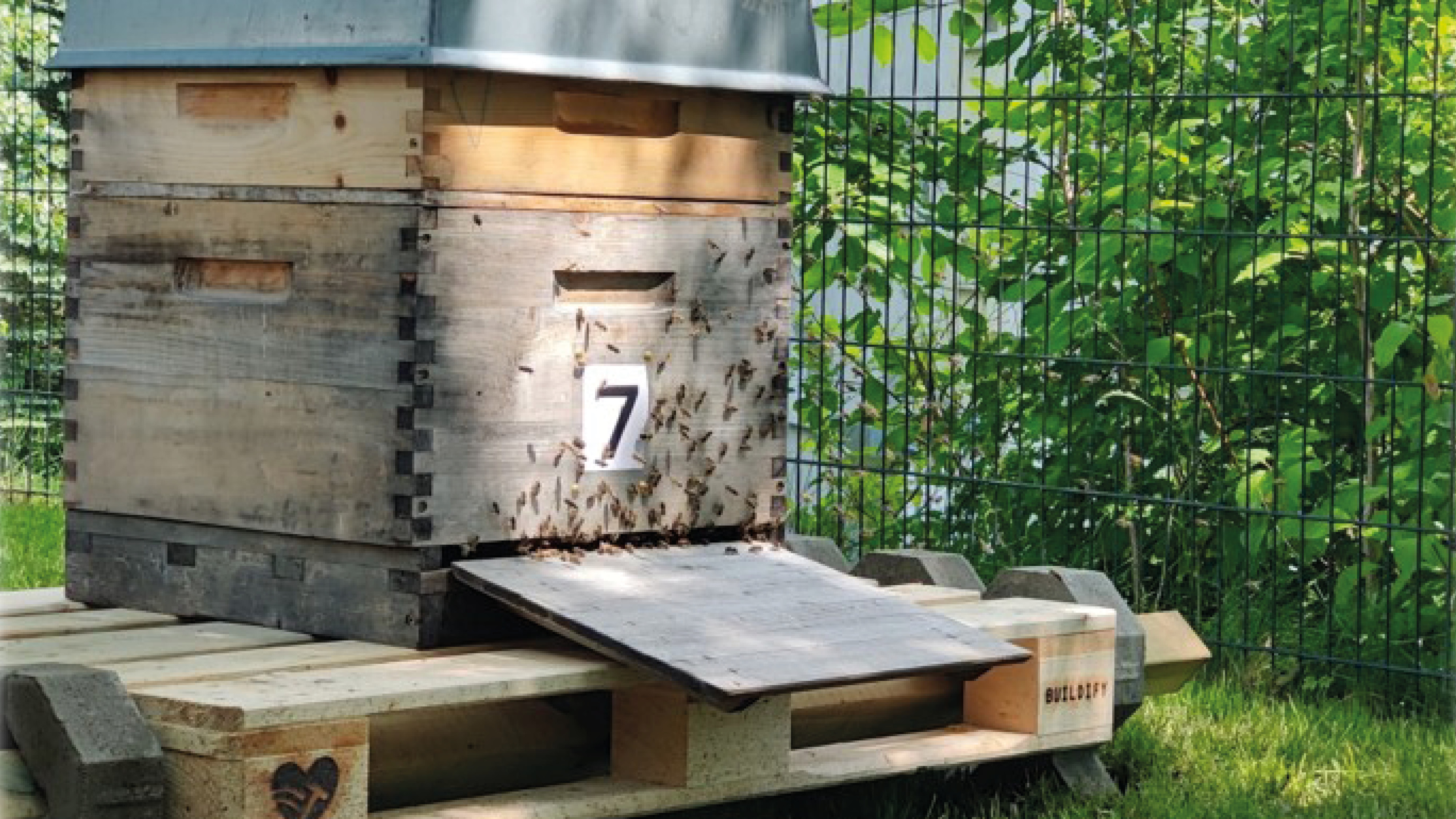
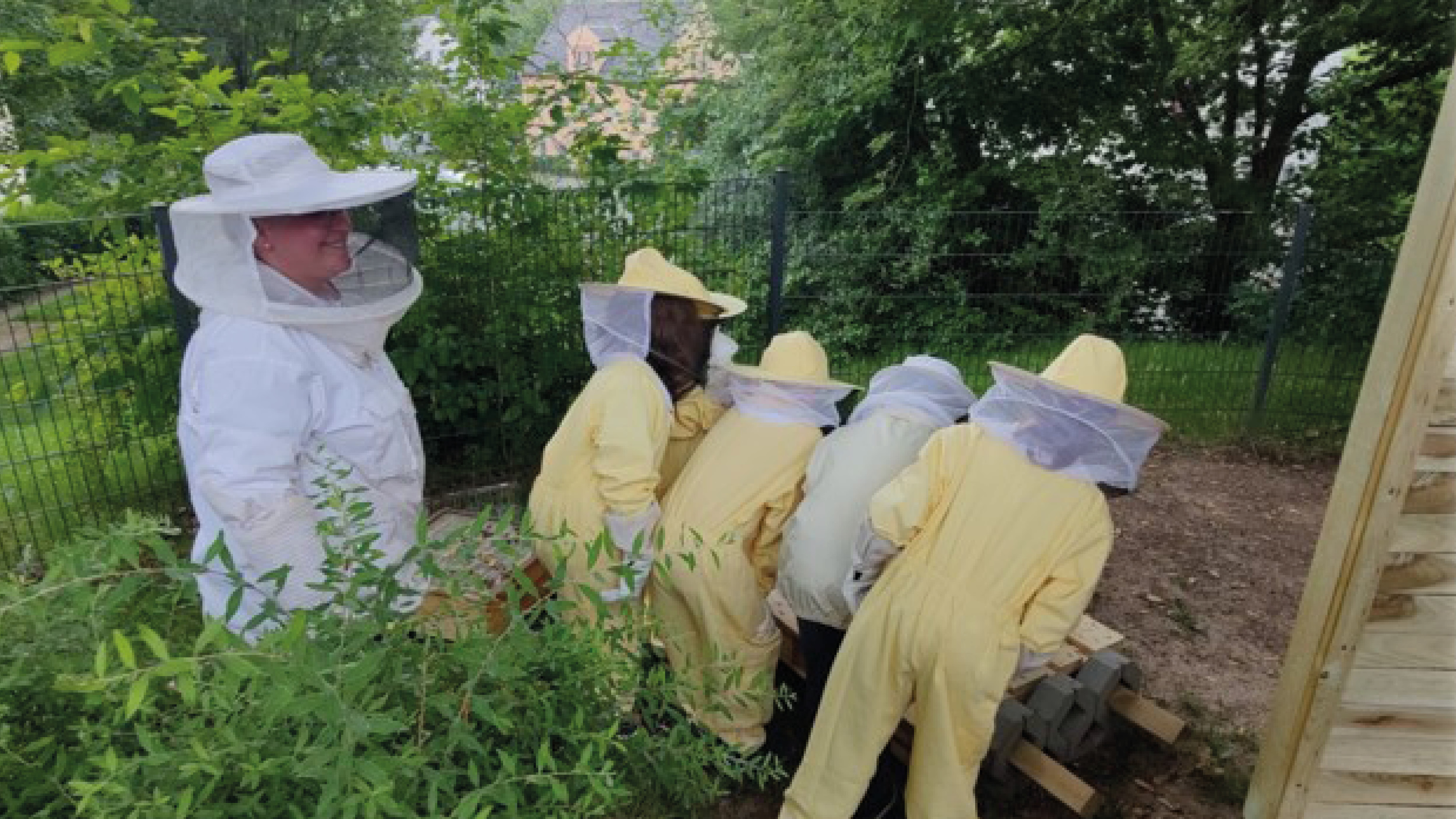
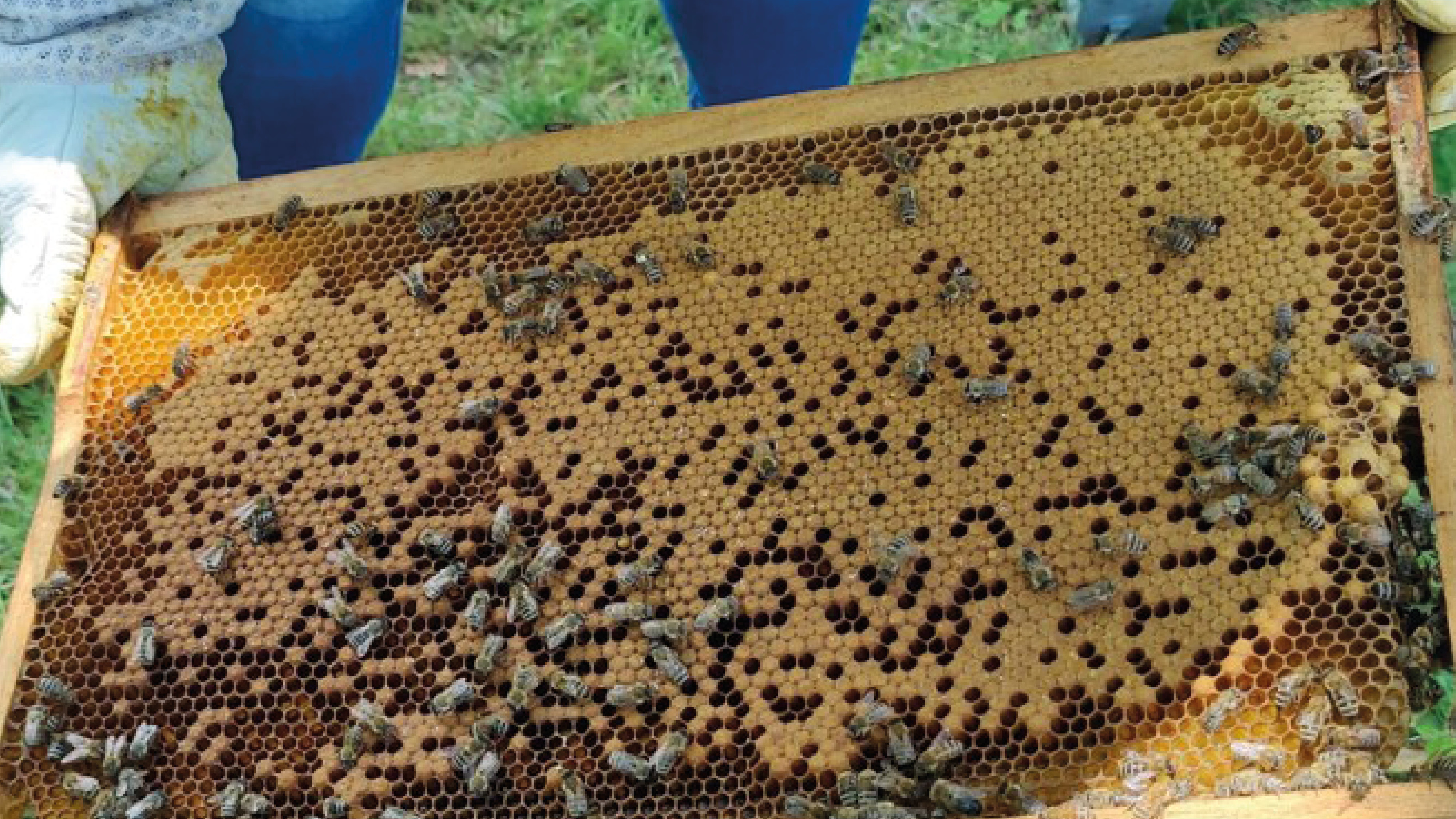
Since June 2023, the after-school care centre in Albert-Köhler-Straße has been looking after a bee colony on the premises. The all-day bee programme focuses on everything to do with bees. In winter, the children were not able to work directly with the animals in the hive. However, there was other important work to be done at this time of year.
For example, they treated the bees against Varroa mites by administering medication to the animals. They protected the bees from uninvited guests, such as mice, by using wire to make the entrance hole smaller. In addition, excess wax was removed and then cleaned, which took three passes. The cleaned wax was then used to make
candles were made from the cleaned wax, which were given away at Christmas time.
Cooperation school Chemnitz: Small animals also make dung 2.0
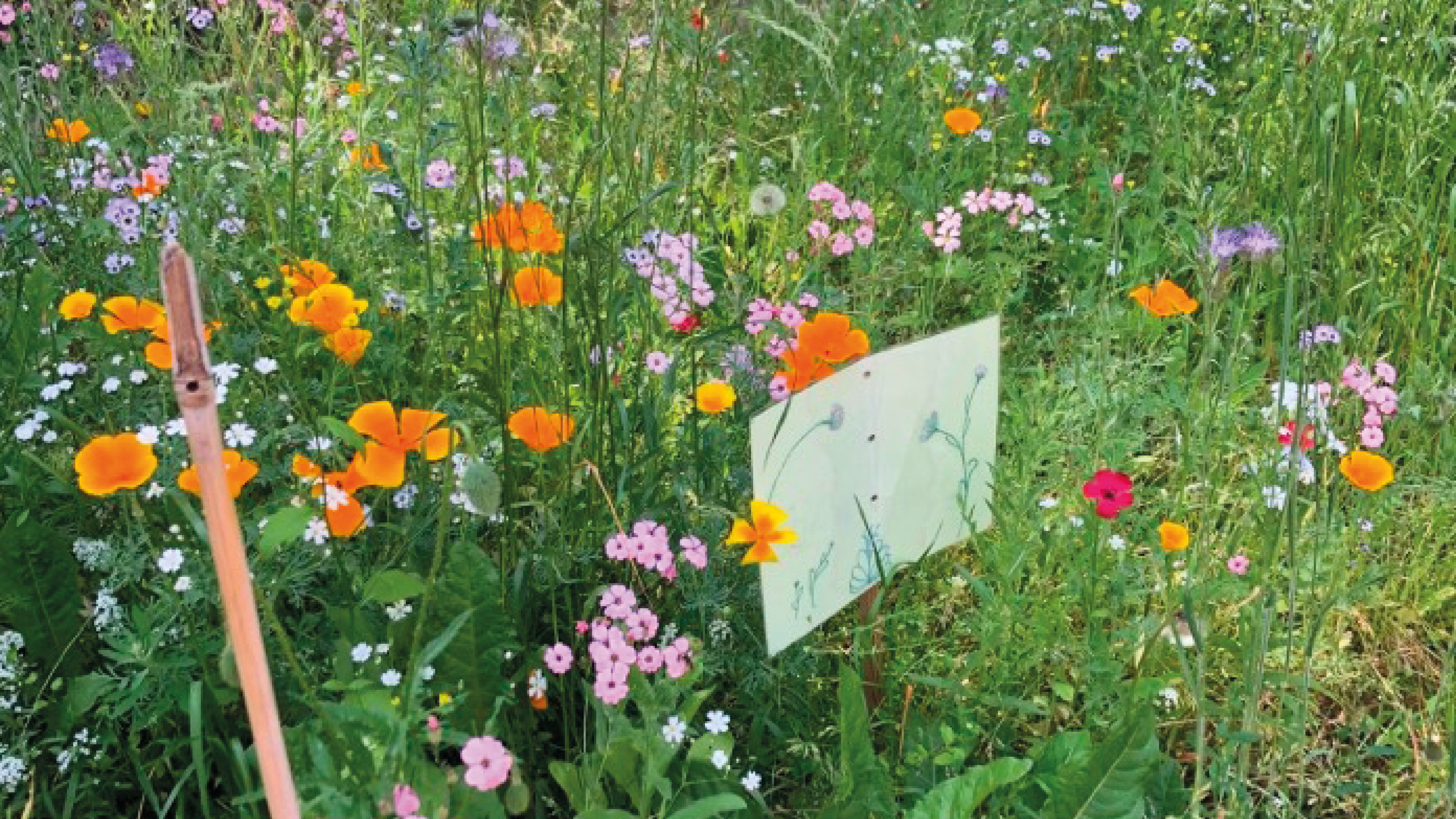
The Plant for the Planet working group at the cooperation school continued the project they had already submitted for the 2023 Environmental Award. They began by identifying the plants that had grown in their flowering meadow, such as dandelions, marigolds and meadowfoam.
The participants in the working group then asked themselves how they could
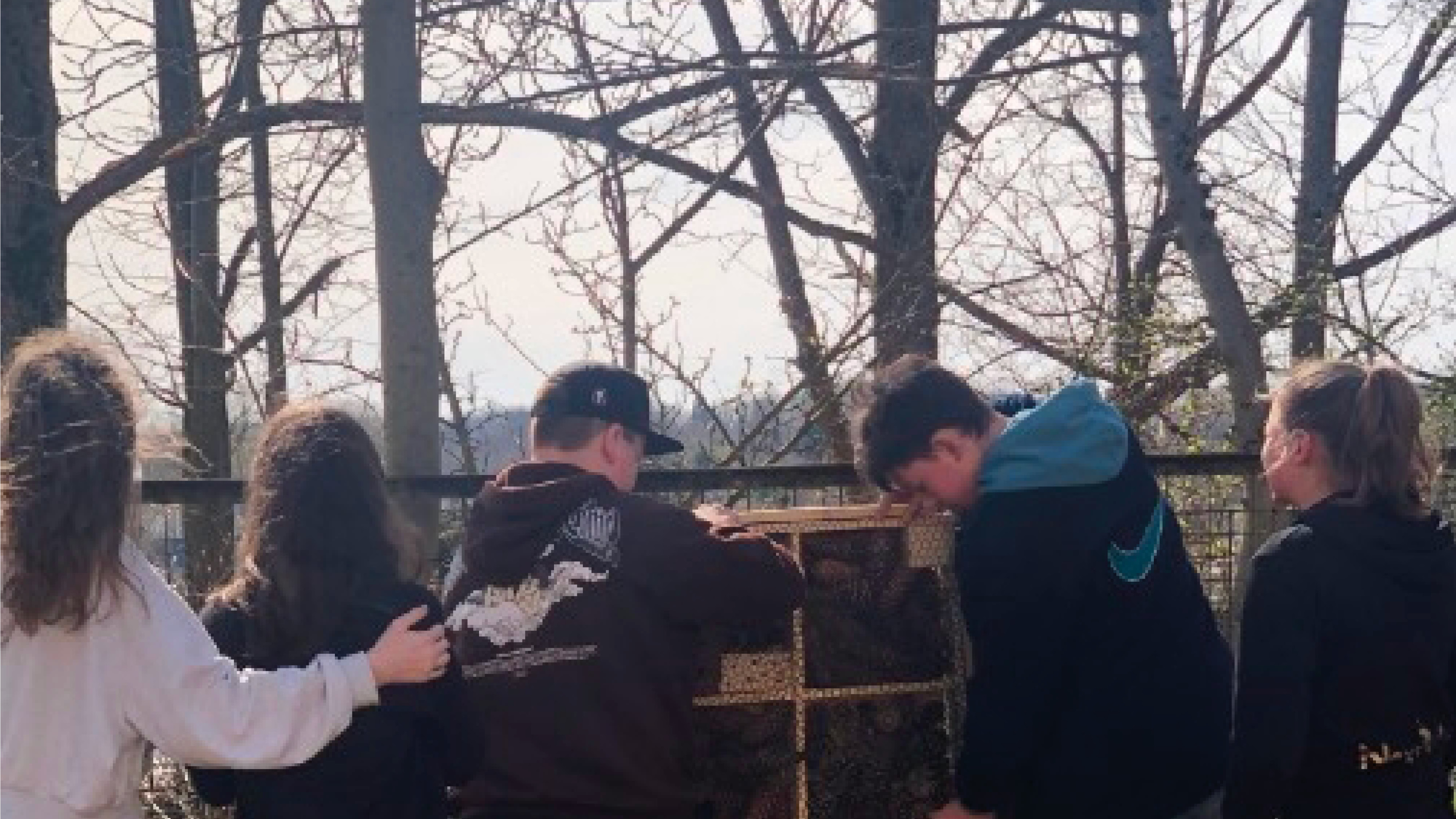
meadow inhabitants could colonise. They therefore focussed on various insect species and their habitats. To create new habitats for the insects, the children built a total of four insect hotels.
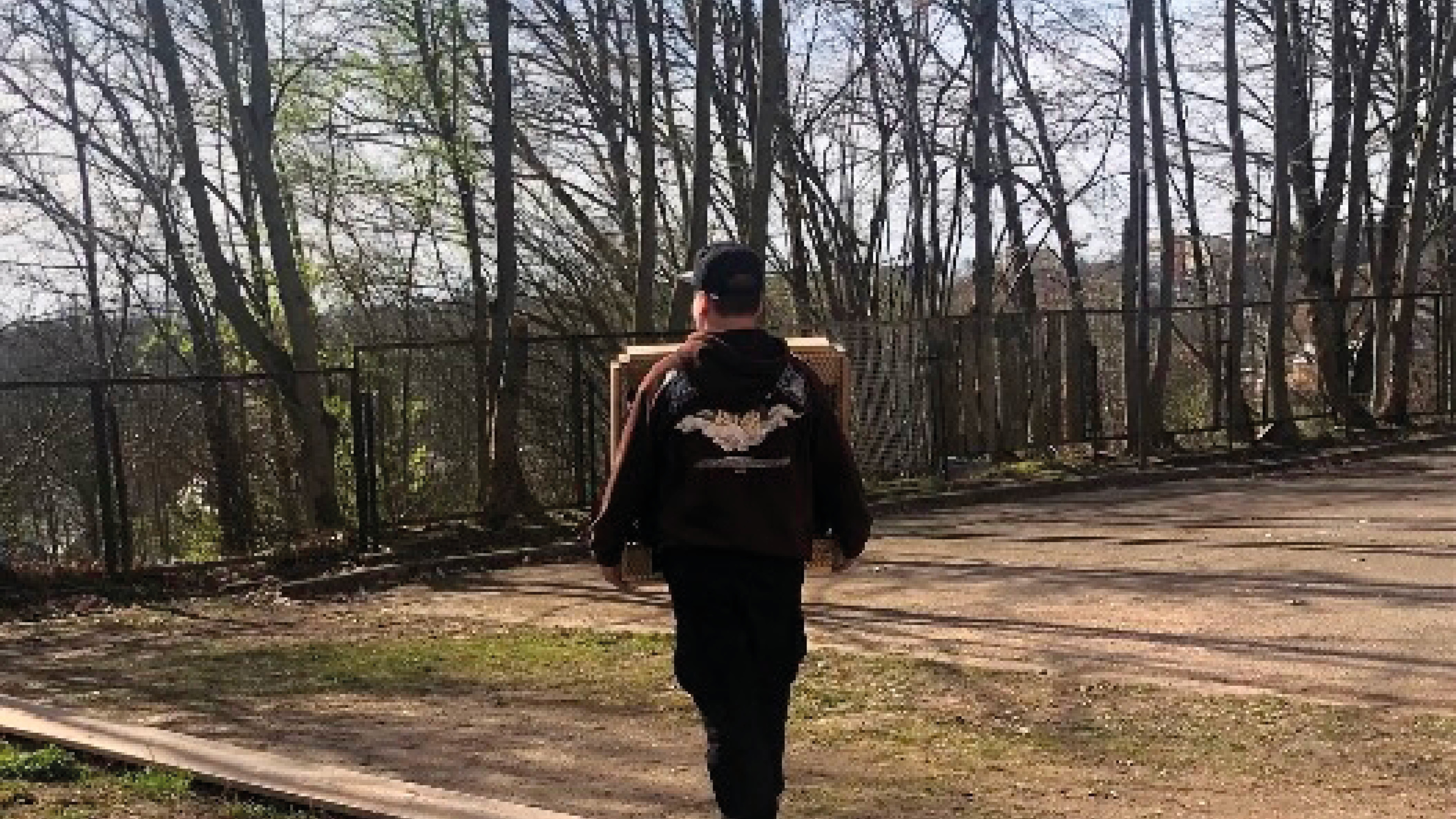
They were particularly keen to work in a way that conserved resources. Materials that had already been used in the past could now be used to build the insect hotels. The finished hotels were installed near the flowering meadows.
Hort am Stadtpark: Sustainability and a respectful approach to our environment


As part of a project week, the children at the Stadtpark after-school care centre explored the topic of "Sustainability and respecting our environment". The participants were able to set their own priorities and decide which topics they wanted to focus on.
On the first day of the week, the children cleared rubbish from the day-care centre grounds. They used tools such as rubbish grabbers and appropriate containers. The second day continued with the topic of rubbish: The rubbish bins were labelled with self-designed pictures and the collected rubbish was sorted accordingly.
The penultimate day was dedicated to the garden, which was cleared of weeds. A wildflower meadow was then created and the raised beds were replanted. At the end of the week, everyone watched a film together.
Hort Röhrsdorfer Kinderwelt e. V.: Revenge in the forest
The children of the Hort Röhrsdorfer Kinderwelt e. V. performed a specially created theatre play. The play, entitled "Revenge in the Forest", shows a group of animals who have to prepare a dance and sports festival.They are disturbed by careless young people who treat their environment with disregard, for example by throwing rubbish everywhere, listening to loud music or trampling on plants. The youngsters are also camping in the forest, which is not allowed.
The animals decide to teach the naughty youngsters a lesson.
So they dug a pit in front of the teenagers' tent, into which they all fell one after the other. Taught a lesson by the animals and their friends, they realised that they were no longer allowed to pollute their environment.
After-school care centre at Wittgensdorfer Straße 121a: "From field to field" game
Since the 2021/22 school year, children at the Wittgensdorfer Straße 121a after-school centre have beento take care of the trees on the school grounds. To get more children interested in the topic of nature, the project participants came up with their own game "From Field to Field".
The game includes various questions and activities around the grounds of the
Chemnitz-Borna Primary School/Wittgensdorfer Straße day nursery and the animal and plant world. The aim of the game is to find a treasure that has been hidden on the grounds. The group that reached the goal first by answering the questions correctly had to solve a riddle. Once the riddle was solved, the group was given a clue to the hiding place.
Hort Hoffmannstraße: Individual projects
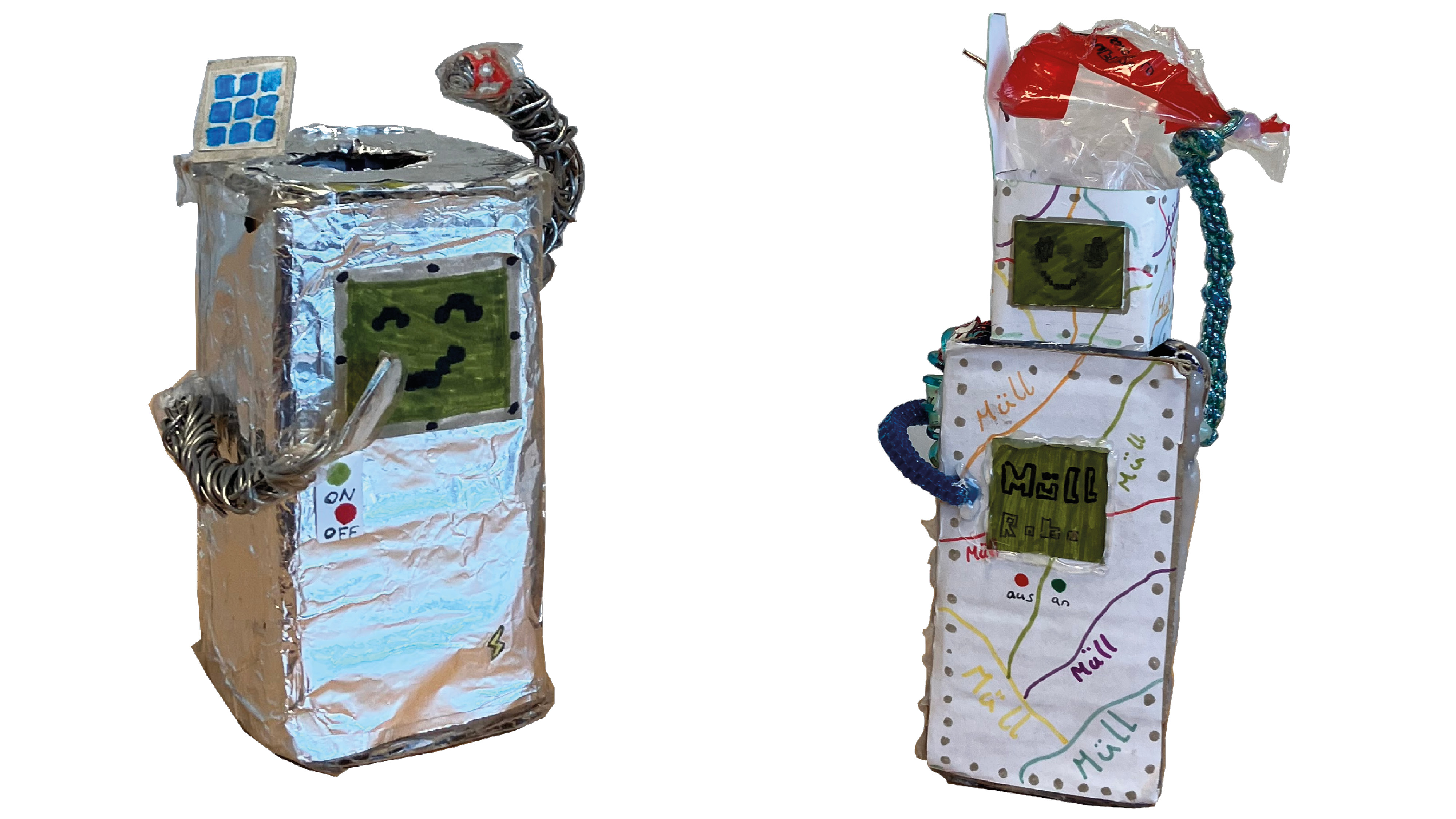
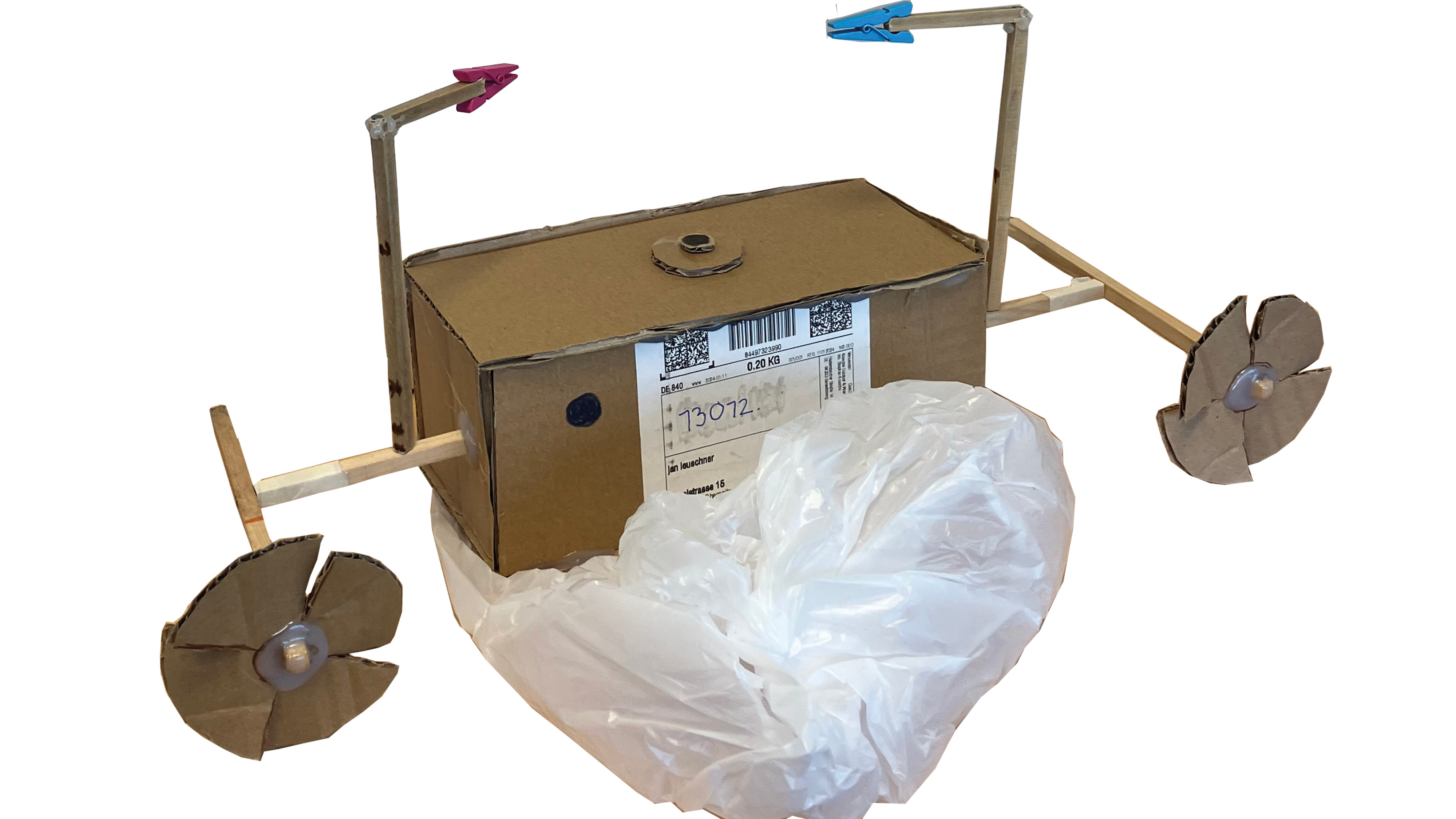
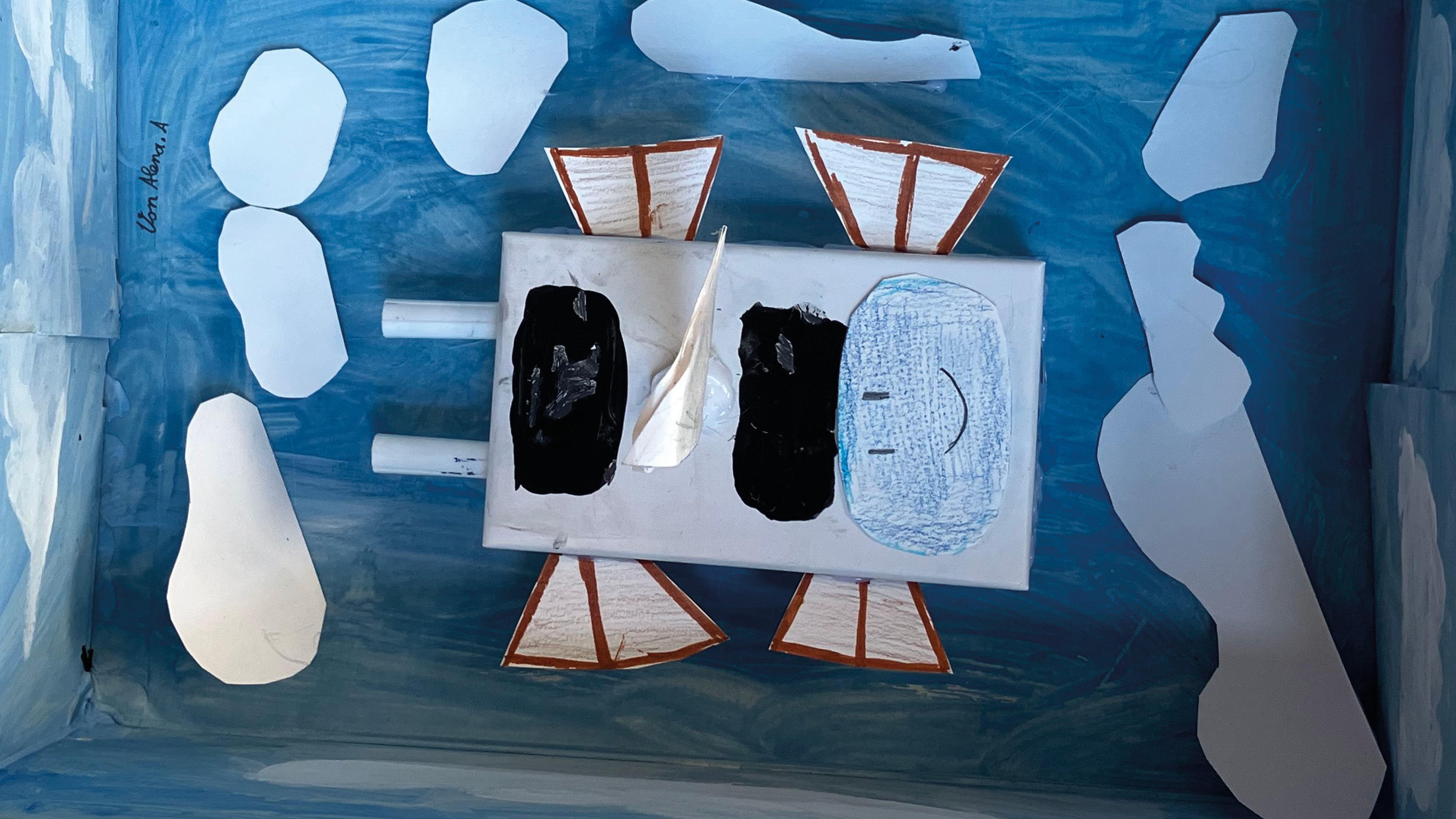
Children from the after-school care centre in Hoffmannstraße submitted various individual projects.
Projects in the category class 5 to 8
Parzivalschule Chemnitz: Renaturalisation - Bee pasture
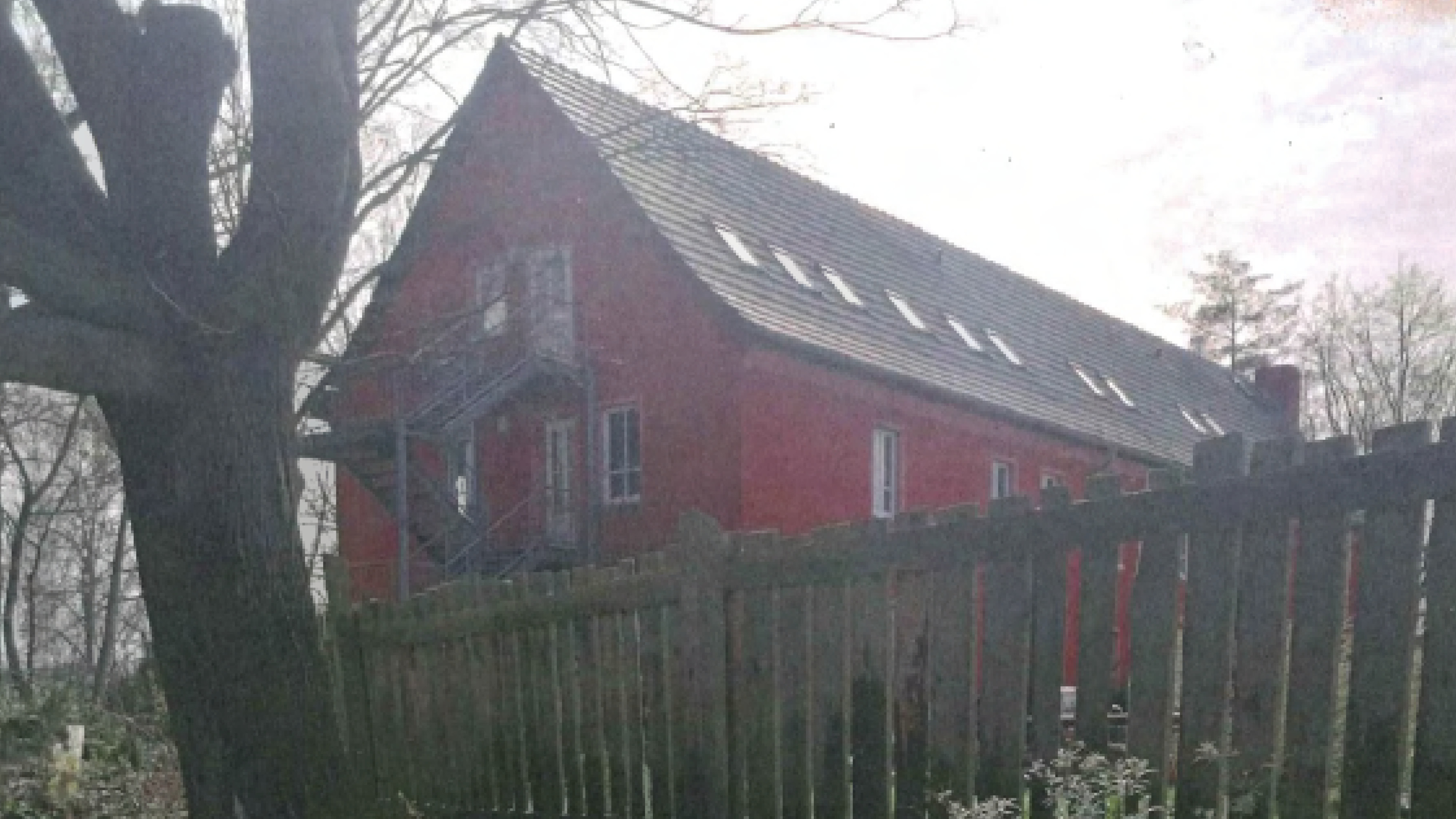
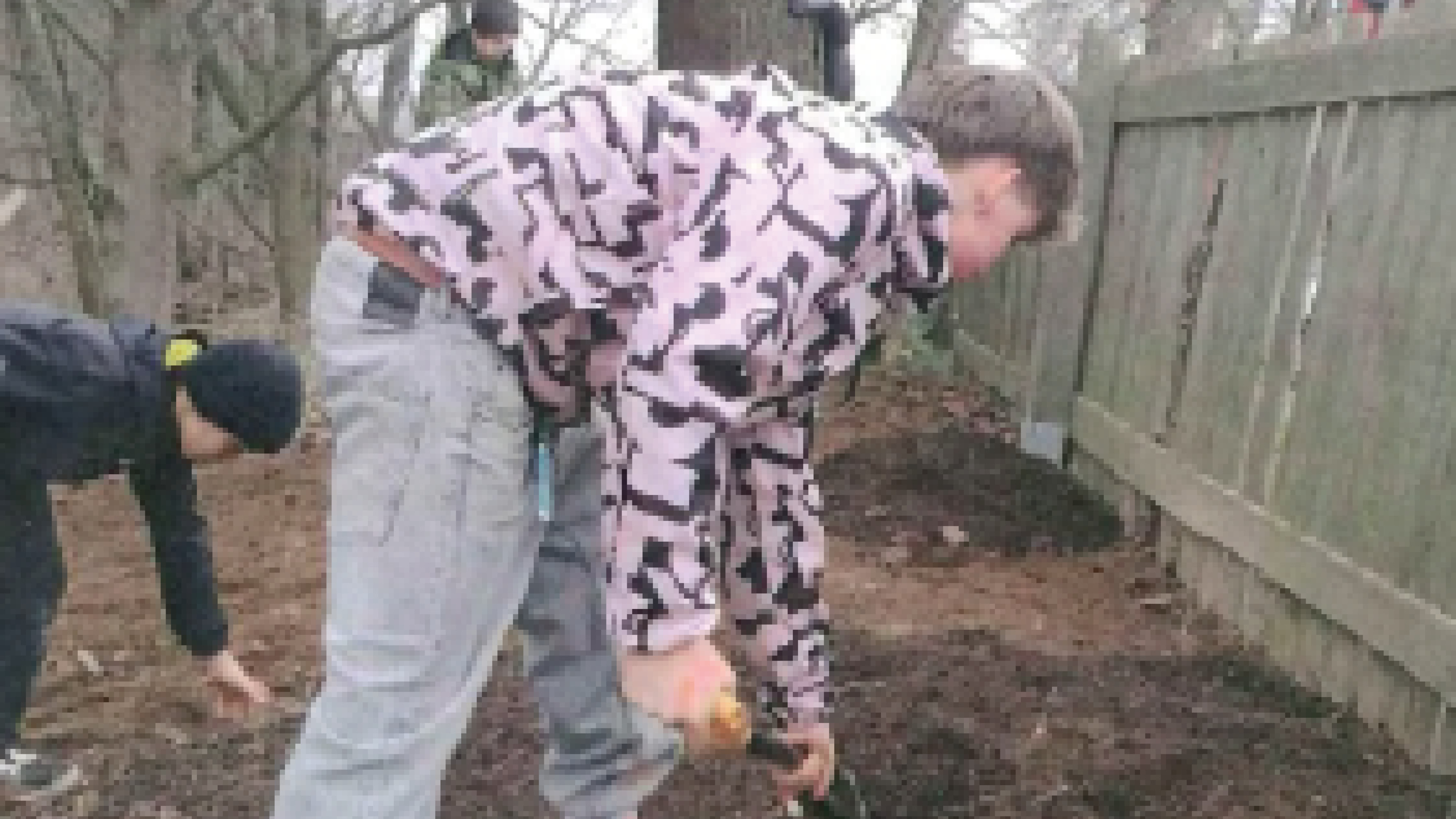
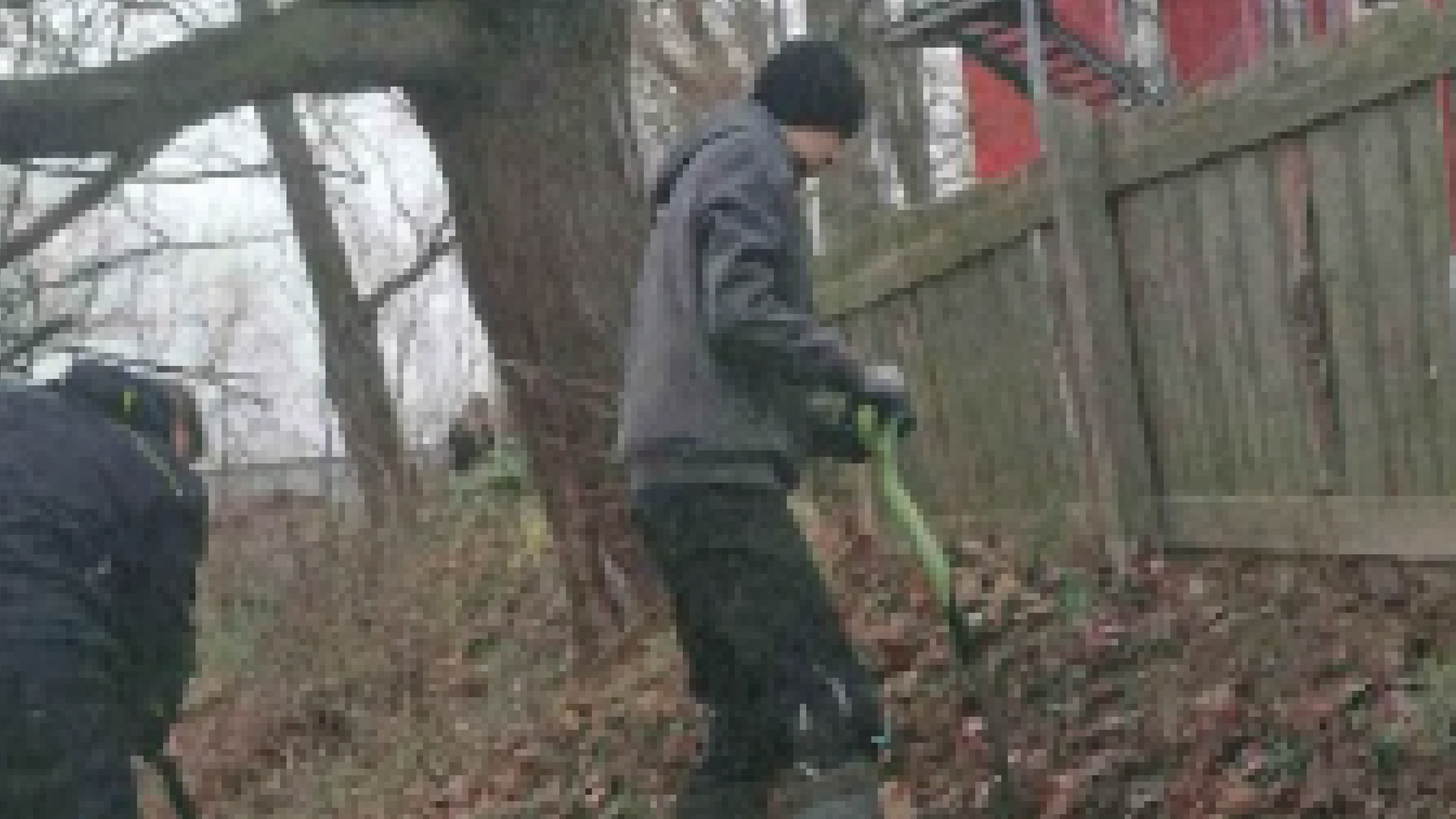
Class 7b at Parzivalschule Chemnitz wants to do something good for the environment in the long term. They looked into the topic of renaturation and realised that it can play an important role in overcoming the consequences of climate change.
In their project, they then set about making a brownfield site bee-friendly. To do this, they renaturalised an area and then planted bee-friendly plant species. First, the area was cleared of rubbish. The resulting meadow then had to be dug up and fresh compost added.
Next, wild herbs were planted. Straw was spread over the entire area to protect the soil from drying out. The renaturalised bee pasture was edged with natural stones that had been specially collected.
Terra Nova Campus - the discovery school: A special place to learn - the forest
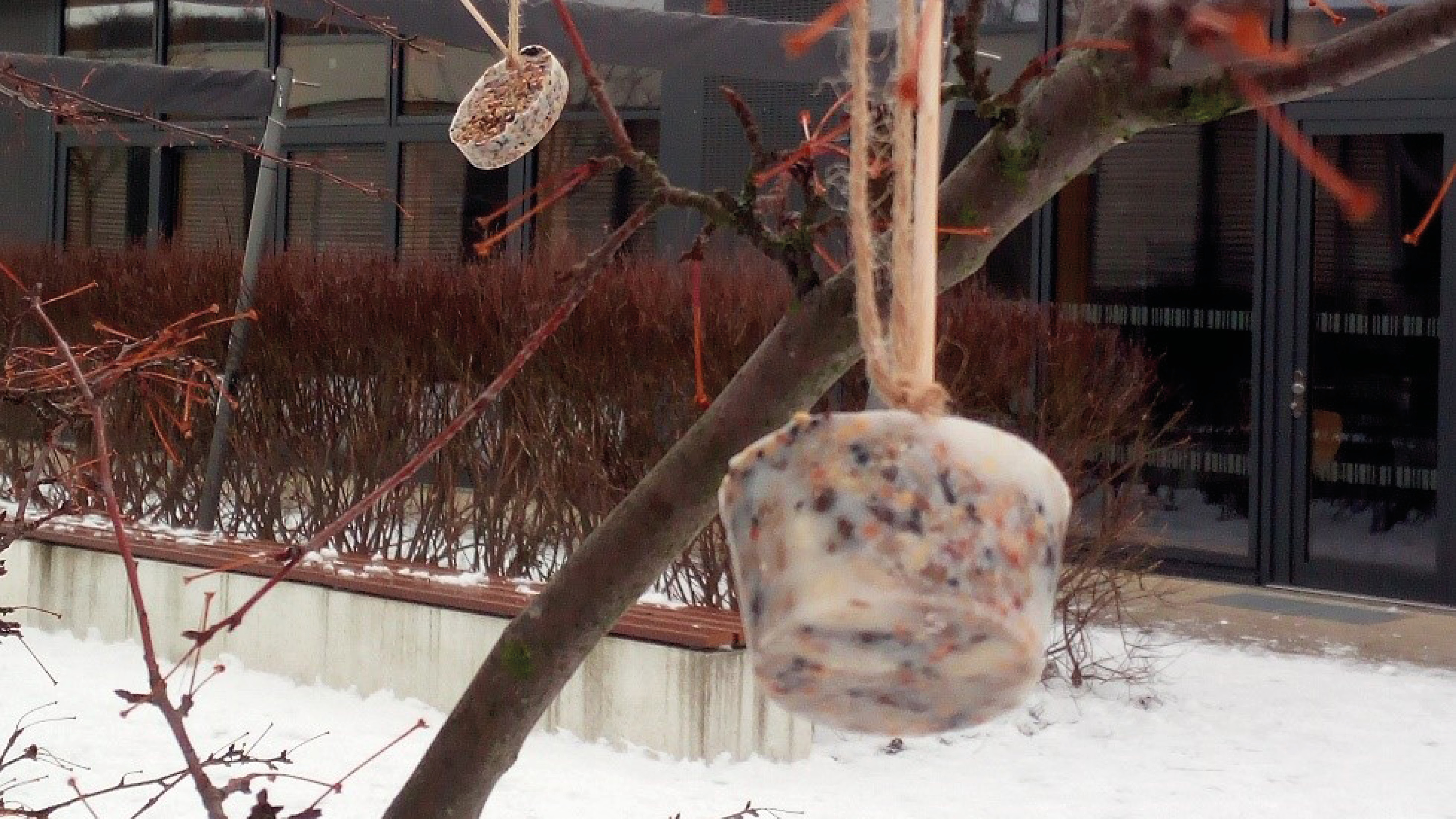
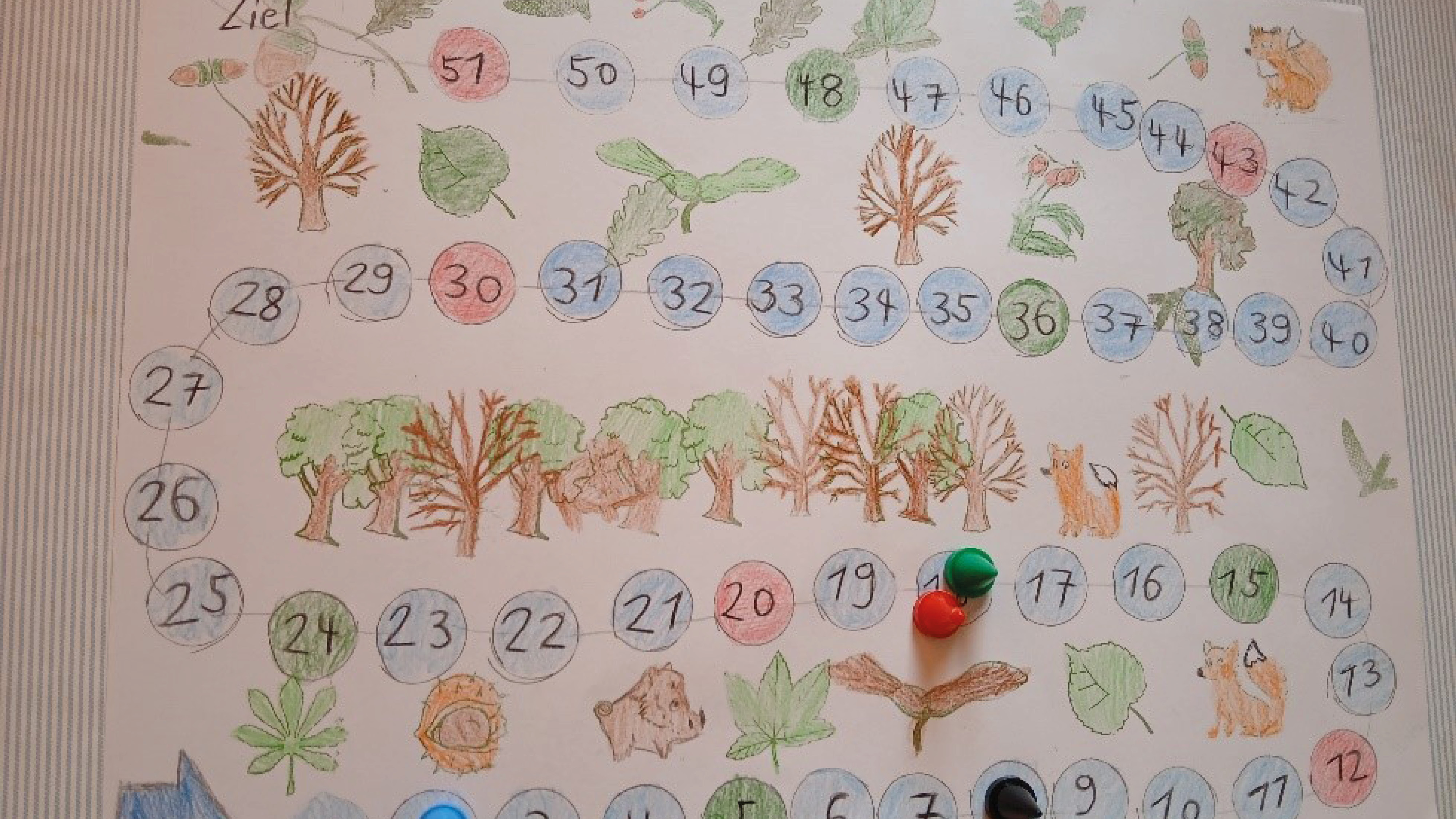
The pupils on the "Natural Treasures" elective course offered by the Terra Nova Campus all-day programme enjoy going to the Zeisigwald forest, the school's natural neighbour. That's why the young Chemnitz students were keen to take a closer look at the forest. As part of the project, they made their own bird feeders, went on an excursion, created a photo exhibition and information boards for the school building, took part in spring cleaning, created their own knowledge game and went on a final excursion.
Before they got down to the practical realisation of the project focuses, they researched the respective topic in detail. They went about their search for information in very different ways: Some looked for information in the school's own library, while other pupils preferred to search for knowledge on the computer.
DPFA Rainbow Schools: Collecting rubbish in the neighbourhood
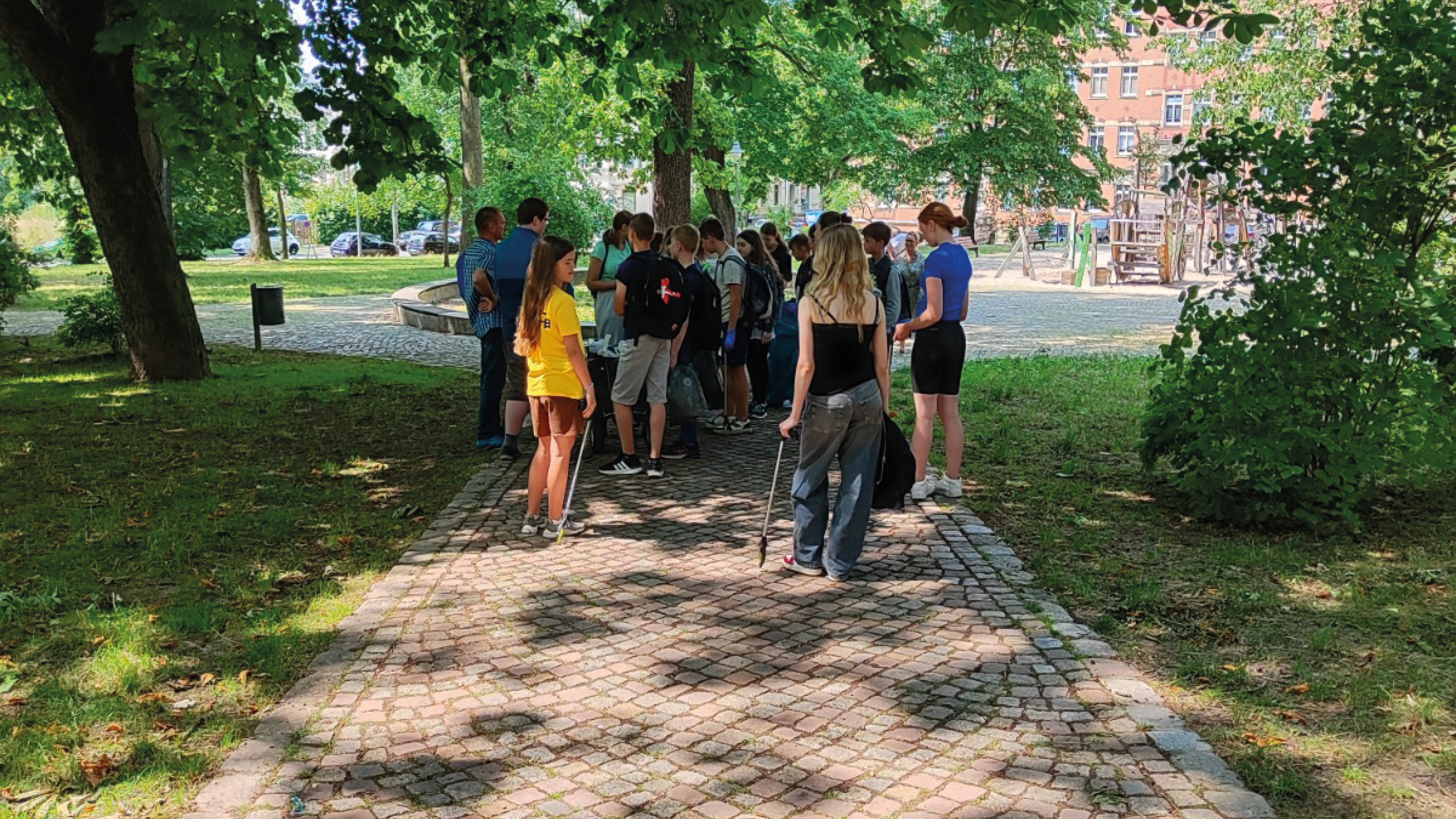
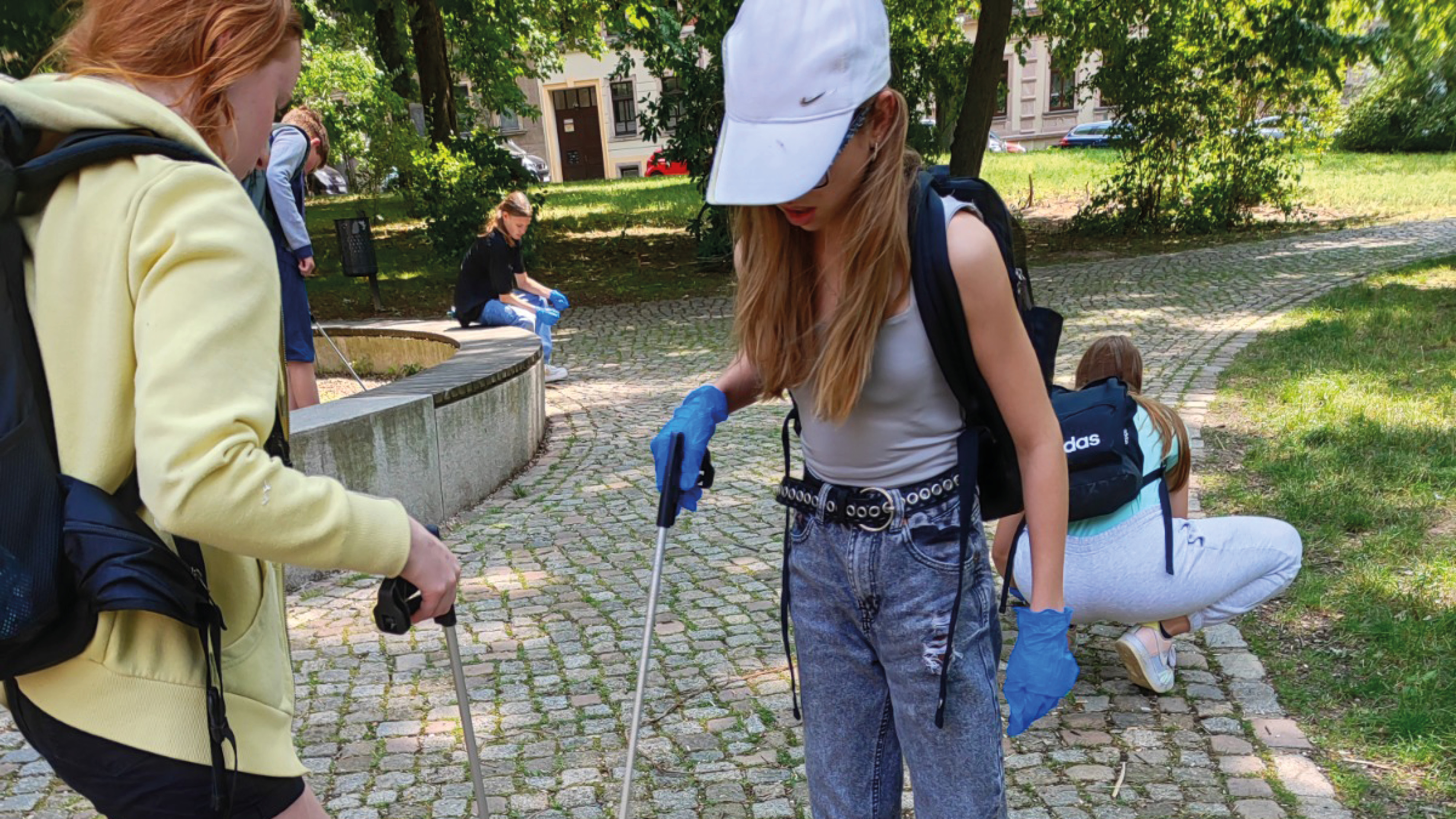
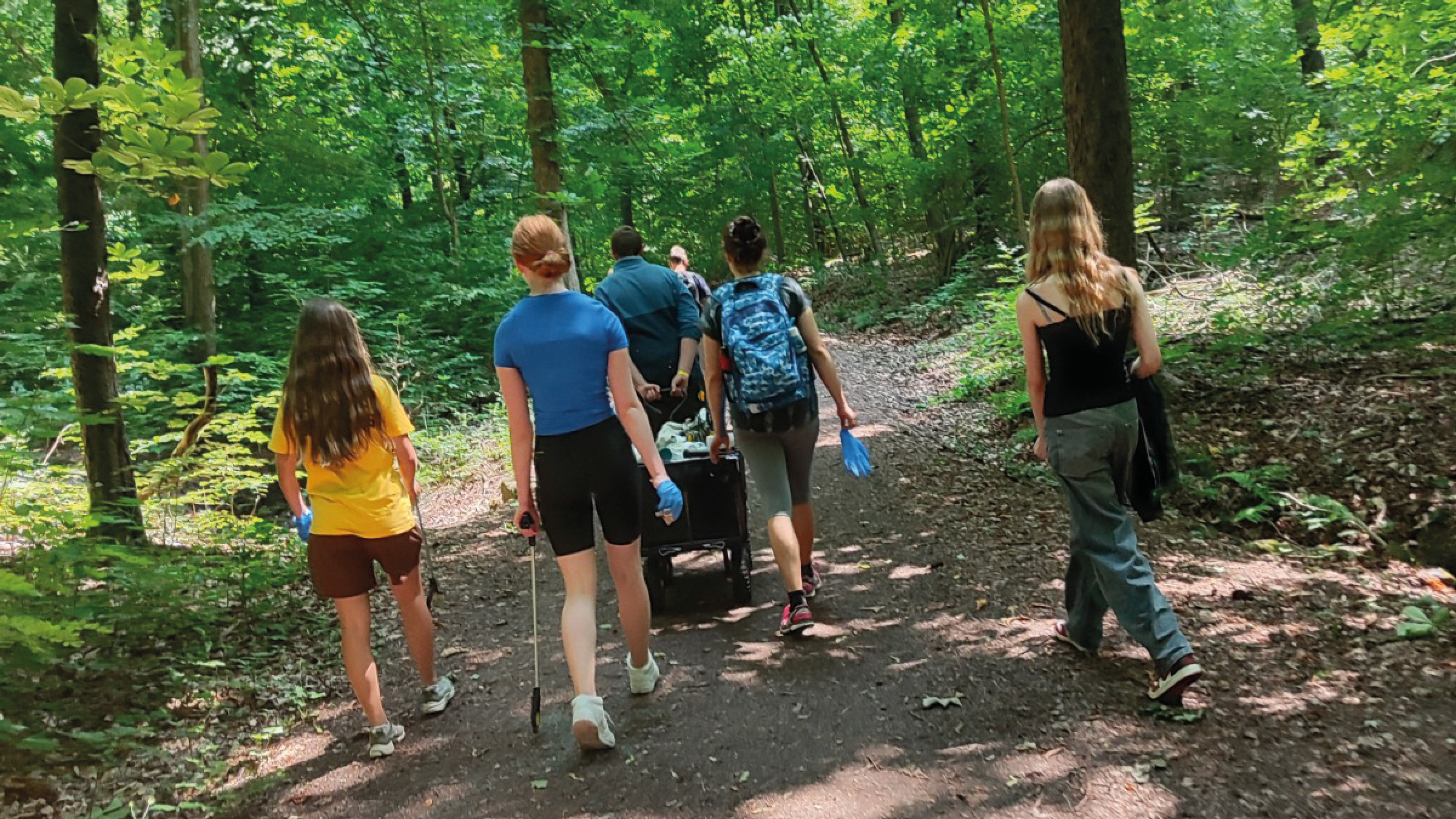
In May 2023, pupils from Year 7, the secondary school and the grammar school at the DPFA Rainbow School organised a litter collection campaign. Equipped with rubbish grabbers, rubber gloves and a handcart, the three-hour walk took them from the school building in Emilienstraße via Scharnhorstplatz, along Margarethenstraße and Cäcilienstraße to the Zeisigwald forest. They found all kinds of rubbish, lots of bottles and small items of waste, but also collected larger items such as car tyres and metal parts.
At the end, they sorted the rubbish together and put it in the correct bins. The pupils were surprised and annoyed by the large amount of rubbish lying around and could have collected a lot more.
Johannes Trüper Special Education Centre: Watch out for hedgehogs!
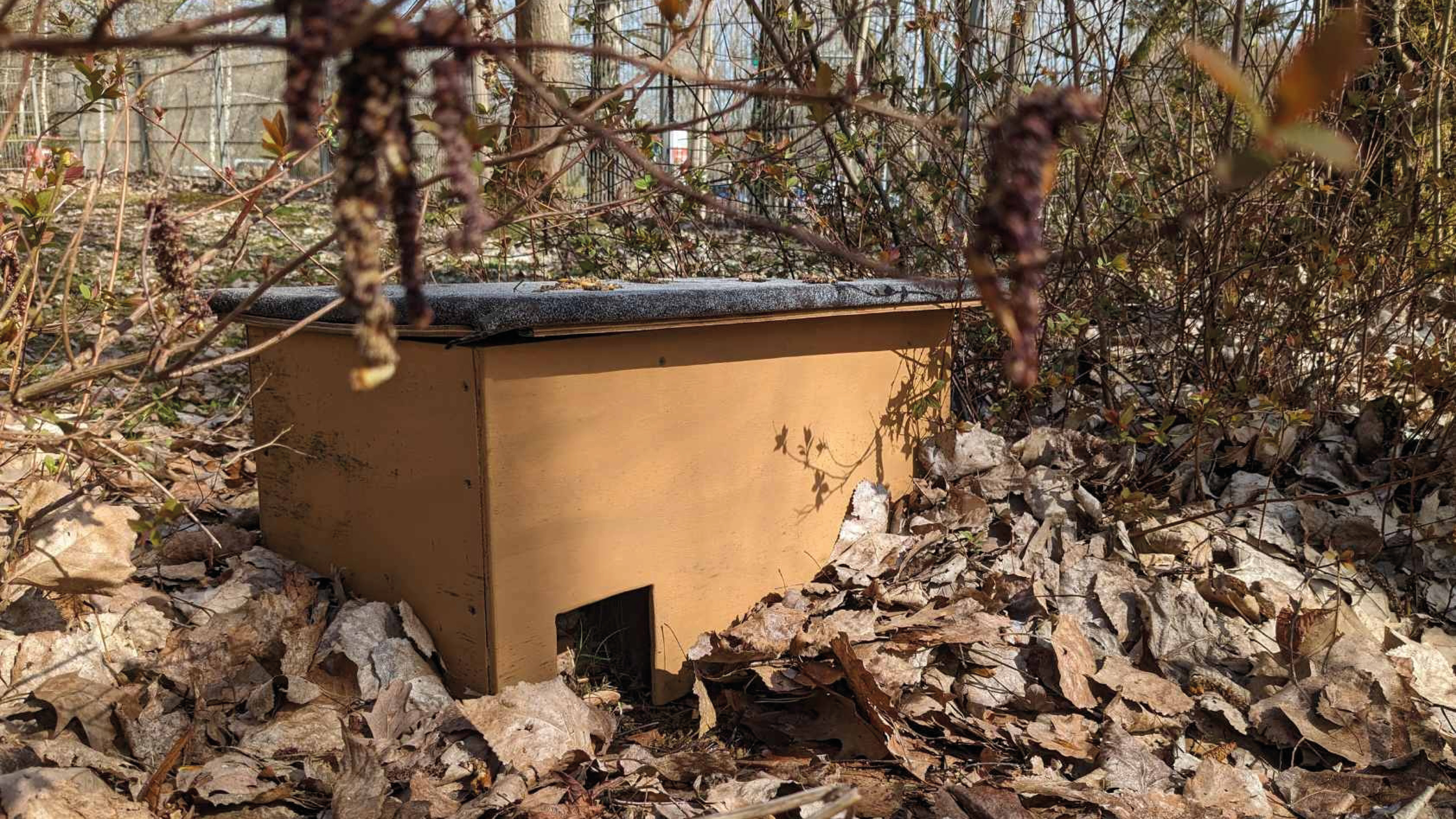
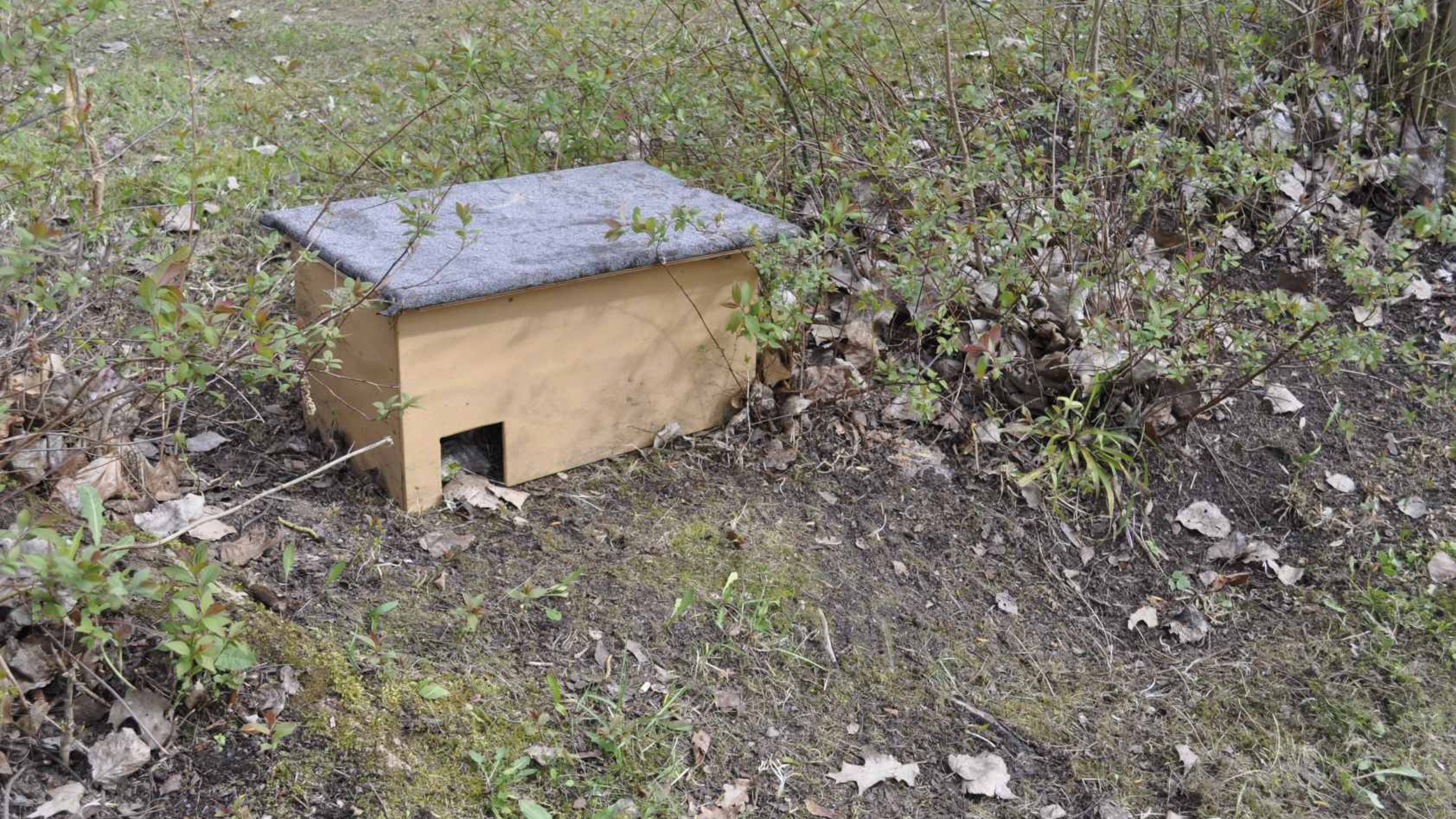
The school garden group, "SOFIE`S FELD", from the special educational support centre
Johannes Trüper built a hedgehog house and set it up on the school grounds. They also put up a sign saying "Attention hedgehogs".
BSZ Health and Social Services: Chemnitz in bloom - a flourishing future
As part of a project week in November 2023, pupils created paper and used it to make seed paper, which they gave away as Christmas and New Year greetings. Inspired by the creative and physically demanding task, they thought about how they could develop the idea further. So they came up with the idea of making a seed box.
The seed box is labelled with instructions on how to make seed paper.
The box is handed out to interested parties at the centre's open days.
The pupils also take the box to events at secondary schools in Chemnitz. The pupils can also green their own neighbourhood and make it even more liveable. The box thus enables a simple and low-threshold transfer of knowledge that contributes to a greener Chemnitz.
Sächsische Sozialakademie Chemnitz: Collecting cups
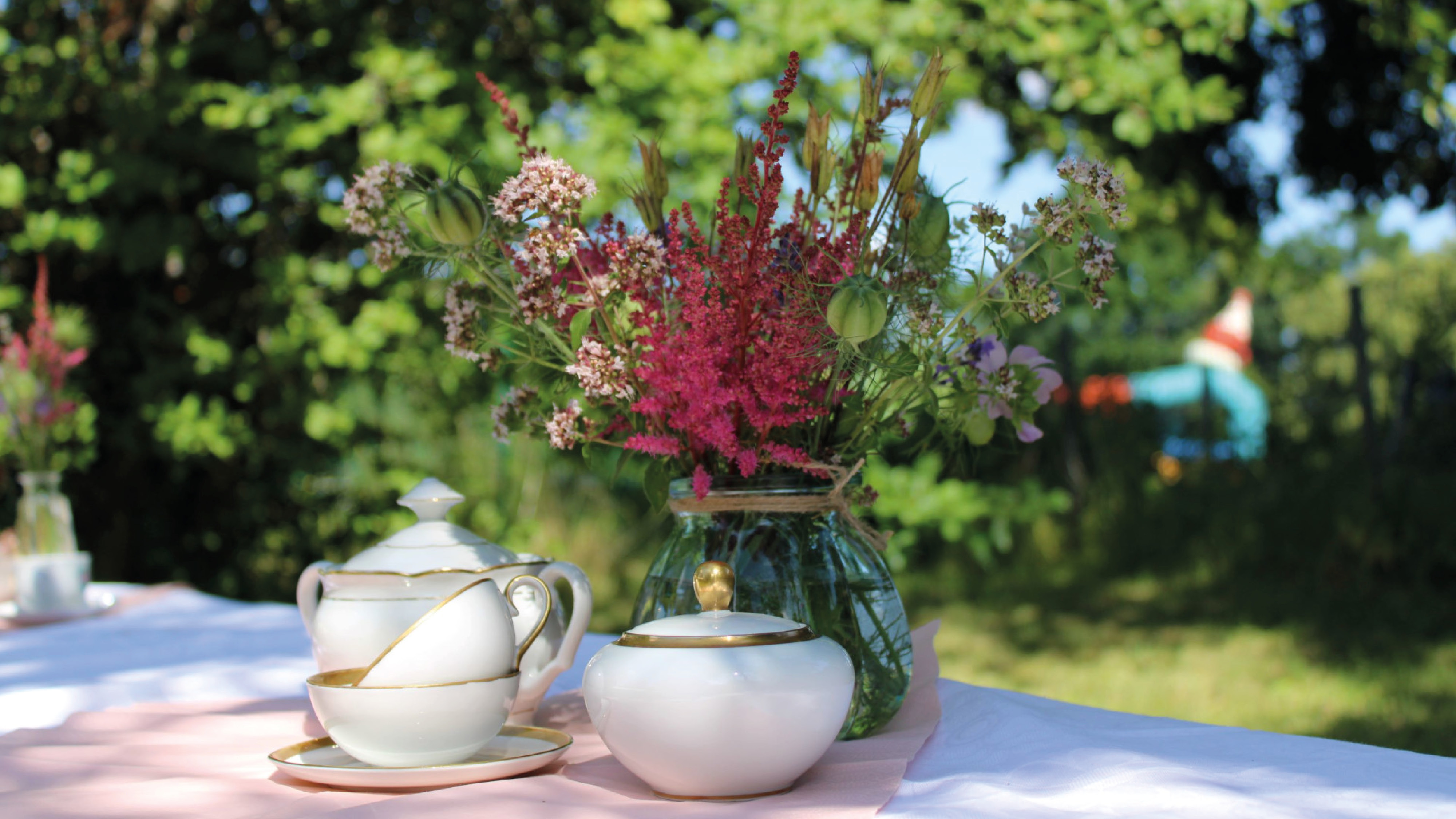
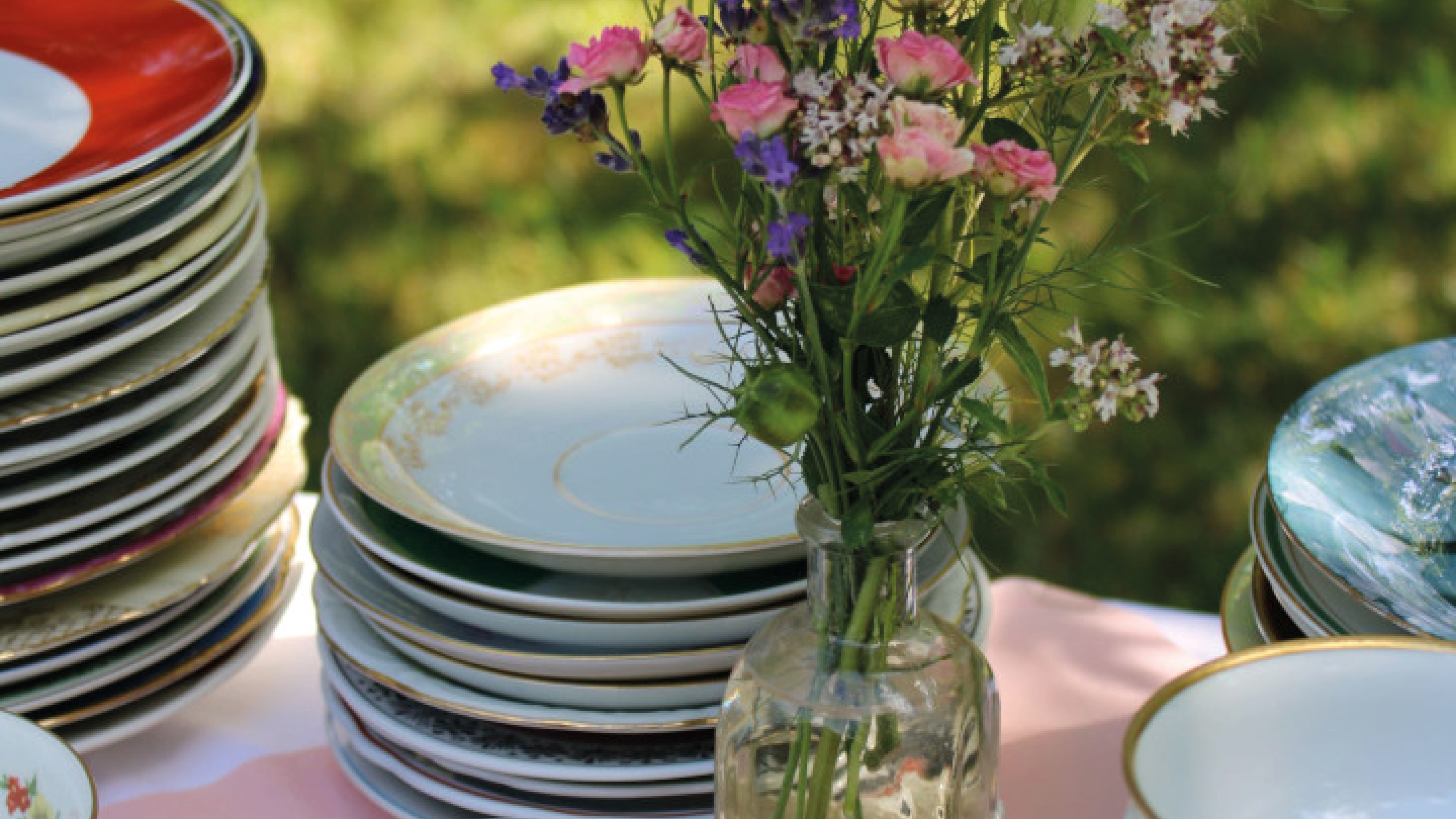
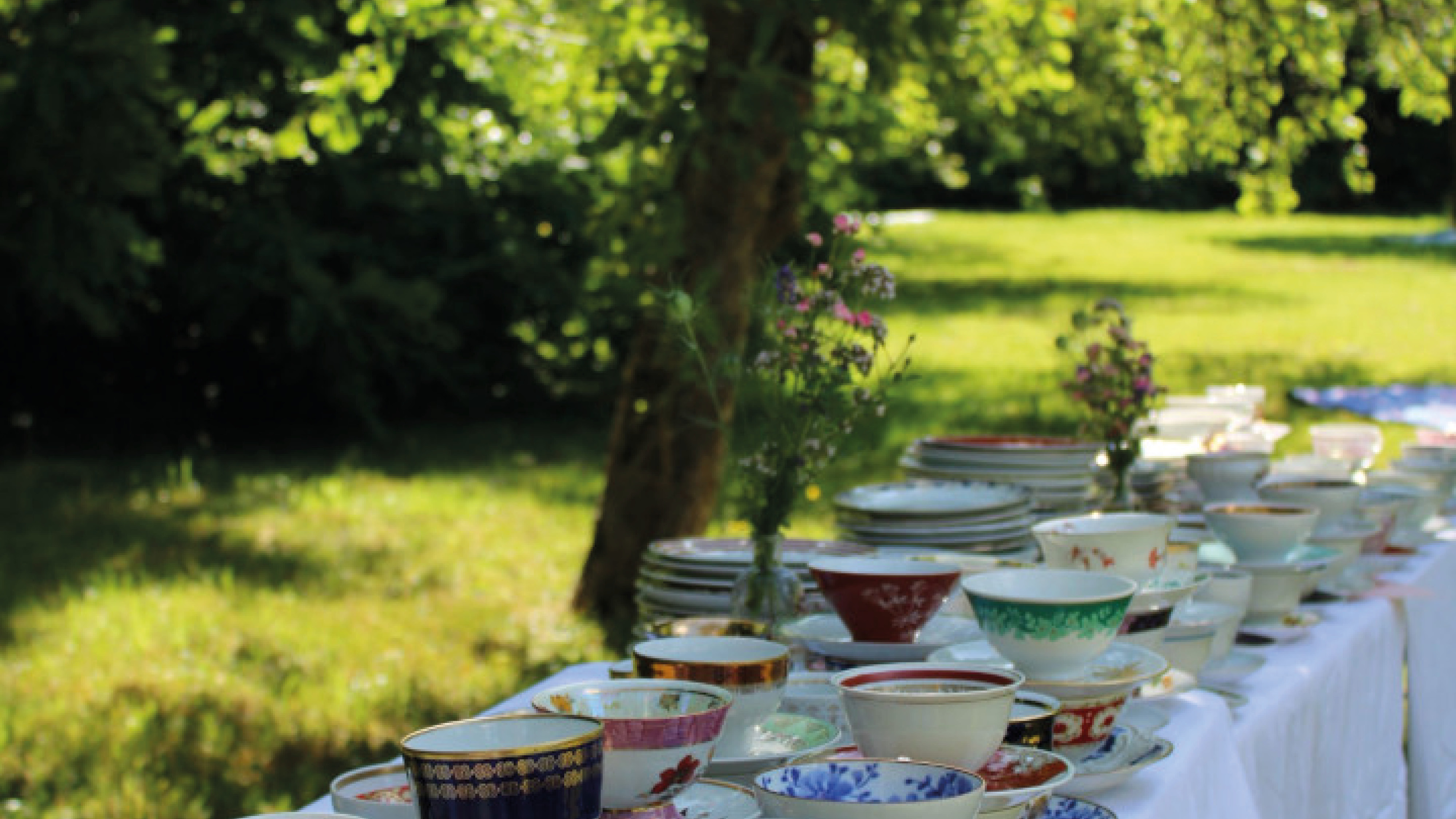
Inspired by the film "Alice in Wonderland", the future educators,
care workers and nursing assistants wondered whether they should use disposable or reusable crockery for the upcoming graduation ceremony. The idea for the "Collecting cups" project was born.
The graduation ceremonies at the Saxon Social Academy had previously generated a lot of rubbish year after year with around 250 guests. So a collection campaign began within the student body, which was supported by the school management and teaching staff. More than 300 complete sets of cups, saucers and plates were quickly collected, which are still used today at every celebration or open day at the centre. The parents and grandparents of the students always enjoy the crockery as it brings back many fond memories.
Bethanien training centre for healthcare professions: Raised bed garden
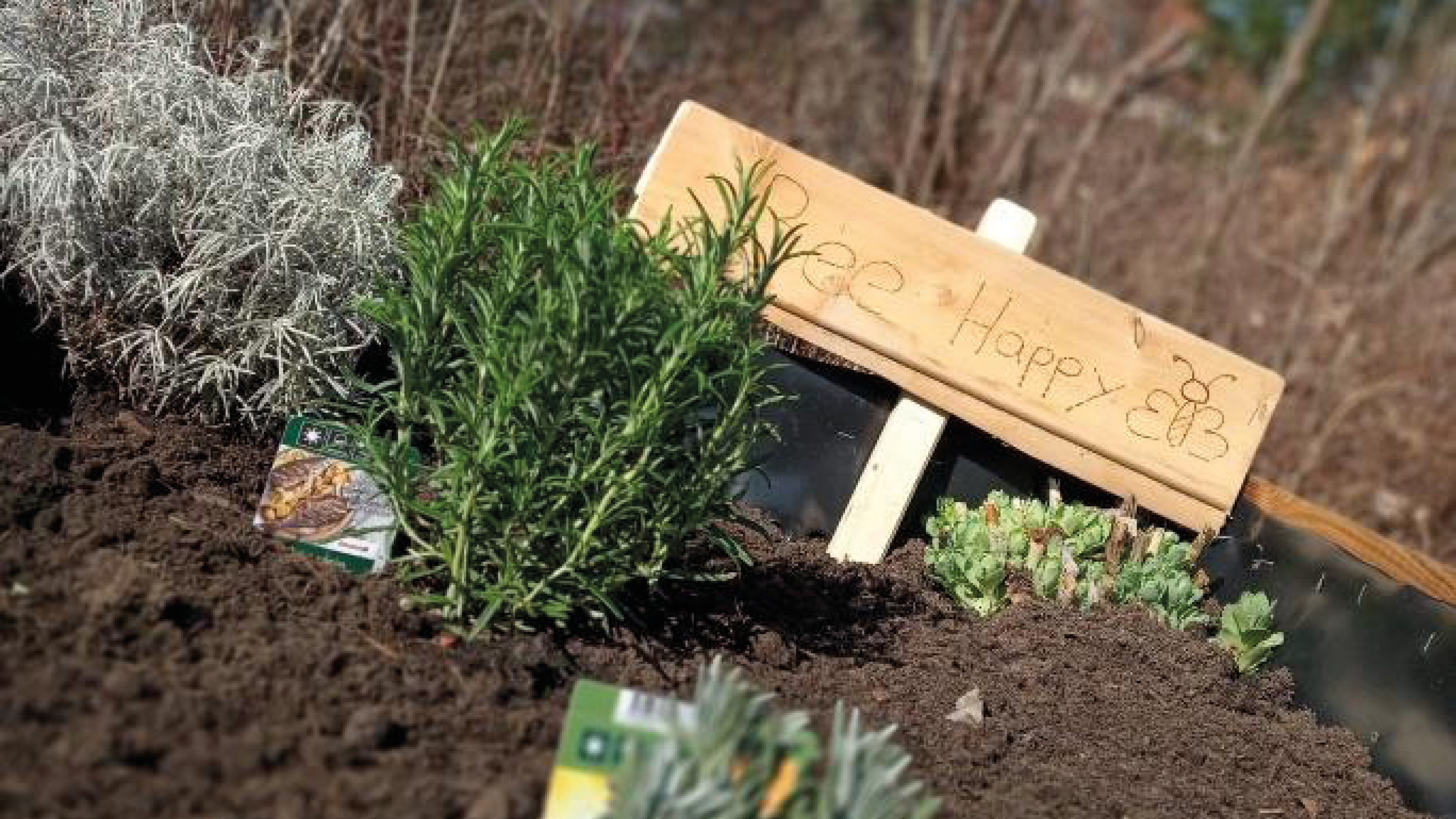
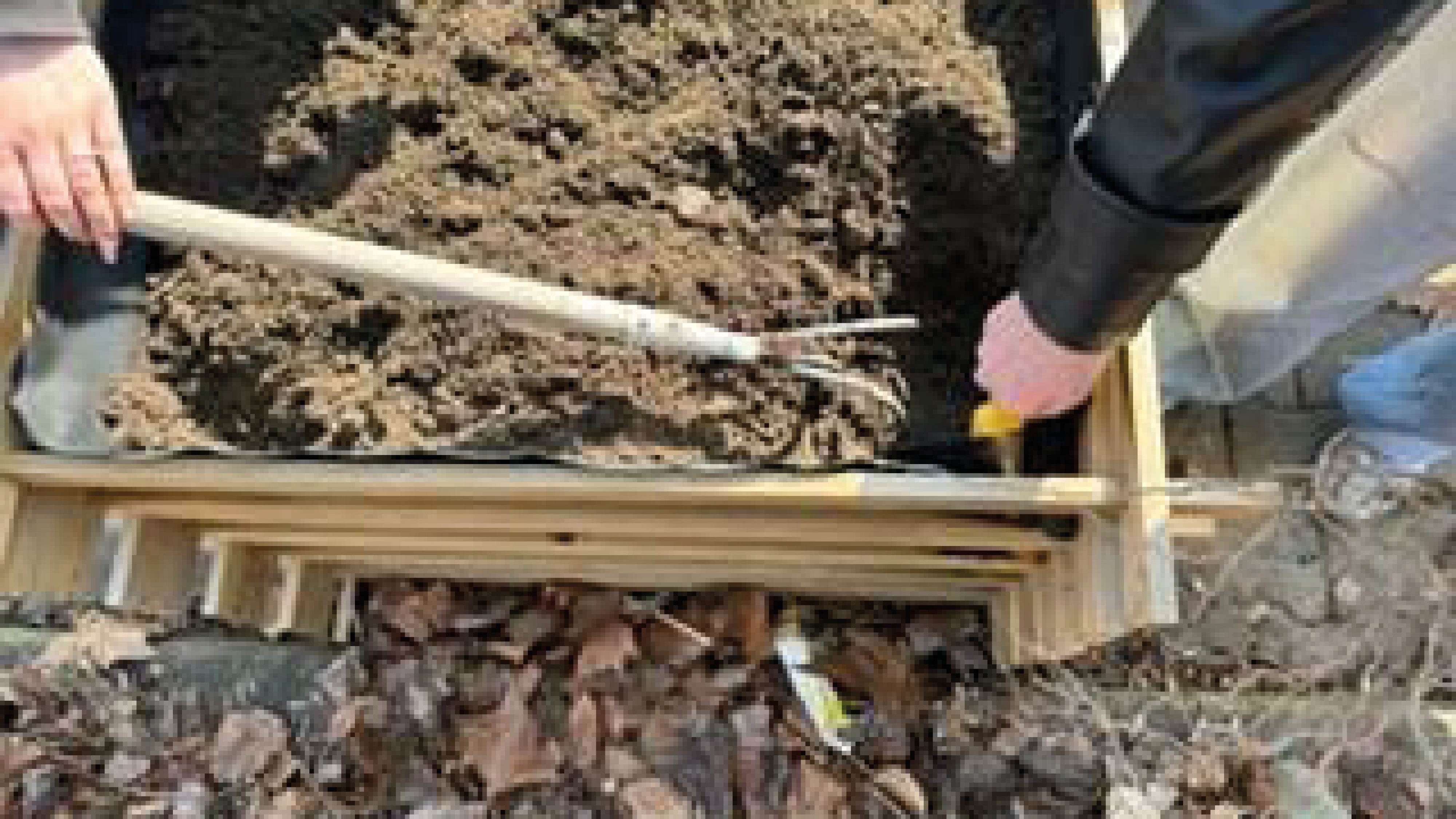
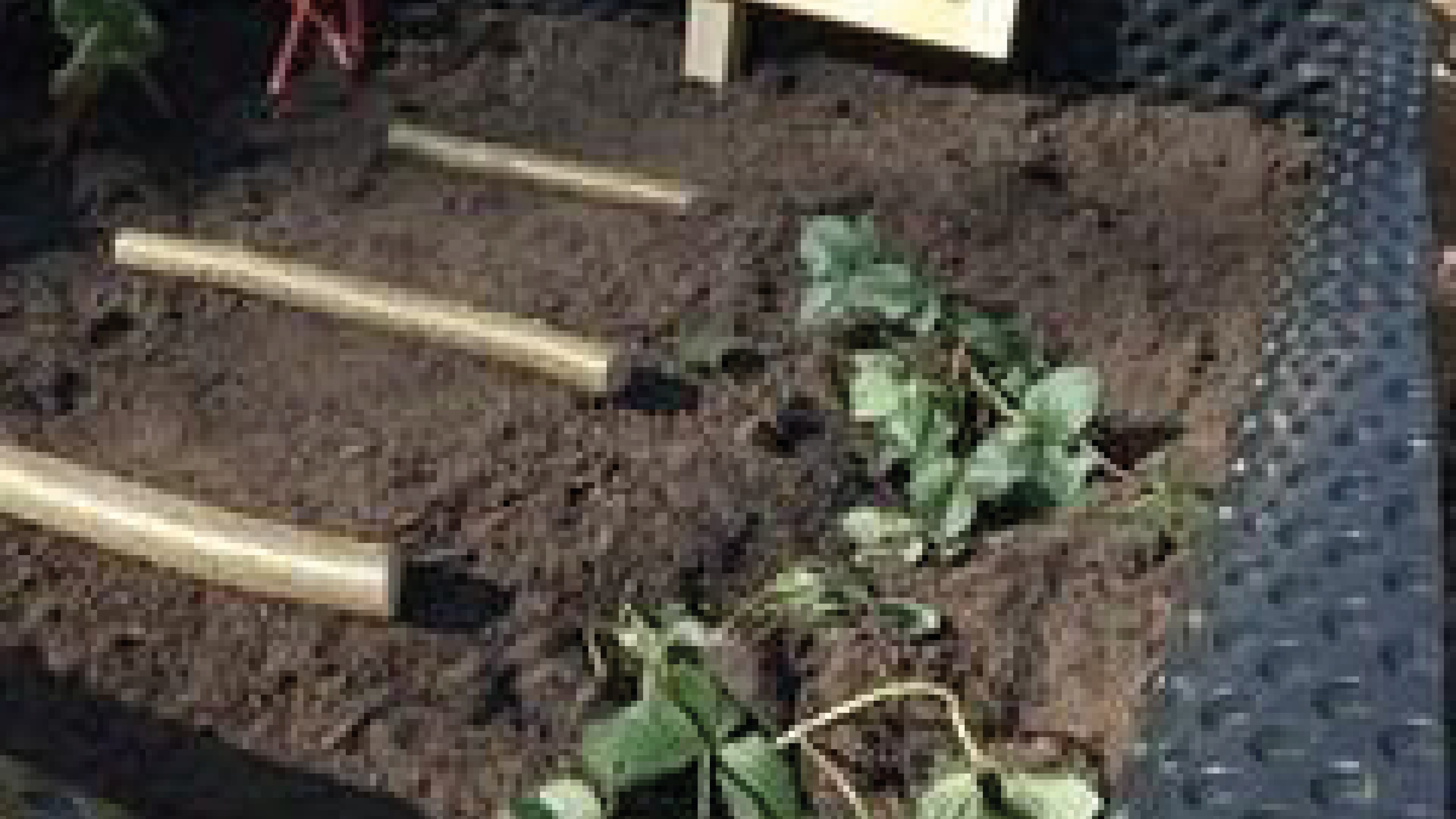
Four raised beds were created at the Bethanien Education Centre for Health Professions as part of the project. The newly created beds are intended to give the students a profound environmental awareness and practical knowledge of sustainable cultivation and the use of plants.
The "raised bed project" will be continued sustainably at the school. It will be integrated into everyday school life and the curriculum: pupils will take care of the cultivation according to the rotation principle. In this way, everyone is taught about ecological cultivation and a seed is sown for a lifelong commitment to environmental protection.
BSZ Health and Social Services: Chemnitz in bloom - a flourishing future
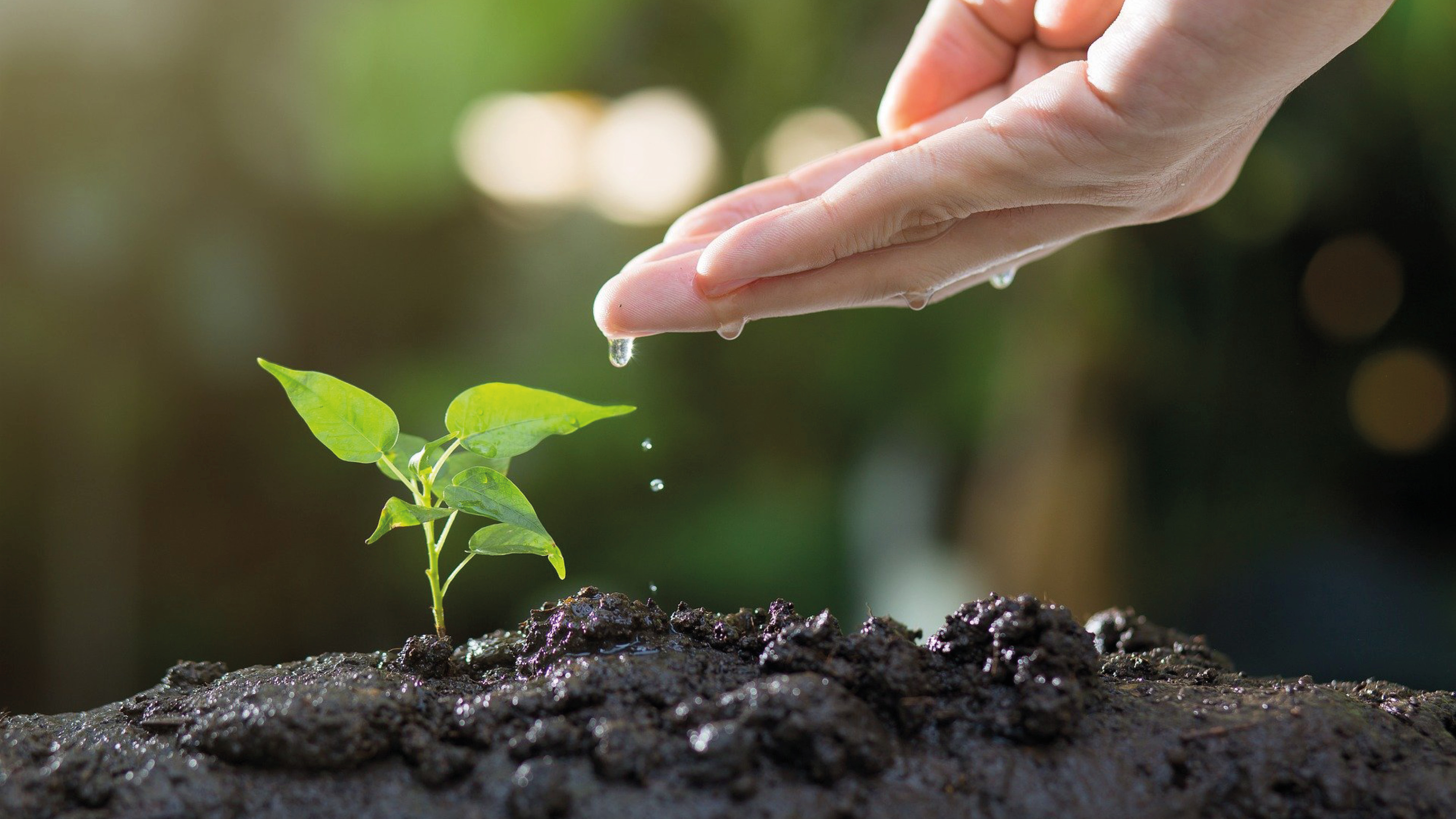
As part of a project week in November 2023, pupils created paper and used it to make seed paper, which they gave away as Christmas and New Year greetings. Inspired by the creative and physically demanding task, they thought about how they could develop the idea further. So they came up with the idea of making a seed box.
The seed box is labelled with instructions on how to make seed paper.
The box is handed out to interested parties at the centre's open days.
The pupils also take the box to events at secondary schools in Chemnitz. The pupils can also green their own neighbourhood and make it even more liveable. The box thus enables a simple and low-threshold transfer of knowledge that contributes to a greener Chemnitz.


